

Tom Dwan Reveals Why Timing Made Him a High Stakes Poker Legend
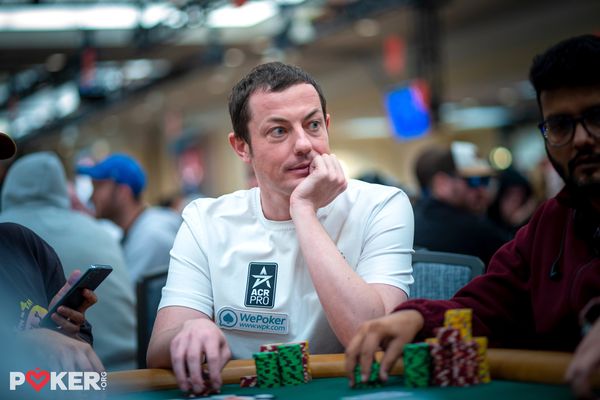
Tom Dwan credits his legendary High Stakes Poker success to perfect timing rather than superior skill, revealing how his early arrival gave him massive edges that later players like Phil Galfond never enjoyed. The poker icon’s candid admission sheds light on how perception and timing can matter more than raw ability at the highest stakes.
What Happened
During a recent Run It Once Training Q&A session, Tom Dwan fielded an intriguing question about how his career trajectory might have differed had he experienced Phil Galfond’s misfortune on High Stakes Poker. The question struck a nerve, prompting Dwan to deliver one of his most revealing explanations about the golden era of televised poker.
Dwan’s record on High Stakes Poker speaks for itself—nearly $3 million in profits during his early appearances, cementing his reputation as one of poker’s most fearsome competitors. Meanwhile, Galfond’s experience couldn’t have been more different. Despite being widely recognized as an elite player, Galfond dropped over $425,000 across just 11 hours of High Stakes Poker action.
The disparity between these two outcomes has puzzled poker fans for years. Both players were considered among the best online poker minds of their generation, excelling in both No-Limit Hold’em and Pot-Limit Omaha. So what explained the dramatic difference in their televised results?
According to Dwan, the answer is surprisingly straightforward: he got there first.
The Poker Strategy Breakdown
Dwan’s explanation reveals a fascinating dynamic that extended far beyond standard poker strategy. When he first appeared on High Stakes Poker, the established live professionals viewed online players with considerable skepticism. These veteran pros had built their reputations through decades of live play, trusting their instincts and reading abilities above all else.
“I got in while they all thought we were clueless,” Dwan explained. This perception gap created enormous strategic advantages. When opponents underestimate your capabilities, they make fundamental errors in their approach. They might call down lighter, believing you’re bluffing too frequently. They might attempt elaborate bluffs themselves, assuming you lack the experience to recognize them. They might even avoid certain sophisticated plays, thinking you wouldn’t understand them anyway.
The mathematical foundation that Dwan and other online players brought to the table represented a genuine evolution in poker thinking. Online grinders had access to hand history databases, tracking software, and the ability to play hundreds of thousands of hands—tools that gave them pattern recognition and frequency-based decision-making that live pros simply couldn’t match through experience alone.
However, Dwan acknowledges that luck played a significant role in his High Stakes Poker performance. Running well in high-variance situations certainly helped build his mystique. But the crucial factor was the timing—he capitalized on his edge before the live professionals adjusted their perception of online players’ capabilities.
By the time Galfond received his opportunity, the landscape had fundamentally shifted. “By the time Phil got in, they were like, ‘Oh, these fucking math kids know a little bit of fucking math,'” Dwan noted. The element of surprise had evaporated. The live pros had watched Dwan’s performances, studied the online players’ approaches, and adjusted their strategies accordingly.
This meant Galfond faced opponents who respected his abilities from the outset. They played more cautiously against him, avoided marginal situations, and generally gave him less action in spots where he held edges. Combined with some unfortunate variance, Galfond never had the chance to replicate Dwan’s success.
Reading The Field & Table Dynamics
The dynamics Dwan describes illustrate a critical concept that applies across all levels of poker: your edge isn’t absolute—it’s relative to your opponents’ perception and adjustment level. A strategy that crushes one lineup might struggle against another, not because the strategy itself is flawed, but because the opponents have adapted.
When Dwan sat down with players like Doyle Brunson, Eli Elezra, and other old-school legends, he benefited from a massive information asymmetry. He had studied their games through televised footage and online discussions. They had no comparable data on him. More importantly, they entered the match with preconceived notions about online players that worked heavily in Dwan’s favor.
This perception gap meant that Dwan’s aggressive plays received action they probably didn’t deserve. His bluffs got called by hands that should have folded. His value bets got paid by opponents who convinced themselves the young online player was out of line. Every mistake his opponents made due to misreading his capabilities added to his edge.
Galfond faced the opposite problem. His opponents entered with respect for his abilities, having watched online players succeed on the show for several years. This respect manifested as tighter play, more cautious decision-making, and fewer opportunities for exploitation. The psychological edge that Dwan enjoyed simply didn’t exist for Galfond.
Table dynamics also matter in terms of session selection and timing. Dwan’s early success on High Stakes Poker opened doors for future appearances with favorable lineups. Success breeds opportunity in poker. Galfond’s struggles, meanwhile, may have limited his future chances to appear on the show, creating a self-reinforcing cycle.
How To Apply This To Your Game
Dwan’s revelation offers several practical lessons for players at every level. First, understand that your table image and your opponents’ perceptions directly impact your edge. A tight player who suddenly bluffs will get more folds than a maniac making the same play. A player known for mathematical precision might get called lighter by opponents who assume they’re always making calculated moves.
Second, timing matters enormously in poker. Being an early adopter of new strategies or approaches can yield outsized rewards before the player pool adjusts. Whether it’s a new game variant, a different stake level, or a fresh poker room, getting in early often means facing less sophisticated opposition.
Third, recognize that edges erode over time. The strategies that worked brilliantly five years ago might be standard practice today. Continuous learning and adaptation aren’t optional—they’re essential for maintaining your edge as the player pool evolves. Dwan himself has remained relevant for nearly two decades by constantly adjusting his approach.
Fourth, consider how your own biases about opponents might be costing you money. Just as the High Stakes Poker pros underestimated online players initially, you might be underestimating certain player types at your table. The recreational player who seems clueless might actually understand more than you think. The older player might have studied modern theory extensively.
Finally, understand that variance and timing can have life-altering impacts on your poker career. Dwan acknowledges that running well during his High Stakes Poker appearances significantly shaped his trajectory. While you can’t control variance, you can put yourself in positions where good fortune will have maximum impact—playing your best when opportunities arise and ensuring you’re properly bankrolled to weather the storms.
Key Takeaways
- Tom Dwan attributes his High Stakes Poker success largely to timing—he played before live pros adjusted to online players’ mathematical approaches
- Phil Galfond faced much tougher conditions years later when opponents respected online players’ abilities, significantly reducing his edge despite similar skill levels
- Perception and table image can matter as much as actual skill—being underestimated creates profitable opportunities that disappear once opponents adjust
- Edges in poker are temporary and relative to the player pool’s adaptation level, requiring continuous evolution to maintain profitability
- Early adoption of new strategies, games, or environments often yields disproportionate rewards before the competition catches up
- Variance combined with timing can have career-defining impacts, making it crucial to maximize opportunities when they present themselves
Frequently Asked Questions
How much did Tom Dwan actually win on High Stakes Poker?
Tom Dwan won nearly $3 million during his early appearances on High Stakes Poker, making him one of the show’s most successful players. His aggressive style and fearless approach to massive pots made him a fan favorite while building his reputation as an elite high-stakes competitor.
Why did Phil Galfond struggle on High Stakes Poker compared to Tom Dwan?
According to Dwan, Galfond played several years later when live professionals had already adjusted to online players’ mathematical approaches. While both players had similar skill levels, Dwan benefited from being underestimated early on, while Galfond faced opponents who respected his abilities from the start, significantly reducing his edge.
What advantages did online players have over live pros during the poker boom?
Online players had access to hand history databases, tracking software, and the ability to play hundreds of thousands of hands, giving them superior pattern recognition and frequency-based decision-making. These mathematical tools and volume-based experience provided edges that traditional live pros couldn’t match through instinct and live experience alone.
Final Thoughts
Tom Dwan’s honest assessment of his High Stakes Poker success provides a masterclass in understanding poker beyond the cards themselves. His acknowledgment that timing and perception played crucial roles in his legendary performances demonstrates the kind of self-awareness that separates good players from great ones. It’s a reminder that poker success depends on numerous factors beyond pure skill—timing, table selection, opponent perception, and yes, even luck all play their parts.
The contrast between Dwan’s and Galfond’s experiences also highlights how quickly the poker landscape evolves. Strategies and approaches that dominate today may become standard practice tomorrow. Maintaining an edge requires constant adaptation, continuous learning, and the wisdom to recognize when conditions favor your particular skillset. Dwan got to be the pioneer; Galfond faced the adjusted field. Neither outcome was entirely within their control, but both shaped their careers in profound ways.
For players looking to improve their own games, the lesson is clear: stay ahead of the curve, understand how your opponents perceive you, and recognize that your edge exists only relative to the competition you face. The game never stops evolving, and neither should you.
Ready to Sharpen Your Poker Game?
Master your poker game with expert hand analysis
