When Heads-Up Battles Turn Personal: Deeb’s WSOP Walkoff
Shaun Deeb’s controversial refusal to shake hands with Joey Couden after losing the $3K Nine-Game Mix final has sparked debate about poker etiquette and emotional control at the felt. The five-time bracelet winner claims off-camera behavior from his opponent justified the cold exit, revealing tensions that boiled over during their heads-up confrontation. What started as a friendly rivalry between longtime acquaintances deteriorated into what Deeb now calls “bad blood” that won’t be easily forgotten.
What Happened
The final table of the $3,000 Mixed Games: Nine-Game Mix event appeared routine on the surface, but underlying tensions were building to a breaking point. Deeb entered heads-up play against Couden holding a commanding 2:1 chip advantage, the kind of edge that typically translates to victory for a player of his caliber. Yet the cards didn’t cooperate, and Couden mounted a comeback to claim his largest tournament score to date.
As the final hand concluded, Deeb immediately stood and left the table without the customary handshake. For viewers watching the stream, it seemed like another example of poor sportsmanship from a player who’d previously drawn criticism for a similar walkoff after finishing second to Gilles Silbernagel at the WSOPE Colossus. That earlier incident involved a recreational player defeating one of poker’s elite, and Deeb’s refusal to congratulate him struck many as petulant.
This situation, however, carried different context. During an appearance on the WSOP Countdown show, Deeb explained that his relationship with Couden had been cordial for years before the final table. According to Deeb’s account, something shifted during the decisive stages of play. He claims Couden began making personal attacks, calling him “a villain” and declaring that he was widely hated in the poker community.
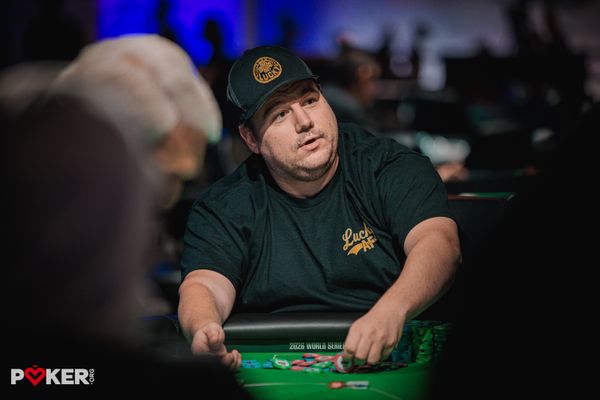
“The rails were extremely loud on both sides, and his adrenaline was pumping,” Deeb explained. “I know it’s a big spot for him – it’s his biggest ever tournament score. I think the moment got the best of him. He was just being an absolute d**k.” Deeb went further, stating that Couden engaged in behavior during the final hours that wasn’t captured by cameras, actions that would have provided context for his abrupt departure.
The incident marks Deeb’s third runner-up finish of the 2026 WSOP series, adding frustration to an already tense situation. Despite limited cashes this summer, his fifth-place showing in the $10K 2-7 Lowball Championship keeps him competitive in the Player of the Year race, currently sitting third and trailing leader Alex Foxen by fewer than 700 points.
The Poker Strategy Breakdown
Beyond the interpersonal drama, this situation offers insights into how psychological warfare impacts heads-up play, particularly in mixed game formats. The Nine-Game Mix rotates through various poker disciplines, requiring players to maintain focus across dramatically different strategic frameworks. When you add emotional turbulence to that cognitive load, decision-making inevitably suffers.
Deeb’s 2:1 chip advantage should have been decisive. In heads-up play, that margin provides enormous flexibility to apply pressure and force mistakes. However, mixed games complicate chip leverage because optimal aggression varies wildly between disciplines. In Limit Hold’em or Razz, you can grind down an opponent methodically. In No-Limit Hold’em or Pot-Limit Omaha, those same chips enable devastating all-in pressure. The rotating structure means you can’t sustain a single strategic approach.
When an opponent begins engaging in verbal needling or personal attacks, it creates additional mental overhead. You’re suddenly playing two games simultaneously: the poker game on the table and the psychological game being waged through words and behavior. For a player like Deeb, who built his reputation on technical excellence and mathematical precision, emotional disruption can be particularly damaging. His game relies on processing complex information across multiple variables, and anger or frustration narrows that analytical bandwidth.
The question becomes whether Couden’s alleged behavior was strategic angle-shooting or simply adrenaline-fueled excitement. There’s a long tradition in poker of verbal sparring designed to tilt opponents. Mike Matusow built a career partly on table talk that got under people’s skin. Phil Hellmuth’s blow-ups often precede aggressive play designed to capitalize on his “maniac” image. If Couden recognized that Deeb was becoming emotionally compromised, pressing that advantage would be strategically sound, even if ethically questionable.
From a pure game theory perspective, anything that degrades your opponent’s decision-making quality increases your expected value. If Deeb was making suboptimal folds because he was angry, or suboptimal calls because he wanted to “show him,” then Couden’s behavior was working. The fact that Deeb couldn’t close out a significant chip lead suggests something disrupted his typical execution.
Reading The Field & Table Dynamics
The social dynamics at a final table extend beyond the two players involved. Deeb mentioned that rails on both sides were “extremely loud,” creating an amphitheater atmosphere rather than the focused environment typically preferred for mixed game play. When friends and supporters are cheering and potentially heckling, it transforms the psychological landscape of the match.
For Couden, this represented the biggest moment of his tournament poker career. The pressure of that situation can manifest in different ways. Some players become conservative, trying to lock up the life-changing score. Others experience a rush of confidence that borders on invincibility. If Couden felt the momentum shifting in his favor and had vocal support reinforcing that belief, it could have emboldened behavior he might not normally display.
Deeb, conversely, was facing his third runner-up finish of the series. That pattern creates its own psychological burden. When you repeatedly get close to victory only to fall short, frustration accumulates. Each near-miss feels more painful than the last. The mental resilience required to maintain composure through that pattern is substantial, and even elite professionals have breaking points.
The heads-up dynamic also matters for understanding how personal conflicts emerge. In a full-ring game, you can avoid direct confrontation with a single opponent. Heads-up, you’re forced into constant engagement. Every hand involves both players. There’s nowhere to hide, no opportunity to take a mental break. If tension exists between two players, heads-up play amplifies it exponentially.
Mixed games add another layer because they reward versatility over specialized excellence. A player might feel confident in their No-Limit Hold’em abilities but vulnerable in Stud Hi-Lo. When the game rotates to your weaker discipline, an opponent who senses that vulnerability and applies verbal pressure is exploiting a legitimate edge. Whether that crosses ethical lines depends on the specific behavior involved.
How To Apply This To Your Game
The primary lesson here isn’t about trash talk or psychological warfare – it’s about emotional control and recognizing when you’re compromised. Deeb is a world-class player who couldn’t execute with his typical precision, likely because emotional factors degraded his performance. If it can happen to him, it can happen to anyone.
First, develop awareness of your emotional state during play. When you notice anger, frustration, or anxiety building, that’s a warning sign. Your decision-making is likely being affected even if you don’t consciously realize it. In cash games, you can take a break or leave. In tournaments, you need coping mechanisms: breathing exercises, mental reframes, or simply acknowledging the emotion without letting it dictate your actions.
Second, understand that opponents may deliberately try to tilt you. This isn’t personal – it’s strategic. If someone is needling you or celebrating excessively after winning pots, they’re likely trying to provoke a reaction. Recognizing the tactic neutralizes much of its power. You can even use it as information: if they’re trying to tilt you, they probably respect your game and feel they need an edge beyond pure poker skill.
Third, consider your own behavior at the table. Even if you’re not intentionally trying to upset opponents, excessive celebration or commentary can create negative dynamics. Poker has an etiquette for good reason – it keeps the game running smoothly and maintains an environment where everyone can play their best. Violating that etiquette might provide short-term advantages but damages your reputation and can lead to exactly the kind of “bad blood” Deeb describes.
Finally, practice heads-up play specifically. The psychological intensity of one-on-one poker is fundamentally different from multi-way pots. You need comfort with constant confrontation and the ability to maintain focus when every hand involves direct competition. Many players avoid heads-up practice, which leaves them unprepared for final table situations where the biggest money is won or lost.
Key Takeaways
- Emotional control is a critical skill that even elite professionals struggle to maintain under pressure, particularly during extended heads-up battles
- A significant chip lead doesn’t guarantee victory when psychological factors disrupt optimal decision-making across multiple game formats
- Verbal behavior and table talk can be strategic tools, but they risk creating lasting damage to professional relationships and personal reputation
- The rotating structure of mixed games creates additional cognitive load that makes players more vulnerable to emotional disruption
- Understanding when you’re emotionally compromised and having strategies to regain composure is as important as technical poker knowledge
- Tournament pressure affects different players in different ways, with career-best situations sometimes triggering behavior that players later regret
Frequently Asked Questions
Was Deeb justified in refusing to shake hands with Couden?
Without video evidence of the alleged off-camera behavior, it’s impossible to definitively judge. Deeb claims Couden engaged in personal attacks and unsportsmanlike conduct that justified his response. However, refusing to shake hands is generally considered poor etiquette regardless of what preceded it. The more professional approach would be a perfunctory handshake followed by addressing any serious behavioral issues through proper channels afterward.
How does psychological warfare affect poker strategy?
Anything that degrades an opponent’s decision-making quality increases your expected value. Verbal needling, excessive celebration, or personal attacks can tilt opponents into making mistakes. However, there’s a line between strategic table talk and genuinely unethical behavior. The best players maintain psychological pressure through their betting patterns and table presence rather than personal attacks, which can backfire by motivating opponents or creating uncomfortable playing environments.
What should you do if an opponent is trying to tilt you?
First, recognize what’s happening – awareness neutralizes much of the tactic’s power. Take deep breaths and refocus on making optimal decisions rather than emotional reactions. In cash games, you can take a break or leave the table. In tournaments, use the breaks between levels to reset mentally. If behavior crosses into harassment or rule violations, alert the floor staff. Remember that an opponent trying to tilt you is actually paying you a compliment – they feel they need an edge beyond pure poker skill.
Final Thoughts
The Deeb-Couden situation reveals an uncomfortable truth about competitive poker: the mental game matters as much as technical skill, and even world-class players have breaking points. Deeb’s refusal to shake hands will be remembered regardless of what provoked it, while Couden’s victory is now overshadowed by controversy. Both players likely wish the final table had unfolded differently, with the poker taking center stage rather than interpersonal conflict.
For the rest of us, this incident serves as a valuable case study in emotional control and professional conduct. The ability to maintain composure under pressure, to execute your strategy despite psychological provocation, and to treat opponents with respect even in defeat – these skills separate good players from great ones. Technical knowledge gets you to the final table, but mental fortitude wins bracelets.
As the WSOP continues and Deeb chases the Player of the Year title, it will be interesting to see whether this experience motivates him or becomes a lingering distraction. The best players learn from every situation, even the painful ones, and use those lessons to sharpen their complete game. Whether you’re playing mixed games at the WSOP or no-limit hold’em at your local card room, the principles remain the same: master your emotions, respect the game, and let your decisions at the table speak louder than your words.
Ready to Sharpen Your Poker Game?
Master your poker game with expert hand analysis