When Table Karma Strikes: A Lucky Chances Justice Story
Sometimes poker delivers justice in the most satisfying ways. At a Lucky Chances $250 daily tournament, an obnoxious player’s pocket aces met their demise against jack-ten offsuit—and the entire table erupted in celebration. This hand analysis explores why table dynamics matter as much as the cards you’re dealt.
What Happened
The scene unfolded at Lucky Chances Casino in Colma, California, during a modest $250 daily tournament with just four tables running. Among the field sat what poker players call a “Shrek”—a misregistered player who combines whale-like play with unearned cockiness. This particular specimen had spent the entire morning offering unsolicited strategy advice with a smirk that could curdle milk.
The villain had already made himself memorable by waving off a cash game seat with the declaration: “Yeah, I’ll win this real quick. Shouldn’t be that hard.” He’d been critiquing other players’ decisions all morning, including telling one player who folded tens on an A-A-9 board (after running into nines full) that he “lost the absolute maximum.”
By the time the field narrowed to fourteen players across two tables, the Shrek had accumulated an 80K stack at 1K/2K blinds. That’s when he encountered “Amigo”—a well-liked older Mexican gentleman who’d been quietly accumulating chips while keeping the table atmosphere light and friendly.
The hand developed simply: Amigo raised to 5K from early position. Shrek went into a performative tank on the button before three-betting to 10K. Amigo called. On a jack-high flop, Amigo led out for 10K into the 25K pot. Shrek snap-shoved his remaining stack. After tanking, Amigo called.
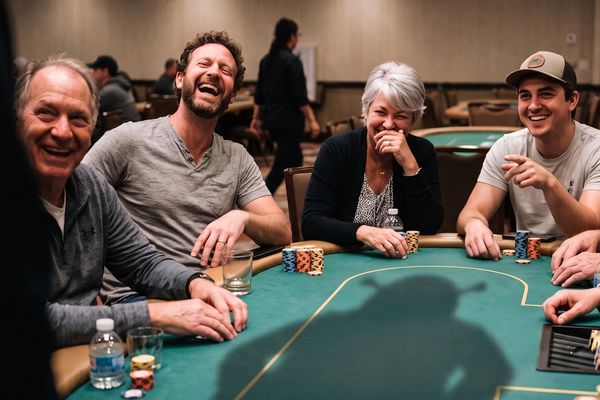
The showdown revealed pocket aces for Shrek against Amigo’s JT offsuit. But when a jack peeled off on the turn, the table exploded. Players were cheering, laughing, and celebrating like their team had just won a championship. The Shrek was eliminated, and justice—at least in the eyes of everyone present—had been served.
The Poker Strategy Breakdown
Let’s dissect this hand from a pure strategy perspective before we get to the social dynamics that made it memorable.
Amigo’s preflop raise with JT offsuit from early position is loose by most tournament standards, especially at fourteen players remaining. Jack-ten offsuit plays poorly when called or three-bet because it’s frequently dominated. However, in smaller field tournaments where players know each other’s tendencies, ranges can profitably widen if opponents are overly tight or predictable.
Shrek’s three-bet with pocket aces is standard, though the sizing to 10K (from a 5K open) is quite small—only a 2x raise. This sizing keeps worse hands in the pot but also disguises hand strength, which with aces isn’t necessarily ideal. A more polarizing size of 12K-15K would build the pot while maintaining fold equity against hands that are drawing thin.
The performative tank before three-betting is a tell in itself. Strong hands don’t need theatrical consideration in this spot. The tank-then-reraise often indicates either a marginal hand being turned into a bluff or a premium hand trying to appear weak. Experienced players catalog these timing tells.
Amigo’s call of the three-bet is questionable with JT offsuit, even in position. He’s getting roughly 2.7:1 on the call (15K to win 26K including blinds), but he’s out of position postflop and likely crushed when called. This is a spot where tournament survival and stack preservation should override implied odds considerations.
The flop donk-bet of 10K into 25K is an interesting line. Donk-betting (leading into the preflop aggressor) is often either very strong hands trying to build a pot or weak hands trying to take initiative. With top pair on a jack-high board, Amigo’s bet makes sense for value, though checking to the preflop raiser would be more standard.
Shrek’s snap-shove over the donk-bet is where his play becomes questionable. While aces are ahead of most ranges here, the snap-shove accomplishes little. He’s either getting called by better (sets, two pair) or folding out worse hands that might pay him off. A call or smaller raise keeps bluffs and weaker made hands in the pot while maintaining control.
The snap nature of the shove also provides information. Players who snap-shove are often either very strong or very weak, rarely medium strength. Combined with his table image, this snap-shove actually narrowed his perceived range to either a big overpair or air—and given the preflop action, overpairs were more likely.
Reading The Field & Table Dynamics
This hand illustrates a crucial poker concept that doesn’t appear in most strategy books: your table image affects not just how opponents play against you, but how they root for you.
The Shrek had spent the entire tournament alienating everyone around him. Unsolicited analysis is one of poker’s cardinal sins—it’s condescending, often wrong, and makes recreational players uncomfortable. The smirk after each critique added insult to injury. When you make enemies at the table, you create an environment where players actively want you to lose.
This matters strategically because players who dislike you are less likely to give you information, more likely to call you down light, and more willing to take marginal spots against you. They’re playing to beat you specifically, not just to win chips. This shifts their ranges in ways that can be exploited if you’re aware, but catastrophic if you’re not.
Conversely, Amigo had built social capital all morning. He was friendly, engaged with other players positively, and created a fun atmosphere. When decision time came, he had the entire table’s goodwill. While this doesn’t change the mathematical equity of his hand, it does affect information flow and future action against him.
The fact that everyone at the table “immediately knew what they wanted to happen” when the cards were tabled speaks volumes. In poker, you’re often one bad beat away from sympathy or mockery. Which one you receive depends entirely on how you’ve conducted yourself.
At fourteen players remaining across two tables, ICM considerations start mattering significantly. Both players had healthy stacks, so neither was in immediate danger, but the Shrek’s aggressive play with an 80K stack (40 big blinds) showed he wasn’t thinking about ladder considerations or final table implications.
How To Apply This To Your Game
The strategic lessons from this hand extend beyond the specific cards and betting actions.
First, manage your table image consciously. You don’t need to be everyone’s best friend, but creating a pleasant atmosphere pays dividends. Players are more likely to make mistakes against people they like, either by giving away information or by not maximizing value against you. Save the trash talk and unsolicited advice—they cost you money in ways that don’t show up in hand histories.
Second, recognize when your timing tells are giving away information. The performative tank-three-bet is a classic tell that screams either premium strength or air. If you’re going to tank, do it consistently across your range, not just when you have a decision you want to dramatize. Better yet, take the same amount of time for all significant decisions.
Third, understand that snap-actions narrow your range dramatically. When you snap-call, snap-fold, or snap-shove, you’re telling observant opponents that your decision was easy—which means your hand is at the extreme end of your range. Sometimes this is fine, but often you’re giving away free information that costs you chips in future hands.
Fourth, consider your bet sizing in relation to your goals. Shrek’s small three-bet and then snap-shove created a confusing narrative. If you want to build a pot with aces, size your three-bet larger. If you want to trap, consider flatting in position. The mixed signals in his line suggested unclear strategic thinking.
Finally, recognize that in small-field tournaments, social dynamics matter more than in large-field events. When you’re playing with the same twenty people for hours, your behavior compounds. One obnoxious comment might be forgotten in a 500-person field, but in a four-table event, it colors every subsequent interaction.
Key Takeaways
- Table image affects outcomes: Players who alienate the table face more aggressive action and less sympathy when variance strikes
- Timing tells matter: Performative tanks and snap-actions give away significant range information to observant opponents
- Bet sizing should match objectives: Small three-bets with premium hands create confusion; size your bets to accomplish specific goals
- Social capital is real equity: In small-field tournaments, being pleasant creates strategic advantages beyond the cards
- Unsolicited advice is -EV: Critiquing other players’ decisions makes you a target and costs you money in subtle ways
- Justice hands happen: When the entire table is rooting against you, poker has a way of delivering poetic outcomes
Frequently Asked Questions
Should you ever offer strategy advice at the poker table?
Generally, no. Unsolicited advice is considered poor etiquette and actually costs you money. If you help weaker players improve, you’re reducing your edge. If you critique better players, you’re creating enemies who will target you. The only exception is if someone specifically asks for your input away from active play, and even then, keep it brief and humble. Save the detailed analysis for after the session with friends.
How should you play pocket aces on a jack-high flop when your opponent leads into you?
The optimal play depends on your opponent’s tendencies and the specific board texture. Against unknown opponents, raising is generally better than shoving because it keeps worse hands in their range and allows them to make mistakes on later streets. Shoving folds out everything worse except sets and two-pair combinations. A raise to 2.5-3x the donk-bet accomplishes the same goal while maintaining maneuverability.
What is a “Shrek” in poker terminology?
A “Shrek” is poker slang for a player who is misregistered in the ecosystem—someone who plays like a recreational player (loose, making fundamental mistakes) but carries themselves with the confidence and arrogance of a professional. The term comes from the character’s combination of being both an ogre and oddly self-assured. These players are profitable to play against but exhausting to sit with due to their behavior.
Final Thoughts
This hand from Lucky Chances reminds us that poker is played between people, not just cards. The mathematical equity of aces versus jack-ten on a jack-high board is clear—Shrek was an 88% favorite when the money went in. But the emotional equity of the situation was entirely different. When an entire table erupts in celebration at your elimination, you’ve lost something more valuable than a single tournament buy-in.
The lesson isn’t that being nice will make you win more hands—variance doesn’t care about your personality. The lesson is that poker is a long-term game played in a social environment. Your behavior compounds over time, affecting everything from the information you receive to the action you get on your value bets. Players who understand this have an edge that doesn’t appear in solver outputs.
Next time you sit down at a poker table, remember that you’re not just playing cards—you’re managing relationships, building or destroying social capital, and creating the environment in which you’ll play for hours. The Colma wind might cut straight to the bone, but a table full of players rooting for your demise cuts even deeper. Play well, play smart, and maybe keep the smirk to yourself.
Ready to Sharpen Your Poker Game?
Master your poker game with expert hand analysis