Why Off-Strip Poker Rooms Are Your Best Summer Value Play
While the World Series of Poker draws thousands to the Strip, savvy players are finding bigger edges and better value at off-Strip venues that understand counter-programming. The Orleans Casino proved this formula in 2025, shattering attendance records with their Sunday tournament series—and they’re doubling down on the strategy for summer 2026.
What Happened
The Orleans Casino, located just off Tropicana Avenue away from the Strip’s congestion, discovered a goldmine during last summer’s WSOP season. Their weekly Sunday Special tournament—already popular among locals—transformed into the Super Sunday Special and demolished every previous attendance record.
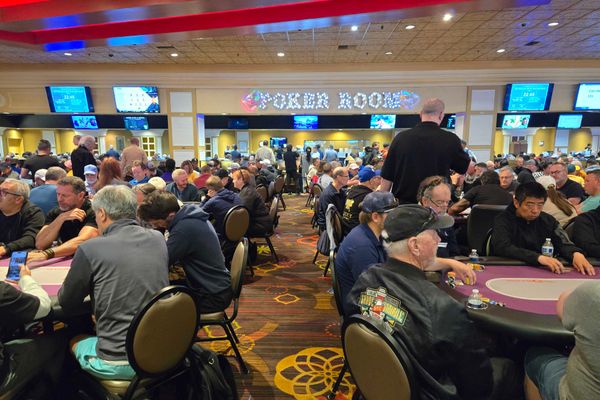
The numbers tell an impressive story. On May 25, 2025, the inaugural Super Sunday Special attracted 538 players and generated a $181,000 prize pool. Just one week later, 587 entries pushed that number higher. Then came the breakthrough: 815 players showed up for a $274,000 pool that ended in a seven-way chop worth $17,000 each at sunrise.
The momentum continued building through June. On June 22, the tournament hit 819 entries, setting another record. The final mark came June 29 with 904 players competing for $305,160 in prizes. The eventual winner took home $46,000—five-figure scores that rival many WSOP bracelet events at a fraction of the buy-in.
For 2026, The Orleans is expanding the concept. Seven Super Sunday Specials are scheduled from May 22 through July 12, each featuring a $300 buy-in with an optional $100 add-on for an additional starting stack. Every tournament carries a $100,000 guarantee, though last year’s numbers suggest that’s merely a formality.
The series culminates with a $600 Main Event boasting a $500,000 guarantee. Last year’s version at the same price point drew 2,726 entries for a prize pool exceeding $1.4 million—substantially larger than the 2024 edition’s $800 buy-in that attracted 1,653 players.
The Poker Strategy Breakdown
The Orleans’ success reveals crucial strategic insights about tournament selection during the WSOP summer. While recreational players might assume the biggest value lies within the official series, experienced grinders recognize that alternative venues often provide superior risk-reward profiles.
Consider the mathematics: A $400 tournament (with add-on) that attracts 800+ recreational players creates a dramatically softer field than a $1,000 WSOP event filled with professionals. The effective buy-in represents less than half the investment, yet the top prizes regularly reach $40,000-$50,000—comparable to many mid-tier bracelet events.
Field composition matters enormously in tournament poker. During WSOP season, The Orleans attracts a unique player mix: tourists who ventured off-Strip seeking better value, local recreational players who avoid the Strip chaos, and sharp regulars who recognize the profitable opportunity. This creates a field that’s simultaneously large (generating substantial prize pools) and soft (containing many inexperienced players).
The structure also favors skilled play. Unlike turbo formats that reduce post-flop decision-making, these tournaments provide adequate stack depth for maneuvering. The add-on option creates an interesting dynamic—disciplined players who take the add-on start with double the chips of those who don’t, immediately establishing a strategic advantage.
From a bankroll management perspective, these events offer exceptional tournament equity. A skilled player might need a $20,000-$30,000 bankroll to comfortably play $1,000 WSOP events, but can take shots at The Orleans tournaments with just $5,000-$8,000 behind them. The reduced variance exposure allows for more frequent play and faster skill development.
Reading The Field & Table Dynamics
Understanding your opponents’ motivations dramatically impacts optimal strategy in these counter-programmed events. The player pool segments into distinct categories, each requiring different tactical adjustments.
WSOP tourists often arrive at The Orleans seeking a break from the intensity and crowds. They’re typically playing with “fun money” rather than serious bankrolls, leading to looser opening ranges and more speculative calls. Against these opponents, value betting becomes paramount—thin value bets on all three streets extract maximum profit from players who “came to play hands.”
Local recreational players represent another significant segment. They’re familiar with the venue and structure but often lack sophisticated tournament theory. These players frequently make ICM mistakes near the bubble and in final table situations, calling too tight when they should be aggressive and vice versa. Recognizing these tendencies allows you to apply pressure at critical junctures.
The professional contingent—perhaps 15-20% of the field—understands they’re playing in a soft game. However, many make the mistake of over-adjusting, attempting elaborate bluffs against opponents who won’t fold. The key is balancing exploitation (value betting relentlessly) with solid fundamentals (not spewing chips on fancy plays).
As these tournaments progress into late stages, ICM considerations become crucial. With 800+ player fields, the bubble period can be extensive and chaotic. Medium stacks often play too conservatively, creating opportunities for aggressive players to accumulate chips through strategic pressure. The seven-way chop mentioned earlier illustrates how final table dynamics differ from typical tournaments—with such large fields and relatively flat payout structures, deal-making becomes common.
Table draw significantly impacts your approach. An early table filled with tight, scared money allows for aggressive chip accumulation. Conversely, a table with multiple loose players requires tightening ranges and focusing on premium holdings. Continuously reassessing table dynamics as players bust and tables break ensures you’re always employing optimal strategy.
How To Apply This To Your Game
If you’re planning a WSOP summer trip, incorporating off-Strip tournaments into your schedule isn’t just about variety—it’s about maximizing your overall profitability and tournament experience.
First, schedule strategically. Rather than grinding WSOP events seven days weekly, designate specific days for alternative venues. Sunday at The Orleans becomes a high-value target, offering substantial prize pools in softer fields. This approach also prevents burnout, as the change of scenery and player pool keeps your game fresh.
Second, adjust your technical preparation. Study large-field tournament strategy, focusing on early-stage survival and chip accumulation. These massive fields require patience—you’ll need to navigate 10-12 hours of play to reach final tables. Review ICM calculations for 100+ player payouts, as the bubble and early money jumps create unique pressure points.
Third, exploit the add-on structure intelligently. Always take the add-on unless you’ve already accumulated a massive stack. The additional chips provide crucial flexibility in the middle stages when blinds escalate. Budget for the full $400 investment rather than treating the add-on as optional.
Fourth, manage logistics carefully. The Orleans offers free parking and easy access—advantages that seem minor until you’ve spent 45 minutes searching for Strip parking. Arrive early to ensure you’re seated comfortably and mentally prepared. The nearby food court provides quick, affordable meals during breaks, maintaining your energy without the Strip’s premium prices.
Fifth, network strategically. These events attract a consistent group of local professionals and serious amateurs. Building relationships can lead to valuable game information, staking opportunities, and private game invitations. The poker community thrives on connections, and off-Strip venues provide more relaxed environments for building them.
Key Takeaways
- Off-Strip venues like The Orleans offer superior value during WSOP season, with softer fields and comparable prize pools to mid-tier bracelet events at fraction of the buy-in
- The $400 buy-in (with add-on) tournaments regularly generate $40,000-$50,000 first-place prizes from fields exceeding 800 players—exceptional risk-reward ratios for skilled players
- Field composition heavily favors experienced players, mixing WSOP tourists, local recreationals, and sharp regulars in a profitable player pool
- Logistical advantages including free parking, easy access, and affordable dining reduce the friction and expense of tournament poker
- Strategic scheduling of alternative events prevents burnout while maximizing overall summer profitability compared to WSOP-only grinding
- Large-field dynamics require specific adjustments in ICM calculations, bubble play, and final table negotiations that differ from typical tournament strategy
Frequently Asked Questions
Are off-Strip tournaments actually softer than WSOP events?
Generally yes, especially during peak WSOP season. While WSOP events attract the world’s best players competing for bracelets and prestige, off-Strip tournaments draw more recreational players seeking value and convenience. The Orleans’ Sunday tournaments particularly attract tourists looking for a break from the Strip intensity, creating fields with higher percentages of inexperienced players. However, skilled regulars also recognize this opportunity, so you’ll still face competent opposition—just in smaller proportions than typical WSOP events.
How does bankroll management differ for these tournaments versus WSOP events?
The lower buy-ins allow for more conservative bankroll requirements. While you might need 30-40 buy-ins for $1,000 WSOP events ($30,000-$40,000), you can comfortably play $400 tournaments with 15-20 buy-ins ($6,000-$8,000). This reduced variance exposure means you can play more frequently, accelerating your learning curve and increasing your chances of hitting a big score. The softer fields also improve your ROI, further reducing the bankroll needed for sustainable play.
Should I always take the add-on in these tournaments?
Almost always, yes. The add-on doubles your starting stack for just 25% more investment, providing exceptional value. The only exception is if you’ve already accumulated a massive stack (3-4x starting) where the add-on chips become proportionally less valuable. For most players in most situations, the add-on is mandatory—budget for the full $400 buy-in rather than considering it optional. The extra chips provide crucial flexibility during middle stages when blinds escalate and antes kick in.
Final Thoughts
The Orleans’ record-breaking 2025 summer wasn’t an accident—it was the result of understanding what players actually want during WSOP season. While the prestige of gold bracelets draws headlines, most players are simply seeking profitable, enjoyable poker in comfortable environments. Off-Strip venues that recognize this reality are capturing significant market share and creating genuine value for smart players.
As more poker rooms announce their 2026 summer schedules, expect similar counter-programming strategies from Aria, Wynn, Venetian, and others. This competition benefits players through better structures, larger guarantees, and softer fields. The key is identifying which events offer optimal value for your skill level and bankroll, then scheduling strategically to maximize your summer profitability.
Whether you’re a serious grinder or a recreational player planning your annual Vegas trip, incorporating off-Strip tournaments into your WSOP summer isn’t just smart poker—it’s essential strategy. The combination of softer fields, better logistics, and comparable prize pools creates opportunities that simply don’t exist within the official series. The Orleans proved the formula works, and 2026 promises even bigger and better options for players willing to venture beyond the Strip.
Ready to Sharpen Your Poker Game?
Master your poker game with expert hand analysis