

Why Teaching Poker Newbies on Camera Reveals the Game’s Core
A new YouTube series is flipping the poker content script by documenting complete beginners learning Texas Hold’em from scratch. Fins Poker Show, created by veteran player and LA talent manager Lea Anne Wolfe, captures young actors experiencing their first hands, first bad beats, and first strategic decisions—offering viewers a rare glimpse into how poker fundamentals actually sink in when stakes and egos are still low.
What Happened
Lea Anne Wolfe has spent two decades grinding cash games and accumulating WSOP cashes while simultaneously building a career as a talent manager in Los Angeles. That dual experience positioned her perfectly to launch something the poker world hasn’t seen much of: a show focused entirely on people who’ve never played a hand of poker.
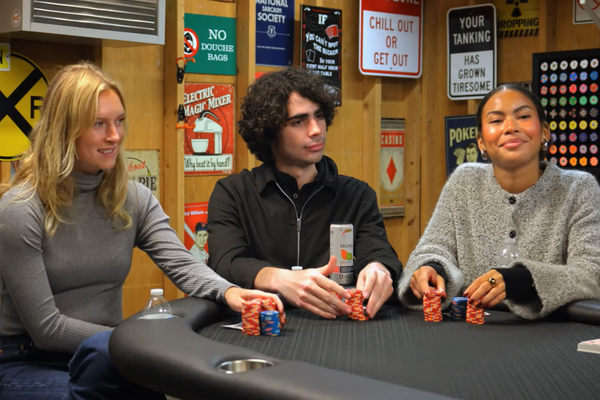
The concept emerged from Wolfe’s coaching work and her access to professional actors through her management career. Rather than creating another high-stakes poker show or strategy series aimed at experienced players, she assembled a cast of seven young actors—Savanna Gann, Cyrus Arnold, Nikki Bruner, Ella Rouhier, Benni Latham, Jaden Betts, and Jarod Bainbridge—none of whom had poker experience.
Wolfe funded the entire production herself using her poker bankroll, investing in HD cameras, professional lighting, and quality audio equipment. The first season has already launched on YouTube, with episodes documenting the cast’s journey from learning what blinds are to navigating their first real pots and experiencing the emotional swings that define poker.
The show also serves as Wolfe’s way of giving back to a game that’s provided her decades of enjoyment while potentially introducing a new generation to poker. She commentates occasionally on Bally Poker Live streams at Commerce Casino when her schedule permits, but this project represents her most ambitious contribution to poker education and entertainment.
The Poker Strategy Breakdown
What makes Fins Poker Show strategically interesting isn’t advanced three-bet ranges or ICM considerations—it’s the demonstration of how foundational concepts actually take root in a player’s mind. Watching complete beginners navigate their first sessions reveals something experienced players often forget: the learning curve for poker fundamentals is steeper than we remember.
When you’re teaching someone what position means, you can’t rely on shorthand. You can’t say “you’re in the cutoff, so widen your opening range.” You have to explain why acting later provides information advantages, why that information translates to playable hands, and why that matters more than the cards’ aesthetic appeal. This forced clarity in instruction actually reinforces concepts that intermediate players often apply inconsistently.
The show captures moments where beginners make “incorrect” plays that accidentally stumble into profitable situations—limping behind other limpers with suited connectors, for instance, or checking strong hands out of uncertainty and inducing bluffs. These accidents highlight how poker strategy isn’t always about optimal play in isolation, but about adapting to the specific opponents and dynamics at your table.
More importantly, documenting the learning process reveals how quickly pattern recognition develops. In early episodes, players struggle to calculate pot odds or remember hand rankings. But poker’s feedback loop is immediate and visceral—you make a call, you see the result, you feel the win or loss. That emotional imprinting accelerates learning in ways that reading strategy articles cannot replicate.
The strategic value for viewers comes from watching this compression of the learning timeline. You see someone grasp position in one hand, misapply it in the next, then correctly leverage it three hands later. This mirrors how actual skill development works—not linear progression, but iterative refinement through repetition and mistake correction.
Wolfe’s coaching approach emphasizes understanding over memorization. Rather than drilling starting hand charts, she lets players discover through experience why certain hands perform better than others. This inductive learning method may be slower initially, but it builds stronger strategic foundations because players understand the “why” behind each concept rather than just following rules.
Reading The Field & Table Dynamics
One of the show’s most valuable elements is how it captures table dynamics forming in real time among players with zero history. In typical poker content, we analyze dynamics between known players with established reputations and patterns. Here, we see something rarer: how those dynamics emerge from scratch.
With no preconceived notions about who’s tight, who’s aggressive, or who’s capable of bluffing, the cast starts with a blank slate. This creates an environment where every action carries maximum informational weight. When someone bets, opponents can’t filter that action through “well, he always does that with air” or “she only raises there with value.” They’re forced to take actions at face value and slowly build mental models of each opponent.
This mirrors the experience of playing with strangers online or at an unfamiliar live venue—situations where experienced players often struggle because they lack their usual informational advantages. Watching beginners navigate this uncertainty demonstrates the importance of observation and note-taking, skills that separate winning players from break-even ones.
The show also captures how emotional dynamics develop. When one player wins several pots in a row, you can see others beginning to target them or play more cautiously against them. When someone takes a bad beat, their next few hands reveal whether they’ll tilt or maintain composure. These psychological patterns exist at every level of poker, but they’re more visible and raw when players haven’t yet learned to mask them.
As Wolfe noted, the river is brutal for everyone—beginners and professionals alike. The show documents those moments when a player makes the correct decision, gets unlucky, and has to process that outcome. How they respond reveals character and determines whether they’ll develop into winning players. Some immediately understand that variance exists and move on. Others struggle with the concept that doing everything right can still result in losing the pot.
The absence of outcome attachment that Wolfe mentions is crucial. When players aren’t focused on winning money but on learning the game, they make decisions based on curiosity and logic rather than fear and greed. This creates a paradoxically healthier decision-making environment than many experienced players operate in, where results-oriented thinking often clouds judgment.
How To Apply This To Your Game
The biggest lesson from watching complete beginners learn poker is the importance of revisiting fundamentals. If you’ve been playing for years, you likely have blind spots in your basic understanding—concepts you think you know but actually apply inconsistently or incorrectly. Watching someone learn position from scratch might reveal that you’re not leveraging it as effectively as you could.
Create opportunities to explain poker concepts to non-players. Teaching forces clarity. If you can’t explain why you three-bet that hand in simple terms, you might not fully understand your own reasoning. This doesn’t mean your play is wrong, but it suggests you’re operating on pattern recognition rather than strategic understanding. Both have value, but conscious competence beats unconscious competence when facing novel situations.
Embrace the beginner’s mindset of detachment from outcomes. One of the most common leaks in experienced players is results-oriented thinking—judging decisions by outcomes rather than process. Beginners don’t have this problem initially because they don’t expect to win. They’re focused on learning, which is precisely the mindset that leads to long-term improvement.
Pay attention to how quickly patterns emerge at your table, especially with unfamiliar opponents. The cast of Fins Poker Show starts developing reads within a single session. You should be doing the same, actively categorizing opponents from hand one rather than waiting until you’ve played with them for hours. Every action provides information; the question is whether you’re processing it.
Record and review your own learning journey. Whether through hand histories, session notes, or even video if you play home games, documenting your development reveals patterns in your thinking. You might discover that you make the same mistake repeatedly in similar spots, or that your understanding of a concept has actually regressed over time as bad habits crept in.
Finally, consider how your emotional responses to bad beats and coolers compare to complete beginners. Newer players often handle variance better because they don’t have expectations about deserving to win. If you find yourself tilting after a river suckout, you might benefit from adopting more of that beginner’s acceptance that poker includes both skill and luck.
Key Takeaways
- Fins Poker Show documents complete beginners learning poker from scratch, offering a fresh perspective on how fundamental concepts are actually absorbed and applied
- Teaching poker to newbies reveals gaps in your own understanding—if you can’t explain a concept simply, you might not fully grasp it yourself
- Beginners often make better decisions than experienced players in certain spots because they’re not attached to outcomes or clouded by results-oriented thinking
- Table dynamics form quickly even among players with zero history, demonstrating the importance of active observation from the first hand
- The emotional journey of learning poker—handling bad beats, processing variance, managing tilt—is remarkably similar whether you’re a beginner or seasoned professional
- Funded entirely by creator Lea Anne Wolfe’s poker bankroll, the show represents a unique contribution to poker education by focusing on the learning process rather than high-stakes action
Frequently Asked Questions
Why is watching beginners learn poker valuable for experienced players?
Watching beginners forces you to revisit fundamentals you may have started applying inconsistently. It also reveals how quickly pattern recognition develops and demonstrates the value of detachment from outcomes—beginners often make clearer decisions because they’re focused on learning rather than winning money. Additionally, seeing concepts explained from scratch can expose gaps in your own understanding that have developed into leaks over time.
How quickly can complete beginners develop useful poker skills?
The learning curve is steeper than most remember, but pattern recognition develops surprisingly fast. Within a single session, beginners start making reads, understanding position, and grasping pot odds basics. However, applying these concepts consistently and developing the emotional control to handle variance takes much longer. The Fins Poker Show demonstrates that understanding concepts intellectually happens quickly, but integrating them into automatic decision-making requires extensive repetition.
What makes Fins Poker Show different from other poker content?
Most poker content assumes baseline knowledge and focuses on advanced strategy, high-stakes action, or professional players. Fins Poker Show starts from absolute zero, documenting people who’ve never played a hand learning the game in real time. This creates educational value for beginners while offering experienced players a fresh perspective on fundamentals. The show also emphasizes the emotional and social aspects of learning poker rather than just technical strategy.
Final Thoughts
The poker content landscape is saturated with high-stakes streams, advanced strategy breakdowns, and professional tournament coverage. Fins Poker Show carves out entirely different territory by returning to something the industry rarely documents: the moment when poker stops being mysterious and starts making sense.
Lea Anne Wolfe’s decision to fund this project from her poker bankroll rather than seeking investors speaks to genuine passion for both the game and education. By combining her entertainment industry access with her poker experience, she’s created something that serves multiple purposes—introducing potential new players to the game, reminding experienced players why they fell in love with poker, and demonstrating that the learning process itself can be compelling content.
Whether you’re a beginner looking for relatable content, an intermediate player wanting to reinforce fundamentals, or an experienced grinder seeking fresh perspective on concepts you’ve internalized, watching people discover poker for the first time offers surprising value. It’s a reminder that beneath all the solver outputs and GTO strategies, poker remains a game of people making decisions under uncertainty—and that core experience is remarkably similar whether you’re playing your first hand or your millionth.
Ready to Sharpen Your Poker Game?
Master your poker game with expert hand analysis
