Why The Orleans Tournament Strategy Differs From Strip Venues
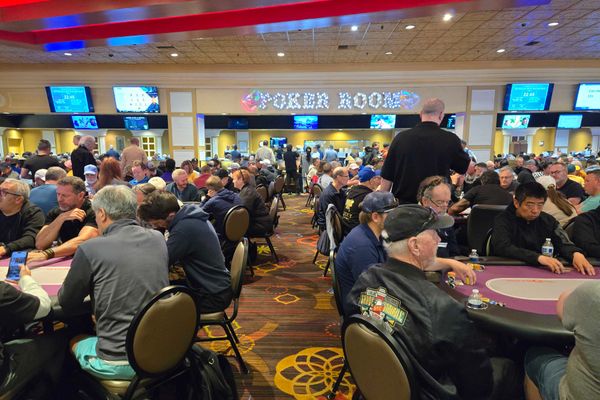
The Orleans poker room has cracked the code on WSOP counter-programming, turning their Sunday tournament into a weekly phenomenon that demands a completely different strategic approach than Strip venues. With their 2026 Summer Open launching May 22 and the Super Sunday Special returning at a $300+$100 structure, understanding how to exploit these unique tournament dynamics could be the difference between busting early and making a five-figure score.
What Happened
The Orleans Hotel & Casino, positioned just off the Strip on Tropicana, has transformed itself into a summer poker destination by capitalizing on what the WSOP can’t provide: affordable buy-ins, accessible parking, and a relaxed atmosphere away from the tournament circus. Their Sunday Special tournament evolved into the Super Sunday Special during the 2025 summer series, shattering attendance records week after week.
The numbers tell a compelling story. Starting May 25, 2025, the tournament attracted 538 entries and generated a $181,000 prize pool. By June 29, that figure had exploded to 904 players competing for $305,160 in prizes. The June 22 event drew 819 entries, while an earlier June tournament saw 815 players create a $274,000 pool that ended in a seven-way chop worth $17,000 per player at sunrise.
For 2026, The Orleans is doubling down on this formula. The Summer Open runs from May 22 through July 12, featuring seven Super Sunday Specials with $100,000 guarantees and a $600 Main Event carrying a $500,000 guarantee. The previous year’s Main Event at $600 attracted 2,726 entries for a prize pool exceeding $1.4 million, outperforming the 2025 edition’s $800 price point that drew 1,653 players for $1.1 million.
The Poker Strategy Breakdown
Playing a massive field tournament at The Orleans requires fundamentally different strategic adjustments than you’d employ at Bellagio or Aria events. The $300+$100 structure creates a unique dynamic where recreational players willing to spend $400 mix with grinders seeking value, producing fields that are simultaneously soft and unpredictable.
The optional $100 add-on that doubles your starting stack creates an immediate strategic fork in the road. Players who decline the add-on are either inexperienced or extremely short-rolled, making them prime targets for exploitation. Meanwhile, those who add-on signal they’re committed to playing deep-stack poker, which should influence your opening table reads significantly.
With fields regularly exceeding 800 players, survival becomes paramount in the early stages. The tournament structure rewards patience because you’re not just competing against your table—you’re outlasting hundreds of players who will bust themselves through overaggression or fundamental errors. This isn’t a 150-player Aria High Roller where you need to accumulate chips immediately; it’s a marathon where staying power matters more than early chip accumulation.
The locals-heavy player pool at The Orleans creates exploitable tendencies you won’t find in Strip venues. Many regulars play ABC poker, folding too much to aggression and overvaluing top pair hands. They’re comfortable but predictable, having settled into patterns that work in smaller weeknight tournaments but become liabilities in fields approaching 1,000 entries.
The tournament’s late-night finish—often concluding at sunrise—introduces a fatigue factor that savvy players can exploit. As the field thins and exhaustion sets in, decision-making quality deteriorates. Players who maintain focus and continue making optimal decisions gain an edge that compounds with each level. The seven-way chop mentioned in the 2025 results wasn’t random; by that stage, players were exhausted and risk-averse, creating chop situations that might not occur in afternoon tournaments.
Reading The Field & Table Dynamics
Understanding your opponents’ motivations is crucial at The Orleans. You’re facing three distinct player types: locals looking for weekly entertainment, WSOP tourists seeking a break from the Strip grind, and professional grinders hunting soft fields for steady profit.
Locals typically play tight-passive early, protecting their $400 investment while hoping to hit big hands. They’ll call too much preflop with speculative hands like suited connectors and small pairs, then play fit-or-fold on the flop. Exploit this by raising aggressively in position and c-betting frequently on dry boards where their speculative hands missed.
WSOP tourists arrive with varied skill levels but share common traits: they’re often tired from playing the main series, they’re in vacation mode, and they’re willing to gamble. These players provide the most variance to your session. They might make hero calls with weak holdings or execute sophisticated bluffs—you need to observe their patterns quickly to categorize them accurately.
Professional grinders are your toughest competition but also the most predictable. They understand ICM considerations, respect position, and make mathematically sound decisions. Against them, avoid marginal spots early and wait for situations where you have clear equity advantages.
Table dynamics shift dramatically as the tournament progresses. Early levels feature loose, passive play with minimal bluffing. The middle stages tighten considerably as the bubble approaches—this is prime time to accumulate chips through aggressive stealing. Late stages become increasingly about ICM pressure, especially as players eye those five-figure top prizes.
Pay attention to stack distributions at your table. In massive fields, the effective stack isn’t necessarily the chip leader—it’s the player with the stack size that can hurt you most. A 40-big-blind stack can apply maximum pressure to your 35-big-blind stack, even if someone else has 100 big blinds.
The physical environment at The Orleans also affects play. The comfortable setting and convenient food court mean players take fewer breaks and maintain energy longer than in cramped Strip venues. This sustained engagement keeps the action flowing but also means you can’t rely on opponents making fatigue-induced errors until very late in the tournament.
How To Apply This To Your Game
First, commit to the add-on before you sit down. Playing with half the starting stack of your opponents is a massive disadvantage that no amount of skill can fully overcome. The $100 investment is essential for competitive viability.
Adjust your opening range to be tighter than you’d play in smaller fields. With 800+ players, you don’t need to win pots in the first two hours—you need to not bust. Focus on premium holdings early and expand your range as the field thins and your table image solidifies.
Exploit the locals’ fit-or-fold tendencies by increasing your c-bet frequency on boards that miss drawing hands. When the flop comes K-7-2 rainbow, most locals with suited connectors or small pairs are done with the hand. A two-thirds pot c-bet takes it down with extremely high frequency.
Position becomes even more valuable in large fields because you’ll see more hands and encounter more marginal situations. Tighten your early position ranges significantly and widen your button and cutoff ranges to compensate. Stealing blinds from tight players adds up over a long tournament.
Plan your energy management strategy before the tournament starts. Bring snacks, stay hydrated, and consider caffeine timing if you expect to play into the early morning hours. Your decision-making quality at 4 AM determines whether you’re negotiating a chop or busting in 15th place.
Study ICM implications before playing. When the tournament reaches the final two tables, chip accumulation becomes less important than survival. Understanding when to fold strong hands and when to apply pressure with your stack size relative to payouts is crucial for maximizing your expected value.
Don’t be afraid to negotiate chops when you reach the final table, especially in the early morning hours. The difference between first place and a three-way chop might be smaller than you think when you factor in the additional hours of play required and the variance involved.
Key Takeaways
- The Orleans’ massive fields require tighter early-game ranges and patient chip accumulation compared to smaller Strip tournaments
- Always take the $100 add-on to maintain competitive stack depth against a field where 90%+ of players will also add-on
- Exploit locals’ fit-or-fold tendencies with aggressive c-betting on dry boards, especially in position
- Energy management and focus maintenance become crucial edges in tournaments that regularly extend past sunrise
- ICM considerations intensify in large-field tournaments where pay jumps create significant pressure points throughout the final stages
- The $300+$100 structure attracts a softer player pool than higher buy-in Strip events, making it ideal for bankroll building
Frequently Asked Questions
Is The Orleans Super Sunday Special softer than Strip tournament fields?
Generally yes. The locals-heavy player pool and affordable buy-in attract more recreational players than you’d find in Aria or Bellagio events. However, the massive fields also draw professional grinders who recognize the value, so you’ll still face competent opposition. The key difference is the percentage of weak players is higher, creating more exploitable situations throughout the tournament.
Should I adjust my strategy for the late-night finish time?
Absolutely. Tournaments that run until sunrise create a fatigue edge for players who prepare properly. Bring energy drinks or coffee, pack protein-rich snacks, and pace yourself. As exhaustion sets in for your opponents after midnight, you’ll notice more mistakes—calling too loose, folding too much to aggression, and making ICM errors. Maintaining sharp focus during these hours is one of the most underrated edges in poker.
How does the $100 add-on affect optimal strategy?
The add-on creates a two-tiered structure where players who take it have double the chips of those who don’t. This makes the add-on essentially mandatory for serious players. It also means your effective starting stack is what you have after the add-on, so plan your early strategy around deep-stack play rather than short-stack survival mode. Players who skip the add-on are typically weak and should be targeted aggressively.
Final Thoughts
The Orleans has identified a profitable niche in the Las Vegas poker ecosystem by offering what the WSOP cannot: accessibility, value, and a player-friendly environment that doesn’t sacrifice prize pool quality. Their record-breaking 2025 summer demonstrated that players are hungry for alternatives to the Strip grind, and the 2026 schedule suggests they’re committed to delivering even bigger fields and prize pools.
For players willing to make the short trip off-Strip, The Orleans Super Sunday Special represents one of the best value propositions in Las Vegas poker. The combination of soft fields, massive prize pools, and a comfortable playing environment creates an ideal scenario for both recreational players seeking entertainment and professionals building bankrolls. Understanding how to adjust your strategy for these unique dynamics—from the locals-heavy player pool to the marathon duration—separates those who bust early from those negotiating five-figure chops at sunrise.
As more venues announce their WSOP counter-programming schedules in the coming weeks, The Orleans has set the standard for what players expect: guaranteed prize pools that actually get crushed, structures that reward skill over luck, and an atmosphere that prioritizes player experience over casino flash. Whether you’re grinding the summer circuit or just looking for a quality tournament during your Vegas trip, the strategic adjustments outlined above will help you maximize your edge in what’s become one of the city’s premier weekly events.
Ready to Sharpen Your Poker Game?
Master your poker game with expert hand analysis