

Why You’re Stuck: Mental Barriers Killing Your Poker Win Rate
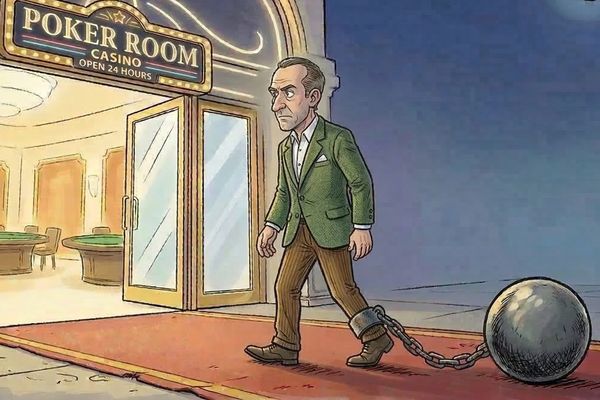
Most poker players blame variance when they’re stuck, but the real culprit is often invisible psychological patterns sabotaging their game. These mental barriers—what performance coaches call ‘execution blockers’—create a widening chasm between your technical knowledge and actual table results, costing you buy-ins every session.
What Happened
You’ve studied the charts, watched the training videos, and know the GTO ranges inside out. Yet somehow, when you’re deep in a session, you find yourself making plays that contradict everything you’ve learned. You fold when you should call, you check when you should bet, and you convince yourself it’s just bad luck or tough opponents.
The uncomfortable truth is that technical knowledge alone doesn’t translate to winning poker. Between understanding optimal strategy and executing it under pressure lies a minefield of psychological obstacles that most players never address. These aren’t random occurrences—they’re systematic patterns that reliably degrade your performance whenever conditions get challenging.
Performance psychology research in poker has identified distinct categories of barriers that separate consistent winners from perpetually struggling players. Understanding these execution blockers is the first step toward dismantling them and finally playing the poker you’re capable of.
The Poker Strategy Breakdown
To understand why you’re not playing your best poker, we need to examine the three distinct performance states every player cycles through during their poker career.
Your peak performance state is where you execute your technical knowledge smoothly despite external pressure. You’re reading opponents accurately, sizing bets appropriately, and making disciplined folds even when you’re curious about your opponent’s hand. This is the poker you’re capable of—the version of yourself that makes you think “I’ve got this game figured out.”
Your intermediate state is where cracks begin showing. You’re still functional, but execution blockers start influencing your decisions. You might skip a thin value bet because you’re unsure, or you might call down too light because you’re frustrated with being pushed around. The gap between your knowledge and execution becomes noticeable.
Your compromised state is where execution blockers completely dominate your play. Your focus evaporates, emotional reactions drive your decisions, and you’re essentially playing a different game than you studied. This is where the biggest leaks occur—not from lack of knowledge, but from complete psychological breakdown.
The key insight is that these aren’t three different skill levels—they’re three different execution states of the same player. Your goal isn’t to eliminate the lower states entirely (that’s impossible), but to spend more time in peak state and recognize when you’ve slipped into compromised state before it costs you your stack.
The Psychology Barrier: Mental Execution Blockers
The first category of execution blockers lives entirely in your psychology. These are the internal narratives and emotional patterns that hijack your decision-making process when it matters most.
Self-belief issues manifest when you second-guess your reads or fail to execute plays you know are profitable. You’ve calculated that a river bluff has the right price, but you check back because you’re not confident in your ability to get called by worse or fold out better. This isn’t a strategy problem—it’s a belief problem. You don’t trust your own analysis under pressure.
Drive inconsistency shows up when you only grind sessions when you’re “feeling it.” You wait for inspiration to strike rather than treating poker as a professional pursuit requiring consistent effort. This creates a feast-or-famine pattern where you never build momentum because your volume fluctuates wildly based on mood.
Emotional volatility is the classic execution blocker everyone recognizes but few properly address. When a bad beat triggers you, your entire strategic framework collapses. You’re no longer playing poker—you’re playing “get even” or “punish this lucky idiot.” The game becomes about emotions rather than expected value.
Limiting perspectives are the beliefs about poker and yourself that constrain your growth. If you believe “I’m just unlucky” or “these games are too tough,” you’ve created a mental ceiling that prevents you from improving. Your interpretation of events becomes more important than the events themselves.
Pressure mismanagement occurs when the natural stress of poker—the money at stake, the uncertainty, the competition—overwhelms your system. Your heart races, your thoughts scatter, and your body’s stress response actively interferes with the calm, analytical thinking poker requires.
The Lifestyle Barrier: Habit Execution Blockers
The second category involves the daily habits and routines that either support or undermine your poker performance. These are the unsexy fundamentals that most players ignore while chasing advanced strategy content.
Learning integration gaps occur when you consume poker content without properly processing it. You watch a training video, think “that makes sense,” and then never actually implement it at the tables. Your brain needs repeated, spaced exposure to new concepts before they become automatic. Passive consumption doesn’t create lasting change.
Rest and recovery deficits directly attack your cognitive function. When you’re sleep-deprived, your working memory suffers, your emotional regulation weakens, and your ability to calculate complex scenarios deteriorates. You’re essentially playing poker with a handicap you’ve imposed on yourself.
Start-of-day protocols matter more than most players realize. How you begin your day sets your baseline state for everything that follows. If you roll out of bed and immediately start grinding, you’re starting from a suboptimal baseline. Simple interventions like morning light exposure, hydration, and movement create a foundation for better performance.
Session preparation and decompression rituals help you transition into and out of poker mode. Without these boundaries, your sessions bleed into your personal life, creating chronic stress and preventing proper recovery. A warm-up routine primes your mind for optimal play; a cool-down routine helps you process the session and leave it behind.
The Planning Barrier: Strategic Execution Blockers
The third category involves high-level planning errors that prevent you from progressing as a player, even when your in-game execution is solid.
Ambiguous objectives kill motivation because your brain needs clear targets to stay engaged. “Get better at poker” is too vague to drive behavior. Your brain needs specific, measurable outcomes to work toward—otherwise, you’re just drifting without direction.
Reactive calendar management means you’re constantly responding to circumstances rather than proactively designing your poker schedule. You play when you feel like it, study when you’re motivated, and take breaks when you’re burned out. This reactive approach prevents you from building the consistency that separates professionals from hobbyists.
Reading The Field & Table Dynamics
Understanding execution blockers changes how you read not just your opponents, but yourself at the table. When you recognize that every player cycles through different performance states, you gain a massive edge.
Watch for signs that opponents have entered compromised states. Players who suddenly speed up their decision-making, start talking more, or make unusual bet sizes may be experiencing emotional volatility. These are prime opportunities to apply pressure, as their execution blockers are actively interfering with their strategy.
In tournament situations, execution blockers become even more pronounced as stack sizes change and ICM pressure increases. Players near the bubble often experience heightened pressure mismanagement, making them exploitable targets. Conversely, chip leaders sometimes suffer from overconfidence issues, a form of self-belief distortion that leads to loose play.
Table dynamics shift dramatically based on the collective psychological state of your opponents. A table where multiple players are in compromised states creates a high-variance environment where disciplined play has enormous edge. Recognize these situations and adjust your session length accordingly—these are the spots where you want maximum volume.
Your own state awareness is equally crucial. Learn to recognize the early warning signs that you’re slipping from peak to intermediate state. Maybe you start checking your phone more frequently, or you notice your thoughts drifting to results rather than process. These signals tell you it’s time to take a break, adjust your approach, or end the session before you enter compromised state.
How To Apply This To Your Game
Identifying execution blockers is worthless without a practical framework for addressing them. Here’s how to systematically remove these barriers from your game.
Build a performance audit system. After each session, spend five minutes identifying which execution blockers affected your play. Did you skip value bets due to self-belief issues? Did fatigue from poor sleep degrade your focus? Create a simple log tracking which blockers appear most frequently—this reveals your priority areas for improvement.
Develop state-dependent strategies. Create different game plans for different performance states. In peak state, you can execute your full strategic range including complex bluffs and thin value bets. In intermediate state, simplify your strategy—focus on fundamentals and avoid marginal spots. In compromised state, you should quit the session entirely. Having these predetermined rules removes decision-making when you’re least capable of good decisions.
Implement a pre-session protocol. Before you sit down to play, spend 10-15 minutes preparing your mind. Review your key strategic concepts, do breathing exercises to regulate your nervous system, and set specific process goals for the session. This ritual creates a consistent entry point into peak performance state.
Design a learning integration system. When you study poker content, immediately create implementation triggers. If you learn a new river betting concept, write down three specific situations where you’ll apply it in your next session. Then, after that session, review whether those situations occurred and how you handled them. This closes the gap between knowledge and execution.
Establish non-negotiable recovery habits. Treat sleep, nutrition, and exercise as seriously as you treat studying ranges. These aren’t optional lifestyle factors—they’re performance necessities. Set a consistent sleep schedule, prioritize protein and hydration, and incorporate daily movement. These basics create the foundation for everything else.
Create outcome clarity. Define specific, measurable goals for different timeframes. What do you want to accomplish this month? This quarter? This year? Break these down into process metrics you can control—hands played, hours studied, specific skills developed. Your brain needs this clarity to maintain motivation through inevitable downswings.
Key Takeaways
- Execution blockers create a systematic gap between your poker knowledge and actual table performance, costing you money in every session where they appear
- Mental execution blockers—including self-belief issues, emotional volatility, and pressure mismanagement—hijack your decision-making process under stress
- Lifestyle execution blockers like poor sleep, lack of learning integration, and missing session rituals undermine your cognitive performance before you even sit down
- Strategic execution blockers such as vague goals and reactive scheduling prevent long-term growth even when your in-game execution is solid
- Recognizing which performance state you’re in (peak, intermediate, or compromised) allows you to adjust your strategy or quit before major damage occurs
- Building systematic protocols for session preparation, learning integration, and recovery habits addresses execution blockers at their source rather than treating symptoms
Frequently Asked Questions
How do I know which execution blockers are affecting my game most?
Start with a performance audit after your next 10 sessions. Create a simple checklist of potential blockers—self-belief issues, emotional volatility, fatigue, lack of preparation, unclear goals—and note which ones appeared during each session. The patterns that emerge most frequently are your priority areas. Most players discover 2-3 dominant blockers that account for the majority of their execution gaps.
Can I eliminate execution blockers completely?
No, and that’s not the goal. Execution blockers are inherent to being human—you’ll always have sessions where fatigue, emotions, or pressure affect your play. The objective is to reduce their frequency and intensity while building awareness to recognize when they’re active. Elite players still experience these blockers; they just spend more time in peak state and quit faster when they slip into compromised state.
What’s the fastest way to improve my performance state?
Focus on the lifestyle execution blockers first, particularly sleep and pre-session preparation. These create the foundation for everything else. You can’t think your way out of sleep deprivation, and you can’t execute complex strategy when your nervous system is dysregulated. Fix your sleep schedule and implement a 10-minute pre-session warm-up routine—these two changes alone will elevate your baseline performance state significantly within two weeks.
Final Thoughts
The gap between the poker you know and the poker you play isn’t about studying more strategy content or learning more GTO ranges. It’s about identifying and systematically removing the execution blockers that prevent you from applying what you already know.
Most players spend 100% of their improvement time on technical strategy and 0% on the psychological and lifestyle factors that determine whether they can actually execute that strategy under pressure. This is backwards. Your technical knowledge is only valuable to the extent that you can reliably access it when money is on the line and emotions are running high.
Start with awareness. Track which blockers appear in your sessions. Build simple protocols to address them. And remember that this isn’t about perfection—it’s about spending more time in peak state and recognizing compromised state before it destroys your bankroll. The player who addresses their execution blockers will always outperform the player with superior technical knowledge but poor execution. Make the choice to be that player.
Ready to Sharpen Your Poker Game?
Master your poker game with expert hand analysis
