WSOP $50K PPC Carnage: Negreanu Busts as Champions Fall
Daniel Negreanu’s 2026 Poker Players Championship campaign ended in brutal fashion during Day 2’s early levels, adding the 2024 champion to a growing list of decorated pros hitting the rail before the $50,000 buy-in event even closed registration. The mixed-game massacre saw defending champion Michael Mizrachi, former winners Dan Cates and Elior Sion, and multiple 2026 bracelet winners all eliminated before the field could consolidate.
What Happened
The carnage unfolded swiftly on Monday morning as Negreanu found himself crippled during a Seven Card Stud Hi-Lo hand in Level 8. After briefly climbing above his 300,000 starting stack earlier in the day, the Canadian poker legend was left with fewer than 50,000 chips when the decisive hand began.
Kane Kalas delivered the final blow in a three-way pot that saw Dylan Weisman fold on fifth street. By the time sixth street arrived, Negreanu was nursing just over one big bet—roughly 16,000 chips—and holding nothing but queen-high with multiple backdoor draws. Despite the grim situation, Negreanu committed his final 1,000-denomination chip on sixth street with a gutshot straight draw to an eight-high.
The mathematics were unforgiving. Kalas had already completed an ace-high flush, locking up the high portion of the pot with a card to come. Negreanu needed to hit his low draw just to claim half the pot and survive. Seventh street brought a brick—pairing Negreanu instead of completing his low—and with no re-entry option available in the PPC, his summer’s most anticipated event concluded prematurely.
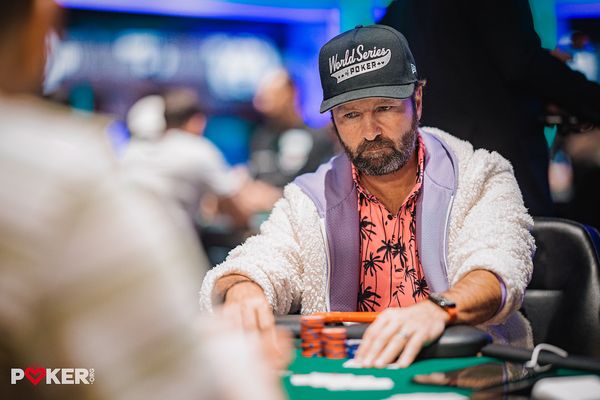
The elimination roster reads like a who’s who of poker royalty. Defending champion Michael Mizrachi exited on Day 1, joined by former PPC winners Cates and Sion. Day 2 added Negreanu, 2025 third-place finisher Esther ‘ETay’ Taylor, and 2026’s hottest players—double bracelet winners Naoya Kihara and Calvin Anderson—to the elimination column.
Meanwhile, Phil Hellmuth made his entrance at the Level 8 mark, returning to WSOP action after testing negative for COVID-19 on Sunday evening. The 17-time bracelet winner had already notched three Championship event cashes this summer across various Omaha and draw variants. Phil Ivey remained conspicuously absent from the registration sheets, though he’d been spotted in the summer’s biggest buy-in events with cashes in both the $10K Limit Hold’em Championship and the $250K Super High Roller.
The Poker Strategy Breakdown
Negreanu’s elimination hand illustrates the razor-thin margins that define mixed-game tournament poker, particularly in split-pot variants like Stud Hi-Lo. With queen-high and multiple backdoor draws on fifth street, continuing in a three-way pot represents a marginal decision even for a skilled player—but stack preservation becomes secondary when you’re already in survival mode.
The critical juncture arrived on sixth street. Holding a gutshot straight draw with approximately one big bet remaining, Negreanu faced a binary decision: commit the final chips or surrender the pot entirely. In Stud Hi-Lo, these decisions hinge on several factors: the visible cards (both in opponents’ hands and in the muck), the likelihood of scooping versus quartering, and the tournament context.
Against Kalas’s made flush, Negreanu was essentially drawing to half the pot at best. His gutshot gave him eight-high if completed—a strong low hand—but he needed to dodge Kalas’s own low draw while also hitting his card. The pot odds likely justified the call given the chips already committed, but the situation underscores how quickly chip stacks evaporate in mixed games when you’re on the wrong side of equity.
This hand also demonstrates why Stud Hi-Lo punishes short stacks so severely. Unlike Hold’em or PLO where you can move all-in preflop, Stud’s betting structure forces you to make multiple decisions across several streets. With antes and bring-ins constantly eroding your stack, you’re often pot-committed by fifth or sixth street even when holding marginal holdings. The format rewards deep-stacked play and punishes desperation—exactly the situation Negreanu found himself navigating.
Reading The Field & Table Dynamics
The early elimination of so many accomplished players reveals important truths about PPC dynamics. Unlike freezeout No-Limit Hold’em events where ICM considerations dominate late-stage play, the PPC’s mixed-game format and no-reentry structure create a uniquely volatile environment from the opening deal.
Consider the psychological pressure: these are players who’ve conquered the PPC before or come tantalizingly close. The $50,000 buy-in represents significant money even for wealthy professionals, and the prestige associated with this particular championship adds emotional weight to every decision. When Mizrachi, the defending champion, busts on Day 1, it sends a clear message—nobody is safe, and variance respects no résumés.
The absence of re-entry fundamentally alters risk assessment. In events with multiple bullets available, aggressive players can take calculated gambles early, knowing they can reload if variance swings against them. The PPC offers no such safety net. Every pot becomes consequential, every marginal spot demands careful consideration, and one bad runout can end your tournament regardless of skill edge.
This year’s field composition also matters. With multiple 2026 bracelet winners already eliminated, the remaining players understand they’re navigating a minefield of talent. The presence of specialists in each game variant means you can’t simply wait for your strongest games—you’ll face world-class opposition in every rotation. This flattens the skill advantage and amplifies the role of short-term card distribution.
The late entries of players like Hellmuth and the potential appearance of Ivey add another layer of intrigue. Fresh stacks entering late face players who’ve already survived several levels of mixed-game attrition. Some will be nursing short stacks and playing desperately; others will have accumulated chips and be playing confidently. Reading these dynamics and adjusting your game selection becomes crucial.
How To Apply This To Your Game
The lessons from this year’s PPC bloodbath extend far beyond high-stakes mixed games. Whether you’re playing $1/$2 cash or grinding mid-stakes tournaments, several principles apply universally.
First, respect stack-to-pot ratios in structured betting games. If you’re playing Limit Hold’em, Stud, or any variant with fixed bet sizes, understand how quickly your stack can disappear once you’re pot-committed. Unlike no-limit formats where you control your all-in timing, limit games force you through multiple betting rounds. Don’t enter pots with marginal hands when your stack can’t withstand the multi-street commitment.
Second, recognize when you’re drawing to half the pot in split-pot games. Many players make the mistake of chasing low draws in Omaha Hi-Lo or Stud Hi-Lo without considering whether they’re freerolling, flipping, or drawing to a quarter of the pot. Negreanu’s situation—drawing to a low against an opponent who’d already made a high hand but was also drawing to a better low—represents the nightmare scenario. You need the right price to continue, and sometimes folding is the only correct play even when you have outs.
Third, understand tournament structures before entering. The PPC’s no-reentry format demands a more conservative approach than events where you can fire multiple bullets. If you’re playing a freezeout, adjust your risk tolerance accordingly. Don’t make hero calls or ambitious bluffs in marginal spots during the early levels. Survival has value when you can’t reload.
Finally, study mixed games even if they’re not your primary focus. The strategic principles that govern Stud, Razz, and various Omaha variants will sharpen your overall poker thinking. These games reward hand reading, board texture analysis, and equity calculation in ways that pure Hold’em sometimes doesn’t. Many of the world’s best players—including several PPC champions—credit mixed games with elevating their overall poker understanding.
Key Takeaways
- Daniel Negreanu, the 2024 PPC champion, was eliminated on Day 2 in a Stud Hi-Lo hand against Kane Kalas, joining a list of early exits that includes defending champion Michael Mizrachi and former winners Dan Cates and Elior Sion
- Short stacks in structured betting games like Stud face severe disadvantages because antes and bring-ins constantly erode chips, and you can’t move all-in preflop to protect your equity
- Drawing to half the pot in split-pot variants requires careful pot odds calculation—Negreanu needed to hit his low draw while dodging Kalas’s low draw just to survive
- The PPC’s no-reentry format creates a uniquely high-pressure environment where single hands can end tournaments for even the world’s best players
- Multiple 2026 bracelet winners including Naoya Kihara and Calvin Anderson also busted early, demonstrating that recent success doesn’t guarantee deep runs in mixed-game championships
- Phil Hellmuth entered late after recovering from COVID-19, while Phil Ivey remained a potential late registration candidate despite appearing in other high-stakes events this summer
Frequently Asked Questions
Why is the Poker Players Championship considered the most prestigious WSOP event?
The PPC rotates through eight different poker variants (including Limit Hold’em, Omaha Hi-Lo, Razz, Stud, Stud Hi-Lo, No-Limit Hold’em, Pot-Limit Omaha, and 2-7 Triple Draw), testing players’ skills across the full spectrum of poker games rather than just one variant. The $50,000 buy-in ensures a field of elite professionals, and the no-reentry format means players get just one bullet. Many pros consider winning the PPC a greater accomplishment than winning the Main Event because it demonstrates mastery of multiple poker disciplines.
What strategic adjustments should you make when short-stacked in Stud variants?
Short-stacked Stud play requires extreme selectivity with starting hands because you can’t move all-in preflop like in Hold’em. Focus on hands with strong high potential or premium low draws in Hi-Lo variants. Avoid marginal situations where you’ll be pot-committed by fifth or sixth street without strong equity. Consider your visible cards relative to opponents’—if your key cards are live (not visible in other hands or the muck), your drawing hands gain value. Most importantly, recognize when you’re priced in to continue versus when folding preserves your remaining chips for better spots.
How does the no-reentry format change PPC strategy compared to other WSOP events?
No reentry fundamentally shifts risk assessment throughout the tournament. In multi-entry events, aggressive players can take calculated gambles early, knowing they can fire another bullet if variance goes against them. The PPC offers no such safety net, which encourages more conservative play during early levels. Players must balance survival with chip accumulation, avoiding marginal all-in situations that might be standard in reentry events. This format also increases the psychological pressure—one bad beat or cooler can end your tournament regardless of skill edge, making every significant pot decision carry additional weight.
Final Thoughts
The early carnage at the 2026 Poker Players Championship serves as a humbling reminder that even poker’s elite aren’t immune to the game’s inherent variance. When former champions and current bracelet winners hit the rail before registration closes, it underscores both the competitive depth of the field and the unforgiving nature of mixed-game poker. Negreanu’s elimination—grinding from a short stack only to run into a made flush while drawing thin—could happen to any player, regardless of skill level or experience.
What separates the PPC from standard WSOP events isn’t just the buy-in or the mixed-game format—it’s the absence of second chances. In an era where most major tournaments offer multiple reentries, the PPC stands as poker’s ultimate test of skill, endurance, and mental fortitude. You get one bullet, eight games, and three days to prove you’re the most complete poker player in the room. The players who navigate this gauntlet successfully earn their place among the game’s legends.
For the rest of us grinding smaller stakes, the lessons remain universal: respect your stack size, understand pot odds in split-pot games, and never underestimate the role of variance in tournament poker. Whether you’re playing a $50,000 championship or a $50 local tournament, the fundamentals of sound poker strategy don’t change—only the stakes and the spotlight do.
Ready to Sharpen Your Poker Game?
Master your poker game with expert hand analysis