WSOP Fantasy Draft Winners and Losers: Mid-Series Analysis
The 2026 World Series of Poker has reached its midpoint, and the fantasy poker landscape has been turned upside down by unlikely heroes and shocking disappointments. While some $1 bargain picks have delivered championship-level returns, several premium-priced pros are struggling to justify their hefty auction tags.
What Happened
As the WSOP crosses the halfway mark of its 100-event schedule, fantasy poker managers are experiencing the full spectrum of emotions. The summer has produced clear winners and losers in the fantasy draft game, with performance metrics revealing some stunning disparities between investment and return.
Naoya Kihara has emerged as the ultimate value play, turning a $1 draft price into 259 fantasy points through two bracelet victories. His wins in the $10K NL 2-7 Single Draw Championship and $10K Seven Card Stud Championship have each generated 126-point hauls, complemented by eight total cashes. This point-per-dollar ratio stands unmatched across the entire player pool.
Martin Zamani represents another bargain success story at just $3, accumulating 254 points to rank fourth overall in 25K Fantasy scoring. His 36th-place finish in the massive $1,500 Monster Stack field delivered a crucial 101-point field bonus, while deep runs in the $10K PLO 8 or Better Championship and $10K Super Turbo Bounty added another 127 points.
At the premium end, Alex Foxen has validated his $79 price tag by leading all fantasy scorers with 361 points. His bracelet win in the $10K Super Turbo Bounty, three additional final tables, and a semi-final appearance in the $25K Heads-Up Championship have propelled him to the top of both the fantasy standings and the Player of the Year race, with an 89-point cushion over second-place Nick Schulman.
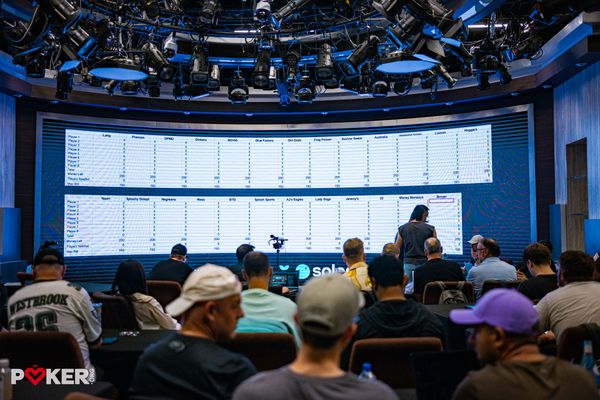
The disappointment column tells an equally dramatic story. Nacho Barbero carries the dubious distinction of being the highest-priced zero, failing to cash a single event despite his $43 auction price. Brian Rast, despite six cashes, has managed only 19 points against his $97 investment—the fifth-highest price paid. Portuguese star Joao Vieira sits as the lowest-scoring $100+ pick with just 21 points, his best finish being 18th in a $5,000 PLO event.
The Poker Strategy Breakdown
The fantasy draft results illuminate crucial strategic considerations that extend beyond simple tournament selection. Understanding why certain players outperform their price tags while others underdeliver reveals important insights about tournament poker in the modern era.
Kihara’s success in specialized formats—NL 2-7 Single Draw and Seven Card Stud—demonstrates the value of niche expertise. These events typically feature smaller, more skilled fields where players with deep format knowledge gain significant edges. The 126-point scores from these victories highlight how targeting less popular variants can generate outsized returns compared to competing in massive no-limit hold’em fields where variance runs higher and edges compress.
Zamani’s approach showcases the importance of field bonus optimization combined with high-roller consistency. His Monster Stack result exemplifies the fantasy value of large-field events where even modest percentage finishes generate substantial points. Pairing this with legitimate threats in $10K championships creates a diversified portfolio that balances volume plays with skill-edge exploitation.
Foxen’s dominance reflects the evolution of the modern tournament professional. His success across multiple formats—turbo structures, heads-up play, and standard deep-stack events—demonstrates the adaptability required at poker’s highest levels. The ability to adjust strategy across varying stack depths, payout structures, and opponent pools separates elite performers from specialists who excel in narrow contexts.
The underperformers reveal different strategic vulnerabilities. Rast’s six cashes without deep runs suggest possible issues with late-stage tournament execution or running into unfavorable variance at critical junctures. Vieira’s inability to reach final table stages in his four cashes points to potential difficulties navigating the transition from middle stages to the final table bubble—a crucial skill gap that costs players significant expected value.
Barbero’s complete absence from the payout window represents the most concerning pattern. For a player commanding a $43 price tag, failing to min-cash even once suggests either severe run-bad, poor game selection, or fundamental strategic misalignment with current WSOP field dynamics. This level of underperformance typically indicates a player either entering events outside their optimal format or facing fields where their perceived edge has evaporated.
Reading The Field & Table Dynamics
The mid-series fantasy standings reveal critical insights about field evolution and player adaptation throughout the summer grind. The WSOP’s marathon schedule creates unique dynamics that separate players who maintain peak performance across six weeks from those who fade as the series progresses.
Value picks like Kihara and Zamani often succeed by avoiding the most hyped events where recreational player overlay is lowest. Instead, they target tournaments where field composition favors skilled players willing to compete in less glamorous formats. The $10K Stud Championship, for instance, attracts a much different player pool than the $10K Main Event, with fewer casual entries and more grizzled mixed-game veterans.
Foxen’s sustained excellence across multiple weeks demonstrates superior stamina management and mental game discipline. The WSOP grind tests not just poker skill but physical endurance, sleep management, and the ability to maintain focus across hundreds of tournament hours. Players who pace themselves strategically—balancing event selection with recovery time—consistently outperform those who adopt a play-everything approach and burn out mid-series.
The struggling high-price players may be experiencing the pressure of expectation. When fantasy owners, media, and peers anticipate deep runs, the psychological burden can influence decision-making at critical moments. ICM pressure intensifies when players feel obligated to justify their reputations, potentially leading to overly conservative play near pay jumps or desperate moves when short-stacked.
Table dynamics shift dramatically as the series progresses. Early WSOP events feature recreational players with fresh bankrolls and aggressive tendencies. Mid-series tournaments see more professional-heavy fields as casual players bust out or return home. This field composition change requires strategic adjustment—tactics that crush soft early fields may prove unprofitable against the tougher lineups that emerge in late June and July.
How To Apply This To Your Game
The fantasy performance data offers actionable lessons for players at all levels, whether competing in major series or local tournament circuits.
First, develop specialized format expertise rather than being merely competent across all variants. Kihara’s success in draw and stud formats demonstrates how deep knowledge in less popular games creates exploitable edges. Invest study time in formats where opponent pools are weaker and educational resources are scarcer. This creates information asymmetry that translates directly to profitability.
Second, implement strategic event selection based on field size optimization. Understand when to target large-field tournaments for maximum variance and when to focus on smaller championships where skill edges are more likely to materialize. The Monster Stack model—accepting higher variance in exchange for massive field bonuses—works when balanced with skill-edge events where you can more reliably reach late stages.
Third, prioritize endurance and session management during tournament series. The players maintaining strong performance through week three and beyond are those treating the WSOP as a marathon, not a sprint. Schedule rest days, maintain consistent sleep patterns, and avoid the temptation to play every event. Quality over quantity consistently produces better results across extended series.
Fourth, recognize when your perceived edge in certain formats may have eroded. The game evolves rapidly, and strategies that worked in previous years may no longer generate positive expectation. If you’re consistently failing to cash or reach late stages in specific tournament types, conduct honest self-assessment about whether those events still represent profitable opportunities.
Fifth, manage psychological pressure by focusing on process over results. Players who obsess over justifying price tags or meeting external expectations often make suboptimal decisions. Instead, trust your preparation, execute your strategy, and accept that variance will create both hot and cold streaks regardless of skill level.
Key Takeaways
- Specialized format expertise in less popular variants like draw and stud poker can generate exceptional value, as demonstrated by Kihara’s 259 point-per-dollar return on a $1 investment
- Balancing large-field variance plays with skill-edge events in smaller championships creates optimal tournament portfolios, exemplified by Zamani’s combination of Monster Stack and $10K championship results
- Sustained excellence across a six-week series requires superior stamina management and strategic event selection rather than playing maximum volume
- Even elite players with strong track records can experience extended cold streaks, with high-priced pros like Rast and Vieira struggling to deliver expected returns
- Modern tournament success demands adaptability across multiple formats and structures rather than narrow specialization in a single game type
- Field composition evolves throughout a major series, requiring strategic adjustment as recreational players are eliminated and professional density increases
Frequently Asked Questions
How do fantasy poker scoring systems work for WSOP events?
Fantasy poker scoring typically awards points based on finish position, with bonuses for final tables, bracelet wins, and large field events. Players are drafted at auction prices reflecting their perceived value, and the goal is maximizing points per dollar invested. Field size bonuses reward deep runs in massive tournaments, while championship victories in any event generate the highest point totals regardless of field size.
Why do some expensive players underperform in fantasy drafts?
High-priced players can underperform due to variance, poor event selection, evolving field dynamics that reduce their edge, or psychological pressure to justify their reputation. The WSOP’s marathon schedule also tests endurance and mental game, areas where some elite players struggle. Additionally, auction prices sometimes reflect past accomplishments rather than current form, creating overvalued assets.
What makes a good value pick in WSOP fantasy drafts?
Successful value picks typically possess specialized skills in less popular formats, demonstrate consistent cashing ability across multiple events, or have recently improved their game without corresponding price adjustments. Players who balance volume play in large fields with selective entries in high-skill events tend to outperform their price tags. Geographic factors also matter—international players with lower name recognition in US markets often provide value despite strong credentials.
Final Thoughts
The mid-series fantasy standings provide a fascinating window into tournament poker’s current landscape. The dramatic spread between value picks and premium disappointments reinforces that reputation and past results don’t guarantee future performance, especially across the grueling WSOP schedule.
For serious players, the lessons extend well beyond fantasy implications. The success of format specialists like Kihara suggests that depth of knowledge in specific variants may be more valuable than broad competence across all games. Meanwhile, Foxen’s dominance across multiple tournament types demonstrates that the highest level of success still requires versatility and adaptability.
As the second half of the series unfolds, struggling players still have opportunities for redemption. The WSOP’s structure means a single deep run in a major championship can transform a disappointing summer into a successful one. For fantasy owners and players alike, the key is maintaining process discipline, managing expectations, and recognizing that variance operates on timescales longer than individual series.
Ready to Sharpen Your Poker Game?
Master your poker game with expert hand analysis