WSOP Main Event Returns to ESPN: What It Means for Players
The World Series of Poker Main Event is heading back to ESPN in a landmark multi-year broadcasting agreement that will deliver over 100 hours of coverage annually. The deal marks a strategic shift for poker’s most prestigious tournament, featuring live final table action delayed by three weeks and production from the team behind Netflix’s biggest sports documentaries.
What Happened
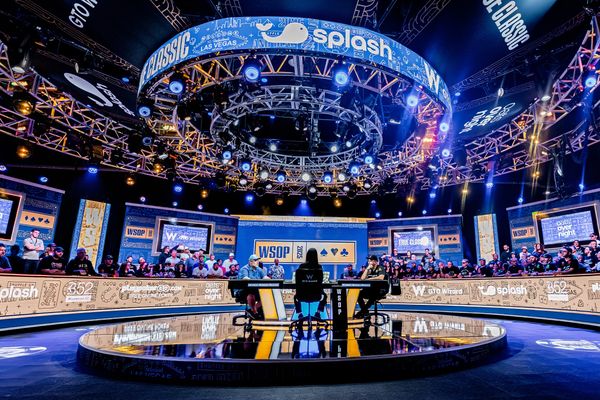
ESPN has secured exclusive rights to broadcast the WSOP Main Event beginning with the 2026 tournament, returning poker’s championship event to the network that helped launch the poker boom decades ago. The comprehensive coverage package includes at least six hours of programming for each tournament day, starting from Day 1A on July 2nd and continuing through July 13th when the final table is established.
In a significant departure from recent formats, the final table will be delayed by 20 days, scheduled to play out live from August 3-5 with broadcasts beginning at 9pm Eastern Time. During the interim period, ESPN plans to air edited highlight packages showcasing the tournament’s most compelling moments, building momentum toward the championship finale.
The production will be handled by Omaha Productions, the company responsible for innovative sports programming like Monday Night Football with Peyton and Eli Manning, NBA Unplugged with Kevin Hart, and acclaimed Netflix docuseries including Quarterback, Starting 5, and Unreal. This partnership signals a fresh approach to poker broadcasting that emphasizes storytelling and character development alongside traditional hand coverage.
The announcement comes following NSUS Group Inc’s $500 million acquisition of the WSOP brand in 2024. NSUS, which operates GGPoker, the world’s largest online poker platform, has clearly prioritized mainstream media exposure as part of its growth strategy. WSOP CEO Ty Stewart emphasized the historical significance, noting that ESPN has been home to the series’ most memorable moments since 1987.
While presenter and commentary team details remain unconfirmed, the scale of the commitment—approximately 100 hours of original programming annually—represents one of the most substantial poker broadcasting deals in recent history.
The Poker Strategy Breakdown
The 20-day delay between setting the final table and playing it out creates a unique strategic landscape that fundamentally alters preparation and execution. Unlike traditional final tables where players transition directly from Day 7 or Day 8 into the finale, this extended break transforms the Main Event into a two-phase strategic challenge.
During the three-week intermission, finalists will have unprecedented opportunity to study opponents, analyze playing tendencies from broadcast footage, and work with coaches to develop counter-strategies. This shifts the final table dynamic from pure in-tournament reads to a hybrid model combining live observation with detailed video analysis. Players who excel at studying hand histories and identifying patterns will gain significant advantages over those who rely primarily on table feel.
The delay also impacts stack management strategy leading into the final table. In traditional formats, players might take calculated risks on the final table bubble to accumulate chips, knowing they’ll immediately leverage that stack. With a 20-day break, the psychological weight of entering as short stack versus chip leader intensifies—you’ll have three weeks to contemplate your position rather than immediately playing through it.
Smart players will adjust their late-stage strategy accordingly, potentially playing more conservatively to secure a workable final table stack rather than gambling for chip leadership. The ability to study and prepare during the break somewhat equalizes stack disparities, making survival more valuable than domination in the hands immediately preceding the final table.
The extensive television coverage beginning from Day 1 also means your entire tournament will be documented and potentially broadcast. This creates strategic implications for image management—aggressive moves on Day 2 could influence how opponents perceive and play against you at the final table weeks later. Players must balance optimal strategy with the awareness that every significant hand might be reviewed and analyzed by future opponents.
Reading The Field & Table Dynamics
The delayed final table format fundamentally changes ICM considerations and player dynamics. Traditional final table ICM calculations assume players enter with limited information beyond what they’ve observed during the tournament. The three-week break demolishes this information asymmetry, creating a scenario where preparation quality becomes as crucial as poker skill.
Players with strong analytical teams and coaching support gain structural advantages. A recreational player who navigated brilliantly through seven days of play may find themselves outmatched at the final table by professionals who’ve spent three weeks dissecting every decision, identifying leaks, and developing exploitation strategies. This widens the skill gap at the final table compared to immediate-play formats.
The psychological dynamics also shift dramatically. In standard tournaments, players carry momentum and emotional state directly from the bubble into the finale. The delay disrupts this continuity—a player who made the final table on an incredible heater must rediscover that confidence weeks later, while someone who backed in short-stacked has time to reset mentally and approach the finale fresh.
Table dynamics will likely play out more cautiously in the early levels as players implement prepared strategies rather than relying on pure feel. Expect more disciplined play initially, with adjustments coming as players gauge whether opponents are executing game plans or deviating from studied approaches. The player who best balances preparation with adaptive play will hold significant edges.
The broadcast element adds another layer to table dynamics. Players are performing for millions of viewers, which can influence decision-making—some may make more spectacular plays for entertainment value or personal branding, while others might play more conservatively to avoid televised mistakes. Reading which players are affected by the cameras versus those who remain focused purely on optimal strategy provides valuable information.
How To Apply This To Your Game
While most players won’t face 20-day final table delays, the strategic principles apply broadly to tournament poker. The most immediate lesson is the value of post-session analysis. Just as Main Event finalists will study opponents during the break, you should review your tournament sessions, particularly deep runs, to identify patterns in your play and your opponents’ tendencies.
Develop a systematic approach to hand review. Record notes on opponents during play, then dedicate time afterward to analyzing key decisions and considering alternative lines. This mirrors the preparation advantage that better-resourced final table players will leverage. Even without video footage, hand history review and note-taking create similar strategic benefits.
Adjust your late-stage tournament strategy to account for information asymmetry. In multi-day events where you might face the same opponents across days, recognize that aggressive or unusual plays will be remembered and potentially studied. Balance the immediate value of a creative play against the future cost of showing that capability to opponents you’ll face again.
Practice maintaining focus and performance quality after breaks. The 20-day delay represents an extreme version of what happens in any multi-day tournament. Train yourself to return from breaks—whether 20 minutes or 12 hours—with consistent mental approach and execution. Players who handle disrupted rhythm better than opponents gain edges in all tournament formats.
Invest in your analytical skills and tools. The delayed final table rewards players who can effectively study and implement strategic adjustments. Whether through solver work, hand history review, or working with coaches, developing your analytical capabilities pays dividends whenever you have preparation time before facing opponents again.
Finally, manage your image strategically across tournament days. In events with extensive coverage or where you’re likely to face the same player pool repeatedly, consider how your plays will be perceived and remembered. Sometimes the optimal long-term strategy involves playing more straightforwardly in certain spots to avoid revealing capabilities you want to deploy in higher-leverage situations.
Key Takeaways
- ESPN’s multi-year deal brings the WSOP Main Event back to the network that helped create the poker boom, with 100+ hours of annual coverage starting in 2026
- The final table will be delayed 20 days (August 3-5), creating unprecedented preparation time that shifts advantages toward analytically strong players with quality coaching support
- Omaha Productions’ involvement signals a storytelling-focused approach emphasizing character development and narrative alongside traditional hand coverage
- Stack management strategy leading into the final table should adjust to account for the extended break, potentially favoring survival over chip accumulation in bubble situations
- The format creates a two-phase strategic challenge combining in-tournament play with detailed video analysis and preparation during the break period
- Players should develop systematic post-session analysis habits and invest in analytical skills to capitalize on preparation opportunities in their own tournament play
Frequently Asked Questions
Why is the WSOP Main Event final table being delayed by 20 days?
The delay allows ESPN to build anticipation through highlight packages during the interim period and schedule the live final table broadcast during a premium time slot. This format maximizes viewership and creates a championship event atmosphere similar to other major sporting finals. It also provides compelling storylines as viewers follow finalists during the break period.
How does the delayed final table change strategy compared to traditional formats?
The 20-day break fundamentally alters preparation dynamics, giving players time to study opponents through broadcast footage, work with coaches, and develop specific counter-strategies. This shifts advantages toward analytically strong players and reduces the value of pure in-tournament reads. It also impacts late-stage decisions, as players must consider their final table position knowing they’ll have weeks to contemplate it rather than playing through immediately.
Will I need a subscription to watch the WSOP Main Event on ESPN?
Specific subscription requirements haven’t been announced yet. Traditional ESPN broadcasts are available through cable packages and streaming services that include ESPN networks. The final table coverage beginning at 9pm ET will likely air on main ESPN channels, though some preliminary coverage might appear on ESPN2 or ESPN+. Details on streaming options and package requirements will be released closer to the tournament dates.
Final Thoughts
ESPN’s return to WSOP Main Event broadcasting represents more than nostalgia—it’s a strategic repositioning of poker’s premier event for a new era of sports media consumption. The partnership with Omaha Productions suggests we’ll see innovative storytelling approaches that emphasize the human drama alongside the cards, potentially attracting audiences who appreciate sports narratives beyond hardcore poker fans.
For players, the delayed final table format creates fascinating strategic challenges that reward preparation and analysis. Whether you’re dreaming of making a WSOP Main Event final table yourself or simply looking to improve your tournament game, the lessons are clear: invest in your analytical capabilities, develop systematic review processes, and recognize that poker success increasingly requires excellence both at and away from the tables.
The deal also signals confidence in poker’s mainstream appeal from both ESPN and WSOP’s new ownership. In an era where live sports remain among the most valuable programming properties, securing 100+ hours of annual coverage demonstrates belief in poker’s ability to deliver compelling television and attract substantial audiences. For the poker ecosystem, this visibility could spark renewed recreational interest similar to previous broadcast eras, creating softer fields and more opportunities for skilled players across all stakes.
Ready to Sharpen Your Poker Game?
Master your poker game with expert hand analysis