90-Year-Old WSOP Legend: What Perry Green Teaches Us
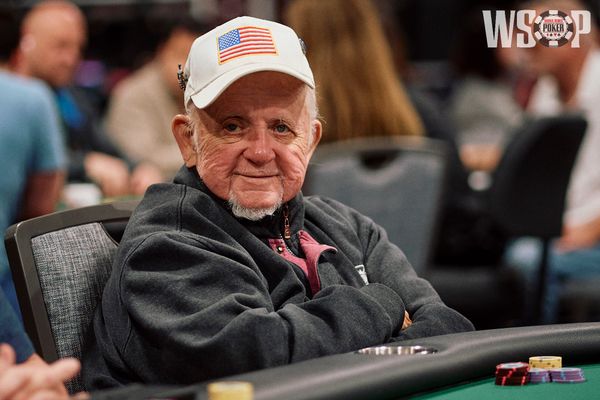
Perry Green is 90 years old and still grinding World Series of Poker events. The three-time bracelet winner who battled Stu Ungar heads-up for the 1981 Main Event championship continues to compete five decades after his first WSOP cash, offering modern players a masterclass in longevity, adaptability, and what truly matters at the poker table.
What Happened
When Phil Hellmuth stops to request a photograph with you at the Rio, you’ve achieved something special in poker. Perry Green commands that level of respect. His tournament resume spans exactly 50 years, beginning with a bracelet victory in 1976 and extending through a recent Day 2 appearance in the $1,500 Omaha Hi-Lo 8 or Better event.
Green’s poker journey started far from the bright lights of Las Vegas. Working primarily as a fur trader in Alaska, he discovered the game during high school and sharpened his skills playing mixed games while serving in the military. During basic training, he transformed $14 into $1,000—money that eventually helped fund his wedding to his wife of 70 years.
His tournament achievements tell a remarkable story. After winning his first bracelet in Ace to Five Draw in 1976, Green captured a second title in the same discipline just one year later. He completed his bracelet trio in 1979 by taking down a $1,500 No-Limit Hold’em event during the WSOP’s 10th anniversary celebration.
But Green’s most famous result came in 1981 when he finished runner-up to Stu Ungar in the Main Event. According to Green, he had the legendary Ungar all-in three times during their heads-up battle. In one critical hand, Green held jack-ten and flopped a straight and flush draw against Ungar’s pocket aces. The cards didn’t cooperate, Ungar survived, and the momentum shifted permanently.
Green returned to the Main Event final table a decade later in 1991, ultimately finishing fifth when Brad Daugherty claimed the championship. Throughout his career, he shared felt with icons like Doyle Brunson and Amarillo Slim, building friendships that extended well beyond poker rooms into fishing trips and life adventures.
The Poker Strategy Breakdown
Green’s approach to poker reveals fundamental principles that remain relevant regardless of era. He identified himself primarily as a lowball player—a discipline that demands exceptional hand-reading abilities and precise mathematical understanding. The transition from draw games to hold’em required significant adaptation, which Green accomplished by studying Doyle Brunson’s groundbreaking Super System.
This willingness to learn represents a critical strategic lesson. Green didn’t cling to his lowball expertise when the poker landscape shifted toward hold’em. Instead, he absorbed new information, applied it at the tables, and achieved success in multiple formats. His three bracelets came in two different games, demonstrating genuine versatility rather than one-dimensional expertise.
The hand Green describes against Ungar illustrates both the excitement and danger of drawing hands. Holding jack-ten with a straight and flush draw creates tremendous equity against many holdings. However, against pocket aces, even with 15 outs twice, you’re still facing approximately 45% equity at best. Green’s decision to get all-in wasn’t necessarily incorrect—the pot odds and tournament dynamics likely justified the commitment—but variance didn’t favor him when it mattered most.
Green’s background in cash games before transitioning to tournaments provided him with crucial skills. Cash game players typically develop superior hand-reading abilities because they face the same opponents repeatedly and can’t rely on ICM pressure or short-stack shoves to generate profit. They must outplay opponents across all streets, understanding range construction and bet sizing with precision.
His success in Omaha Hi-Lo at age 90 demonstrates that certain poker skills don’t deteriorate with age. Split-pot games reward patience, discipline, and mathematical accuracy—qualities that experience enhances rather than diminishes. While physical stamina may decline, the ability to identify profitable situations and avoid marginal spots actually improves over decades of play.
Reading The Field & Table Dynamics
Green’s era of poker featured significantly different table dynamics than today’s game. The player pool in the 1970s and 1980s was smaller, less theoretically sophisticated, and more personality-driven. Success required reading individuals rather than balancing ranges or calculating GTO frequencies.
Playing against legends like Brunson and facing Ungar heads-up meant confronting opponents with extraordinary natural talent but less access to the training resources modern players take for granted. Green couldn’t study solver outputs or review database statistics. He relied on observation, pattern recognition, and psychological warfare.
The tournament structures of Green’s prime differed substantially from contemporary events. Slower blind increases and deeper starting stacks meant that skill edges could manifest more clearly over time. Players couldn’t simply memorize push-fold charts for 15-big-blind scenarios—they needed comprehensive poker understanding across all stack depths.
Green’s ability to reach two Main Event final tables demonstrates exceptional tournament stamina and adaptability. Making deep runs in the WSOP Main Event requires navigating multiple days, adjusting to changing stack sizes, and handling the psychological pressure of life-changing money on the line. His fifth-place finish in 1991 came a full decade after his runner-up result, proving he could maintain competitive form across different poker eras.
The social dynamics Green describes—arranging fishing trips, building genuine friendships, and maintaining relationships across 50 years—highlight an often-overlooked aspect of poker success. Players who cultivate positive reputations and authentic connections often receive more action in cash games and encounter less targeted aggression in tournaments. Being well-liked isn’t just pleasant; it can be profitable.
How To Apply This To Your Game
Green’s career offers several actionable lessons for players at every level. First, embrace game diversity. While specialization has value, understanding multiple poker variants makes you a more complete player. The hand-reading skills developed in Omaha Hi-Lo translate to hold’em. The aggression required in no-limit helps in pot-limit formats. Study games outside your primary focus to build transferable skills.
Second, prioritize sustainable poker over short-term results. Green maintained a 50-year career because poker remained a passion rather than a desperate income source. He built businesses, raised a family, and served his community while treating poker as an enriching activity. This approach prevented burnout and allowed him to enjoy the game across five decades.
Third, invest in continuous learning regardless of your experience level. Green could have rested on his lowball expertise, but instead he studied Super System and adapted to hold’em. Today’s players must similarly embrace new concepts, whether that means learning GTO principles, studying ICM implications, or understanding modern three-betting strategies.
Fourth, manage your physical and mental resources wisely. Green acknowledges that grinding full WSOP days at 90 presents challenges, yet he still competes effectively in his chosen events. Know your limitations, select spots where you maintain an edge, and don’t force yourself into situations where fatigue compromises your decision-making.
Fifth, remember that poker success extends beyond chips and trophies. Green’s proudest accomplishments include his 70-year marriage, his family, and his contributions to Alaska. Poker provided memorable experiences and friendships, but it complemented his life rather than consuming it. Maintain perspective, build relationships, and create meaning beyond the felt.
Key Takeaways
- Adaptability trumps specialization—Green transitioned from lowball to hold’em by studying and applying new concepts, ultimately winning bracelets in multiple formats
- Cash game experience builds superior hand-reading skills that translate powerfully to tournament success, as evidenced by Green’s two Main Event final tables
- Sustainable poker careers require balance—treating the game as a passion rather than desperation prevents burnout and enables decades of enjoyment
- Physical limitations can be managed through smart game selection—Green still competes effectively at 90 by choosing events that reward experience over stamina
- The social dimension of poker matters—building genuine friendships and maintaining a positive reputation creates value beyond immediate chip accumulation
- Continuous learning remains essential regardless of accomplishments—even with three bracelets, Green studied to improve and adapt to evolving poker landscapes
Frequently Asked Questions
How did Perry Green transition from cash games to tournament success?
Green built his foundation playing cash games at Binion’s Horseshoe during Vegas vacations, developing strong hand-reading and fundamental skills. He rarely played tournaments initially but applied his cash game expertise when entering WSOP events. His deep understanding of poker fundamentals, combined with study of resources like Doyle Brunson’s Super System, allowed him to adapt successfully to tournament formats and capture three bracelets across different disciplines.
What made the 1981 Main Event heads-up match against Stu Ungar significant?
Green’s heads-up battle with Ungar represents a clash between different playing styles and one of poker’s most talented players. Green had Ungar all-in three times during their match, demonstrating he could create pressure even against a legendary opponent. The pivotal hand where Green flopped a straight and flush draw with jack-ten against Ungar’s pocket aces showcased the variance inherent in poker—Green had significant equity but couldn’t convert, allowing Ungar to seize momentum and ultimately win the championship.
How can older players remain competitive in modern poker tournaments?
Green’s continued success at 90 demonstrates that certain poker skills actually improve with age. Games like Omaha Hi-Lo reward patience, mathematical precision, and disciplined hand selection—areas where experience provides advantages. Older players should focus on game selection, choosing events that minimize physical demands while maximizing their strategic edges. Managing energy by playing fewer but better-selected events, maintaining physical health, and leveraging decades of hand-reading experience allows older players to compete effectively against younger opponents who may have theoretical knowledge but less practical wisdom.
Final Thoughts
Perry Green’s 50-year WSOP journey transcends statistics and trophies. His story reminds us that poker’s greatest value often lies in the experiences created, friendships forged, and lessons learned rather than the chips accumulated. While his three bracelets and two Main Event final tables establish his competitive credentials, his perspective on poker as one enriching element of a full life offers wisdom that every player should consider.
The game has evolved dramatically since Green turned $14 into $1,000 during basic training. Solvers, database analysis, and GTO strategies have transformed poker’s technical landscape. Yet Green’s core advice remains perfectly relevant: play for enjoyment, maintain balance, and remember that life’s true richness comes from family, relationships, and experiences beyond the felt. Modern players obsessed with win rates and ROI might benefit from adopting Green’s broader perspective—poker success means little if it comes at the expense of everything else that matters.
Whether you’re grinding microstakes online or competing in WSOP events, Green’s career offers a roadmap for sustainable poker longevity. Study continuously, adapt to changing conditions, select your spots wisely, and never forget why you started playing in the first place. The cards and chips are just tools for creating memorable moments and testing yourself against worthy opponents. Approach the game with Green’s combination of competitive drive and healthy perspective, and you’ll still be enjoying poker decades from now.
Ready to Sharpen Your Poker Game?
Master your poker game with expert hand analysis