Maurice Hawkins Wins Ring #26: What His Dominance Teaches Us
Maurice Hawkins just added another WSOP Circuit ring to his unprecedented collection, claiming his 26th at Choctaw’s Mini Main Event. The victory extends a record that may never be broken, and Hawkins says he’s finally cracked the code on consistent tournament success.
What Happened
The WSOP Circuit stop at Choctaw delivered another chapter in Maurice Hawkins’ remarkable story. Taking down the Mini Main Event for $76,380, Hawkins pushed his all-time Circuit ring count to 26—six rings clear of his nearest competitors, Ari Engel and Daniel Lowery, who each have 20.
The path to victory wasn’t straightforward. Hawkins navigated a tough final table that included fellow ring-chaser Ari Engel and Will Givens. After Engel departed in fourth and Givens in third, Hawkins faced Brian Green heads-up. Green mounted serious pressure, getting Hawkins down to just six big blinds at one point, but couldn’t close the deal. Green settled for second place and $50,900.
This win comes during a turbulent year for Hawkins. He filed for bankruptcy in spring 2024, shortly after securing ring #24. Ring #25 followed at Cherokee, then came a near-miss at the WSOP main series—a runner-up finish in the $600 NLH/PLO event that would have been his first bracelet.
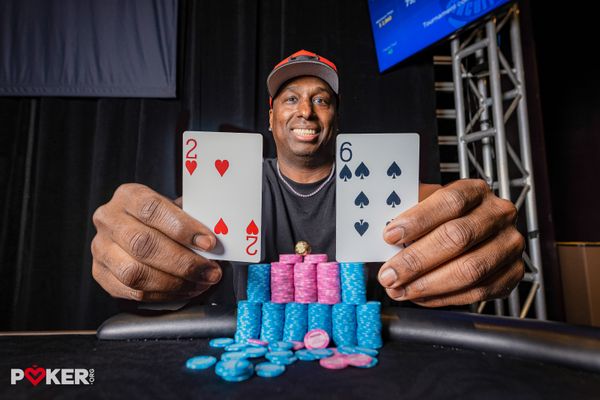
Speaking to reporters after his win, Hawkins was candid about his approach. He’s identified specific patterns in Circuit events that play to his strengths, particularly the player pools outside of Las Vegas. The confidence in his post-tournament interview wasn’t bravado—it was the assessment of someone who’s played more Circuit final tables than almost anyone alive.
The Poker Strategy Breakdown
Hawkins’ comments after the win reveal something crucial about tournament poker strategy: understanding your edge isn’t just about cards and math. It’s about recognizing where your experience creates the biggest advantages.
“After a while, it’s the same poker tournament just over and over again,” Hawkins explained. This perspective shift is critical. While recreational players see each tournament as a unique challenge, elite grinders like Hawkins recognize the patterns. Final table situations repeat. Player types recur. The same ICM spots appear again and again.
His distinction between playing stronger versus weaker fields is particularly instructive. Against better players, chip accumulation happens more slowly because they’re not making the fundamental errors that create easy spots. Weaker fields offer more frequent opportunities to exploit mistakes. This isn’t about being disrespectful—it’s about honest assessment of where your edge is maximized.
The comeback from six big blinds in heads-up play demonstrates another key skill: short-stack mastery. When you’re that shallow, every decision becomes critical. Fold equity calculations, push-fold ranges, and reading your opponent’s tendencies all converge. Hawkins has been in this spot dozens of times, and that repetition creates pattern recognition that’s impossible to teach from a book.
Consider the mental game aspect too. Being down to six big blinds would rattle many players, especially with a significant payday on the line. But Hawkins has won 25 rings before this one. He’s been shorter. He’s come back before. That experience creates a psychological edge that’s as valuable as any technical skill.
Reading The Field & Table Dynamics
Hawkins’ success on the Circuit isn’t accidental—it’s the result of deliberate field selection and understanding table dynamics at a granular level. His comments about competition levels outside Las Vegas highlight a strategic approach to tournament selection that recreational players often overlook.
Circuit events attract a different player pool than WSOP main series tournaments. You’ll find more regional grinders, more recreational players taking a shot at a ring, and fewer of the elite international pros who descend on Vegas each summer. This doesn’t make the tournaments easy—Hawkins still had to outlast Ari Engel, himself a 20-ring winner—but it does shift the overall skill distribution.
At the final table with four players remaining, the dynamics become particularly interesting. Engel and Givens are both experienced tournament players who understand ICM pressure. The pay jumps matter, but so does accumulation for a shot at winning. Hawkins had to balance aggression with preservation, knowing that one mistake could end his run but also that passive play would let the other experienced players chip away at him.
The heads-up battle with Brian Green showcased a different dynamic. Green clearly came to play, building a dominant chip lead and getting Hawkins severely short-stacked. But heads-up poker is its own skill set, and the pressure of trying to close out against a 25-time ring winner can create mistakes. Green had to be thinking about the implications of every decision—not just the poker math, but the psychological weight of the situation.
Understanding when to apply pressure and when to let the situation develop is crucial in these spots. Hawkins’ experience told him that six big blinds isn’t dead in heads-up play. A few double-ups and momentum shifts completely. Green needed to maintain aggression without overcommitting in marginal spots, a delicate balance that’s harder to execute than it sounds.
How To Apply This To Your Game
The lessons from Hawkins’ 26th ring win extend far beyond Circuit grinding. Here’s how to incorporate his approach into your tournament strategy:
Play where your edge is maximized. Hawkins deliberately focuses on Circuit events where his experience and skill set create the biggest advantage. For you, this might mean choosing local tournaments over tougher regional series, or online stakes where you’ve studied the player pool. Don’t let ego drive your game selection—play where you can win.
Embrace repetition as a learning tool. Hawkins has played hundreds of Circuit events, and that volume has revealed patterns invisible to less experienced players. You can create the same advantage by specializing. Whether it’s a specific tournament format, stake level, or venue, playing the same structure repeatedly builds pattern recognition that translates to better decisions.
Develop short-stack proficiency. Hawkins’ comeback from six big blinds wasn’t luck—it was skill honed over countless similar situations. Practice short-stack play deliberately. Study push-fold charts. Review your own hands where you were short. This is a learnable skill that will save your tournament life repeatedly.
Adjust your chip accumulation strategy based on field strength. Against weaker competition, you can take more aggressive lines to exploit mistakes. Against stronger fields, be more selective and focus on preservation with strategic aggression. This doesn’t mean playing scared—it means recognizing when to press your edge and when to wait for better spots.
Build mental resilience through experience. Hawkins’ calm under pressure comes from having been there before. You can develop this by reviewing your own close calls, studying how you respond to pressure, and deliberately putting yourself in challenging spots during practice sessions. Mental game is as important as technical skill at the highest levels.
Key Takeaways
- Maurice Hawkins extended his all-time WSOP Circuit ring record to 26, six ahead of his nearest competitors
- Strategic field selection matters—playing where your experience creates maximum edge is a legitimate strategic advantage
- Pattern recognition from repetition is a learnable skill that separates elite tournament players from the field
- Short-stack mastery can save your tournament life; Hawkins came back from six big blinds in heads-up play to win
- Understanding the difference between chip accumulation against strong versus weak fields allows for better strategic adjustments
- Mental game and experience create psychological edges that are as valuable as technical poker skills
Frequently Asked Questions
How many WSOP Circuit rings does Maurice Hawkins have now?
Maurice Hawkins now has 26 WSOP Circuit rings, extending his all-time record. The next closest players are Ari Engel and Daniel Lowery, each with 20 rings. Hawkins’ record of 26 rings represents two baker’s dozens and puts him six rings ahead of the competition.
Is it better to play tournaments with weaker or stronger fields?
It depends on your goals. Weaker fields offer higher win rates and more frequent chip accumulation opportunities, making them better for consistent profit and building your bankroll. Stronger fields offer tougher competition that can improve your game and typically feature bigger prize pools. Elite players like Hawkins strategically choose weaker Circuit fields to maximize their edge, while still occasionally testing themselves in tougher WSOP main series events.
How do you come back from being short-stacked in a tournament?
Coming back from a short stack requires a combination of technical skill and mental fortitude. Study push-fold charts to understand your shoving ranges at different stack depths. Look for spots where your fold equity is maximized. Stay patient and wait for reasonable hands rather than panicking. Understand that in heads-up play especially, a few double-ups can completely shift momentum. Hawkins came back from six big blinds by leveraging his experience in similar situations and making optimal decisions under pressure.
Final Thoughts
Maurice Hawkins’ 26th Circuit ring isn’t just another trophy—it’s a masterclass in strategic tournament poker. His approach combines technical excellence with smart game selection, mental fortitude with honest self-assessment. While most players will never accumulate 26 rings, the principles behind his success are universally applicable.
The most striking aspect of Hawkins’ dominance is his clarity about where his edge comes from. He’s not trying to be the best player in the world or conquer the toughest fields. He’s identified a circuit where his skills, experience, and style create maximum advantage, and he’s executing that strategy relentlessly. That’s not just smart poker—it’s smart business.
Whether you’re grinding local tournaments or playing online, the lessons remain the same: know your edge, play where it matters most, and build your skills through deliberate repetition. Hawkins has the recipe, and now you do too.
Ready to Sharpen Your Poker Game?
Master your poker game with expert hand analysis