Kristen Foxen’s Six-Bet Bluff Against Tilting Nik Airball
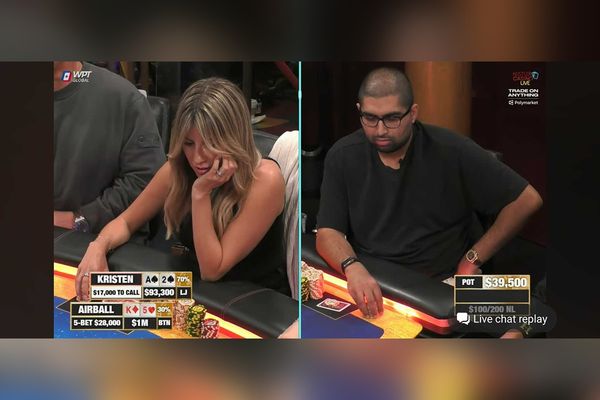
When Kristen Foxen six-bet shoved with absolute garbage against Nik Airball during a recent Hustler Casino Live stream, she wasn’t just making a poker play—she was exploiting tilt, table dynamics, and aggressive preflop warfare at its finest. The hand exemplifies how elite players weaponize opponent psychology and table image to print money in high-stakes cash games.
What Happened
The action unfolded during a $100/$200 nosebleed cash game at Hustler Casino Live, featuring an eclectic mix that included Ethan ‘Rampage’ Yau, Turbo Nguyen, Big Mike, Rick, HCL co-founder Ryan Feldman, and special guest Kristen Foxen. By the time this particular hand developed, Nik Airball was visibly struggling, deep in what appeared to be full tilt mode.
Before the stream even started, Airball had boldly proclaimed that “Tourney players all suck, this is free money if I ever seen it!” He backed up his trash talk by accepting a $10,000 side bet from tournament crusher Chance Kornuth, wagering that Kristen would finish the session with more profit than him. That confidence would prove costly.
As the evening progressed toward its final hour, the preflop aggression escalated to absurd levels. When Foxen and Airball clashed in a massive pot, the betting went through the roof—open, three-bet, four-bet, five-bet, and finally Foxen’s devastating six-bet shove. Airball eventually folded, and Foxen showed down complete trash, demonstrating a masterclass in exploitative aggression.
By session’s end, Airball was buried nearly $400,000 in the red, while Kornuth collected his easy $10K without breaking a sweat.
The Poker Strategy Breakdown
Foxen’s six-bet shove represents advanced exploitation theory in action. When facing an opponent who’s clearly tilting and engaging in hyper-aggressive preflop warfare, the correct counter-strategy isn’t to wait for premium hands—it’s to expand your own aggression range and put maximum pressure on their inflated ranges.
The key strategic elements at play:
Range advantage through polarization: By the time betting reaches five-bet and six-bet territory, both players’ ranges become extremely polarized—either premium value hands or complete air. Foxen recognized that Airball’s tilted state meant his five-bet range was likely wider than it should be, including many hands that can’t call a six-bet shove for stacks.
Leveraging fold equity: Even with trash, a six-bet shove generates tremendous fold equity. Airball would need a premium holding—typically QQ+ or AK—to continue. If he’s five-betting with a wider range due to tilt and aggression, Foxen’s shove becomes immediately profitable regardless of her actual cards.
Stack-to-pot ratio considerations: Deep-stacked cash game play creates interesting dynamics. Once significant money enters the pot through multiple raises, the effective stack-to-pot ratio shrinks dramatically. This makes shoving more attractive as a polarized strategy, forcing opponents into difficult decisions for their entire stack.
Blockers become irrelevant: In extreme preflop warfare, specific card combinations matter less than pure aggression and fold equity. Foxen didn’t need specific blockers to aces or kings—she needed to recognize that Airball’s psychological state made him vulnerable to maximum pressure.
Reading The Field & Table Dynamics
What separates elite players from amateurs is the ability to read beyond cards and recognize exploitable table dynamics. Foxen demonstrated this skill brilliantly.
“I used to play cash games extensively years ago, but haven’t focused on them much recently,” Foxen explained after the session. “HCL is incredibly dynamic and unique in how it plays preflop. It’s almost more like a tournament than a traditional cash game.”
This observation is crucial. Traditional deep-stacked cash games emphasize postflop play, implied odds, and set-mining. But the HCL environment—with its mix of recreational players, aggressive regulars, and livestream dynamics—creates unusual preflop pressure that more closely resembles tournament poker.
Foxen had done her homework. Her husband Alex Foxen had played with Airball the previous night and witnessed his hyper-aggressive tendencies firsthand. “Alex played with Airball the night before, and there was extremely aggressive action,” Kristen noted. “Nik definitely attacks these spots preflop, which is actually unique. It’s not typical cash game play—it’s more like deep tournament poker with ICM pressure.”
Understanding opponent tendencies before sitting down gave Foxen a massive edge. She entered the game with a strategic framework specifically designed to counter Airball’s style: meet aggression with even more aggression, and don’t wait for premium holdings to apply pressure.
The psychological element cannot be overstated. By the time this hand developed, Airball was clearly struggling. Tilt manifests in predictable ways: overvaluing marginal hands, refusing to fold, and escalating aggression to “get even.” Foxen recognized these symptoms and adjusted accordingly.
“Airball has a unique style. He’s hard to play against, that’s for sure,” Foxen admitted. But “hard to play against” doesn’t mean unprofitable—it means requiring specific adjustments and fearless execution.
How To Apply This To Your Game
While most players won’t face $100/$200 nosebleed stakes, the strategic principles from this hand apply across all levels:
Identify tilted opponents: Watch for players showing frustration, making unusual plays, or deviating from their normal patterns. These opponents become prime targets for increased aggression, especially in position.
Adjust to hyper-aggressive players: Against opponents who constantly three-bet and four-bet, don’t simply tighten up and wait for aces. Instead, expand your own reraising range with a polarized strategy—premium hands for value, and strategic bluffs with fold equity.
Study opponent tendencies before playing: Like Foxen gathering intelligence from her husband’s previous session, you should observe games before joining, review hand histories, and ask regulars about opponent tendencies. Information is profit.
Don’t fear preflop escalation: Many players become paralyzed when facing four-bets and five-bets. But if you’ve identified an opponent with an inflated range, sometimes the correct play is to apply even more pressure rather than backing down.
Exploit the livestream effect: In streamed games or home games with observers, some players perform for the audience, making overly aggressive plays to appear fearless. Recognize this tendency and punish it.
Balance your own image: Foxen’s six-bet bluff worked partly because she has a solid, credible image. If you’re going to make big bluffs, ensure your overall strategy includes enough value hands in those spots that opponents can’t automatically assume you’re bluffing.
Key Takeaways
- Extreme preflop aggression becomes correct when facing tilted opponents with inflated ranges—don’t wait for premium hands to apply pressure
- Six-bet shoving with trash can be profitable when fold equity is high and opponent’s five-bet range is too wide
- HCL’s unique dynamics create tournament-like preflop play despite being a cash game, requiring specific strategic adjustments
- Gathering intelligence on opponent tendencies before playing provides massive strategic advantages
- Psychological warfare and table image matter as much as cards in high-stakes cash games
- Meeting aggression with even greater aggression exploits players who can’t adjust to escalating pressure
Frequently Asked Questions
When should you six-bet bluff in a cash game?
Six-bet bluffing becomes profitable when your opponent’s five-bet range is wider than premium hands (QQ+/AK), they’re showing signs of tilt or frustration, and you have significant fold equity. It’s an advanced play that requires reading opponent psychology and table dynamics, not just cards. In standard cash games, six-bet bluffing is rare, but in aggressive livestream environments or against hyper-aggressive opponents, it can be a powerful weapon.
How do you adjust to hyper-aggressive players like Nik Airball?
Against hyper-aggressive opponents, avoid the common mistake of playing too tight and waiting for premium hands. Instead, adopt a polarized strategy: three-bet and four-bet more frequently with both value hands and strategic bluffs. Use position aggressively, don’t be afraid of preflop escalation, and recognize that their wide ranges make them vulnerable to pressure. Most importantly, maintain emotional control—don’t let their aggression tilt you into making mistakes.
Why is HCL poker different from traditional cash games?
Hustler Casino Live features unusual dynamics that make it play differently than traditional cash games. The livestream format encourages showboating and aggressive action, the player mix includes wealthy recreational players willing to gamble, and the preflop aggression levels resemble tournament poker more than typical deep-stacked cash. Stack depths vary wildly, players make unconventional plays for entertainment value, and the social dynamics create exploitable situations that don’t exist in standard casino cash games.
Final Thoughts
Kristen Foxen’s six-bet bluff against Nik Airball wasn’t a reckless gamble—it was calculated exploitation based on opponent psychology, table dynamics, and strategic fundamentals. While the hand looks insane on the surface, it demonstrates advanced poker theory in action: identifying exploitable tendencies, adjusting ranges accordingly, and executing fearlessly when the situation demands it.
The broader lesson extends beyond this single hand. Success in modern poker, especially in aggressive livestream environments, requires more than waiting for premium hands and playing ABC poker. It demands psychological awareness, dynamic range construction, and the courage to make unconventional plays when the math and situation support them. Foxen’s performance proved that tournament players don’t “all suck” at cash games—they simply bring different skills that, when properly applied, can devastate opponents who underestimate them.
Whether you’re playing $1/$2 or $100/$200, the principles remain constant: study your opponents, identify their weaknesses, and adjust your strategy to exploit them. Sometimes that means six-betting with trash. More often, it means making smaller adjustments that compound over time. But always, it means thinking beyond your cards and playing the complete game.
Ready to Sharpen Your Poker Game?
Master your poker game with expert hand analysis