GGPoker Shatters Traffic Records: What It Means For You
GGPoker just recorded over 900,000 concurrent players on its platform, marking an explosive 50% surge from its previous peak just eight months prior. This milestone solidifies the operator’s position as the dominant force in online poker traffic, but the real story lies in what’s driving these numbers—and how savvy players can capitalize on the influx.
What Happened
The online poker landscape witnessed a seismic shift last week when GGPoker confirmed unprecedented player activity across its network. The platform registered more than 900,000 simultaneous users, demolishing its previous benchmark of 600,000 concurrent players set in late 2025.
This isn’t just incremental growth—it’s a 50% explosion in active player volume in less than a year. The timing coincides with two major catalysts: the GG World Festival tournament series featuring a staggering $300 million guaranteed prize pool, and the approaching World Series of Poker in Las Vegas, where GGPoker serves as the primary online satellite provider.
The GG World Festival, which launched May 3rd and runs through June 9th, represents the largest guaranteed prize pool in online poker tournament history. The series features three separate Main Events on May 18th, 25th, and June 1st, each guaranteeing $10 million with buy-ins ranging from $525 to $10,000. Meanwhile, GGPoker’s WSOP Express promotion offers daily free-roll opportunities for players to begin their qualification journey to poker’s most prestigious live event.
The Poker Strategy Breakdown
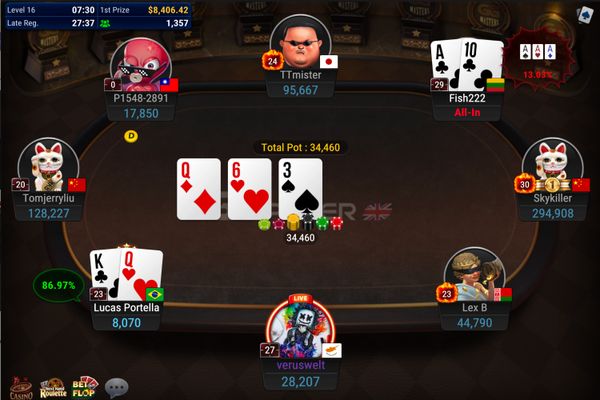
When player pools surge to this magnitude, the strategic landscape transforms dramatically. Understanding how to navigate these swollen fields separates professionals from recreational players hoping to run hot.
First, recognize that massive player influxes typically skew toward recreational participants. Festival series and WSOP satellite opportunities attract casual players, weekend warriors, and bucket-list enthusiasts who don’t grind daily. This creates a temporary softening of average field strength—but only if you know how to exploit it.
The mathematical reality of 900,000 concurrent players means tournament fields are deeper, prize pools are larger, and variance increases exponentially. In a standard 1,000-player field, you might need to outlast 10-15% of entries to reach the money. In massive festival events with 10,000+ runners, that same percentage represents hundreds of additional players—each decision point multiplied across hours of play.
Your fundamental strategy must adapt to accommodate increased field depth. Early-stage survival becomes paramount when you’re facing potentially 12-15 hours of play to reach final tables. This doesn’t mean playing scared—it means recalibrating your risk-reward calculations. That marginal +EV shove with ace-jack offsuit in the first two hours? It’s probably worth passing when you have 8,000 players behind you and abundant better spots ahead.
Conversely, the presence of recreational players means you should widen your value-betting ranges and thin your bluffing frequencies. Inexperienced opponents don’t fold enough—they came to play poker, not to fold their way through a bucket-list tournament. When you hold strong hands, extract maximum value across multiple streets. When you’re bluffing, target spots where the board texture tells an undeniable story, because subtle semi-bluffs often get called down light.
Multi-tabling strategy also requires reconsideration during peak traffic periods. While the softer games tempt you to fire up eight tables simultaneously, the increased recreational player count means more unusual play patterns, more unexpected bet sizing, and more attention required per decision. Consider reducing your table count by 25-30% while increasing your focus on player tendencies and exploitative adjustments.
Reading The Field & Table Dynamics
Tournament dynamics shift fundamentally when you’re navigating fields populated by satellite qualifiers, festival tourists, and WSOP dreamers alongside the regular player pool.
Early stages in these bloated fields feature extremely wide skill disparities at your table. You’ll encounter players who barely understand position alongside competent regulars. Your primary objective is rapid player profiling—identify the weakest links within your first orbit and ruthlessly target them. Watch for players who limp frequently, call raises out of position with capped ranges, or make suspiciously round bet sizes (100, 500, 1000 instead of optimal amounts). These are your profit centers.
ICM considerations become increasingly complex as prize pools expand. In a $10 million guaranteed event, the pay jump differences between 100th and 50th place might represent life-changing money for recreational players but standard variance for professionals. This creates exploitable fear-based play as the bubble approaches. Recreational players tighten dramatically, sometimes folding their way from comfortable stacks into desperation mode. Professionals understand this and apply maximum pressure during bubble periods.
However, don’t assume all recreational players are tight. Festival environments attract gamblers who view poker as entertainment, not investment. These players generate action regardless of ICM pressure. They’re the ones calling all-ins with middle pair because “I didn’t come here to fold.” Against these opponents, value-bet relentlessly and avoid elaborate bluffs.
Middle-stage play in massive fields requires patience that many players lack. You’re still hours from significant money, but blinds are escalating and antes are accumulating. This is where disciplined players build stacks by consistently winning small-to-medium pots while avoiding catastrophic confrontations. Focus on position-based aggression, stealing blinds from tight players, and three-betting weak opens from recreational opponents who fold too frequently to pressure.
Deep-run dynamics favor players who can shift gears. As fields narrow from thousands to hundreds, you’ll increasingly face competent opponents who’ve survived the recreational player gauntlet. Your exploitative early-game approach must evolve toward more balanced, theoretically sound play. The players remaining understand ICM, recognize pressure spots, and won’t donate chips without strong holdings.
How To Apply This To Your Game
Capitalizing on traffic surges requires both strategic preparation and practical adjustments to your poker routine.
Start by auditing your current tournament selection process. During high-traffic periods, game selection becomes exponentially more valuable. The same $100 tournament that typically attracts 500 players might balloon to 2,500 entries during a festival series. While the prize pool increases proportionally, so does the time investment and variance. Evaluate whether your bankroll and schedule accommodate the extended session length and increased swings.
For satellite opportunities, the math becomes particularly attractive during traffic spikes. When thousands of players are firing satellites to major events, the fields contain more recreational players than usual, improving your ROI. However, satellite strategy differs fundamentally from standard tournaments—you’re playing to survive into a qualifying position, not to accumulate maximum chips. Once you’ve secured a qualifying stack, extreme risk aversion becomes correct. Let other players battle while you fold into a seat.
Bankroll management deserves extra scrutiny during festival periods. The temptation to jump into massive guaranteed events can strain your roll if you’re not careful. A good rule: never invest more than 2-3% of your bankroll in a single tournament entry, regardless of how soft the field appears. The variance in 10,000-player fields is brutal, and even significant skill edges take hundreds of entries to realize.
Technical preparation matters more than most players realize. High-traffic periods can strain platform performance. Test your connection, update your software, and consider reducing screen clutter to maintain optimal performance. The last thing you want is lag during a crucial decision with 200 big blinds in the pot.
Study habits should adapt to the current meta. Review hands specifically from large-field tournaments, focusing on middle-stage play where most players leak chips through impatience. Use tracking software to identify your own tendencies in 5+ hour sessions—fatigue-based mistakes become more costly in marathon events.
Finally, schedule strategically. If you’re serious about maximizing edge during traffic surges, plan your sessions around peak recreational player hours—evenings and weekends. The player pool at 3 PM on Tuesday, even during a festival, skews more professional than Saturday night when casual players are firing entries.
Key Takeaways
- Traffic surges create temporarily softer games as recreational players flood the platform for festival series and satellite opportunities, but you must adapt your strategy to exploit them effectively.
- Reduce your table count during peak periods by 25-30% to maintain focus on unusual play patterns and exploitative adjustments against recreational opponents.
- Early-stage survival becomes more valuable in massive fields—avoid marginal spots that would be profitable in smaller tournaments but carry excessive risk when facing 10,000+ opponents.
- ICM pressure creates exploitable situations during bubble periods as recreational players tighten dramatically to secure min-cashes, allowing aggressive players to accumulate chips.
- Satellite strategy differs fundamentally from tournament play—once you’ve secured a qualifying stack, extreme risk aversion becomes mathematically correct.
- Bankroll discipline prevents festival-induced tilt—never invest more than 2-3% of your roll in a single entry, regardless of perceived field softness or massive guarantees.
Frequently Asked Questions
Why do player numbers surge during festival series like the GG World Festival?
Festival series attract recreational players through massive guaranteed prize pools, bucket-list tournament opportunities, and promotional tie-ins to major live events like the WSOP. The $300 million guarantee represents the largest online series in history, drawing casual players who don’t typically grind online but want a shot at life-changing money. Additionally, GGPoker’s WSOP satellite opportunities create a secondary draw for players dreaming of competing in Las Vegas.
Should I play more tournaments when player traffic increases?
Not necessarily more—play smarter. High traffic periods offer softer games but also longer session times and increased variance due to larger fields. Focus on optimal game selection rather than volume. If your typical schedule allows four tournaments, maintain that number but choose events with the best combination of field softness, buy-in level appropriate to your bankroll, and schedule compatibility. Quality over quantity prevents burnout and bankroll damage.
How does strategy change in 10,000+ player tournament fields versus standard tournaments?
Large fields require greater emphasis on early survival, as marginal +EV spots become less valuable when you’re facing 12-15 hours to reach final tables. Widen your value-betting ranges against recreational players who call too frequently, but tighten your bluffing frequencies since inexperienced opponents don’t fold enough. Middle-stage patience becomes critical—consistently winning small pots while avoiding catastrophic confrontations builds stacks more reliably than high-variance gambles. ICM pressure intensifies dramatically during bubble periods, creating exploitation opportunities against scared money.
Final Thoughts
GGPoker’s record-breaking traffic numbers represent more than just a milestone for the platform—they signal a temporary but significant shift in the online poker ecosystem. When 900,000 players log in simultaneously, the ripple effects touch every stake level, every game format, and every strategic consideration. For skilled players, these surges represent golden opportunities to maximize win rates against softer-than-usual competition. For developing players, they offer invaluable experience navigating large-field dynamics that separate profitable players from perpetual break-even grinders.
The convergence of the GG World Festival and WSOP qualification season creates a perfect storm of recreational player activity. But these conditions won’t last forever. Festival series end, satellite periods close, and player pools eventually return to their regular composition. The players who profit most from these windows are those who recognize them for what they are—temporary edges requiring immediate, disciplined exploitation.
Whether you’re grinding satellites to Las Vegas, taking shots at massive guaranteed tournaments, or simply enjoying softer cash games during peak hours, the fundamental principle remains constant: adapt your strategy to your opponents. The poker landscape is always evolving, and right now, it’s evolving in favor of players who can recognize opportunity and execute accordingly. Don’t let this window close without taking your shot.
Ready to Sharpen Your Poker Game?
Master your poker game with expert hand analysis