

From Short Stack to Champion: Shovkovyi’s PGT Texas Win
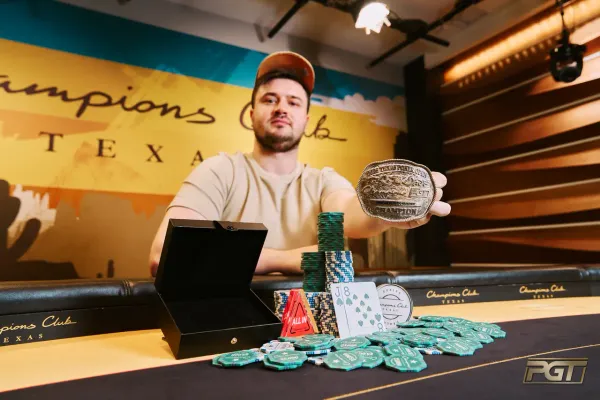
Vladyslav Shovkovyi proved that chip counts aren’t everything, turning one of the shortest stacks at the final table into a $180,000 victory at the PokerGO Tour Texas Poker Open Main Event. The Houston-based player navigated a treacherous final table at Champions Club, overcoming massive chip disadvantages to defeat overwhelming chip leader Phu Vo in heads-up play.
What Happened
The $2,000 buy-in PGT Texas Poker Open Main Event attracted 444 entries, generating a $1,000,000 prize pool that paid 55 spots. When the final six players assembled for the concluding day of action, Phu Vo commanded the table with a dominant chip lead that made him the clear favorite to capture the title.
But tournament poker rarely follows the script. Shovkovyi, sitting with one of the shorter stacks in play, methodically built his position through calculated aggression and well-timed confrontations. His path to victory required eliminating both Adrian Curry and Brant Jolly in quick succession during four-handed play, catapulting him into heads-up action against Vo.
With both players holding relatively shallow stacks when heads-up commenced, they negotiated a deal that locked in most of the prize money while leaving $20,000 and the championship title up for grabs. Shovkovyi seized early momentum in the duel and sealed the victory when he rivered two pair against Vo’s top pair on the final hand.
The victory pushed Shovkovyi’s career tournament earnings to $1,215,874 and elevated him six positions on Ukraine’s all-time money list, jumping from 25th to 19th place. For Vo, the $160,000 runner-up prize represented a career-best score, boosting his lifetime earnings to $766,967.
The final table payouts rounded out with Brant Jolly earning $95,000 for third place, Adrian Curry collecting $60,000 for fourth, Randall Brooks taking home $48,000 for fifth, and Bradley Rich banking $40,000 for sixth.
The Poker Strategy Breakdown
Shovkovyi’s comeback exemplifies several critical tournament concepts that separate elite players from the pack. Starting with a short stack at a final table demands a completely different strategic approach than playing with a commanding chip lead. Rather than applying constant pressure, short stacks must identify optimal spots for accumulation while avoiding marginal situations that could end their tournament life.
The first elimination took nearly 90 minutes to materialize, demonstrating the cautious nature of final table play when ICM pressure weighs heavily on decision-making. Bradley Rich’s elimination came via a cooler scenario where Brant Jolly opened from the button, Jolly three-bet from the small blind, and Rich committed his remaining chips from the big blind. Jolly’s call was mandatory given the price, and he caught fortunate cards to make a runner-runner straight.
This hand illustrates a fundamental truth about short-stack final table play: sometimes you simply run into the wrong situation at the wrong time. Rich’s shove from the big blind was likely correct given his stack size and the action in front of him, but tournament poker doesn’t reward correct decisions with guaranteed positive outcomes.
Randall Brooks met a similar fate shortly after when he moved all-in from the small blind with pocket tens, only to run into Phu Vo’s pocket queens. The flop initially gave Brooks hope by pairing Vo, but the turn delivered a devastating third queen, and the river completed Vo’s quad queens. These back-to-back coolers reduced the field to four and set the stage for Shovkovyi’s surge.
During four-handed play, Shovkovyi executed a crucial hand against Vo that shifted the chip dynamics entirely. This momentum swing proved pivotal, as Shovkovyi leveraged his newfound chip position to apply pressure on the remaining short stacks. When Adrian Curry moved all-in from the button with his short stack, Shovkovyi’s call with a dominating hand was textbook. The flop gave Curry an open-ended straight draw, creating legitimate equity, but the turn and river blanked out.
Two hands later, Shovkovyi eliminated Jolly in nearly identical fashion. After opening from the button, Shovkovyi called when Jolly shipped from the small blind with a dominated holding. The flop created some drama with potential straight possibilities, but the turn and river sealed Jolly’s fate and brought the tournament to heads-up play.
Reading The Field & Table Dynamics
Final table dynamics shift dramatically as each player exits. With six players remaining, ICM considerations reach their peak intensity. Every decision carries enormous financial implications, as the pay jumps between positions grow increasingly substantial. This explains why the first elimination consumed 90 minutes—players understood that one mistake could cost them tens of thousands of dollars.
Phu Vo’s massive chip lead entering the final table should have provided him with overwhelming leverage to dictate action. In theory, he could have applied relentless pressure on the shorter stacks, forcing them into difficult decisions for their tournament lives. However, the presence of multiple competent players with viable stacks prevented him from running over the table unchallenged.
Shovkovyi’s approach from a short stack position demonstrates sophisticated tournament understanding. Rather than desperately shoving with marginal holdings, he remained patient and waited for premium situations. This discipline allowed him to survive long enough to capitalize when the deck turned in his favor during four-handed play.
The deal struck at the beginning of heads-up play reflects mature negotiation from both players. With shallow effective stacks and significant variance inherent in heads-up poker, locking in guaranteed money while still competing for meaningful prize differential and the title represents sound risk management. The $20,000 remaining in play ensured both players maintained competitive intensity while eliminating catastrophic downside scenarios.
Shovkovyi’s ability to seize early momentum in heads-up play proved decisive. In shallow-stacked heads-up situations, winning the first few pots often snowballs into commanding control. Each pot won increases your chip lead while simultaneously applying pressure on your opponent, who watches their stack dwindle and their options narrow.
How To Apply This To Your Game
The most valuable lesson from Shovkovyi’s victory is that short stacks aren’t death sentences at final tables. Too many players adopt a defeatist mentality when they arrive short-stacked, either shutting down completely or making desperate moves. Instead, recognize that short-stack play requires a specific skill set focused on hand selection, timing, and exploitation of ICM pressure affecting your opponents.
When you’re short-stacked at a final table, identify which opponents are most likely to fold to your aggression. Players with medium stacks often face the most ICM pressure—they have too much to lose by calling light, but they also can’t afford to blind down. These players make ideal targets for resteal attempts and strategic aggression.
Pay attention to opening ranges and three-betting patterns. As the final table progresses and blinds increase relative to stacks, players widen their ranges out of necessity. This creates opportunities for well-timed reshoves with hands that have decent equity against wide ranges, even if they’re not premium holdings.
Study the cooler hands that eliminated Rich and Brooks. While you can’t avoid running into premium hands, you can minimize damage by understanding when your stack size mandates commitment versus when you still have fold equity. Rich’s situation in the big blind with multiple players already committed left him with limited options. Brooks’s small blind shove with tens represents standard play, but running into queens is simply an occupational hazard.
In heads-up play, especially with shallow stacks, aggression typically trumps passivity. Shovkovyi’s early momentum in the heads-up battle stemmed from putting pressure on Vo rather than waiting for premium hands. When effective stacks drop below 20-30 big blinds in heads-up play, hand values shift dramatically, and position combined with aggression often matters more than actual holdings.
Finally, don’t underestimate the value of deal-making skills. Shovkovyi and Vo’s agreement to chop most of the prize pool while leaving meaningful money to play for represents sophisticated negotiation. Understanding ICM implications and your leverage in deal discussions can add significant value to your tournament results over time.
Key Takeaways
- Short stacks at final tables require patience combined with strategic aggression—Shovkovyi proved that being short-stacked doesn’t eliminate your chances when you pick your spots carefully
- ICM pressure creates opportunities for exploitation, particularly against medium stacks who have the most to lose by calling light in marginal situations
- Four-handed and three-handed play often sees dramatic chip swings—one or two key hands can completely reshape the final table dynamics
- Heads-up deals with shallow stacks represent sound risk management while maintaining competitive integrity and meaningful prize differential
- Early momentum in heads-up play snowballs quickly, especially with shallow effective stacks where each pot won significantly impacts the chip distribution
- Tournament poker rewards persistence and adaptability—the chip leader entering the final table doesn’t always emerge victorious
Frequently Asked Questions
How did Vladyslav Shovkovyi overcome being short-stacked at the final table?
Shovkovyi employed patient aggression, waiting for premium situations rather than making desperate moves. He identified key spots during four-handed play to accumulate chips, particularly in a crucial hand against chip leader Phu Vo that shifted momentum. He then leveraged his improved stack to eliminate Adrian Curry and Brant Jolly in quick succession, propelling him into heads-up play with viable chips.
What was the deal structure when play reached heads-up?
When Shovkovyi and Vo reached heads-up play, both players held relatively shallow stacks. They agreed to lock in most of the remaining prize pool while leaving $20,000 and the championship title to compete for. This deal reduced variance while maintaining meaningful stakes and competitive intensity for the conclusion of the tournament.
What strategic lessons can players learn from this final table?
The final table demonstrated several key concepts: ICM pressure creates exploitable situations, particularly against medium stacks; short stacks require disciplined hand selection and timing; four-handed play often produces dramatic chip swings; and heads-up aggression with shallow stacks typically trumps passive play. Additionally, the cooler eliminations of Rich and Brooks show that sometimes you simply run into bad situations regardless of correct decision-making.
Final Thoughts
Vladyslav Shovkovyi’s victory at the PGT Texas Poker Open Main Event serves as a masterclass in short-stack final table navigation. His journey from one of the shortest stacks to champion demonstrates that tournament poker rewards skill, patience, and the ability to capitalize on opportunities when they arise. While Phu Vo entered the final table as the overwhelming favorite, Shovkovyi’s strategic execution and timely aggression proved that chip counts tell only part of the story.
The $180,000 first-place prize represents a career-defining score for Shovkovyi, elevating his standing among Ukraine’s top tournament players. For Houston poker fans, watching a local player conquer a prestigious PokerGO Tour event on home soil added extra excitement to an already thrilling conclusion. The tournament showcased the depth of talent in the Texas poker scene while reinforcing fundamental strategic concepts that apply to tournament players at every level.
Whether you’re grinding local tournaments or competing on poker’s biggest stages, the lessons from this final table remain constant: understand ICM pressure, identify exploitable situations, maintain discipline with short stacks, and never underestimate the power of well-timed aggression. Shovkovyi’s championship run proves that in tournament poker, it’s not how you start—it’s how you finish.
Ready to Sharpen Your Poker Game?
Master your poker game with expert hand analysis
