Ren Lin’s Relentless Energy Powers Deep WSOP Run in $5K Event
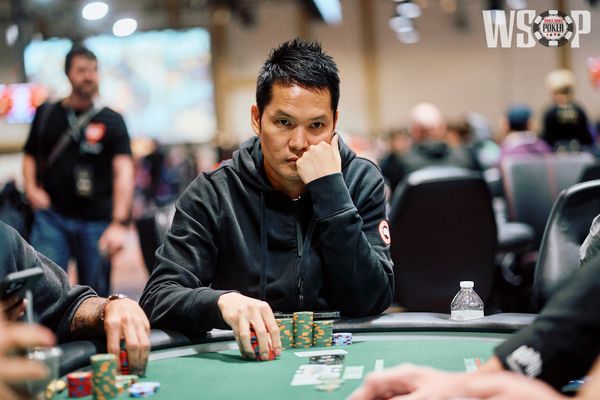
While most tournament grinders conserve energy during marathon poker sessions, Ren Lin was doing star jumps and push-ups between hands on Day 3 of the 2026 WSOP $5,000 8-Handed No-Limit Hold’em event. The Chinese pro’s unconventional approach to stamina management paid dividends as he battled his way to the final five, positioning himself for a shot at his first bracelet and a strong start in the Player of the Year race.
What Happened
The $5,000 8-Handed No-Limit Hold’em tournament at the 2026 World Series of Poker played down to its final five competitors on Thursday, with Ren Lin securing the fourth-largest stack heading into Friday’s conclusion. While his 3,000,000 chips (25 big blinds) trail chip leader Chenxiang Miao’s commanding 10,850,000 stack, Lin’s confidence hasn’t wavered.
What set Lin apart wasn’t just his poker prowess—it was his physical routine. During breaks deep in Day 3, while competitors stepped outside for fresh air or grabbed quick meals, Lin stayed in the tournament area performing jumping jacks and push-ups. His perpetual smile never faded, even as the pressure mounted with each elimination.
The moment gained additional significance when reigning WSOP Player of the Year Shaun Deeb stopped to offer encouragement, predicting Lin would soon have his own POY banner hanging in the Rio. Lin’s response was characteristically ambitious: he’s not just chasing one title—he wants the WSOP Player of the Year, the GPI Player of the Year, and every bracelet he can capture.
The final five return Friday at 1pm PT to compete for the $502,985 first-place prize and the coveted gold bracelet. All remaining players have locked up at least $120,035, but for Lin, the minimum cash isn’t the goal—victory is the only acceptable outcome.
The Poker Strategy Breakdown
Lin’s deep run in an 8-handed format reveals several strategic considerations that separate competent tournament players from those who consistently reach final tables. The 8-handed structure creates a middle ground between full-ring and 6-max poker, requiring adaptability in hand selection, positional awareness, and aggression frequency.
With 25 big blinds entering the final day, Lin sits in what many pros call the “danger zone”—too short to wait for premium hands, but deep enough that reckless all-ins would be catastrophic. This stack depth demands precise range construction and spot selection. Every decision carries magnified ICM (Independent Chip Model) implications, where survival can be worth more than chip accumulation in certain situations.
The chip distribution at the final table creates interesting dynamics. Miao’s massive lead with 90 big blinds gives him tremendous leverage to apply pressure, while the bottom three stacks (including Lin) are bunched closely together between 22-28 big blinds. This clustering means one double-up could vault any short stack into contention, while one mistake could mean elimination.
Lin’s aggressive mindset—his declaration that he “will win”—suggests he won’t be playing survival poker. This approach has merit at this stack depth. With antes in play and blinds increasing, passive play bleeds chips rapidly. The most successful short-stack strategy often involves selective aggression: finding spots to three-bet light, applying pressure to middle stacks who can’t afford confrontation, and exploiting the bubble dynamics that emerge as players eye pay jumps.
The 8-handed format also rewards players who can effectively balance their ranges across multiple positions. Unlike 6-max where aggression is paramount, or full-ring where patience dominates, 8-handed poker requires reading opponents quickly and adjusting exploitation strategies on the fly. Lin’s ability to navigate this middle ground while maintaining physical and mental energy through unconventional methods speaks to a holistic approach to tournament poker.
Reading The Field & Table Dynamics
The final five composition presents fascinating strategic puzzles. With three Chinese players (Miao, Liu, and Lin) and two Americans (Gheba and Mugar), there’s potential for both cultural playing style differences and individual exploitation opportunities.
Chenxiang Miao’s chip lead isn’t just about stack size—it’s about the strategic freedom it provides. With 90 big blinds, Miao can call three-bets profitably with a wider range, apply relentless pressure on the middle stacks, and force difficult decisions on his opponents. However, chip leaders often fall into the trap of overusing their leverage, spewing chips through unnecessary aggression. Lin’s best opportunities may come from trapping when Miao overextends.
Daniyal Gheba’s 71-big-blind stack positions him as the primary challenger to Miao’s dominance. This creates a natural rivalry that the shorter stacks can exploit. When big stacks clash, they often create dead money situations that savvy short stacks can capitalize on through well-timed aggression.
The three short stacks—Liu, Lin, and Mugar—face the most precarious situations. ICM pressure intensifies every decision, particularly regarding bubble considerations for pay jumps. The player who best navigates these spots, finding the balance between survival and accumulation, will likely emerge victorious.
Lin’s psychological edge shouldn’t be underestimated. His physical routine during breaks isn’t just about staying energized—it’s a mental reset technique that prevents the emotional fatigue that plagues many tournament players. While opponents might be dwelling on bad beats or missed opportunities during breaks, Lin’s exercise routine provides a clean mental slate for each new level. This clarity of mind often translates to better decision-making in critical moments.
How To Apply This To Your Game
Ren Lin’s approach offers several lessons that players at all levels can implement immediately. First, the importance of physical preparation in tournament poker cannot be overstated. While you don’t need to do push-ups between hands, maintaining physical activity during breaks improves blood flow, reduces stress, and sharpens mental acuity. A simple walk, stretching routine, or breathing exercises can provide similar benefits.
Second, Lin’s aggressive goal-setting demonstrates the power of positive visualization. Rather than hoping to “run well” or “make a deep run,” he declares his intention to win everything. This mindset shift from passive hope to active expectation changes how you approach critical decisions. When you expect to win, you play to win rather than playing not to lose—a crucial distinction in tournament poker.
For players facing similar stack depths (20-30 big blinds) in the late stages of tournaments, Lin’s situation offers a masterclass in necessary aggression. At this depth, your strategy should include:
Expanding your three-bet ranges from late position: When action folds to the cutoff or button and they open, a well-timed three-bet can win the pot immediately or build a pot where you have positional advantage. Target players who open wide but fold to aggression.
Identifying squeeze opportunities: When a player opens and another calls, a three-bet from the blinds (a squeeze play) can be highly effective. You’re representing massive strength and forcing two players to fold, often winning dead money without seeing a flop.
Attacking big stacks strategically: Contrary to intuition, big stacks can sometimes be easier to play against than medium stacks. They’re less concerned with individual pots and may fold marginal hands to avoid complicated situations. Use this to your advantage with well-timed bluffs.
Avoiding middle-stack confrontations: Players with 30-50 big blinds are in the most awkward spot—too deep to shove, too short to play comfortably post-flop. They often play tight to preserve their position. Don’t donate chips to them in marginal situations.
Finally, Lin’s ability to maintain consistent energy and positivity throughout a grueling tournament day is perhaps his greatest asset. Tilt, fatigue, and emotional swings destroy more tournament runs than bad beats. Develop your own routine for mental and physical reset between sessions. Whether it’s exercise, meditation, music, or conversation with friends, find what works for you and implement it religiously.
Key Takeaways
- Physical preparation directly impacts mental performance in poker—develop a break routine that includes movement and mental reset techniques
- At 20-30 big blind stack depths, selective aggression outperforms passive survival strategies in tournament play
- ICM considerations intensify at final tables—understand when chip accumulation matters less than survival and vice versa
- Big stack leverage can be exploited through trapping and well-timed aggression when chip leaders overextend
- Goal-setting and positive expectation change decision-making patterns—play to win rather than playing not to lose
- The 8-handed format requires balancing full-ring patience with short-handed aggression, demanding quick opponent reads and strategic flexibility
Frequently Asked Questions
What is the optimal strategy with 25 big blinds at a final table?
With 25 big blinds, your strategy should focus on selective aggression rather than passive survival. This stack depth is too short to wait for premium hands but too deep for push-fold poker. Look for opportunities to three-bet from late position, execute squeeze plays when the situation presents itself, and avoid marginal confrontations with medium stacks. Your goal is finding spots where you can win pots without showdown or get your chips in with equity advantage when called.
How does ICM affect decision-making at final tables?
ICM (Independent Chip Model) calculates the real money value of your chip stack based on payout structure and remaining players. At final tables, ICM pressure means that losing chips costs you more in real money value than winning the same number of chips gains you. This creates situations where folding becomes correct even with positive chip EV, particularly when short stacks are at risk of elimination. Understanding ICM helps you identify when to apply pressure and when to exercise caution based on stack distributions.
Why is physical fitness important for tournament poker success?
Tournament poker sessions often last 10-14 hours, demanding sustained mental acuity under pressure. Physical fitness improves cardiovascular health, which enhances blood flow to the brain and supports clearer thinking. Exercise also reduces cortisol (stress hormone) levels and releases endorphins, helping players maintain emotional stability during variance swings. Players who incorporate physical activity into their routines consistently report better focus, reduced tilt, and improved decision-making in crucial moments.
Final Thoughts
Ren Lin’s journey to the final five of the $5,000 8-Handed No-Limit Hold’em event exemplifies how modern tournament success requires more than technical poker knowledge. His unconventional approach to physical preparation, combined with aggressive goal-setting and unwavering confidence, creates a competitive advantage that pure strategy alone cannot provide. While his 25-big-blind stack presents challenges, his mindset and energy position him as a dangerous opponent for the chip leaders.
The final table dynamics set up compelling strategic battles. Miao’s chip lead gives him leverage, but short stacks with nothing to lose often play their most fearless poker. Lin’s declaration that he “will win” isn’t empty bravado—it’s the mentality required to navigate the high-pressure situations that determine champions. Whether he captures the bracelet or not, his approach offers valuable lessons for players seeking to elevate their tournament game beyond mechanical strategy execution.
As the 2026 WSOP continues, Lin’s quest for “everything”—bracelets, Player of the Year honors, and GPI recognition—will be worth monitoring. Players who set ambitious goals and back them with preparation, energy management, and fearless execution often achieve results that seem impossible to those playing not to lose. The question isn’t whether Lin has the skills to win—it’s whether his relentless energy and positive expectation can overcome the variance inherent in tournament poker’s final stages.
Ready to Sharpen Your Poker Game?
Master your poker game with expert hand analysis