Justin Arnwine’s Deep Run: 6-Max Strategy & Baby Rungood
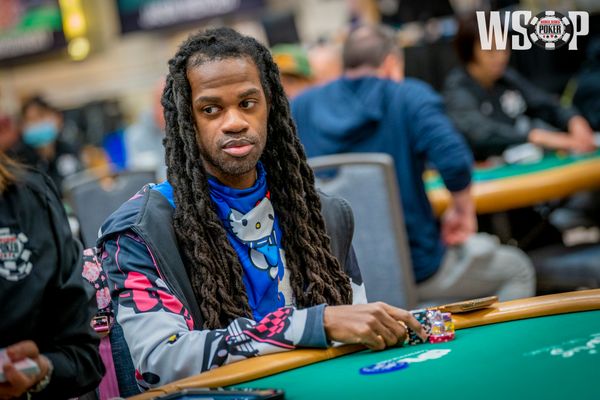
Maryland grinder Justin Arnwine sits second in chips with nine players remaining in the WSOP $1,500 6-Max event, eyeing his first bracelet and a $346,108 payday. The Hello Kitty-clad pro with 230+ tournament wins is leveraging both elite skills and newfound father energy to navigate one of summer’s toughest fields.
What Happened
Justin Arnwine has established himself as a force on the East Coast tournament circuit over the years, racking up more than 230 victories according to his own count, though many remain unreported in official databases. With $1.8 million in tracked earnings and a signature Hello Kitty wardrobe that makes him instantly recognizable at any poker table, Arnwine has built an impressive resume—but WSOP gold has remained elusive.
That could change this week. Arnwine bagged 11,135,000 chips at the end of Day 2 in Event #13, the $1,500 6-Max No-Limit Hold’em tournament, positioning himself as the second-largest stack among the final nine players. Only Michel Molenaar, who holds 11,380,000, stands ahead of him. Together, these two players control nearly half of all chips in play, giving Arnwine a commanding position to make his bracelet breakthrough.
The field of 1,840 entries has been whittled down through grueling competition. Arnwine has already secured $35,250, his best-ever WSOP cash, but he’s hunting for the top prize that would eclipse his previous best score—a $260,000+ victory in a WPT Mystery Bounty event last December. A bracelet win would represent more than ten times his largest WSOP score to date.
The final table lineup includes Harlan Karnovsky (5,230,000), Honghao Zhang (3,960,000), Julien Duveau (3,300,000), David Rees (3,185,000), Rania Nasreddine (2,950,000), Daniel Hill (2,890,000), and Thai Dinh (1,970,000). With blinds escalating and stack depths ranging from 24 to 142 big blinds, the tournament has reached its critical phase where ICM pressure and six-max dynamics will determine who claims the title.
The Poker Strategy Breakdown
Six-max tournaments demand a fundamentally different strategic approach than full-ring events. With only six seats at the table, players face action more frequently, and the premium hand range expands significantly. Arnwine’s deep run showcases the adjustments necessary to thrive in this format.
In six-max play, positional awareness becomes even more critical. The cutoff and button see action on nearly every hand, and stealing blinds becomes both more frequent and more necessary. Arnwine’s chip accumulation suggests he’s been effectively applying pressure from late position while defending his blinds with appropriate aggression. With fewer players to act behind you, speculative hands gain value, and three-betting ranges widen considerably compared to nine-handed play.
The tournament’s structure also rewards players who can shift gears effectively. Early on, with deeper stacks relative to blinds, Arnwine would have had room to play post-flop poker and see flops with suited connectors and small pairs. As the field thinned and antes kicked in, the game transitions toward a push-fold dynamic for shorter stacks while chip leaders can apply maximum pressure.
Arnwine’s comment about the field quality reveals another strategic dimension: “There was nobody here who you could just be like ‘okay, they have this obvious tell, or I know I can just get paid off, or I know I can always bluff them.’ Everybody was capable.” This observation indicates he was playing fundamentally sound poker rather than relying on opponent mistakes. Against strong competition, exploitative adjustments become less effective than game theory optimal foundations with selective deviations.
The chip distribution heading into the final day creates interesting strategic considerations. With Arnwine and Molenaar holding nearly equal massive stacks, they can afford to avoid each other and target the medium and short stacks. Players like Karnovsky with 65 big blinds sit in an awkward middle ground—too deep to shove recklessly, but not deep enough to comfortably see flops without commitment. The short stacks, particularly Thai Dinh with just 24 big blinds, face immediate survival pressure.
Reading The Field & Table Dynamics
The path to this final table required navigating a minefield of accomplished professionals. Cherish Andrews, Chris Hunichen, Shundan Xiao, and Lukas Hafner all fell in the late stages, each bringing their own formidable tournament resumes. That Arnwine outlasted this caliber of competition speaks to both his technical skills and mental fortitude.
ICM considerations will dominate final table play. With payouts escalating dramatically toward the top positions, the nine remaining players face complex decision trees where chip EV and dollar EV diverge significantly. Arnwine’s chip position gives him leverage—he can apply pressure knowing that medium stacks face elimination risk that costs them significant money.
The psychological element Arnwine mentioned about being a new father adds an intriguing dimension. His theory about “taking every spot” because losing means returning home to family creates a paradoxical fearlessness. This mental framework can eliminate the anxiety that causes players to play scared money, particularly when deep in a major tournament. Whether it’s genuine psychological advantage or simply confidence speaking, the mindset of having nothing to lose while simultaneously playing for everything can be powerful.
Six-max final tables also create unique social dynamics. With fewer players, reads develop faster, and patterns become more apparent. A player who’s been three-betting aggressively for two hours can’t suddenly shift to a tight strategy without observant opponents noticing. Arnwine will need to balance his aggression, mixing in enough bluffs to keep his value hands paid off while avoiding unnecessary confrontations with Molenaar’s equally massive stack.
The stack distribution also suggests we’ll see rapid eliminations once play resumes. The short stacks will need to find spots quickly before blinds and antes erode their chips further. This creates opportunities for the big stacks to apply pressure, but also danger—doubling up a short stack at the wrong time can shift momentum dramatically.
How To Apply This To Your Game
Arnwine’s deep run offers several lessons applicable to players at all levels, particularly those looking to improve their six-max tournament game.
Adjust your ranges for six-max: If you’re playing six-max tournaments with the same tight ranges you use in full-ring games, you’re leaving money on the table. Expand your opening ranges from all positions, particularly from the button and cutoff. Hands like K-9 suited, Q-J offsuit, and small pocket pairs become much more playable. Your three-betting frequency should increase, and you should be prepared to defend your blinds more liberally against aggressive opponents.
Master position even more: In six-max, you’ll be in late position far more frequently. Learn to maximize this advantage by applying pressure to players in the blinds and by isolating limpers aggressively. When out of position, exercise more caution—the positional disadvantage is magnified when you’ll face action on every street against skilled opponents.
Develop fearless aggression with discipline: Arnwine’s willingness to “take every spot” reflects the aggressive mindset necessary for tournament success, but it must be tempered with solid fundamentals. Being willing to put chips at risk doesn’t mean gambling recklessly. It means not letting fear of elimination prevent you from making +EV plays, especially when ICM considerations favor aggression.
Study your opponents constantly: Arnwine’s observation that everyone was “capable” indicates he was actively assessing each player’s skills. Even when you can’t find obvious exploits, you can identify tendencies—who folds too much to three-bets, who overvalues top pair, who gives up too easily on the river. These subtle reads accumulate into significant edges over long sessions.
Manage your mental game: Whether it’s Arnwine’s family motivation or another source, finding your psychological anchor can help you play your best poker under pressure. Some players use bankroll management to remove fear; others focus on process over results. Identify what allows you to make clear decisions without emotional interference.
Understand ICM at final tables: When you reach the late stages of a tournament, chip value and money value diverge. The chip leader can bully medium stacks who face significant pay jump pressure. If you’re a short stack, you need to find spots to double before you’re blinded away. If you’re in the middle, you need to avoid marginal situations against big stacks while attacking shorter stacks.
Key Takeaways
- Justin Arnwine sits second in chips with nine players remaining in the WSOP $1,500 6-Max event, holding 139 big blinds and controlling nearly half the chips in play alongside chip leader Michel Molenaar
- Six-max tournaments require significantly wider ranges, increased aggression, and heightened positional awareness compared to full-ring formats
- Arnwine navigated a brutally tough field including Cherish Andrews, Chris Hunichen, and other accomplished professionals to reach this position
- ICM pressure will dominate final table dynamics, with medium stacks facing difficult decisions against the two massive chip leaders
- Mental game factors, including Arnwine’s “new father rungood” mindset, can provide psychological advantages that translate to fearless decision-making
- The final table’s stack distribution suggests rapid action, with short stacks needing to find spots quickly while big stacks can apply maximum pressure
Frequently Asked Questions
What makes six-max poker strategy different from full-ring?
Six-max poker requires wider opening ranges, more frequent three-betting, and increased aggression overall. With fewer players at the table, you’ll be in late position more often and face the blinds more frequently. Premium hands like pocket pairs and suited connectors gain value because you’re more likely to play them in position. Blind defense also becomes more critical since you’ll be in the blinds more often, and opponents will be attacking them more aggressively.
How should ICM considerations affect play at a final table?
ICM (Independent Chip Model) calculations show that tournament chips aren’t worth equal dollar amounts at all times. When pay jumps are significant, medium stacks often need to play more conservatively to avoid elimination, while chip leaders can exploit this by applying maximum pressure. Short stacks need to find double-up spots before blinds consume their stack, sometimes taking slightly -EV chip situations because the alternative is blinding away. Understanding these dynamics helps you make optimal decisions that maximize your expected prize money rather than just chip accumulation.
What is “rungood” and does being a new parent really help poker performance?
“Rungood” is poker slang for a streak of good luck or positive variance. The “new parent rungood” phenomenon is a well-documented pattern where players returning from paternity or maternity leave often perform exceptionally well, possibly because they’re playing with a fearless mindset—winning means more money for their family, while losing means more time at home with their child. This psychological framework can eliminate scared money mentality and help players make optimal decisions without fear. While variance and skill remain the primary factors in poker success, mental game advantages shouldn’t be underestimated.
Final Thoughts
Justin Arnwine’s journey to the final day of this WSOP event represents more than just another tournament result. For a player with his extensive resume but limited WSOP success, a bracelet would validate years of grinding and cement his status among poker’s elite tournament professionals. His position—second in chips with a healthy stack and nearly half the chips in play between just two players—couldn’t be much better.
The strategic elements at play offer valuable lessons for any tournament player. Six-max poker rewards aggression, positional awareness, and the ability to adjust to changing dynamics. Arnwine’s navigation of a field packed with accomplished pros demonstrates that success at the highest levels requires both technical excellence and mental fortitude. His comments about field quality and his psychological approach reveal a player who’s thinking deeply about every aspect of his game.
Whether Arnwine converts this opportunity into his first bracelet or falls short, his deep run showcases the skills necessary to compete at poker’s highest level. For players looking to improve their own tournament results, studying how top professionals like Arnwine approach six-max play, manage ICM pressure, and maintain optimal mental states provides a roadmap to success. The combination of solid fundamentals, aggressive play, and fearless decision-making creates a formula that works across all levels of poker competition.
Ready to Sharpen Your Poker Game?
Master your poker game with expert hand analysis