Deeb Leads $10K 2-7 Draw as Hellmuth Chases Bracelet #18
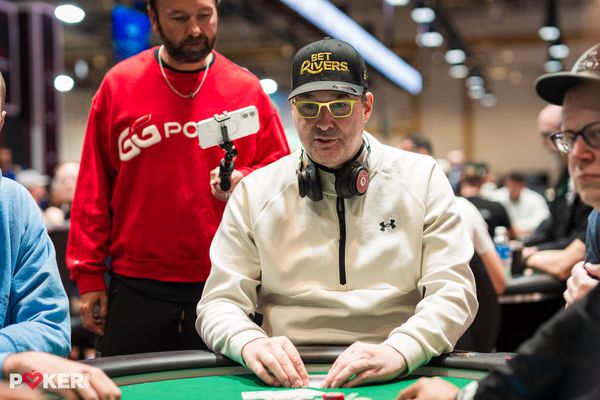
Shaun Deeb surged to the chip lead with 13 players remaining in the $10,000 No-Limit 2-7 Lowball Draw Championship, while Phil Hellmuth survived to keep his dream of an 18th WSOP bracelet alive. The Poker Brat sits in 12th place with 620,000 chips heading into the final day of one of the summer’s most skill-intensive events.
What Happened
The $10,000 No-Limit 2-7 Lowball Draw Championship has always attracted poker’s elite, and this year’s field didn’t disappoint. Day 2 delivered the kind of brutal swings that make this variant simultaneously beloved and feared by professionals.
Nick Schulman entered as the defending champion after claiming his seventh career bracelet in this exact event last year, defeating Darren Elias in heads-up play. His title defense ended when Hellmuth eliminated him with an 8-5 low, setting up a guaranteed new champion for 2026.
The tournament floor resembled a who’s who of poker royalty. One table featured Hellmuth alongside Ren Lin, Gus Hansen, Chris Moneymaker, and Ryan Riess. Adjacent to them sat Daniel Negreanu, Alex Foxen, and Shaun Deeb—a lineup that would make any final table proud.
Chris Moneymaker experienced the definition of a rollercoaster session. He demolished Jesse Lonis twice in consecutive hands, first cracking Lonis’s eight with a perfect wheel (7-5-4-3-2). Lonis immediately re-entered, only to run into Moneymaker’s pat 10-8 with his own 10-9 draw. Despite building a formidable stack, Moneymaker’s run ended in brutal fashion when he finished 34th—four spots shy of the money—after colliding with Ryutaro Suzuki’s wheel.
Daniel Negreanu started Day 2 as the second-largest stack but plummeted to near-elimination by the second break. With 31 players remaining and 30 paid spots, both Negreanu and Foxen found themselves dangerously short.
Foxen made a calculated bubble play, min-raising from under the gun with the blinds approaching. He got his stack in holding a pat wheel and doubled through, leapfrogging Negreanu on the counts. Jon Shoreman became the unfortunate bubble boy in 31st place, allowing both Foxen and Negreanu to secure minimum cashes.
Negreanu’s comeback attempt fell short at 20th place. In his elimination hand, he stood pat with 8-7-5-4-2, only to watch Per Hildebrand draw one card and spike a nine to make 9-7-5-4-2, sending the six-time bracelet winner to the rail.
Shaun Deeb timed his surge perfectly, dominating the final level to bag 1.5 million chips—the overnight lead. Hellmuth survived with a workable 620,000, keeping his bracelet dreams intact for at least one more day.
The Poker Strategy Breakdown
No-Limit 2-7 Lowball Draw represents one of poker’s purest skill tests, and the hands from Day 2 illustrate why this game demands such respect from professionals.
Moneymaker’s back-to-back eliminations of Lonis showcase fundamental 2-7 strategy. In the first hand, both players drew one card—a common scenario that often comes down to who makes the better low. Moneymaker’s wheel (7-5-4-3-2) is the absolute nuts in this game, the equivalent of a royal flush in hold’em. When you make it, you’re guaranteed to win the pot.
The second hand demonstrates the power of pat hands. Standing pat with a 10-8 applies maximum pressure to opponents who must draw. Lonis needed to improve to beat Moneymaker’s made hand, and when he drew to a 10-9, he was drawing dead or nearly dead depending on his exact holding. This is the essence of 2-7: pat hands have tremendous equity against drawing hands, even relatively strong draws.
Foxen’s bubble play reveals sophisticated tournament thinking. Min-raising from under the gun with a short stack appears weak, but when you’re holding a pat wheel, you’re setting a trap. Any caller or three-bettor faces a nightmare scenario—they’re almost certainly behind and will need to draw to win. Foxen’s double-up wasn’t lucky; it was the mathematical expectation of holding the best possible hand.
Negreanu’s elimination hand against Hildebrand illustrates the variance inherent in 2-7. Standing pat with an eight-seven (8-7-5-4-2) is typically a strong play. You’re representing a made hand and forcing opponents to make difficult decisions. Hildebrand’s one-card draw to make a nine-seven was the right play—he was behind but had outs. The nine he caught was one of several cards that would give him a better hand than Negreanu’s eight-seven.
This hand also demonstrates why position and aggression matter so much in 2-7. The player who stands pat first applies maximum pressure. If Negreanu had position, he might have seen Hildebrand draw one and reconsidered his pat decision, potentially drawing to improve his eight-seven to something better.
Reading The Field & Table Dynamics
The concentration of elite players in this event fundamentally changes the strategic landscape. When your table includes multiple bracelet winners and players who’ve studied 2-7 for decades, standard exploitative plays become dangerous.
Hellmuth’s position in 12th place with 620,000 chips puts him in an interesting spot for the final day. He’s not comfortable, but he’s not desperate either. With 13 players remaining and significant pay jumps ahead, ICM considerations will dominate decision-making.
Deeb’s chip lead gives him enormous leverage. In 2-7, having a big stack allows you to apply relentless pressure with pat hands and strong draws. Opponents must respect your raises because you can afford to gamble, while they’re fighting for tournament life. This dynamic becomes especially pronounced in the later stages when pay jumps matter.
The bubble dynamics we witnessed reveal how differently professionals approach tournament poker compared to amateurs. Foxen and Negreanu openly discussed their stack sizes and bubble situation—a level of transparency that might seem strange but reflects their understanding of the mathematics involved. They both knew exactly what they needed to do to survive, and Foxen executed his plan perfectly.
Moneymaker’s elimination just before the money demonstrates the cruelty of tournament poker. After building a substantial stack and eliminating Lonis twice, one bad runout against Suzuki’s wheel ended his tournament. This is why chip preservation matters—every chip you save could be the difference between bubbling and making a deep run.
How To Apply This To Your Game
Even if you’re not playing $10,000 buy-in 2-7 Lowball Draw Championships, the strategic principles from this tournament apply across poker variants.
First, understand the power of made hands versus draws. Whether you’re playing 2-7, Omaha, or hold’em, standing pat or checking back strong made hands can be more profitable than betting when your opponent must improve to beat you. Let them pay to draw out on you rather than giving them free cards.
Second, recognize bubble dynamics and use them to your advantage. Foxen’s min-raise with a monster hand exploited the bubble pressure perfectly. In any tournament near the money, short stacks become desperate while medium stacks become cautious. Identify which player type you’re facing and adjust accordingly.
Third, accept variance as part of the game. Negreanu made a fundamentally sound play by standing pat with an eight-seven, and Hildebrand made an equally sound play by drawing one. Sometimes your opponent hits their card. The key is making correct decisions repeatedly over time, not winning every individual hand.
Fourth, pay attention to tournament stage and stack sizes. Moneymaker’s aggressive play with a big stack was correct—he was leveraging his chips to accumulate more. However, as the bubble approached, that same aggression became riskier. Adjust your strategy based on where you are in the tournament structure.
Finally, study game variants outside your comfort zone. The professionals in this event have invested thousands of hours learning 2-7 strategy because it sharpens their overall poker thinking. Understanding different games makes you a more complete player, even if you primarily play no-limit hold’em.
Key Takeaways
- Shaun Deeb leads the final 13 players with 1.5 million chips in the $10,000 No-Limit 2-7 Lowball Draw Championship
- Phil Hellmuth survived Day 2 with 620,000 chips and remains in contention for his 18th career WSOP bracelet in an event he’s finished second in twice before
- Pat hands in 2-7 Lowball carry enormous value, as demonstrated by Moneymaker’s 10-8 and Foxen’s wheel during crucial moments
- Bubble dynamics create opportunities for strategic players willing to exploit ICM pressure, particularly when holding premium hands
- Even world-class players like Daniel Negreanu and Chris Moneymaker experience brutal swings in this variance-heavy game
- The final day will determine whether Hellmuth can finally capture the bracelet that’s eluded him since his runner-up finishes in 1993 and 2011
Frequently Asked Questions
What is 2-7 Lowball Draw and why is it considered so skill-intensive?
In 2-7 Lowball Draw, the worst traditional poker hand wins—the best possible hand is 7-5-4-3-2 (called a wheel or number one). Straights and flushes count against you, and aces are always high. Players receive five cards and can discard and draw new cards to improve their hand. The game is skill-intensive because it involves multiple betting rounds, drawing decisions, position play, and reading opponents’ draw patterns. Unlike hold’em where community cards are shared, 2-7 requires you to construct your entire hand through the draw, creating complex strategic situations.
Why has Phil Hellmuth never won the $10K 2-7 Lowball Draw Championship despite his success in other events?
Despite holding 17 WSOP bracelets, Hellmuth has finished runner-up in this event twice—in 1993 to Billy Baxter and in 2011 to John Juanda. The 2-7 variant requires a different skill set than the hold’em events where Hellmuth has dominated. The game rewards patience, mathematical precision, and the ability to navigate high-variance situations without tilting. It’s also one of the most competitive fields at the WSOP, consistently attracting the world’s best mixed-game players who have spent years mastering the format.
How should you play a pat hand on the bubble of a major tournament?
Playing a pat hand on the bubble depends on your stack size and the strength of your pat hand. With a premium pat hand like Foxen’s wheel, you want to get maximum value while exploiting bubble pressure. A min-raise can induce action from players who think you’re trying to steal, while a larger raise might fold out hands that would call and draw. With a medium-strength pat hand like a ten or jack, you need to consider your opponents’ likely holdings and whether they’ll respect your pat representation. The key is balancing value extraction with the risk of elimination just before the money.
Final Thoughts
The $10,000 No-Limit 2-7 Lowball Draw Championship continues to prove why it’s one of the most respected events on the WSOP schedule. The combination of elite competition, high variance, and pure skill creates compelling poker drama that few other tournaments can match.
Phil Hellmuth’s quest for bracelet number 18 in an event that’s haunted him for over three decades adds a compelling narrative to the final day. After two runner-up finishes spanning nearly two decades, Hellmuth has the experience and motivation to close this one out. However, with Shaun Deeb holding the chip lead and a field packed with accomplished mixed-game specialists, nothing is guaranteed.
The hands we witnessed on Day 2 demonstrate the beautiful brutality of tournament poker. Moneymaker’s rise and fall, Negreanu’s near-elimination and subsequent bust-out, and Foxen’s bubble survival all illustrate how quickly fortunes change. For students of the game, these hands offer invaluable lessons in tournament strategy, hand reading, and mental resilience. Whether you play 2-7 or not, understanding how the world’s best players navigate these high-pressure situations will improve your overall poker game.
Ready to Sharpen Your Poker Game?
Master your poker game with expert hand analysis