Jeff Madsen’s Dealer’s Choice Victory: Mixed Game Mastery
Two decades after becoming the youngest WSOP bracelet winner in history, Jeff Madsen has proven his poker prowess extends far beyond youthful talent. The 41-year-old captured his fifth career bracelet in the $1,500 Dealer’s Choice event, ending an 11-year drought and cementing his status as one of poker’s most complete players.
What Happened
Madsen navigated a record-breaking field of 656 players to claim the Dealer’s Choice title, earning $161,057 and his first WSOP bracelet since 2015. The victory came exactly 20 years after his breakout summer in 2006, when he won Player of the Year honors as a 21-year-old prodigy.
The final table showcased Madsen’s dominance, as he seized the chip lead before the dinner break and maintained control throughout. He personally eliminated three of the final four players, including runner-up Philip Wess, a respected mixed-game cash player from Boston who was making his Dealer’s Choice tournament debut.
Wess, known for his appearances in Las Vegas’s prestigious $80/160 mixed games, earned $107,341 for his second-place finish. Despite falling one spot short of the bracelet, the relative tournament unknown proved he could compete with poker’s elite on the biggest stage.
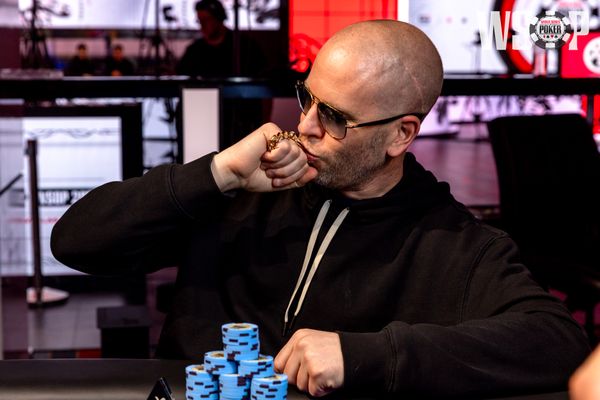
The victory was particularly emotional for Madsen, who credited years of dedicated work to the game. “It’s just nice because I put a lot of work into poker,” he said following the win. “I can’t believe it’s been 20 years in poker. More to come, more to come.”
A boisterous rail of friends and supporters celebrated each pot Madsen won, creating an electric atmosphere at the final table. The group included people from various walks of life, with one friend even creating AI-generated posters to support their champion. “Most rails aren’t like that,” Madsen noted. “It was awesome.”
The Poker Strategy Breakdown
Dealer’s Choice represents one of the WSOP’s most strategically complex events, requiring proficiency across 21 different poker variants. Unlike standard No-Limit Hold’em tournaments where players can specialize in a single format, Dealer’s Choice demands versatility and adaptability.
The format’s unique structure adds multiple strategic layers beyond standard tournament play. Players must not only execute properly in each variant but also make meta-game decisions about which games to select based on their opponents’ perceived weaknesses. This creates a psychological chess match where game selection becomes as important as hand selection.
Madsen’s victory demonstrates mastery of this multi-layered approach. Success in Dealer’s Choice requires deep knowledge of games ranging from traditional formats like Omaha Hi-Lo and Stud variants to more obscure games like Badacey and Big O. Each game has distinct optimal strategies, hand values, and betting patterns that players must internalize.
The tournament also tests a player’s ability to switch mental gears rapidly. One orbit might feature aggressive No-Limit Hold’em action, while the next requires the patience and precision of Limit Triple Draw. Players who can’t adjust their aggression levels and decision-making frameworks across these variants find themselves at a severe disadvantage.
Madsen emphasized the prestige of winning this particular event: “You could argue High Rollers or the $10K Deuce, there are certain specific games that might be higher skill, but I think this is a good showing that I’m a well-rounded player.”
Reading The Field & Table Dynamics
The Dealer’s Choice final table featured a mix of accomplished professionals and skilled mixed-game specialists, including Dario Sammartino, who finished fourth for $49,383. This blend of tournament veterans and cash game experts created fascinating dynamics throughout the final table.
Madsen’s chip accumulation before dinner proved crucial to his victory. In mixed-game tournaments, chip leadership provides even greater advantages than in standard formats. The big stack can apply pressure across multiple game types, forcing opponents into difficult decisions in formats where they may be less comfortable.
The psychological element of game selection cannot be understated. When Madsen chose games, his opponents had to consider whether he was selecting his strongest formats or targeting their weaknesses. This uncertainty creates additional mental strain on shorter stacks already fighting for survival.
Wess’s deep run as a tournament newcomer highlights an important dynamic in mixed-game events: cash game experience translates exceptionally well to these tournaments. Unlike No-Limit Hold’em, where tournament-specific skills like ICM understanding and short-stack play differ significantly from cash games, mixed-game tournaments closely mirror their cash game counterparts in hand-to-hand play.
The record-setting 656-player field demonstrates the growing popularity of mixed-game tournaments. As more players develop well-rounded skills, these events attract larger fields and more competitive lineups, making victories increasingly impressive.
How To Apply This To Your Game
For players looking to improve their mixed-game tournament performance, Madsen’s victory offers several actionable lessons. First and foremost: breadth of knowledge matters. You don’t need to be the world’s best at any single variant, but you must be competent across all formats offered.
Start by identifying your weakest games and dedicating focused study time to them. Many players avoid games they dislike, but this creates exploitable weaknesses in Dealer’s Choice formats. Even raising your proficiency from poor to average in a few variants can significantly impact your overall results.
Practice game selection strategy before entering these events. Consider which games favor big stacks versus short stacks, which formats create the most variance, and which variants your typical opponents might struggle with. This meta-game knowledge separates good mixed-game players from great ones.
Develop mental endurance for format switching. Practice sessions should include rotating through multiple games rather than focusing on one variant for extended periods. This builds the cognitive flexibility required to excel when games change every orbit.
Study how hand values shift across formats. A hand that’s premium in one game might be marginal in another. Understanding these relative value shifts prevents costly mistakes when transitioning between variants.
For cash game specialists considering tournament play, Wess’s success demonstrates that your skills translate well to mixed-game tournaments. The gap between cash and tournament play is narrower in these formats than in No-Limit Hold’em, making them excellent entry points for cash players exploring tournament poker.
Key Takeaways
- Dealer’s Choice tournaments require proficiency across 21 poker variants, making them among the most challenging WSOP events
- Game selection strategy adds a crucial meta-game layer beyond standard tournament decisions
- Chip leadership provides enhanced advantages in mixed-game formats by allowing pressure across multiple game types
- Cash game experience translates exceptionally well to mixed-game tournaments compared to No-Limit Hold’em events
- Improving your weakest games matters more than perfecting your strongest ones in these formats
- Mental flexibility and the ability to switch strategic frameworks rapidly separates elite mixed-game players from the field
Frequently Asked Questions
What makes Dealer’s Choice one of the toughest WSOP events?
Dealer’s Choice requires players to be proficient in 21 different poker variants, from traditional games like Omaha and Stud to more obscure formats like Badacey and Big O. Players must not only execute properly in each game but also strategically select games based on opponents’ weaknesses. This combination of technical skill across multiple formats and meta-game decision-making creates exceptional complexity. Adam Friedman’s three consecutive $10,000 Dealer’s Choice Championship victories is considered one of the greatest WSOP accomplishments precisely because of this difficulty.
How did Jeff Madsen become the youngest WSOP bracelet winner?
In 2006, Madsen won his first bracelet at age 21 years and 5 weeks, becoming the youngest player ever to achieve this feat at the time. He followed this by winning a second bracelet less than a week later and adding two third-place finishes, earning him the WSOP Player of the Year award. His 2026 victory marks his fifth career bracelet and first since 2015, coming exactly 20 years after his breakout summer.
What strategy should players use for game selection in Dealer’s Choice?
Effective game selection in Dealer’s Choice involves multiple considerations: choosing games where you have the strongest edge, selecting formats that exploit opponents’ known weaknesses, and picking games that favor your stack size. Big stacks often benefit from high-variance games that put pressure on opponents, while short stacks might prefer lower-variance formats. Advanced players also consider which games allow them to maximize their positional advantages and which formats their specific opponents struggle with most.
Final Thoughts
Jeff Madsen’s fifth bracelet victory represents more than just ending an 11-year drought—it demonstrates that elite poker success requires constant evolution and comprehensive skill development. In an era where specialization dominates, his Dealer’s Choice triumph showcases the enduring value of being a complete player.
The growing popularity of mixed-game tournaments, evidenced by the record 656-player field, signals a maturing poker ecosystem where players increasingly value well-rounded skills. For those willing to put in the work across multiple formats, these events offer opportunities to compete against smaller, more specialized fields than standard No-Limit Hold’em tournaments.
Whether you’re a cash game specialist like runner-up Philip Wess or a tournament veteran like Madsen, mixed-game events reward preparation, adaptability, and mental endurance. As Madsen’s 20-year journey shows, sustained success in poker comes from continuous learning and expanding your strategic toolkit across all formats.
Ready to Sharpen Your Poker Game?
Master your poker game with expert hand analysis