WSOP Cash Game Drama: Player Ejected Over Fund Verification
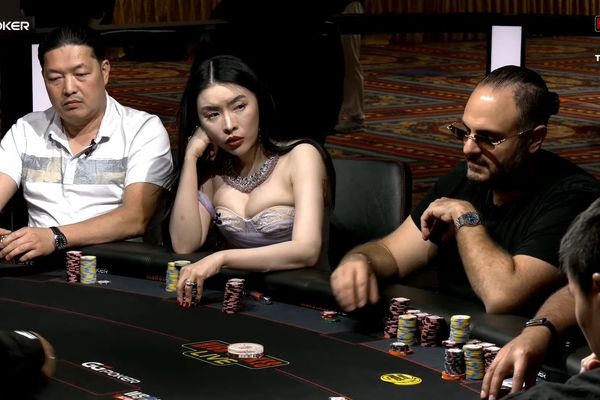
The World Series of Poker’s inaugural High Stakes Live broadcast hit an unexpected snag when regular player Britney was ejected mid-stream due to compliance issues. The incident, which unfolded during a $100/$200 cash game produced by High Stakes Poker Productions, highlighted the increasingly stringent financial verification protocols at major poker venues.
What Happened
Friday night’s stream marked a significant milestone as the first live cash game broadcast directly from the WSOP, with High Stakes Poker Productions—the team behind Hustler Casino Live—at the helm. The $100/$200 game featured familiar faces from the HCL lineup, including Britney, who joined approximately 20 minutes after cards were in the air with a $50,000 minimum buy-in.
Her session started promisingly. After doubling through with pocket eights against an opponent’s ace-king, Britney built her stack close to $100,000. However, variance swung against her as she lost significant pots to both Rampage and Nik Airball. In one notable hand, her king-jack fell to Rampage’s pocket nines on a king-high board. Another costly confrontation saw Airball river a straight to crack her top pair, ultimately sending her first buy-in to Rampage.
Undeterred, Britney reloaded for another $50,000 and climbed back to $90,000 before busting a second time. Shortly thereafter, production displayed a promotional graphic for several minutes. When the stream returned, Britney’s seat sat empty—she’d been removed from the game entirely.
The culprit? Casino compliance officers couldn’t verify the source of her cash buy-in. According to PokerOrg’s confirmation, Britney initially received clearance to play after being told she couldn’t participate, only to be pulled roughly two hours into the broadcast. Game runner Ryan Feldman addressed the situation, explaining that WSOP security maintains exceptionally strict compliance standards, particularly regarding cash transactions in high-stakes games that dwarf typical tournament buy-ins.
Despite the disruption, the game continued with Airball claiming top honors at $323,800 profit, while Rampage finished close behind with $301,600. On the losing end, Rips dropped $411,400 and Ace lost $131,000, both exceeding Britney’s losses.
The Poker Strategy Breakdown
While the compliance drama overshadowed the action, several hands from Britney’s abbreviated session offer valuable strategic lessons for players navigating high-stakes cash games.
Her successful double-up with pocket eights against ace-king represents a classic coin-flip scenario that every tournament and cash game player must navigate. The decision to get stacks in pre-flop with middle pairs depends heavily on effective stack sizes, opponent tendencies, and table dynamics. At 250 big blinds deep—the effective stack with a $50,000 buy-in at $100/$200—there’s significantly more room for post-flop maneuvering than in typical tournament scenarios.
However, Britney’s willingness to commit her stack suggests either a strong read on her opponent’s range or a calculated gamble to build momentum early. Against ace-king specifically, pocket eights are roughly 52-48 favorites, making this a marginal spot when extremely deep-stacked. More conservative players might opt for a flat call to see a flop in position, preserving stack depth and maintaining flexibility.
The king-jack hand against Rampage’s pocket nines reveals a common trap for aggressive players. Flopping top pair with a decent kicker on a king-high board feels strong, but against thinking opponents who continue applying pressure, you must consider their range construction. Rampage’s willingness to build a pot with nines suggests either a strong read that Britney’s range was wide or confidence in his ability to navigate post-flop spots against her tendencies.
This hand illustrates the importance of range versus range thinking rather than fixating on your specific holding. While king-jack makes a strong pair, it’s vulnerable to better kings, sets, and two-pair combinations. Against an opponent applying consistent pressure, you must weigh pot odds, implied odds, and the likelihood they’re bluffing versus value-betting a superior hand.
The hand where Airball rivered a straight against Britney’s top pair demonstrates the brutal reality of deep-stacked cash games: you can make the correct decision on every street and still lose a massive pot. Without seeing the specific action, we can infer that Airball likely had drawing equity throughout the hand, making his aggression or calls mathematically sound despite trailing on earlier streets.
This scenario underscores why bankroll management and emotional control are paramount in high-stakes cash games. Even with $100,000 in play, Britney faced opponents with deeper stacks and potentially more experience navigating these specific dynamics. The swings in these games can be devastating, and maintaining composure through variance is essential.
Reading The Field & Table Dynamics
The player lineup for this inaugural WSOP stream featured a mix of established high-stakes regulars and content creators, each bringing distinct playing styles and strategic approaches. Understanding these dynamics is crucial for anyone aspiring to compete at this level.
Nik Airball has built a reputation as an aggressive, high-variance player willing to apply maximum pressure and gamble in marginal spots. His $323,800 profit on the night demonstrates that when his style connects with favorable runout, the results can be spectacular. However, this approach requires substantial bankroll depth and emotional resilience to weather the inevitable downswings.
Rampage, finishing nearly even with Airball in profit, represents a more balanced aggressive approach. His ability to extract value with pocket nines on a king-high board suggests strong hand-reading skills and confidence in his post-flop execution. These qualities separate competent players from elite ones in deep-stacked cash games.
For Britney, entering this field with the minimum buy-in placed her at an immediate disadvantage. In cash games, stack depth directly correlates to strategic flexibility. Shorter stacks face increased pressure to commit or fold in marginal situations, while deeper stacks can apply pressure and see more flops profitably. Her decision to reload after the first bust showed proper bankroll management and competitive spirit, though the compliance issue ultimately ended her session prematurely.
The presence of players like Rips, who lost over $400,000, illustrates the extreme variance inherent in these games. Whether these losses resulted from poor play, bad beats, or some combination remains unclear without hand-by-hand analysis, but the swings demonstrate why proper bankroll management isn’t optional at these stakes—it’s survival.
Table dynamics in streamed games add another layer of complexity. Players must balance optimal strategy with entertainment value, knowing thousands of viewers are watching and forming opinions. This pressure can lead to suboptimal plays designed to create action or avoid appearing weak, potentially conflicting with mathematically sound decisions.
How To Apply This To Your Game
While most players won’t face $100/$200 stakes, the strategic principles from this session apply across all levels of poker.
First, understand the importance of adequate bankroll depth relative to your table. Britney’s minimum buy-in limited her strategic options against deeper-stacked opponents. As a general rule, buying in for at least 100 big blinds gives you sufficient depth to play your full range profitably. In games where opponents regularly buy in deeper, consider matching their stack size to eliminate this disadvantage.
Second, recognize when top pair isn’t the nuts. Many developing players overvalue hands like king-jack on king-high boards, particularly against aggressive opposition. Develop the discipline to fold strong-but-vulnerable hands when facing significant pressure from opponents whose ranges are weighted toward value. This doesn’t mean becoming overly tight, but rather understanding when your hand strength is marginal given the action.
Third, embrace calculated aggression with medium pairs. Pocket eights through jacks occupy an awkward space in many players’ ranges—too strong to fold pre-flop, but vulnerable to overcards. In deep-stacked situations, these hands often play better with position and the ability to see flops cheaply. However, when you identify opponents who overvalue unpaired hands like ace-king, getting stacks in pre-flop can be profitable.
Fourth, prepare for variance both financially and emotionally. Britney’s session featured a promising double-up followed by consecutive significant losses. This rollercoaster is standard in poker, particularly at higher stakes. Maintain a bankroll that can withstand 20-30 buy-in downswings, and develop mental game practices that prevent tilt from derailing your decision-making.
Finally, understand the non-poker factors that can impact your ability to play. The compliance issue that ended Britney’s session serves as a reminder that major venues have strict protocols around fund verification. When playing at regulated casinos, particularly at high stakes, ensure your financial documentation is in order. This means having clear records of fund sources, using traceable payment methods when possible, and understanding the venue’s specific requirements before sitting down.
Key Takeaways
- Major poker venues like the WSOP maintain increasingly strict compliance protocols for cash game participants, particularly regarding fund verification for large buy-ins
- Buying in for the minimum at a deep-stacked cash game places you at a strategic disadvantage against opponents with 2-3x your stack depth
- Middle pocket pairs (eights through jacks) are roughly coin-flips against overcards like ace-king, making pre-flop all-ins marginal when extremely deep-stacked
- Top pair with a decent kicker can be a trap hand against aggressive opponents on coordinated boards—develop the discipline to fold when facing significant pressure
- Variance in high-stakes cash games can be extreme; proper bankroll management and emotional control are essential for long-term success
- Table dynamics in streamed games add complexity as players balance optimal strategy with entertainment value for viewers
Frequently Asked Questions
Why was Britney removed from the WSOP cash game?
Britney was removed due to compliance issues related to fund verification. Casino officials couldn’t verify the source of her cash buy-in, which led to her ejection approximately two hours into the stream. She initially received clearance to play after being told she couldn’t participate, but was ultimately pulled from the game as WSOP maintains strict security protocols around cash transactions, especially in high-stakes games.
How much did the biggest winners and losers make in this game?
Nik Airball finished as the biggest winner with $323,800 in profit, while Rampage was close behind at $301,600. On the losing side, Rips lost $411,400 and Ace dropped $131,000. These swings demonstrate the extreme variance inherent in $100/$200 deep-stacked cash games where buy-ins start at $50,000.
Should you buy in for the minimum at high-stakes cash games?
Buying in for the minimum at deep-stacked cash games places you at a strategic disadvantage against opponents with deeper stacks. While it limits your potential loss on any single session, it also restricts your strategic flexibility and ability to apply pressure. If you can’t comfortably buy in for at least the average stack size at your table, you should consider playing lower stakes where your bankroll provides adequate depth.
Final Thoughts
The inaugural WSOP High Stakes Live broadcast delivered both compelling poker action and an unexpected reminder that the game extends beyond cards and chips. Britney’s ejection, while unfortunate, highlights the evolving regulatory landscape surrounding high-stakes poker. As venues face increasing scrutiny around anti-money laundering protocols, players must adapt by ensuring their financial documentation meets compliance standards before sitting down.
From a strategic perspective, this session reinforced fundamental principles that apply across all stakes: stack depth matters, top pair isn’t always the nuts, and variance is an unavoidable reality. The $600,000+ swing between the biggest winner and biggest loser demonstrates why bankroll management and emotional control separate professionals from gamblers. Whether you’re playing $1/$2 at your local card room or $100/$200 at the WSOP, these principles remain constant.
As High Stakes Poker Productions continues streaming from the WSOP, expect more dramatic swings, strategic battles, and potentially additional compliance-related disruptions. For players watching at home, these streams offer invaluable learning opportunities—not just in hand analysis, but in understanding the complete ecosystem of professional poker, from table dynamics to regulatory requirements.
Ready to Sharpen Your Poker Game?
Master your poker game with expert hand analysis