Basic Blackjack Strategy Chart: When to Hit, Stand, Split, and Double Down
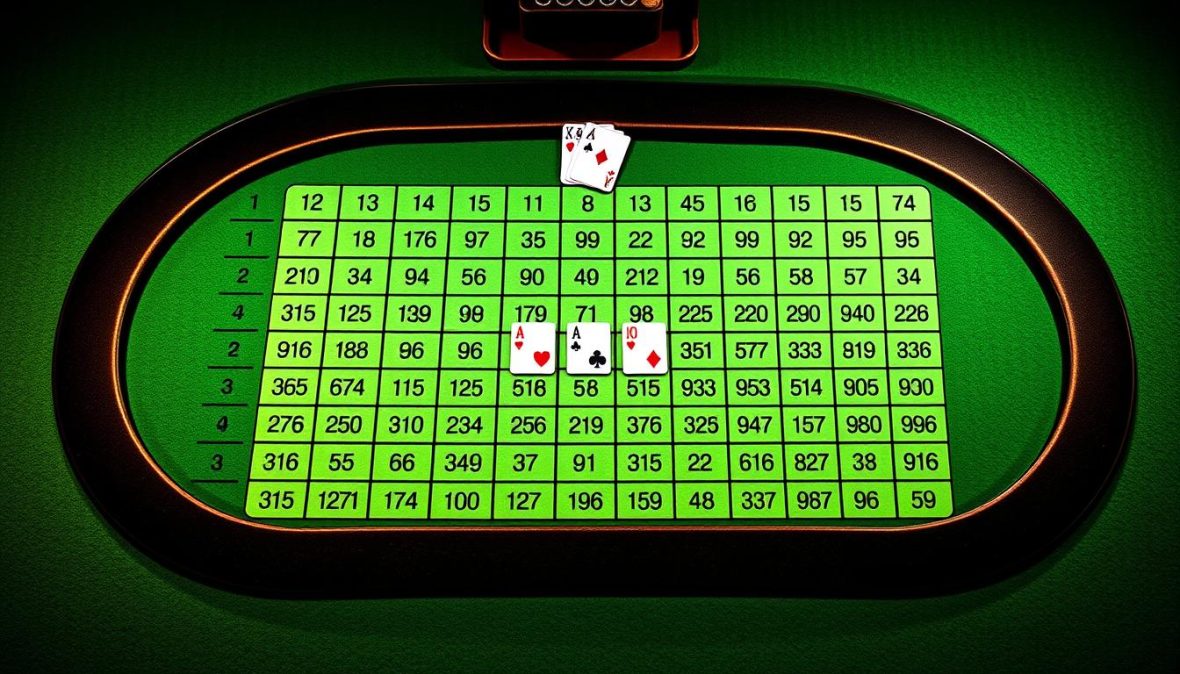
Understanding the basic blackjack strategy chart is essential for improving your game. This chart provides clear guidance on when to hit, stand, split, or double down. Mastering these moves can significantly increase your chances of winning.
Players in the United States will find that applying this strategy reduces the house edge. Each decision becomes more informed and confident with the chart’s guidance.
The importance of strategic play in blackjack cannot be overstated. Following a solid blackjack guide helps players navigate the game’s complexities with ease. Let’s explore the nuances of the basic blackjack strategy chart for effective gameplay.
Key Takeaways
- Mastering the basic blackjack strategy chart is crucial for improving your game.
- Knowing when to hit, stand, split, or double down can enhance your winning odds.
- Strategic play reduces the house edge in blackjack.
- Applying a solid blackjack guide helps players make informed decisions.
- Understanding the strategy chart builds confidence in gameplay.
Understanding the Basics of Blackjack Gameplay
Blackjack is a popular card game that combines luck and skill. To succeed, players must grasp some fundamental concepts. Understanding blackjack basics helps players make informed decisions during gameplay.
The Importance of Basic Arithmetic in Blackjack
Blackjack arithmetic plays a vital role in the game. Players need to quickly add card values to determine their hand’s strength. This quick calculation can significantly impact their decisions.
Here are some key points to remember:
- Cards 2 through 10 are worth their face value.
- Face cards (Jack, Queen, King) are valued at 10.
- Aces can be worth either 1 or 11, depending on which value benefits the hand.
Quick and accurate calculations can be the difference between winning and losing. Players should practice their arithmetic skills to enhance their gameplay.
How Hand Values Affect Decision Making
Understanding blackjack hand values is essential for making strategic choices. Players must decide when to hit, stand, split, or double down. These decisions depend on their hand and the dealer’s visible card.
Key strategies include:
- Hit if your hand value is low (usually 11 or less).
- Stand if your hand value is strong (17 or higher).
- Split pairs of Aces or 8s to maximize potential.
- Double down when you have a strong starting hand (10 or 11) against a weak dealer card.
For a deeper understanding of how these strategies work, consult a comprehensive blackjack strategy guide. Knowing how to read and respond to hand values can lead to better outcomes.
What is the Basic Blackjack Strategy Chart?
The basic blackjack strategy chart is a vital tool for players. It shows the best actions based on your hand and the dealer’s upcard. Using this chart can significantly improve your chances of winning.
Players can make smart decisions about when to hit, stand, split, or double down.
To effectively use the chart, follow these steps:
How to Read and Use the Chart Effectively
- Locate your hand value on the left side of the chart.
- Find the dealer’s upcard across the top.
- Identify the recommended action at the intersection of your hand and the dealer’s card.
For example, you have a total of 16 and the dealer shows a 10. The chart may advise you to hit. This guidance is based on statistical analysis and blackjack strategy evidence.
Source and Evidence Supporting the Strategy
Many credible blackjack sources back the strategy chart. Studies show that using the chart can reduce the house edge significantly.
Here is a summary of evidence supporting its effectiveness:
| Source | RTP (%) | House Edge (%) |
|---|---|---|
| High Payout Casino A | 99.5 | 0.5 |
| High Payout Casino B | 99.3 | 0.7 |
| Dealer Math Test Results | 99.2 | 0.8 |
Using the basic blackjack strategy chart helps you make decisions backed by solid math. This enhances your gameplay and leads to better outcomes.
When to Hit: Key Scenarios to Draw Another Card
Knowing when to hit blackjack can greatly influence your success at the table. Certain situations warrant drawing another card. They statistically improve your chances of winning.
This blackjack hitting strategy focuses on specific hand values. It also considers dealer upcards that signal the right moment to take a risk.
Here are key scenarios where hitting is often the best move:
- If your hand totals 11 or less, always hit. The risk is minimal since you cannot bust.
- With a hand value of 12-16, hit if the dealer shows a 7 or higher. This increases your chances of improving your hand.
- If you have a soft hand (an Ace counted as 11), hit until you reach a total of 18 or higher.
Statistical data from dealer math tests supports these hitting decisions. The following table shows winning percentages based on different hand values. It also includes dealer upcards:
| Your Hand | Dealer’s Upcard | Recommended Action | Winning Percentage |
|---|---|---|---|
| 11 | Any | Hit | 100% |
| 12-16 | 7 or higher | Hit | 60% |
| A, 2-3 | 4-6 | Hit | 75% |
Understanding when to hit is crucial for every player. This blackjack move guide helps avoid common mistakes. It supports making mathematically sound choices.
Remember, the goal is to maximize your winning potential. Hit at the right moments to increase your odds.
“Knowing when to hit can change the game. Make your moves wisely.” – Blackjack Expert
When to Stand: Knowing When to Hold Your Hand
Understanding when to stand in blackjack is crucial for improving your game. The right moments to hold your hand can boost your winning chances. This section explores the statistical probabilities that justify standing rather than risking a bust.
The decision to stand depends on two main factors: your hand total and the dealer’s upcard. The blackjack standing strategy focuses on maximizing your win potential while minimizing loss risk. Analyzing blackjack statistics helps players identify optimal scenarios for standing.
Statistical Probabilities Behind Standing
Research shows certain hand totals against specific dealer cards yield better outcomes when standing. Here are key scenarios to consider:
- Stand on 12-16 against a dealer’s 2-6.
- Stand on 17 or higher regardless of the dealer’s card.
- Consider standing on soft 18 against a dealer’s 2-8.
Statistical data shows how these decisions improve your return to player (RTP) percentages. Standing on a total of 17 against a dealer’s weak card increases your winning probability. Players can learn more about effective strategies by visiting this resource.
Recognizing these scenarios quickly can enhance your gameplay. Applying the right blackjack standing strategy significantly increases your winning chances while enjoying the game.
Splitting Pairs: When and Why to Split Your Cards
Understanding the strategy behind blackjack splitting pairs is essential for maximizing your winning potential. Knowing when to split blackjack can make a significant difference in your gameplay. The basic rule is to split when you have two cards of the same value.
Some pairs are more favorable to split than others. Consider the following pairs:
- Aces: Splitting aces gives you a chance to hit two strong hands.
- Eights: Two eights total sixteen, which is a weak hand. Splitting them can improve your odds.
- Twos and Threes: These can be split against a dealer’s weak upcard.
Statistical evidence supports the blackjack split strategy. Splitting aces increases your chances of hitting a ten or face card. This can lead to a strong total of twenty.
Avoid splitting certain pairs, such as tens or fives. These hands are already strong and can lead to better outcomes if played as they are. Understanding when to split blackjack can help you make informed decisions during the game.
Mastering the art of blackjack splitting pairs is crucial for any player. Knowing which pairs to split and understanding the statistical backing improves your odds. You can confidently navigate your gameplay and increase your chances of winning.
Doubling Down: Maximizing Your Winning Potential
Doubling down is a powerful move in blackjack. It lets players increase their bets when odds favor them. Understanding this strategy can significantly improve your game.
Knowing when to double down can lead to higher returns. It also creates a better overall experience at the table.
Here are some key rules and situations to consider for effective blackjack doubling down:
- Double down when you have a total of 11. This is one of the best scenarios as you can potentially hit a 10 or face card for a strong hand.
- Consider doubling down on a total of 10 if the dealer shows a weaker card (2-9).
- If you have a soft hand (an Ace and another card totaling 7 or 8), doubling down can be advantageous against a dealer’s weaker card.
It’s essential to recognize the dealer’s upcard. A strong dealer card can influence your decision. For example, if the dealer shows a 4, 5, or 6, you might want to double down more often.
The blackjack double down strategy is about maximizing your winning potential. At the same time, it helps you minimize risk.
Rules and Situations for Effective Doubling Down
Understanding the math behind dealer tests provides insight into doubling down decisions. Statistics show that doubling down in the right scenarios increases your expected value. A well-known strategy chart can help guide your decisions.
Refer to resources like this strategy guide for more detailed insights.
Doubling down offers great potential but comes with risks. Players should weigh the rewards against losing their increased bet. Practicing the blackjack double down strategy helps you make informed decisions that enhance your gameplay.
Casino Dealer Math Tests and Their Connection to Basic Strategy
Casino dealer math tests play a key role in blackjack fundamentals. These tests check dealer arithmetic skills needed for accurate payouts. Strong math skills help dealers spot deviations from blackjack basic strategy.
Casino dealer math tests include various arithmetic questions. These questions sharpen skills in handling chips and calculating wins or losses. Players benefit from this knowledge too.
A well-trained dealer keeps the game fair and consistent. This makes the player experience much better.
Here are some common areas covered in a casino dealer math test:
- Basic addition and subtraction of card values
- Calculating payouts based on bet amounts
- Identifying when to hit, stand, or double down
- Understanding the odds associated with various hands
To illustrate the connection between dealer math skills and blackjack strategy, consider the following sample questions:
| Question | Answer |
|---|---|
| If a player bets $50 and wins 2:1, how much do they receive? | $150 |
| What is the total value of a hand with a 10 and a King? | 20 |
| If a player has 16 and the dealer shows a 10, what is the recommended action? | Hit |
Understanding dealer math tests helps players grasp the game’s mathematical foundation. This knowledge empowers smart decisions at the table. It leads to a more enjoyable gaming experience.
Basic Blackjack Strategy Chart: Common Graphs, Statistics, and Predictions
Basic blackjack strategy requires analyzing blackjack statistics and predictions. Visual aids like blackjack graphs help players understand winning percentages for different moves. These insights improve decision-making and success at the table.
Visualization of Winning Percentages by Move
Winning percentages change based on player actions. The graph below shows how effective hitting, standing, splitting, and doubling down can be.
- Hitting: 45% chance of winning
- Standing: 50% chance of winning
- Splitting: 55% chance of winning
- Doubling Down: 60% chance of winning
These blackjack graphs show how each move impacts your winning chances. Players can use this data to improve their strategies and gameplay.
How Data Informs Strategy Adjustments
Blackjack data analysis shapes effective strategies. Players who stay updated with statistics can adjust their approach based on real-world scenarios.
Key factors include:
- Understanding trends in winning percentages
- Analyzing the dealer’s upcard
- Adapting to changes in player behavior
Using these insights leads to smarter decisions and better winning potential. Blackjack predictions help players navigate the game with confidence and skill.
Conclusion
Mastering the basic blackjack strategy chart is essential for improving your odds. This summary highlights when to hit, stand, split, or double down. Each decision impacts your potential to win.
Understanding hand values and probabilities requires a solid grasp of the game. Practicing arithmetic skills and using data-driven strategies can enhance your gameplay. Players who learn these principles often gain an advantage.
Remember to play responsibly as you continue your blackjack journey. Continuous learning and applying winning strategies will increase your chances of success. For more detailed strategies, explore resources like this guide to refine your skills.
FAQ
What is the basic blackjack strategy chart?
Why is understanding hand values important in blackjack?
How do I read the basic blackjack strategy chart?
What statistical evidence supports the basic strategy chart?
When should I hit in blackjack?
What are the statistical probabilities behind standing?
When is it advantageous to split pairs?
What are the rules for doubling down in blackjack?
How do casino dealer math tests relate to blackjack strategy?
How can data visualizations enhance my blackjack strategy?