PokerStars WCOOP Boot Camp 2026: Training Series Preview
PokerStars is rolling out WCOOP Boot Camp from August 2-17, combining $6.5 million in guaranteed prizes with free professional coaching sessions. The 130-event series serves as preparation for September’s flagship WCOOP championship, which boasts a prize pool ten times larger.
What Happened
PokerStars has unveiled its annual WCOOP Boot Camp series, scheduled to run for sixteen days starting August 2nd through the 17th. The operator is positioning this tournament festival as both a competitive series and an educational platform, merging substantial prize money with structured learning opportunities.
The series features 65 distinct events, each offered at two buy-in tiers labeled Low and High. This dual-structure approach ensures accessibility across bankroll levels while maintaining competitive integrity at both price points. Combined, these 130 tournaments guarantee over $6.5 million in prize money to be distributed among participants.
Two Main Events anchor the schedule on August 16th. The Low edition carries a $109 buy-in with a $500,000 guarantee, while the High version requires $1,050 to enter and promises $300,000 in guaranteed prize money. Satellite qualifiers begin at just $0.55, creating pathways for players at virtually any budget level to compete in the marquee events.
The educational component comes through a partnership with BBZ Poker, an established online training platform. Every Friday during the series, BBZ coaches will conduct complimentary strategy sessions from 1-4pm CEST via their Discord server. These sessions analyze upcoming weekend tournaments and include passwords to special centroll events awarding more than $1,000 in WCOOP tickets.
This Boot Camp directly precedes the full World Championship of Online Poker, scheduled for September 6-30. Last year’s WCOOP guaranteed $65 million across its schedule, establishing the Boot Camp as a lower-stakes rehearsal for the operator’s most prestigious online poker festival.
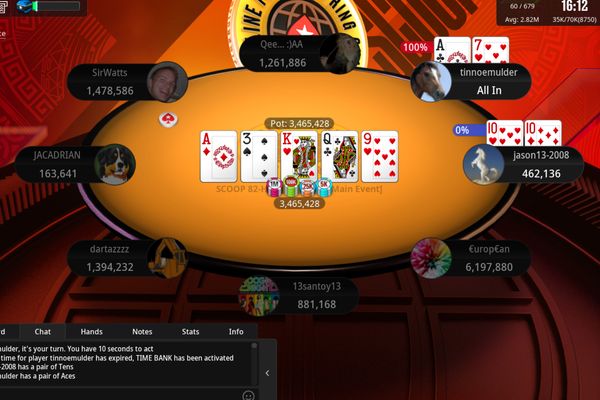
The Poker Strategy Breakdown
The tournament variety within WCOOP Boot Camp creates distinct strategic challenges that demand format-specific preparation. Understanding how to adjust your approach across different game types separates recreational participation from serious contention.
Mixed game events like HORSE and 8-Game require proficiency across multiple poker variants within a single tournament. Players rotate through different disciplines every few orbits, testing versatility rather than specialized expertise. The strategic edge comes from identifying which game segments within the rotation represent your relative strengths and weaknesses compared to opponents. During your stronger games, you should accumulate chips aggressively. During weaker segments, employ damage control by tightening ranges and avoiding marginal situations.
Progressive Knockout tournaments fundamentally alter optimal strategy through bounty incentives. Every elimination awards immediate cash value separate from traditional prize pool equity. This structure mathematically justifies wider calling ranges when you cover an opponent’s stack, since you’re competing for both their bounty and tournament chips. However, this same dynamic means short stacks gain leverage—they can push wider ranges knowing opponents face difficult decisions weighing bounty value against chip preservation.
The Omaha variants (PLO, PLO8, 5-Card PLO) punish players who treat them like Hold’em with extra cards. Hand values are dramatically compressed in Omaha games. What seems like a strong holding preflop often becomes marginal by the river. Successful Omaha tournament strategy emphasizes positional awareness and nut potential. Drawing to non-nut hands in multiway pots frequently proves expensive. The eight-or-better variants add split pot dynamics where scooping becomes paramount—playing hands with two-way potential (both high and low possibilities) provides the best path to chip accumulation.
Lowball games like 2-7 Single Draw, Razz, and 2-7 Triple Draw reverse traditional hand hierarchies entirely. Many tournament players lack significant experience in these formats, creating exploitable knowledge gaps. Basic strategic principles include understanding pat hand values, calculating draw odds accurately, and recognizing how position impacts drawing decisions. In 2-7 variants specifically, wheel cards (A-2-3-4-5) hold dramatically different value than in high games, and straight and flush possibilities become liabilities rather than assets.
Turbo structures compress decision-making timelines. Blinds escalate rapidly, forcing action and reducing post-flop play. Effective turbo strategy requires aggressive chip accumulation during early levels when stack-to-blind ratios still permit maneuverability. As the tournament progresses, push-fold mathematics dominate. Players who adapt their ranges based on precise ICM calculations and Nash equilibrium push-fold charts gain significant edges over opponents playing by feel.
Mystery Bounty events introduce variance through randomized bounty values. Some eliminations pay modest amounts while others award massive prizes, occasionally exceeding first-place money. This randomness creates interesting strategic considerations—you cannot calculate exact bounty EV when making elimination decisions, only average expected value. The format rewards volume of eliminations over selective targeting, though chip preservation remains important for reaching later stages when remaining bounties carry higher average values.
Reading The Field & Table Dynamics
Boot Camp tournaments attract a distinctive player mix that shapes optimal strategic adjustments. Understanding your opposition’s motivations and skill levels enables targeted exploitation.
Educational series attract students actively working on their game. These players often demonstrate solid fundamental understanding but lack experience applying concepts under pressure. They may play theoretically sound ranges but struggle with bet sizing, particularly in non-Hold’em formats. Against studious opponents, avoid fancy plays that assume advanced hand reading. Instead, execute straightforward value betting strategies and capitalize on their tendency toward overly balanced play in spots where population tendencies favor exploitation.
The affordable buy-ins and satellite accessibility bring recreational players seeking entertainment value. These opponents display wider range variance—some play extremely loose preflop, others overfold to aggression. Early tournament levels provide crucial observational opportunities. Tag players showing unusual betting patterns or timing tells. Recreational players often reveal hand strength through bet sizing inconsistencies or physical timing in ways they don’t realize.
Serious grinders treating Boot Camp as WCOOP preparation approach tournaments with specific training objectives. They may be testing new strategies, practicing unfamiliar formats, or working on particular aspects of their game. These players typically demonstrate solid fundamentals but might take unconventional lines as part of their learning process. Against competent regulars, standard ABC poker proves less effective. You must incorporate balancing concepts, vary your play patterns, and avoid becoming exploitably predictable.
Table dynamics shift dramatically based on tournament stage. Early levels with deep stacks permit post-flop poker and creative play. Middle stages see increased fold equity as players protect tournament lives approaching the money bubble. Bubble periods create extreme ICM pressure where short stacks face elimination risk and big stacks can apply maximum aggression. Post-bubble play loosens as min-cashes lock in, but tightens again approaching final table formation.
In PKO formats specifically, table dynamics revolve around stack coverage. When you cover multiple opponents, you can apply relentless pressure knowing bounty incentives justify aggressive play. Conversely, when covered, you gain leverage through opponents’ difficult decisions. Monitor coverage relationships constantly and adjust aggression accordingly. The most profitable spots often involve targeting medium stacks who cover shorter stacks—you can win multiple bounties through a single elimination.
Mixed game events reveal skill differentials most clearly. Many players enter HORSE or 8-Game tournaments with strong Hold’em skills but limited experience in Stud, Razz, or Omaha8. Watch for opponents who tighten dramatically during unfamiliar game segments or make fundamental errors like chasing non-nut low draws in split pot games. These knowledge gaps create exploitation opportunities unavailable in pure Hold’em formats.
How To Apply This To Your Game
Maximizing WCOOP Boot Camp requires strategic preparation extending beyond individual hand decisions. Treat the series as a comprehensive training program rather than isolated tournaments.
Create a personalized schedule targeting specific skill development. Don’t simply register for every event—select tournaments addressing your weakest areas. If you’re a Hold’em specialist, prioritize Omaha and mixed game events where improvement yields the highest return. If you’re comfortable with standard freezeouts, focus on PKO and Mystery Bounty formats where you lack experience. Strategic format selection accelerates learning more effectively than random participation.
Utilize the BBZ Poker coaching sessions strategically. Before attending Friday training, review the weekend schedule and identify which tournaments you plan to enter. Prepare specific questions about those formats. During sessions, take detailed notes rather than passively watching. After training, immediately apply concepts in the evening centroll tournaments while ideas remain fresh. This active learning cycle—preparation, instruction, immediate application—produces better retention than passive observation.
Implement a hand review process for every session. Use tracking software to flag interesting spots during play, then analyze them afterward using solver tools or training resources. Focus particularly on mixed game situations where intuition may mislead. In formats like 2-7 Triple Draw or Badugi, even experienced players often misjudge correct strategy. Systematic review identifies leaks that feel correct in the moment but prove mathematically incorrect upon analysis.
Practice bankroll management appropriate to a learning environment. Boot Camp buy-ins range from micro-stakes to mid-stakes levels. Allocate a specific training budget separate from your regular bankroll. This psychological separation permits format experimentation without risking your core poker funds. If you bust your Boot Camp budget, you’ve paid for valuable education rather than suffering a bankroll disaster.
Build a sweat network with other players targeting WCOOP preparation. Share hand histories, discuss strategic concepts, and rail each other’s deep runs. Collaborative learning accelerates improvement—explaining concepts to others reinforces your own understanding, while receiving feedback reveals blind spots in your analysis. The BBZ Discord provides a ready-made community, but private study groups with players at similar skill levels often prove even more valuable.
Track your results by format rather than overall profit. Boot Camp’s educational value comes from identifying which game types represent strengths versus weaknesses. If you consistently cash in PLO tournaments but bust early in mixed games, you’ve gained actionable intelligence about where to focus future study. Format-specific tracking reveals these patterns that aggregate results obscure.
Develop pre-tournament routines that optimize performance. Before each session, review basic strategy for that specific format. For mixed games, refresh your memory on hand rankings and fundamental strategy for each variant. For PKO events, review bounty-adjusted calling ranges. This brief preparation primes your decision-making and reduces costly errors from format confusion.
Key Takeaways
- WCOOP Boot Camp runs August 2-17 with 130 tournaments guaranteeing $6.5M, serving as preparation for September’s $65M+ flagship WCOOP series
- Every event offers Low and High buy-in tiers with satellites starting at $0.55, creating accessibility across all bankroll levels while maintaining competitive fields
- Free BBZ Poker coaching sessions every Friday (1-4pm CEST) provide format-specific strategy training plus passwords to centroll tournaments awarding $1K+ in tickets
- Tournament variety spans Hold’em, Omaha variants, mixed games (HORSE, 8-Game), lowball formats (2-7, Razz, Badugi), and special structures (PKO, Mystery Bounty, Turbo)
- Format-specific strategy adjustments are essential—mixed games reward versatility, PKO tournaments justify wider ranges for bounty value, and lowball games reverse traditional hand hierarchies
- Treat Boot Camp as structured training by selecting events targeting your weakest areas, implementing systematic hand review, and tracking format-specific results to identify improvement opportunities
Frequently Asked Questions
What’s the difference between WCOOP Boot Camp and the main WCOOP series?
Boot Camp is a smaller preparatory series with $6.5M in guarantees running August 2-17, while the main WCOOP championship runs September 6-30 with approximately $65M in guarantees. Boot Camp features lower buy-ins, fewer events, and includes free training components designed to prepare players for the significantly larger main series. Think of Boot Camp as a practice run with real money and educational support before the flagship championship.
Do I need to be an experienced player to participate in Boot Camp tournaments?
No. The series explicitly targets players at all skill levels through its dual buy-in structure (Low/High), satellite qualifiers starting at $0.55, and free coaching sessions. The educational framing makes it ideal for developing players who want structured learning opportunities alongside competitive play. However, some familiarity with basic poker rules and tournament structure is recommended, particularly for mixed game events featuring less common variants.
How do I access the free BBZ Poker training sessions?
Join the BBZ Poker Discord server where coaches host free strategy sessions every Friday from 1-4pm CEST throughout the Boot Camp series. These sessions analyze upcoming weekend tournaments and distribute passwords for special centroll events that award WCOOP tickets. You’ll need a PokerStars account to use the centroll passwords, but anyone can attend the training sessions regardless of whether they plan to play the tournaments.
Final Thoughts
WCOOP Boot Camp represents a unique convergence of competitive poker and structured education. While the $6.5 million in guarantees provides legitimate prize pool value, the series’ true worth lies in its preparation function. Players who approach Boot Camp strategically—selecting events that challenge their weaknesses, engaging actively with coaching resources, and implementing systematic review processes—will enter September’s main WCOOP with tangible skill improvements and format-specific experience.
The tournament variety deserves particular emphasis. Many players restrict themselves to No-Limit Hold’em, leaving significant edges unexploited in Omaha variants, mixed games, and specialty formats. Boot Camp’s comprehensive schedule creates a low-risk environment for format exploration. The combination of affordable buy-ins, satellite accessibility, and expert coaching removes traditional barriers to learning these games. Even if mixed game events aren’t your primary focus, developing basic competency expands your tournament options and sharpens fundamental poker skills that transfer across all variants.
Whether you’re a recreational player seeking entertainment, a serious grinder preparing for WCOOP, or somewhere in between, Boot Camp offers clear value. The key is defining your objectives before the series begins. Identify which skills you want to develop, which formats you want to learn, and how much of your bankroll you’re allocating to this training investment. With clear goals and strategic participation, Boot Camp becomes more than just another tournament series—it becomes a catalyst for measurable poker improvement.
Ready to Sharpen Your Poker Game?
Master your poker game with expert hand analysis