

How ‘Zero Pressure’ Propelled Rami Hammoud to WSOP Glory
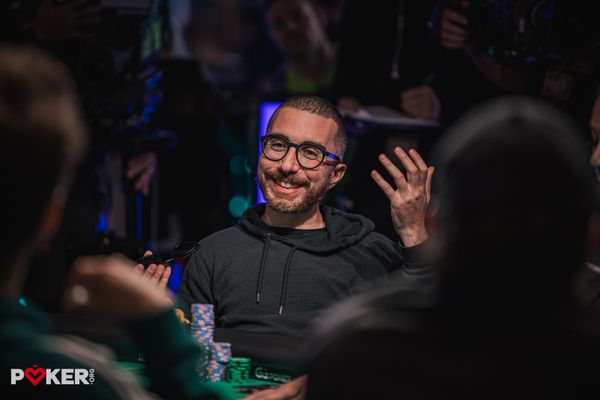
When Rami Hammoud fired his final $1,000 into a WSOP Main Event satellite, he wasn’t chasing glory—he was ready to book a flight home. That detached mindset, born from being nearly broke in Las Vegas, carried the Montreal player all the way to the final table and a guaranteed seven-figure score.
What Happened
Hammoud’s 2026 World Series of Poker started as a disaster. Arriving in Vegas with a $20,000 bankroll on June 18, he hemorrhaged chips across multiple events and found himself down to his last grand by early July. The recreational player—who describes poker as “more than a passion, but less than a profession”—was mentally checked out and ready to head back to Canada.
A random hallway conversation at the Paris Casino changed everything. A fellow Montreal grinder convinced Hammoud to take one last shot, offering to buy significant action if needed. That vote of confidence sparked something. Hammoud satellited into the Main Event with his remaining funds, then proceeded to build a mountain of chips across eight grueling days of play.
His approach? Radical indifference. Each morning, Hammoud checked out of his hotel room, stashed his bags with the bellhop, and played with the mentality that he could bust and catch a flight home at any moment. No attachment to the result. No fear of elimination. Just pure, aggressive poker with nothing to lose.
The strategy worked. Hammoud bagged 79 million chips heading into the final table—second in the counts—with at least $1 million locked up and a shot at the $9 million first-place prize. For a player who had never even accumulated 100,000 chips in three previous Main Event attempts, the transformation was remarkable.
The Poker Strategy Breakdown
Hammoud’s mental framework represents a counterintuitive approach to tournament poker that flies in the face of conventional wisdom. Most players tighten up as they progress deeper into prestigious events, especially the WSOP Main Event. The fear of busting before the money, before a pay jump, or before achieving a career-defining result creates conservative play.
Hammoud did the opposite. Being stuck for the series eliminated outcome attachment entirely. He wasn’t playing to secure profit—he was already losing. He wasn’t playing to validate his skill—he’d stopped studying solver outputs over a year earlier. He was simply playing cards with complete emotional detachment from the financial stakes.
This psychological freedom manifested in aggressive play patterns. Without the fear of elimination clouding his decision-making, Hammoud could apply maximum pressure at optimal moments. He could three-bet lighter, call down thinner, and execute big bluffs without the mental baggage that causes most players to check-fold their way toward min-cashes.
The daily hotel checkout ritual reinforced this mindset. By literally preparing to leave every morning, Hammoud created a physical manifestation of his mental state. He wasn’t settling in for a deep run—he was perpetually ready to exit. This removed the creeping risk-aversion that infects players as they accumulate chips and start protecting their stack rather than leveraging it.
Interestingly, Hammoud had also stopped grinding solver work in 2025, shifting his focus from profit maximization to fun maximization. This decision, made long before the Main Event, meant he was playing more instinctively and less robotically. He wasn’t second-guessing river decisions against GTO benchmarks or worrying about theoretical mistakes. He was reading players, trusting his reads, and firing when it felt right.
Reading The Field & Table Dynamics
The WSOP Main Event creates unique table dynamics that reward players who can exploit fear. With thousands of recreational players nursing short stacks and dreaming of final table glory, the field is filled with opponents playing scared money. They’re checking strong hands, folding to aggression, and generally trying to survive rather than accumulate.
Hammoud’s aggressive approach exploited this tendency perfectly. While opponents were playing to ladder up pay jumps, he was playing to win chips. This dynamic advantage compounds as the tournament progresses—the deeper you go, the more players have to lose, and the more conservative they become.
His chip trajectory tells the story. Starting Day 1C with 62,000, Hammoud steadily built his stack: 281,000 on Day 2, 697,000 on Day 3, 1.49 million on Day 4, 2.63 million on Day 5. The real acceleration came on Days 6 and 7, when he jumped to 17.4 million and then 41.5 million. These massive leaps coincide with the bubble and early money periods, when ICM pressure is highest and opponents are most exploitable.
By Day 8, Hammoud had accumulated 79 million—a nearly 1,300x increase from his Day 1 starting stack. This kind of growth doesn’t happen by playing tight and waiting for premium hands. It requires relentless aggression and a willingness to put opponents to difficult decisions for their tournament lives.
The final table presents a new challenge. Hammoud acknowledged this in interviews, noting the difficulty of maintaining his detached mindset amid media obligations and constant reminders of what’s at stake. The version of Rami who played Days 1-8 wasn’t thinking about $9 million. The version who sits down for the finale will have to fight those thoughts.
How To Apply This To Your Game
Most players can’t replicate Hammoud’s exact circumstances—being down for a series and firing a last-bullet satellite creates genuine detachment that’s hard to manufacture. But you can adopt elements of his approach to improve your tournament results.
First, examine your relationship with buy-in amounts. If you’re playing tournaments that make you nervous about the entry fee, you’re probably playing scared. Either move down in stakes or work on your mental game until the buy-in feels comfortable. You can’t play optimal poker while worried about losing money you can’t afford to lose.
Second, practice outcome detachment in lower-stakes events. Before a tournament, explicitly tell yourself that you’re prepared to bust at any moment. Visualize yourself busting in the first level, then ask: would I play this hand differently if I was okay with that outcome? Often, the answer reveals how much you’re letting fear influence your strategy.
Third, consider reducing study volume if it’s making you robotic. Solver work has value, but over-studying can create paralysis by analysis. Hammoud’s decision to stop grinding solvers freed him to play instinctively and trust his reads. There’s a balance between being prepared and being overthinking every decision.
Fourth, embrace aggression when you have chips. The biggest mistake recreational players make deep in tournaments is shifting from accumulation mode to preservation mode. Your stack is a weapon, not a trophy to protect. Use it to apply pressure, especially against opponents who are clearly playing scared.
Finally, create pre-tournament rituals that reinforce the right mindset. Hammoud’s daily checkout routine kept him mentally ready to leave. Develop your own ritual that reminds you to play fearlessly—whether that’s a mantra, a visualization exercise, or a physical action that symbolizes your commitment to aggressive play.
Key Takeaways
- Outcome detachment is a powerful edge in tournament poker—Hammoud’s willingness to bust at any moment enabled maximum aggression throughout the Main Event
- Being down for a series paradoxically created the perfect mental state for a deep run by eliminating fear of loss and pressure to perform
- Aggressive play compounds in major tournaments as opponents become increasingly risk-averse with each pay jump
- Over-studying can create robotic play—Hammoud stopped using solvers a year before his breakthrough, allowing him to trust instincts and reads
- Physical rituals (like daily hotel checkouts) can reinforce mental frameworks and keep you in the optimal headspace
- Previous Main Event attempts failed because Hammoud played to survive rather than to accumulate—shifting to an aggressive mindset changed everything
Frequently Asked Questions
How did Rami Hammoud qualify for the WSOP Main Event?
Hammoud satellited into the 2026 WSOP Main Event with his last $1,000 after being down to his final grand for the series. A friend from Montreal convinced him to take one last shot rather than flying home early, and he won his seat through the satellite rather than having to sell action.
What was Rami Hammoud’s chip count progression in the Main Event?
Hammoud started Day 1C with 62,000 chips and steadily built his stack: 281,000 (Day 2), 697,000 (Day 3), 1,490,000 (Day 4), 2,630,000 (Day 5), 17,400,000 (Day 6), 41,500,000 (Day 7), and 79,000,000 (Day 8), giving him the second-largest stack heading into the final table.
Is Rami Hammoud a professional poker player?
No, Hammoud describes poker as “more than a passion, but less than a profession.” He tried playing professionally over fifteen years ago but found that turning his passion into work made it less enjoyable, especially during losing stretches. He now plays recreationally for fun rather than as his primary income source.
Final Thoughts
Rami Hammoud’s journey to the WSOP Main Event final table offers a masterclass in the psychological side of tournament poker. His success wasn’t built on advanced solver strategies or cutting-edge GTO play—he hadn’t opened a solver in over a year. Instead, it came from achieving a mental state that most players struggle to access: complete detachment from outcomes.
The irony is profound. By caring less about the result, Hammoud positioned himself to achieve the best result of his poker career. By preparing to leave every single day, he ensured he’d stay longer than almost everyone else. By playing with nothing to lose, he accumulated everything to gain. This paradox sits at the heart of peak performance in poker and beyond.
As Hammoud returns for the final table, his biggest challenge won’t be the opponents across the felt—it’ll be the opponent in his own mind. Can he recapture that fearless, detached version of himself now that the stakes are explicit and the pressure is real? The answer will determine whether this Cinderella story ends with a seven-figure consolation prize or a life-changing championship.
Ready to Sharpen Your Poker Game?
Master your poker game with expert hand analysis
