How Mental Resilience Took Lucas Jumalon to WSOP Final Table
Lucas Jumalon arrived at the 2026 WSOP Main Event final table as chip leader with 194 million chips, but his path to poker’s biggest stage nearly derailed during a crucial Day 7 mental breakdown. The 22-year-old’s comeback story reveals how emotional control and support systems can be just as important as technical skill in tournament poker’s most pressure-packed moments.
What Happened
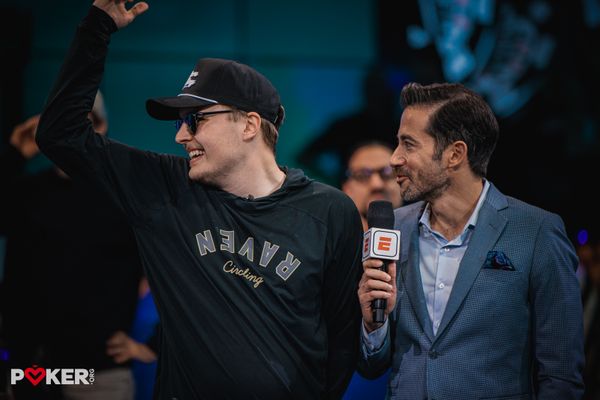
With 28 players remaining in the 2026 World Series of Poker Main Event, Lucas Jumalon stepped away from the feature table during the final break of Day 7, visibly distressed. Despite holding a respectable 28 big blind stack and sitting comfortably in the middle of the pack, the young pro was unraveling after 66 grueling hours at the felt.
Witnesses spotted Jumalon outside the tournament area, struggling to compose himself as friends and family members surrounded him with encouragement. Whatever words of wisdom they offered worked magic—Jumalon returned to action and mounted an impressive late surge that propelled him near the top of the counts heading into Day 8.
The next day proved even more spectacular. Jumalon went on an absolute tear, accumulating chips at a blistering pace to finish Day 8 with a commanding chip lead heading into the nine-handed final table. His stack grew from a modest 7,400 on Day 1B to an overwhelming 194,000,000 by the time the final table was set.
“Without my people here, I don’t know that I would have made it through that day,” Jumalon admitted after securing his seat at poker’s most prestigious final table, where he’ll compete for a $10 million first prize and the World Championship bracelet.
The Poker Strategy Breakdown
Jumalon’s trajectory through the Main Event demonstrates a critical strategic principle that often gets overlooked in hand history analysis: mental game execution matters as much as technical decisions when tournament life is on the line.
His Day 7 stack of 28 big blinds represented a classic inflection point in deep tournament play. At this stage, with 28 players remaining and the final table in sight, ICM pressure intensifies dramatically. Every decision carries enormous financial implications, and the psychological weight can crush even experienced professionals.
The technical challenge at this stack depth involves navigating the awkward middle ground between push-fold poker and deep-stacked play. With 28 big blinds, you’re too deep to simply shove or fold, but too shallow to see many flops without committing a significant portion of your stack. This requires precise range construction, acute positional awareness, and the ability to identify profitable spots for three-betting, four-betting, and thin value betting.
But Jumalon’s struggle wasn’t technical—it was mental. He recognized he wasn’t “feeling settled” at the feature table, a dangerous state of mind when every pot could make or break your tournament. The decision to step away, regroup with his support system, and reset his mental state proved more valuable than any hand reading skill in that moment.
His subsequent chip accumulation on Days 7 and 8 suggests he found the aggressive gear necessary to build a stack for the final table. Growing from 15.8 million on Day 6 to 40.8 million on Day 7, then exploding to 194 million on Day 8 requires winning numerous significant pots through a combination of premium holdings, well-timed bluffs, and exploitative adjustments against opponents tightening up near the final table bubble.
Reading The Field & Table Dynamics
The final three tables of any WSOP Main Event create a unique psychological ecosystem. With life-changing money on the line and the final table representing poker immortality, player tendencies shift dramatically from earlier stages of the tournament.
Many players adopt a survival mentality, hoping to ladder up pay jumps rather than accumulating chips for a serious title run. This creates exploitable situations for aggressive players willing to apply pressure. Jumalon’s massive chip increase suggests he identified and attacked these tendencies relentlessly.
The feature table environment adds another layer of complexity. Cameras, commentators, and the knowledge that thousands are watching your every decision can induce performance anxiety even in seasoned professionals. For a 22-year-old with limited major tournament experience, this pressure proved overwhelming until he addressed it directly.
Jumalon’s preparation for the final table reveals sophisticated strategic thinking. He mentioned working with a support team and study group, putting in hours of analysis daily. This likely involves ICM calculations for nine-handed final table scenarios, reviewing opponent tendencies from available footage, and running simulations for common stack configurations.
His approach to mental preparation—late-night walks, introspection, and consciously projecting positive energy—shows maturity beyond his years. He’s learned to manage his tendency to “overthink spots” and catastrophize, instead focusing on process over results.
How To Apply This To Your Game
Jumalon’s journey offers several actionable lessons for tournament players at every level:
Build your support system before you need it. Jumalon credits his friends, family, and poker team with getting him through his darkest moment. Cultivate relationships with people who understand the game’s emotional demands and can provide perspective when you’re too close to see clearly. This might include poker coaches, study group members, or simply trusted friends who can talk you off the ledge during a rough session.
Recognize when mental state trumps technical decisions. Sometimes the best play isn’t calling, folding, or raising—it’s stepping away to reset your mindset. If you’re tilting, exhausted, or emotionally compromised, no amount of GTO knowledge will save you from making costly mistakes. Jumalon’s willingness to acknowledge his struggle and address it directly prevented a potential meltdown.
Develop emotional resilience through experience. Jumalon mentioned ten to fifteen deep runs that ended in heartbreak before this breakthrough. He used to cry after Day 2 bustouts. But each painful experience taught him to separate process from results, focusing on making optimal decisions rather than outcomes he can’t control. Embrace the emotional difficulty of tournament poker as part of your development, not a sign you’re not cut out for it.
Prepare comprehensively for high-pressure spots. Jumalon isn’t leaving his final table preparation to chance. He’s studying daily, working with his team, and mentally rehearsing scenarios. Apply this same thoroughness to your own important tournaments. Review ICM considerations for your typical stack depths, study opponent tendencies when possible, and visualize yourself executing under pressure.
Manage your inner dialogue. Jumalon’s shift from “Am I even good enough?” to focusing on positive outcomes while accepting what he can’t control represents crucial mental game evolution. Monitor your self-talk during sessions. Are you catastrophizing? Dwelling on bad beats? Replace destructive thoughts with process-oriented thinking: “I made the right decision with the information available.”
Key Takeaways
- Mental resilience and emotional control are as important as technical skill in high-pressure tournament situations, especially during deep runs when fatigue and stress accumulate
- A strong support system of friends, family, and poker colleagues can provide crucial perspective and encouragement during difficult moments at the table
- Recognizing when you’re mentally compromised and taking action to reset your state of mind can prevent costly mistakes and tournament-ending tilt
- Building emotional resilience requires experiencing and processing painful tournament bustouts rather than avoiding the feelings they generate
- Comprehensive preparation for important tournaments should include technical study, opponent analysis, ICM calculations, and mental rehearsal of high-pressure scenarios
- Separating process from results—focusing on optimal decision-making rather than outcomes—reduces emotional volatility and improves long-term performance
Frequently Asked Questions
How important is mental game compared to technical poker skill?
While technical skill provides the foundation for winning poker, mental game often determines who actually realizes their potential in high-pressure situations. Studies of elite performers across domains show that mental resilience, emotional regulation, and stress management separate good players from great ones when stakes are highest. Jumalon’s near-breakdown despite having adequate chips and technical ability demonstrates how mental state can override skill. Most professionals estimate mental game accounts for 30-50% of tournament success at higher levels where technical skill is relatively even.
What should you do when you feel yourself tilting during a tournament?
First, recognize the warning signs: emotional reactions to outcomes, deviation from your standard strategy, physical tension, or racing thoughts. If possible, step away during a break as Jumalon did. Take deep breaths, talk to someone you trust, or use grounding techniques like focusing on physical sensations. If you can’t leave the table, slow down your decision-making, return to fundamental strategy, and avoid marginal spots until you regain composure. Sometimes the best decision is to sit out a few hands or even abandon a session if the stakes are low enough to make that viable.
How can you build a support system for poker?
Start by joining or forming a study group with players at similar skill levels who share your commitment to improvement. Be honest about struggles and create a culture where vulnerability is acceptable. Cultivate relationships with non-poker friends and family who can provide perspective when you’re too emotionally invested in results. Consider working with a poker coach who can provide both technical and mental game guidance. Online poker communities, forums, and Discord servers can also provide support, though in-person relationships typically offer more meaningful connection during difficult times.
Final Thoughts
Lucas Jumalon’s path to the WSOP Main Event final table chip lead offers a masterclass in the often-overlooked mental side of tournament poker. His willingness to acknowledge vulnerability, lean on his support system, and reset his mental state during a critical moment likely made the difference between an early exit and a shot at poker’s most prestigious title.
The technical aspects of poker receive endless attention—hand ranges, bet sizing, ICM calculations—and rightfully so. But Jumalon’s story reminds us that all the theoretical knowledge in the world means nothing if you can’t execute under pressure. His decade-plus of painful deep run bustouts since turning 18, the tears after Day 2 eliminations, and the phone call to his father contemplating quitting poker entirely all contributed to the emotional resilience that carried him through Day 7’s crisis.
As you develop your own poker game, invest equally in technical study and mental game development. Build your support system before you desperately need it. Learn to recognize when you’re mentally compromised and develop strategies for resetting. Most importantly, embrace the emotional difficulty of this game as part of the growth process rather than evidence you’re not good enough. As Jumalon discovered, someone who keeps getting back up and attacking their goals is indeed a dangerous person—at the poker table and in life.
Ready to Sharpen Your Poker Game?
Master your poker game with expert hand analysis