APT Taipei Superstar Challenge: Coaching Pays Off at $25K
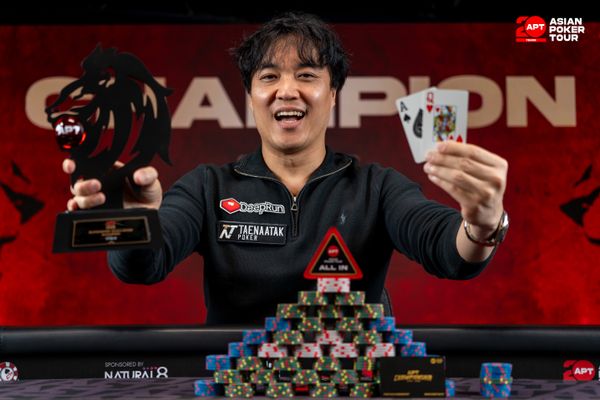
When your day job is teaching poker strategy, winning a $25,300 buy-in tournament for nearly $230K makes for excellent marketing. Phachara Wongwichit, co-founder and coach at DeepRun poker training, just proved his credentials by dominating the APT Taipei Superstar Challenge field, outlasting fellow coach Wai Kiat Lee in a heads-up battle that showcased textbook high-stakes tournament play.
What Happened
The APT Taipei Superstar Challenge lived up to its billing as a premium event, attracting 26 entries and generating a prize pool of $624,284. This wasn’t your typical weekend grind—the field featured GPI #1 Ren Lin, four-time WSOP bracelet winner Dominik Nitsche, poker vlogger Ethan ‘Rampage’ Yau, and GPI Player of the Year Punnat Punsri.
Only five players reached the money, and they returned to the Red Space center in central Taipei on Tuesday to battle for the title. Wongwichit entered the final day commanding the chip lead with 2.2 million, well ahead of Taiwan’s Chih Wei Fan (1.5M), Malaysia’s Chin Wei Lim (1.2M), Wai Kiat Lee (860K), and short-stacked Australian Daniel Neilson (645K).
The final table moved at breakneck speed. In just 75 hands, the field collapsed from five players to a champion. Wongwichit navigated the minefield with precision, ultimately claiming $229,757 and pushing his career earnings past $2.8 million. Lee, despite starting as one of the shorter stacks, mounted an impressive comeback to secure second place and $152,666—adding to his already formidable $24.4 million in lifetime tournament earnings.
The Poker Strategy Breakdown
The early action centered on Malaysian player Chin Wei Lim, who became the unlikely executioner of pocket kings—not once, but twice within the first hour. These hands offer crucial lessons in hand reading and board texture.
In the first confrontation, Lee raised from the button holding pocket kings, and Lim defended his big blind with queen-eight offsuit. The flop came queen-high, giving Lim top pair. When Lee continuation bet small (35K into a pot of roughly 160K), Lim check-raised to 80K—a textbook move with top pair against a button raise that could represent a wide range. Lee’s call and subsequent turn barrel showed commitment to his overpair, but Lim’s flopped trips held up when both players checked the river.
The second kings-cracking hand was even more dramatic. Lim raised from the small blind with ace-jack suited, Fan 3-bet with pocket kings, and Lim shoved for 1.4 million. Fan’s snap-call was standard—he was way ahead. The board ran out with Fan maintaining his lead through the turn, only for an ace to spike on the river. This is tournament poker’s cruelest reality: sometimes you make all the right decisions and still lose.
Fan’s elimination came immediately after on another cooler. His ace-queen ran into Wongwichit’s ace-king, and despite leading through the turn, a king on the river gave Wongwichit a king-high straight. Fan collected $51,401 for fifth place, but these back-to-back beats demonstrate how quickly fortunes shift in short-handed play.
The most instructive hand from a strategic perspective came during three-handed play. Wongwichit min-raised from the button with pocket aces, Lim shoved for 550K with king-jack suited, and Lee cold-called with pocket tens. Wongwichit then 4-bet to 1 million, forcing Lee to fold. While Lee’s fold was disciplined—he was getting squeezed between two aggressive actions—he would have flopped a set. The board ran out with three tens, but Wongwichit’s aces still would have won. This hand showcases the importance of range construction and the difficulty of playing medium pairs in multi-way pots, even when you’re getting decent odds.
Reading The Field & Table Dynamics
What made this final table particularly fascinating was the skill disparity in tournament experience. Lee entered with over $24 million in career earnings, while Wongwichit sat at under $3 million. Yet the chip leader leveraged his position expertly, never allowing Lee to gain momentum until heads-up play was already heavily tilted in his favor.
Lee’s short-stack navigation deserves special recognition. Starting the final day as the second-shortest stack and dropping even further after losing with pocket kings, he faced elimination multiple times. His survival required a delicate balance of patience and aggression—picking spots to apply pressure without overcommitting with marginal holdings.
The ICM pressure was immense with only five players paid. Each elimination represented a significant pay jump: $51K for fifth, $71K for fourth, $99K for third, $152K for second, and $229K for first. This structure incentivizes survival, particularly for shorter stacks who can ladder up by letting others bust.
Neilson’s fourth-place exit exemplified this dynamic. After laddering from the shortest stack, he picked up pocket jacks and jammed his final 520K. Lee, also short, called with ace-king suited and hit the flop hard. Neilson took his $70,027, grabbed a snack from the nearby 7-11, and immediately registered for the Main Event—the mark of a professional who understands tournament variance and doesn’t dwell on results.
The heads-up battle began with Wongwichit holding nearly a 3-to-1 chip advantage. In tournament poker, this lead is often insurmountable unless the short stack wins several key all-ins. Lee, despite his experience and skill, couldn’t manufacture the necessary double-ups. The final hand saw Wongwichit shove with ace-ten and Lee call with king-nine—a standard spot where the big stack applies maximum pressure and the short stack must call with any reasonable holding. The board bricked out, and Wongwichit claimed the title.
How To Apply This To Your Game
The most valuable lesson from this tournament is how to leverage a chip lead without becoming reckless. Wongwichit never gave his opponents cheap opportunities to double through him. His aggression was calculated, targeting spots where opponents faced difficult decisions for their tournament lives.
When you’re the chip leader at a final table, your primary objective is maintaining pressure while avoiding unnecessary confrontations with other big stacks. Wongwichit achieved this by consistently attacking the shorter stacks, forcing them into push-fold situations where they needed premium hands to continue.
For players in Lee’s position—short-stacked but still in contention—the key is identifying when to take stands. Lee’s ability to ladder from near-elimination to second place required recognizing which hands were worth risking his tournament life. He couldn’t afford to wait for premium holdings, but he also couldn’t shove with any two cards. This balance is what separates elite tournament players from the field.
The pocket kings hands offer another crucial lesson: even premium hands can be vulnerable, especially on coordinated boards. When you hold an overpair, you must constantly reassess whether your opponent’s actions make sense with hands you beat. Lee’s continuation betting with kings against Lim’s check-raise was reasonable, but the turn barrel became questionable when Lim continued showing strength.
Finally, recognize that tournament poker involves significant variance, even when you make optimal decisions. Fan’s back-to-back coolers—losing with pocket kings to ace-jack suited on a river ace, then losing with ace-queen to ace-king when a king spiked—demonstrate that sometimes the cards simply don’t cooperate. The best players accept this reality and focus on making correct decisions rather than obsessing over results.
Key Takeaways
- Chip leads at final tables are powerful weapons, but only when wielded with discipline—Wongwichit applied pressure consistently without overcommitting in marginal spots
- Short-stack play requires balancing patience with aggression; Lee’s ladder from near-elimination to second place showcased expert ICM navigation
- Premium hands like pocket kings are strong but not invincible—board texture and opponent actions must inform your continuation strategy
- Tournament variance can be brutal in the short term; Fan made reasonable decisions but still busted fifth after consecutive coolers
- Position and stack sizes dictate strategy more than card strength in short-handed play—the final hands were determined by who could apply pressure effectively
- Professional players understand that one tournament is just a small sample; Neilson’s immediate Main Event registration after busting fourth exemplifies proper mindset
Frequently Asked Questions
What is the APT Superstar Challenge and how does it differ from regular APT events?
The APT Superstar Challenge is a high-stakes invitational tournament with a $25,300 buy-in, significantly higher than typical APT events. It attracts elite professional players, including GPI-ranked players, WSOP bracelet winners, and high-stakes specialists. The smaller field size (26 entries) and premium buy-in create a concentrated talent pool that differs dramatically from standard multi-flight tournaments.
How should you adjust your strategy when playing against fellow poker coaches or training site professionals?
When facing opponents who teach poker strategy, assume they understand fundamental concepts and won’t make basic mistakes. This means your bluffs must tell coherent stories, your value bets need careful sizing, and you can’t rely on exploiting technical errors. However, coaches can sometimes overthink spots or assume opponents are making advanced plays when they’re actually straightforward. The key is balancing respect for their skill with recognition that everyone has exploitable tendencies.
What’s the optimal strategy when you’re the short stack at a final table with significant pay jumps?
Short-stack final table strategy depends on ICM considerations and stack distributions. If other players are similarly short, you can afford to be patient and let them bust first, laddering up the pay structure. However, if you’re the clear short stack, you need to accumulate chips before blinds consume your stack entirely. This typically means expanding your shoving range and looking for spots to apply pressure when you have fold equity. Lee’s performance demonstrated this balance—he survived by picking strategic spots to commit his chips rather than bleeding out to blinds.
Final Thoughts
Phachara Wongwichit’s victory at the APT Taipei Superstar Challenge serves as a masterclass in leveraging position, stack size, and aggression to control a final table. His ability to maintain pressure without overextending separated him from a field packed with accomplished professionals. For a poker coach and training site co-founder, this win provides the ultimate credential—proof that his strategic approach works at the highest levels.
What makes this tournament particularly noteworthy is the caliber of competition. This wasn’t a soft field or a tournament where one player could simply run over inexperienced opponents. Every player at the final table understood advanced concepts, yet Wongwichit still found edges to exploit. His willingness to apply pressure in marginal spots, combined with disciplined fold equity calculations, allowed him to accumulate chips steadily rather than relying on winning big all-in confrontations.
Whether you’re grinding $1 sit-and-goes or competing in $25K high rollers, the fundamental principles remain consistent: understand your opponents’ ranges, leverage your stack effectively, and make decisions based on expected value rather than results-oriented thinking. Study hands like these, analyze the decision points, and incorporate these concepts into your game. The gap between good players and great players often comes down to execution in high-pressure situations—exactly what Wongwichit demonstrated throughout this tournament.
Ready to Sharpen Your Poker Game?
Master your poker game with expert hand analysis