Negreanu Surges in $100K PLO High Roller at WSOP 2026
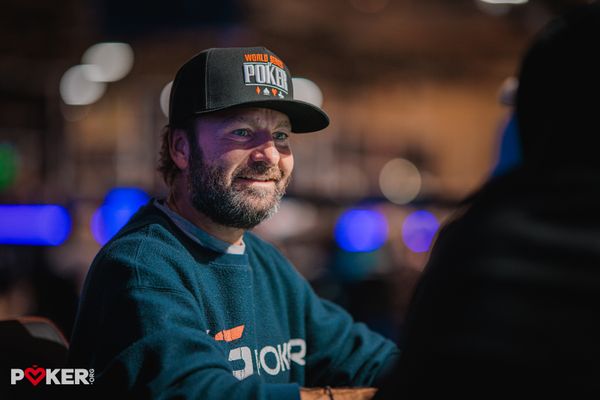
Daniel Negreanu reminded everyone why Pot-Limit Omaha remains his favorite game, storming to a top-five chip position in the $100,000 PLO High Roller at the 2026 WSOP. The poker legend entered late, tripled his stack in under two hours, and finished Day 1 with nearly 2 million chips among an elite field of 50 entries.
What Happened
The $100,000 PLO High Roller attracted exactly the kind of murderer’s row you’d expect from the second-largest buy-in event of the summer. Jason Koon, Alex Foxen, Stephen Chidwick, Nick Schulman, and Eelis Pärssinen all took their seats, creating one of the most talent-dense fields of the series.
But the story of Day 1 belonged to contrasts. Phillipp Mellon, a complete unknown who satellite his way in from a $120 entry, briefly held the chip lead and became the first player to cross the million-chip threshold. His run ended abruptly when his top two pair ran into a flopped set from Spain’s Sergio Martinez Gonzalez, sending him to the rail before dinner.
Negreanu made his entrance during the dinner break and immediately got to work. Within 120 minutes, he’d transformed his 600,000 starting stack into over 1.8 million. The defining hand came when he held pocket aces against Jeremy Druckman’s pocket aces—a classic PLO cooler that saw Negreanu turn a straight and river the nut flush to eliminate his opponent.
By the end of Day 1, Russia’s Artur Martirosian had seized control with a commanding 5.815 million stack. Sean Winter sat second with 3.695 million, while Finland’s Joni Jouhkimainen held third with 2.16 million. Negreanu bagged fifth place among 19 survivors from the 50-entry field.
The field size represents a significant drop from last year’s Day 1, which saw 36 players bag from 88 entries. Late registration remains open until 2:15 PM on Wednesday, though it would take a substantial surge to approach last year’s final tally of 121 entries that awarded Shaun Deeb nearly $3 million for first place.
The Poker Strategy Breakdown
The aces-versus-aces hand that propelled Negreanu’s stack illustrates everything that makes PLO simultaneously thrilling and terrifying. In Hold’em, getting aces in against aces typically means a chopped pot unless someone finds a flush. In PLO, the four-card structure creates exponentially more runout possibilities.
When Negreanu and Druckman got their stacks in pre-flop with identical starting hands, neither player held a significant equity advantage. But PLO’s nature means that flop texture becomes paramount. With eight cards between two players holding aces, the potential for straight and flush combinations multiplies dramatically.
Negreanu’s decision to enter late demonstrates sophisticated tournament strategy. By waiting until the dinner break, he avoided the early-level variance that claimed Mellon and others. In a $100K event with such a small field, preserving bullets matters. Late entry allows you to assess the remaining field size, observe who’s accumulated chips, and enter with maximum focus rather than grinding through six hours of play.
The triple-up in two hours wasn’t luck—it was calculated aggression meeting opportunity. High-stakes PLO rewards players who can identify spots where their range advantage combines with positional leverage. With antes in play and stacks still deep relative to blinds, Negreanu could apply pressure while maintaining the flexibility to see flops in position.
Mellon’s trajectory offers a cautionary tale about PLO’s unforgiving nature. Building the chip lead early means nothing if you can’t recognize when you’re behind. Top two pair feels strong, but in PLO, it’s often a way to lose your stack. Against aggressive action on a coordinated board, disciplined folding preserves your tournament life. The set-over-two-pair cooler is one of PLO’s classic stack-transfer mechanisms.
Martirosian’s ascent to the chip lead showcases the importance of sustained aggression. Accumulating 5.8 million chips from a 600K starting stack requires winning multiple significant pots. In PLO, you can’t grind your way to that stack size—you need to put opponents in difficult decisions and capitalize when they make mistakes.
Reading The Field & Table Dynamics
A $100K buy-in creates unique dynamics that differ markedly from lower-stakes tournaments. Every player at the table has either proven themselves at the highest levels or has the bankroll to absorb six-figure swings. This eliminates the ICM pressure that dominates mid-stakes tournament play.
With 50 entries and 19 survivors, roughly 38% of the field made Day 2. This survival rate suggests players aren’t desperately clinging to chips. The willingness to get stacks in during Day 1 indicates confidence in their ability to re-enter if necessary. Late registration remaining open reduces the penalty for busting, encouraging the kind of high-variance plays that make PLO spectacular.
The presence of players like Koon, Foxen, and Chidwick—all known for their mixed-game prowess—raises the table’s baseline skill level considerably. These aren’t Hold’em specialists dabbling in PLO. They’re elite players who understand range construction, blockers, and the mathematical complexities that separate winning PLO players from break-even ones.
Negreanu’s late entry also meant he avoided the table draw lottery. In a 50-player field, your initial table assignment dramatically impacts your Day 1 experience. Drawing a table with multiple aggressive Europeans versus one with more conservative American pros changes your entire approach. By entering late, Negreanu could potentially select a more favorable seat based on available tables.
The international composition of the leaderboard—Russia, USA, Finland, Spain, UK, India—reflects PLO’s global appeal. Unlike Hold’em, which American players dominated for years, PLO has strong regional pockets of excellence. European players, in particular, have embraced PLO’s complexity, creating a more evenly distributed skill landscape.
How To Apply This To Your Game
The most immediate lesson from Negreanu’s performance is the value of late registration in high-variance formats. If you’re playing a PLO tournament with extended late reg, consider whether entering late provides strategic advantages. You’ll have fewer total hands to accumulate chips, but you’ll also avoid the early-level chaos where one misjudged hand can end your tournament.
In PLO, hand selection discipline becomes exponentially more important as buy-ins increase. The four-card structure tempts players into seeing flops with marginal holdings, but coordinated starting hands—those with connected cards, suited combinations, and pairs—perform significantly better than random four-card combinations. Negreanu’s success came from premium situations, not speculative plays.
When you flop strong-but-vulnerable hands like top two pair, develop the discipline to fold when facing significant aggression. PLO punishes attachment to second-best hands more severely than Hold’em. If the board shows connectivity and your opponent is representing strength, your two pair is often either ahead by a narrow margin or crushed. The risk-reward rarely justifies committing your stack without additional equity like straight or flush draws.
Study how elite players like Martirosian build massive stacks. It’s not about winning one monster pot—it’s about consistently applying pressure, forcing opponents into marginal decisions, and capitalizing when they make mistakes. In PLO, the player willing to play the largest pots with appropriate hands typically accumulates chips fastest.
Position matters even more in PLO than Hold’em. With four cards creating more possible combinations, seeing your opponent’s action before making decisions provides crucial information. Negreanu’s quick stack accumulation likely involved leveraging positional advantages to see cheap flops and apply pressure when he connected.
Key Takeaways
- Daniel Negreanu tripled his stack in under two hours after entering the $100K PLO High Roller at dinner break, finishing Day 1 fifth in chips with 1.99 million
- Artur Martirosian leads with 5.815 million chips, followed by Sean Winter (3.695M) and Joni Jouhkimainen (2.16M) among 19 Day 2 qualifiers
- Satellite qualifier Phillipp Mellon briefly led before busting with top two pair against a flopped set, illustrating PLO’s unforgiving nature
- Late registration remains open until Wednesday at 2:15 PM, though the current 50 entries trail last year’s Day 1 pace significantly
- The field includes elite mixed-game specialists like Jason Koon, Alex Foxen, Stephen Chidwick, and Nick Schulman
- Last year’s event attracted 121 total entries and paid Shaun Deeb nearly $3 million for first place
Frequently Asked Questions
Why does Daniel Negreanu prefer PLO over Hold’em?
Negreanu has publicly stated that PLO provides more interesting strategic decisions and reduces the impact of solver-based play that has become prevalent in Hold’em. The four-card structure creates more post-flop complexity, rewarding creativity and reading abilities over memorized ranges. Additionally, PLO’s higher variance means recreational players can compete more effectively, creating better game dynamics.
How did Phillipp Mellon qualify for a $100K tournament from a $120 satellite?
Mellon won a satellite tournament with a $120 buy-in that awarded a seat to the $100K PLO High Roller. Many major poker rooms offer satellite structures where players can win their way into high-stakes events through a series of smaller tournaments. This creates the possibility for recreational players to compete against the world’s best without risking six figures directly.
What makes PLO strategy different from Texas Hold’em?
PLO requires players to use exactly two of their four hole cards combined with three community cards, creating more possible hand combinations. This means made hands are typically stronger, draws are more common, and hand values change dramatically on each street. Starting hand selection focuses on coordination—connected and suited cards play better than random combinations. Position becomes even more critical because post-flop decisions are more complex with additional equity possibilities.
Final Thoughts
Daniel Negreanu’s Day 1 performance reinforces why he remains one of poker’s most compelling figures. While many pros have abandoned live tournaments for online cash games or moved away from public competition entirely, Negreanu continues showing up to the biggest events and competing at the highest level. His genuine enthusiasm for PLO—evident in his quick stack accumulation and willingness to get involved in massive pots—reminds us why poker remains compelling entertainment beyond just the money.
The contrast between Mellon’s satellite dream and Negreanu’s veteran excellence captures poker’s essential tension. The game’s accessibility means anyone can sit down with the best players in the world, but the skill gap ensures that expertise typically prevails. Mellon’s brief chip lead proves that variance creates opportunities, but his elimination demonstrates that sustained success requires both technical knowledge and disciplined execution.
With late registration open and the field size trailing last year’s pace, Wednesday’s action will determine whether this $100K PLO High Roller reaches the critical mass needed for a massive prize pool. Regardless of final numbers, the remaining field represents some of the world’s most skilled PLO players battling for a seven-figure first prize. Negreanu’s position in the top five gives him an excellent foundation to make a deep run—assuming he can navigate the variance that makes PLO simultaneously beautiful and brutal.
Ready to Sharpen Your Poker Game?
Master your poker game with expert hand analysis