When a Fallen Hero’s Will Sends a Friend to the WSOP
A Washington corrections officer is playing the WSOP Main Event thanks to his late friend’s final testament—a $10,000 bequest that took over a decade to fulfill. Nason Weller’s journey from home game regular to poker’s biggest stage is a story about friendship, sacrifice, and honoring those we’ve lost.
What Happened
In 2014, Nason Weller and Michael ‘The Mayor’ Hughes were colleagues at Washington State’s Department of Corrections and regular participants in their local poker home game. When Hughes accepted a position overseas training prison administrators in Afghanistan, he made an unusual addition to his will: if something happened to him, his poker buddies should pool $10,000 and run a tournament, sending the winner to play the World Series of Poker Main Event.
Tragically, Hughes never returned home. He was killed in a suicide bombing while serving abroad. What should have been a straightforward fulfillment of his wishes turned into a twelve-year odyssey marked by legal complications, a global pandemic, and life’s competing priorities.
The tournament Hughes envisioned didn’t happen until 2019—five years after his death—due to probate disputes that delayed the release of funds. Sixteen players from the original home game finally gathered to compete for the Main Event seat. Weller won that tournament, earning the right to represent his fallen friend on poker’s grandest stage.
But even after winning the qualifier, Weller’s path to Las Vegas faced additional obstacles. The COVID-19 pandemic shut down live poker entirely for over a year. Then family obligations took precedence: Weller had coached his son Jacob in football since age eight and wasn’t willing to miss those final high school years for anything—even a WSOP Main Event seat.
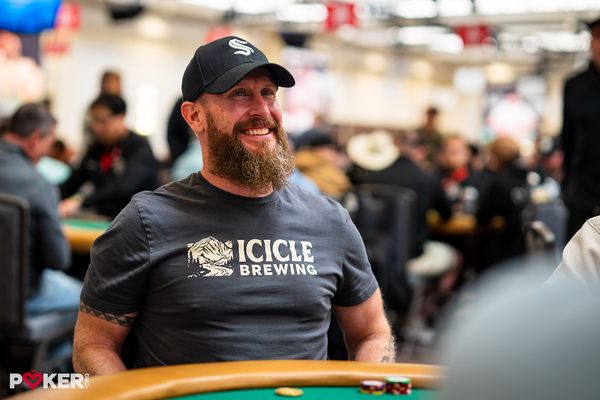
With Jacob now serving in the Navy at age twenty, Weller finally made the trip. He entered Day 1D of the Main Event wearing a memorial bracelet engraved with the date of Hughes’ death, playing his first major live tournament while friends from that original home game sweated his progress from the rail.
The Poker Strategy Breakdown
Weller’s situation presents a fascinating strategic challenge that many amateur players face when stepping up in stakes dramatically. He’s playing in a tournament with a buy-in he openly admits he’d never pay himself—a $10,000 entry that represents serious money for a working corrections officer, even one who describes himself as “not money-scared.”
This psychological dynamic creates what poker theorists call “scared money syndrome,” though Weller’s version has an additional emotional layer. He’s not just protecting his own bankroll; he’s stewarding his late friend’s gift. That sense of responsibility can manifest as overly tight play, exactly what Weller acknowledged when he said, “I think I’m doing a lot of folding.”
The Main Event structure actually favors Weller’s approach more than he might realize. With starting stacks of 60,000 chips and blinds beginning at 100/200, players have tremendous room to maneuver. The tournament is designed to reward patient play early, allowing inexperienced players to wait for premium situations rather than forcing marginal decisions.
However, excessive tightness carries its own risks. In modern Main Event fields, which now regularly attract 8,000+ entries, simply waiting for aces and kings won’t accumulate the chips needed to make deep runs. The key is finding the balance between reckless gambling and paralyzed passivity—playing solid fundamentals while remaining willing to get involved when the situation warrants.
For someone in Weller’s position, the optimal strategy involves identifying the weaker players at the table and exploiting them through selective aggression. The Main Event attracts thousands of recreational players who’ve won satellites or saved up for years to play. These opponents often make fundamental errors: calling too much preflop, overvaluing top pair, and telegraphing hand strength through betting patterns.
Against such opponents, a tight-aggressive approach with occasional well-timed bluffs can accumulate chips steadily without requiring hero calls or massive risks. The goal in the early stages should be reaching Day 2 with an average or better stack—an achievement that alone puts a player in the top 15-20% of the field and guarantees a meaningful cash.
Reading The Field & Table Dynamics
Weller’s table assignment along the rail created a unique dynamic. Having friends and supporters watching every hand adds psychological pressure that can affect decision-making. Some players thrive under observation, playing more confidently with a rooting section. Others tighten up, afraid to look foolish in front of people who matter to them.
The emotional weight of playing in memory of a fallen friend adds another layer. Weller mentioned that preparing for and playing the tournament had “picked some scabs,” indicating the experience was reopening old wounds. Managing emotional equilibrium at the poker table is crucial—letting feelings overwhelm logic leads to poor decisions.
Day 1 fields in the Main Event tend to have distinct characteristics depending on which starting flight players choose. Day 1D, which Weller entered, typically attracts a mix of professionals who’ve been eliminated from earlier flights and are re-entering, plus recreational players who arrived in Las Vegas mid-week. This creates a slightly tougher field than Day 1A or 1B, which feature more pure recreational players.
Table dynamics in the Main Event shift dramatically as the day progresses. Early levels feature loose, splashy play as players with deep stacks gamble freely. As antes kick in and stacks become shallower relative to blinds, play tightens considerably. The final levels of Day 1 often see extreme tight-passive play as short stacks try to survive to Day 2 and lock up a min-cash.
Understanding these rhythms allows savvy players to adjust their strategies accordingly. When the table is playing loose and wild, tighten up and wait for strong hands. When everyone is playing scared near the end of the day, selectively apply pressure to steal blinds and antes from players clearly trying to fold into Day 2.
How To Apply This To Your Game
The most important lesson from Weller’s story isn’t about poker strategy—it’s about emotional management and knowing your motivations. He clearly understood that his primary goal wasn’t maximizing expected value or making a deep run, but honoring his friend’s memory and sharing an experience with the home game crew who’d waited twelve years for this moment.
That clarity of purpose is valuable in any poker context. Before sitting down to play, ask yourself: What am I trying to accomplish? Is this a learning experience, a shot at a big score, or primarily social? Different goals require different approaches, and there’s no shame in prioritizing experience over results in certain situations.
For players stepping up significantly in stakes—whether from $1/$2 cash games to $5/$10, or from $100 tournaments to $1,000 events—managing the psychological adjustment is crucial. The cards and math don’t change, but the emotional weight of each decision increases. Preparation helps: study the structure, understand the blind levels, and have a clear plan for different stack depths.
Weller’s tight approach early in the Main Event isn’t necessarily wrong for his situation. In deep-stacked tournaments, there’s no requirement to accumulate chips immediately. Survival has value, especially for inexperienced players still adjusting to the environment. As comfort increases, aggression can follow.
The concept of “playing within yourself” applies in poker just as it does in sports. Attempting fancy plays or complex bluffs outside your skill level usually backfires. Stick to fundamentals: play strong hands aggressively, fold weak hands, and avoid marginal situations where small edges require perfect execution to realize.
Finally, don’t underestimate the value of the experience itself. Weller will learn more about tournament poker from one day in the Main Event than from months of home games. Every hand provides data about how strong players think, how betting patterns reveal information, and how tournament dynamics evolve. That education has value regardless of results.
Key Takeaways
- Emotional management matters as much as technical skill when playing outside your comfort zone—understand your motivations and adjust expectations accordingly
- In deep-stacked tournaments like the WSOP Main Event, patient play early is completely viable; there’s no need to accumulate chips immediately
- Stepping up in stakes requires psychological adjustment—the math doesn’t change, but the emotional weight of decisions increases significantly
- Home game qualifiers and staking arrangements can provide life-changing opportunities to play in prestigious events that would otherwise be financially out of reach
- The experience and learning from playing a major tournament has inherent value beyond monetary results
- Sometimes the story behind why you’re playing matters more than the outcome—poker can be about honoring relationships and creating memories, not just profit
Frequently Asked Questions
How common are home game WSOP Main Event qualifiers?
Home game satellites for the WSOP Main Event are extremely common. Thousands of recreational players reach Las Vegas through this route every year, with groups pooling money throughout the year or running single-tournament qualifiers. These arrangements range from informal agreements among friends to structured leagues with detailed rules. The WSOP actively encourages this pathway as it brings passionate players who might not otherwise participate, adding to the tournament’s legendary atmosphere and massive field sizes.
What’s the best strategy for first-time WSOP Main Event players?
First-time Main Event players should prioritize patience and fundamentals over fancy plays. The deep structure allows plenty of time to wait for strong hands and favorable situations. Focus on playing tight-aggressive poker: enter pots with quality hands, bet your strong holdings for value, and avoid marginal spots that require advanced skills to navigate. Pay attention to table dynamics and identify weaker opponents to exploit. Most importantly, manage your emotional state—the Main Event’s prestige and large buy-in can create anxiety that leads to poor decisions. Remember that survival itself is an accomplishment in a field of 8,000+ players.
How does playing with “scared money” affect poker performance?
Scared money syndrome occurs when the stakes feel too high relative to a player’s bankroll or comfort level, causing overly conservative play. Players affected by this tend to fold too much, miss value bets, and avoid necessary risks. While some caution is warranted when playing above your normal stakes, excessive fear prevents the calculated aggression required to accumulate chips in tournaments. The solution involves proper bankroll management (only playing stakes you can afford), mental preparation, and focusing on correct decisions rather than monetary amounts. Understanding that each chip has equal value regardless of how you acquired it helps maintain rational decision-making.
Final Thoughts
Nason Weller’s journey to the WSOP Main Event reminds us that poker is ultimately about people, not just cards and chips. While strategy, mathematics, and game theory dominate modern poker discourse, the human stories—the friendships forged, the memories created, the promises kept—give the game its soul. Michael ‘The Mayor’ Hughes understood this when he structured his will to bring his friends together one more time, united by the game they all loved.
The twelve-year delay in fulfilling Hughes’ wish doesn’t diminish the gesture; if anything, it amplifies the impact. Weller’s decision to prioritize coaching his son through high school rather than immediately claiming his Main Event seat shows the same values his friend embodied: loyalty, commitment, and understanding that some things matter more than poker. That he finally made the trip, wearing a memorial bracelet and carrying the hopes of his home game crew, completes a circle that began over a decade ago in a Washington corrections facility break room.
Whether Weller made Day 2, cashed, or busted on Day 1 is almost beside the point. He fulfilled his promise. He honored his friend. He gave his home game buddies a reason to reunite and share an experience none of them will forget. In a poker world increasingly dominated by solvers, game theory optimal play, and professional grinders, stories like this remind us why millions of people fell in love with this game in the first place. Sometimes the best hand you can play is the one that brings people together.
Ready to Sharpen Your Poker Game?
Master your poker game with expert hand analysis