When Stalling Becomes Collusion: WSOP Shot Clock Controversy
The WSOP’s mid-tournament shot clock implementation during the 2026 Main Event sparked outrage across poker Twitter, but the real scandal isn’t the rule change—it’s what forced their hand. When an entire table conspires to let a player tank for 17 minutes over a one-chip decision, we’re not talking about slow play anymore. We’re talking about systematic theft of prize equity from every other player in the field.
What Happened
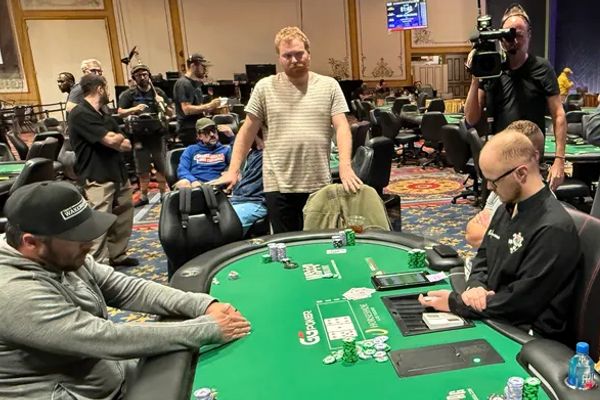
On Day 7 of the 2026 WSOP Main Event, player Loren Klein faced an all-in decision with a twist: he’d kept one chip back, and the call would cost him exactly that—one chip. The pot odds were 145:1. Any reasonable poker player makes this call instantaneously. Klein tanked for over 17 minutes.
His motivation was transparent: stall long enough for another player somewhere in the tournament to bust, securing everyone at his table a $20,000 pay jump. The kicker? Nobody at the table called the clock on him. Not one person. They sat there, complicit, waiting for their collective payday. One player, when asked about the situation, admitted openly: “Solidarity, I guess. You don’t want to be the one. You’d like that pay jump too. It’s $20K.”
Only when a senior tournament director discovered the situation did Klein’s performance end. The TD gave him one additional minute to decide. Klein called, lost the hand, busted—and everyone else got their pay jump anyway.
By the next morning, the WSOP had implemented shot clocks for all remaining Main Event play. Cue the social media firestorm. Prominent players including Jennifer Shahade and Chris Brewer criticized the decision, arguing it was unfair to recreational players and shouldn’t be implemented mid-tournament. But this criticism misses the forest for the trees.
The Poker Strategy Breakdown
Let’s be clear about the poker decision Klein faced: calling one chip when you’re getting 145:1 on your money isn’t a decision that requires contemplation. You could be holding 7-2 offsuit against pocket aces on a board that gives your opponent quads, and you’d still call. The pot odds make it mathematically impossible to fold.
This wasn’t a poker decision. It was theater designed to exploit a structural flaw in tournament poker: the perverse incentive structure created by ICM pressure near pay jumps. Independent Chip Model calculations show that when you’re on the bubble of a significant pay jump, your equity increases when other players bust—even if you’re not involved in the hand.
Klein’s exploitation was brazen, but he wasn’t inventing a new angle. He was simply taking the quiet part and shouting it. Tournament players have been engaging in softer versions of this behavior for years: tanking unnecessarily when short stacks are all-in at other tables, taking extra time to make routine folds, suddenly needing bathroom breaks when the bubble approaches.
The one-chip-back maneuver adds an extra layer of cynicism. By keeping a single chip, Klein ensured he’d face another decision, creating another opportunity to stall. It’s a loophole that exists purely for exploitation, serving no legitimate strategic purpose. When you’re all-in, you’re all-in. The one-chip holdback is the poker equivalent of a tax shelter that’s technically legal but morally bankrupt.
What makes Klein’s behavior cross from angle-shooting into collusion territory is the table’s response—or lack thereof. In a normal game, someone calls the clock within a minute or two. The fact that nobody did reveals an unspoken agreement: we’re all benefiting from this stall, so let’s let it ride. That’s textbook collusion, even if no words were exchanged beforehand.
Reading The Field & Table Dynamics
The “solidarity” comment reveals everything about how tournament dynamics can corrupt proper play. At a cash game table, Klein’s stalling would hurt his tablemates—they’d be losing hands per hour, which costs them money. Someone would call the clock immediately.
But in a tournament approaching a major pay jump, the incentives flip. Klein’s tablemates weren’t victims of his stalling; they were accomplices. Every second he tanked increased their equity by keeping play frozen while other tables continued, creating more opportunities for bustouts elsewhere.
This creates a tragedy of the commons situation. What’s rational for individual tables becomes destructive to the tournament ecosystem. If every table near a pay jump adopts this behavior, the tournament grinds to a halt, turning poker into a waiting game rather than a card game.
The ICM implications are real. A $20,000 pay jump split across nine players is worth over $2,000 per person in expected value—more if you’re one of the shorter stacks. That’s serious money, enough to override normal social pressure to keep the game moving. When players openly admit they’re acting out of “solidarity,” they’re confessing to prioritizing collective gain over competitive integrity.
Critics arguing this hurts recreational players need to answer a simple question: was Klein a recreational player? Was “solidarity guy” with his $500K in lifetime earnings a weekend warrior? The players exploiting these loopholes aren’t confused amateurs taking too long because they’re nervous. They’re experienced professionals executing a coordinated strategy to extract value from a structural flaw.
The real recreational players—the ones who don’t know about one-chip-back tricks or coordinated stalling—are the victims here. They’re losing equity to tables that collude while they continue playing honest poker. The shot clock levels the playing field by removing the advantage that comes from knowing and exploiting these angles.
How To Apply This To Your Game
The immediate lesson: if you’re playing a tournament with a shot clock, practice with one beforehand. Many online poker rooms offer shot clock tournaments. Play them. Get comfortable making decisions under time pressure. The pros who adapted quickly to the WSOP’s change weren’t naturally faster thinkers—they had experience.
More broadly, understand that tournament poker incentives can diverge sharply from optimal poker strategy. Near major pay jumps, the mathematically correct play often involves tightening up dramatically, even folding hands you’d normally play. This isn’t weakness; it’s understanding ICM. But there’s a line between playing conservatively and actively stalling, and that line is bright and clear.
If you’re at a table where someone is obviously stalling for a pay jump, call the clock. Yes, it costs you equity in the short term. But tolerating this behavior corrupts the game for everyone. The social pressure to maintain “solidarity” only works if players go along with it. Be the person who doesn’t.
When you’re facing a trivial decision—calling one chip getting 145:1, for instance—make it quickly. Banking time for genuinely difficult decisions is smart. Using obvious decisions as stalling opportunities is transparent and damages your reputation. The poker community is small, and people remember.
Finally, if you’re playing in a tournament that doesn’t have a shot clock, be aware that stalling is part of the meta-game whether you like it or not. You don’t have to participate, but you should understand that others will. This affects your equity calculations near pay jumps and should influence your strategy accordingly.
Key Takeaways
- The WSOP implemented shot clocks mid-tournament because players were openly colluding to stall for pay jumps, not because of arbitrary rule changes
- Klein’s 17-minute tank over a one-chip call getting 145:1 wasn’t a poker decision—it was systematic equity theft from other players
- Table “solidarity” in refusing to call the clock constitutes collusion, even without explicit verbal agreement
- The one-chip-back loophole serves no legitimate strategic purpose and exists purely for exploitation
- Recreational players are hurt more by coordinated stalling than by shot clocks, since they don’t know the angles being used against them
- Shot clock experience is now essential for tournament players—practice online before major live events
Frequently Asked Questions
Why didn’t the WSOP implement shot clocks before the tournament started?
They probably should have, but Klein’s egregious 17-minute tank forced their hand. When behavior becomes so blatant that it threatens tournament integrity, waiting until next year isn’t an option. The players who exploited the system chose the timing, not the WSOP.
Don’t shot clocks hurt recreational players who need more time to think?
Recreational players are hurt far more by professional players who know exploitative angles like the one-chip-back stall. Shot clocks level the playing field by removing advantages that come from knowing how to manipulate the system. A nervous amateur thinking through a decision isn’t the problem—coordinated stalling by experienced players is.
Is it really collusion if players don’t explicitly agree to stall?
Yes. Collusion doesn’t require verbal agreement. When every player at a table benefits from a stall and nobody calls the clock despite obvious abuse, that’s implicit collusion. The “solidarity” comment made this explicit, but the behavior speaks for itself even without the admission.
Final Thoughts
The controversy over the WSOP’s shot clock implementation reveals a deeper problem in tournament poker: players have become so accustomed to exploiting structural flaws that they view closing those loopholes as unfair. When the poker community defends a player’s right to tank for 17 minutes over a one-chip decision, we’ve lost the plot.
Tournament poker works because players trust that everyone is competing under the same rules. When entire tables coordinate to extract equity from the rest of the field through stalling, that trust breaks down. The WSOP’s response wasn’t draconian—it was necessary and arguably overdue. The real question is why it took this long.
For players moving forward, the message is clear: shot clocks are here to stay, and that’s a good thing. They remove exploitative angles, speed up play, and ensure that poker remains a game of cards rather than a game of waiting. Get comfortable with them, because the alternative—returning to an environment where coordinated stalling is tolerated—isn’t acceptable.
Ready to Sharpen Your Poker Game?
Master your poker game with expert hand analysis