

WSOP Reverses Shot Clock Decision for Main Event Final Table
In a dramatic policy reversal, the World Series of Poker announced it will abandon shot clocks for the 2026 Main Event final table after implementing them mid-tournament. The decision caps a week of heated debate within the poker community about pace of play, player rights, and the integrity of poker’s most prestigious event.
What Happened
The controversy began on Day 6 of the 2026 WSOP Main Event when a single player tanked for 17 minutes attempting to ladder up the payout structure. Tournament organizers responded by introducing shot clocks on Day 7—a first for the Main Event at this stage of play.
The implementation relied on Section 80 of the official WSOP Tournament Rules, which grants organizers broad authority to introduce timing mechanisms at any point during an event. Shot clocks and time banks are standard features across the tournament poker landscape, but their sudden introduction in the middle of poker’s flagship championship sparked immediate backlash.
For Days 7 and 8, players competed under the new timing restrictions as the field condensed from hundreds to the final nine. Then, just days before the final table was scheduled to commence, the WSOP reversed course entirely.
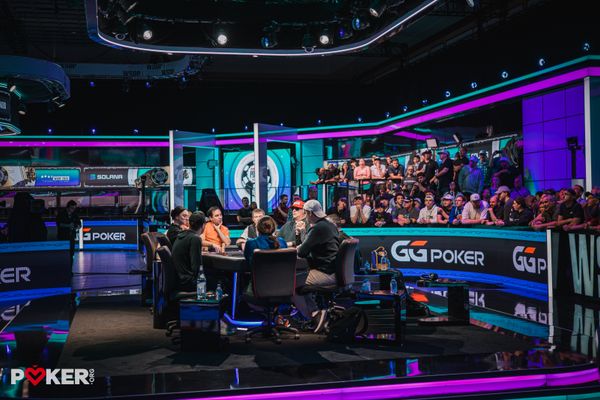
In a Thursday evening statement posted to social media, tournament officials announced they would not use shot clocks at the final table. The statement emphasized creating “the most natural playing environment possible” while reserving the right to reintroduce timing mechanisms if excessive tanking resurfaces.
The reversal maintains traditional clock-calling procedures, where players or staff can manually call the clock on opponents taking unreasonable time. Tournament directors indicated they would exercise this authority sparingly, intervening only in exceptional circumstances.
The Poker Strategy Breakdown
The shot clock debate cuts to the heart of tournament poker strategy. Time is a resource—one that becomes exponentially more valuable as stack sizes grow relative to blinds and as prize pool implications intensify.
At a Main Event final table, a single decision can mean the difference between a $1 million payday and a $5 million payday. When facing these life-changing decisions, players engage in complex calculations that extend far beyond basic pot odds and hand ranges.
Consider a typical final table scenario: you’re in the big blind with pocket nines, facing an all-in shove from middle position. Without time pressure, you can methodically work through multiple strategic layers. What does this opponent’s shoving range look like based on their previous patterns? How does your stack size relative to the other players affect the Independent Chip Model (ICM) implications? If you call and lose, do you become the short stack? If you fold, can you survive to a better spot?
These calculations become even more intricate when considering metagame dynamics. Has this opponent shown the ability to exploit your tight play? Are they aware you’re thinking about ICM pressure? Have they adjusted their range based on your previous folds?
Shot clocks compress this decision-making process. Most tournament shot clock systems provide 30 seconds per decision with a bank of time extension cards—typically four to eight cards worth 30-60 seconds each. Once those cards are exhausted, players face a hard 30-second limit on every decision.
This compression fundamentally alters optimal strategy. Players must rely more heavily on pre-planned ranges and less on real-time adjustment. The ability to adapt to specific situations—traditionally a hallmark of elite poker skill—becomes constrained by the ticking clock.
Proponents argue this forces action and prevents abuse of tanking as a strategic weapon. Detractors contend it diminishes the strategic depth that separates great players from good ones, particularly in unprecedented situations that arise at final tables.
Reading The Field & Table Dynamics
The timing of the WSOP’s reversal reveals fascinating insights into tournament dynamics and stakeholder management. By implementing shot clocks on Day 7 but removing them for the final table, organizers essentially created a two-tiered system that treats different stages of the same tournament with different standards.
This decision acknowledges an uncomfortable truth: final tables operate under different pressures than earlier play. The nine players who reach the Main Event final table have already navigated a week of poker to get there. They’ve earned the right to compete for life-changing money, and the decisions they face carry weight that simply doesn’t exist on Day 3 or Day 4.
ICM considerations become paramount at final tables in ways that don’t apply earlier. When nine players remain and pay jumps exceed hundreds of thousands of dollars per position, every all-in confrontation affects not just the two players involved but the entire table dynamic.
The community response highlighted these competing interests. High-level professionals like Shaun Deeb and Patrick Leonard expressed frustration not with the policy itself but with the timing of changes. Players who navigated Days 7 and 8 under shot clock conditions had to adjust their strategy accordingly—potentially making different decisions than they would have without time pressure.
Those who barely missed the final table, like Deeb, had to play under restrictions that the final nine would not face. This creates a fairness question: should the same tournament maintain consistent rules throughout, or should different stages merit different approaches?
The WSOP’s solution—maintaining traditional clock-calling procedures while reserving the right to intervene—attempts to split this difference. It acknowledges that egregious tanking remains unacceptable while recognizing that final table decisions merit additional consideration time.
From a table dynamics perspective, removing shot clocks empowers players with deep analytical skills and strong mental stamina. Players who can maintain focus during extended decision-making periods gain an edge over opponents who struggle with patience or lose concentration during long tanks.
How To Apply This To Your Game
Whether you’re playing with or without shot clocks, several lessons from this controversy can improve your tournament performance.
First, develop a pre-planned strategy for common situations. Even without time pressure, you shouldn’t need five minutes to decide whether to call a button shove with ace-king from the big blind. Build a mental database of standard plays for frequent scenarios. This preserves your thinking time for genuinely complex spots.
Second, practice making decisions under time pressure. Many online poker rooms and live tournaments use shot clocks. Regularly playing in these formats builds your ability to process information quickly and trust your instincts when the clock is running.
Third, understand when time becomes a weapon. If you’re playing without shot clocks, recognize that tanking can serve strategic purposes beyond just thinking through a hand. Extended tank time can frustrate opponents, disrupt their rhythm, and create psychological pressure. However, use this tool judiciously—abusing it can result in clock calls and damage your table image.
Fourth, know your rights regarding pace of play. In tournaments without automatic shot clocks, you can call the clock on opponents who are taking excessive time. Don’t be afraid to exercise this right when someone is clearly stalling, but also show respect for genuinely difficult decisions.
Fifth, adjust your strategy based on tournament stage. Early in an event, when blinds are small relative to stacks and pay jumps are minimal, you can afford to play more straightforward poker without extensive tanking. As you approach final tables and bubble situations, invest more time in complex ICM calculations.
Finally, prepare for rule changes and uncertainty. The WSOP’s mid-tournament policy shifts demonstrate that even the world’s most established tournament series can alter conditions on the fly. Mental flexibility and the ability to adjust quickly to new constraints are valuable skills in their own right.
Key Takeaways
- The WSOP reversed its decision to use shot clocks at the 2026 Main Event final table after implementing them on Days 7 and 8, citing a desire to create a “natural playing environment” for the biggest decisions
- The policy change highlights the tension between maintaining pace of play and allowing sufficient time for complex, high-stakes decisions at final tables
- Shot clocks fundamentally alter optimal strategy by compressing decision-making time and reducing the ability to adjust to unique situations in real-time
- ICM considerations at final tables justify different treatment than earlier tournament stages, as single decisions can mean million-dollar swings in expected value
- The timing of rule changes created fairness concerns for players who competed under shot clock conditions on Days 7-8 but won’t face them at the final table
- Players can improve their game by developing pre-planned strategies for common situations while preserving thinking time for genuinely complex spots
Frequently Asked Questions
Why did the WSOP initially implement shot clocks during the Main Event?
The WSOP introduced shot clocks on Day 7 in response to a player tanking for 17 minutes on Day 6 while attempting to ladder up the payout structure. Tournament organizers deemed this excessive and invoked their authority under Section 80 of the official rules to implement timing mechanisms mid-tournament.
How do shot clocks affect tournament poker strategy?
Shot clocks compress decision-making time, forcing players to rely more on pre-planned ranges and less on real-time adjustments to specific situations. This particularly impacts complex spots involving ICM considerations, metagame dynamics, and unprecedented scenarios that require extended analysis. While shot clocks prevent tanking abuse, they can reduce the strategic depth that separates elite players from strong players.
Can players still call the clock at the WSOP Main Event final table?
Yes. With shot clocks removed, traditional clock-calling procedures remain in effect. Players can call the clock if they believe an opponent is taking unreasonable time to act. Tournament staff also retains the authority to call the clock but indicated they would exercise this discretion only in exceptional circumstances.
Final Thoughts
The WSOP’s shot clock reversal represents more than a simple policy change—it reflects the ongoing evolution of tournament poker’s relationship with time management. As prize pools grow larger and decisions become more consequential, the poker community continues wrestling with how to balance pace of play against strategic depth.
What makes this situation particularly intriguing is that there’s no clearly correct answer. Shot clock advocates have legitimate concerns about tanking abuse and viewer experience. Opponents raise equally valid points about preserving the strategic complexity that makes poker compelling. The WSOP’s solution—maintaining flexibility to intervene while defaulting to a more permissive approach for the final table—acknowledges this complexity without fully resolving it.
For players at all levels, the lesson extends beyond this specific controversy. Tournament poker exists in a constant state of evolution, with rules, structures, and norms shifting based on competing priorities. Success requires not just technical skill but adaptability, awareness of the broader strategic landscape, and the ability to perform under varying conditions. Whether you’re facing a shot clock or unlimited time, the fundamentals remain the same: make the best decision you can with the information and resources available.
Ready to Sharpen Your Poker Game?
Master your poker game with expert hand analysis
