

Phil Hellmuth’s 2012 WSOPE Victory: Instinct Over Cards
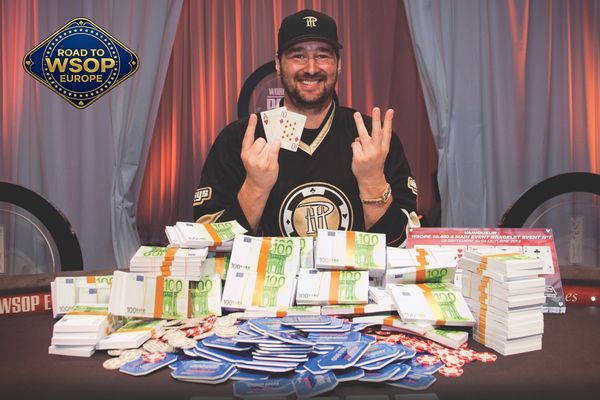
Phil Hellmuth’s thirteenth bracelet came from one of poker’s most unconventional approaches: playing hands without looking at his cards. At the 2012 WSOP Europe Main Event in Cannes, the Poker Brat deployed what he calls “white magic” – a pure instinct-based strategy that baffled opponents and crowned him champion across two continents.
What Happened
The 2012 WSOP Europe Main Event in Cannes drew 420 entries, creating a prize pool that would award €1,022,376 to the winner. Phil Hellmuth entered the tournament just months removed from capturing his twelfth bracelet in Las Vegas, riding momentum that few players ever experience.
The final table featured elite competition including Joseph Cheong and Jason Mercier, both known for their analytical approach to tournament poker. Yet Hellmuth navigated through them using methods that defied conventional wisdom. His heads-up opponent, Sergei Branov, had allegedly predicted the exact finish from Day 1 – telling Hellmuth repeatedly throughout the tournament that he would win while Branov would place second.
When Hellmuth secured the victory, he became the first player in history to win WSOP Main Events on two different continents. Antonio Esfandiari, commentating live, captured the poker world’s sentiment perfectly: “The guy just wins. 13 bracelets – that’s just incredible.” He followed with an admission that resonates with many who’ve watched Hellmuth’s career: “There’s no questioning that Phil Hellmuth can play poker – as much as we are confused and baffled by his ways.”
Hellmuth himself ranked this victory second only to his 1989 World Championship, calling it one of the most prestigious titles in poker. The win wasn’t just another bracelet – it was validation of an approach to poker that prioritizes instinct and opponent exploitation over mathematical precision.
The Poker Strategy Breakdown
Hellmuth’s approach during the 2012 WSOPE defied every textbook strategy guide. According to his own account, he didn’t look at his hole cards for extended periods – sometimes hours at a time. Instead, he waited for opponents to show aggression, then evaluated whether they could withstand a substantial reraise before checking his holdings.
This represents an extreme version of exploitative poker. While most players balance their ranges and make decisions based on their own cards first, Hellmuth inverted the process. He assessed opponent tendencies, identified weakness, and only then consulted his cards to determine if the situation warranted aggression.
The strategy required several elements to work effectively. First, Hellmuth needed exceptional reads on opponent psychology and betting patterns. Without looking at cards, every decision hinged on accurately assessing whether opponents held genuine strength or were vulnerable to pressure. Second, he needed a table image that made his aggression credible. Hellmuth’s reputation – love it or hate it – carries weight that makes opponents think twice before calling big bets.
The preflop and postflop bluffing frequency Hellmuth described would be suicidal for most players. Bluffing “hundreds of times” across multiple streets requires opponents who can be moved off hands. Against calling stations or players willing to gamble, this approach crumbles. But Hellmuth identified a field that would respect aggression, allowing him to accumulate chips without showdown.
This isn’t Game Theory Optimal poker. GTO advocates would cringe at the variance and exploitability of Hellmuth’s method. But tournament poker isn’t always about perfect balance – it’s about maximizing edge against specific opponents. Hellmuth found players who could be exploited through relentless pressure and adjusted his entire strategy accordingly.
The concept of “white magic” itself speaks to something many experienced players understand but struggle to articulate. There are tournaments where everything clicks – where reads feel certain, where timing seems perfect, where instinct overrides analysis. Hellmuth tapped into this state and rode it all the way to the bracelet.
Reading The Field & Table Dynamics
Understanding why Hellmuth’s strategy worked requires examining the specific dynamics of a WSOP Europe Main Event final table. These aren’t online grinders playing 20 tables simultaneously with HUD stats. They’re live tournament specialists navigating high-pressure situations with significant money jumps between positions.
ICM pressure at a WSOP Main Event final table is enormous. Players like Joseph Cheong and Jason Mercier, despite their skill, must consider pay jumps worth hundreds of thousands of euros. This creates situations where folding becomes more attractive than it would be in a cash game or early tournament stage. Hellmuth exploited this by applying maximum pressure when opponents had the most to lose.
The presence of Sergei Branov and his repeated predictions adds a psychological dimension that’s easy to overlook. Whether Branov genuinely believed his prophecy or was engaging in mind games, the effect on Hellmuth was real. Confidence is currency in poker, and believing you’re destined to win can create a self-fulfilling prophecy. Players pick up on confidence, and it makes bluffs more credible.
Hellmuth’s approach also benefited from the live poker environment. Online, players can review hand histories and identify patterns. Live poker, especially before the final table, offers limited information. If Hellmuth was three-betting relentlessly without showdown, opponents couldn’t know whether he was hitting premium hands or running pure bluffs. The ambiguity created doubt, and doubt creates folds.
The final table composition mattered too. While Cheong and Mercier were formidable, the table wasn’t exclusively filled with hyper-aggressive young guns willing to gamble. Mixed player types create opportunities for someone willing to apply consistent pressure. Hellmuth identified who would fold and targeted them mercilessly.
Tournament stage also played a crucial role. Deep-stacked poker allows for more sophisticated play, but as stacks get shallower, fold equity becomes paramount. Hellmuth’s willingness to bluff frequently meant he was constantly accumulating fold equity, building a stack that could then apply even more pressure. It’s a snowball effect that, once started, becomes difficult to stop.
How To Apply This To Your Game
Before you start playing hands without looking at your cards, understand that Hellmuth’s approach requires decades of experience and exceptional instincts. However, there are applicable lessons for players at every level.
First, develop your opponent reading skills independent of your cards. Too many players focus exclusively on their holdings and make decisions in a vacuum. Start paying attention to how opponents bet in different situations. Who folds to three-bets? Who calls down light? Who only raises with premium hands? This information is valuable regardless of what you’re holding.
Second, recognize that your cards are just one variable in the decision-making process. Position, stack sizes, opponent tendencies, and table dynamics often matter more than whether you hold ace-king or seven-deuce. If you identify a profitable spot to apply pressure, sometimes the specific cards become secondary.
Third, understand the power of consistent aggression. Hellmuth’s strategy worked partly because he bluffed frequently enough that opponents couldn’t pinpoint when he was strong. If you only bluff occasionally, observant opponents will identify the pattern. Balanced aggression – not reckless gambling, but calculated pressure – keeps opponents guessing.
Fourth, trust your instincts when they’re backed by observation. Hellmuth described his instincts as “100% spot on” during this tournament. That doesn’t happen by accident – it comes from thousands of hours reading players and situations. When you have a strong read, especially in live poker, don’t talk yourself out of it with overanalysis.
Fifth, adjust your strategy based on tournament stage and ICM pressure. The moves that work at a final table with massive pay jumps won’t work in the early stages. Recognize when opponents have reasons to fold beyond the strength of their hand, and exploit those situations.
Finally, cultivate confidence without arrogance. Hellmuth’s belief in his “white magic” – whether you view it as superstition or supreme confidence – translated into decisive action. Hesitation shows, and opponents exploit it. When you make a move, commit to it fully.
Key Takeaways
- Hellmuth won the 2012 WSOPE Main Event using an instinct-based approach that prioritized opponent reads over card strength, sometimes playing for hours without looking at his hole cards
- The victory made him the first player to win WSOP Main Events on two continents and earned him his thirteenth bracelet, second in prestige only to his 1989 World Championship
- Exploitative poker that targets specific opponent weaknesses can outperform balanced GTO strategies in live tournament environments with mixed player types
- ICM pressure at final tables creates folding incentives that skilled players can exploit through aggressive play, regardless of actual hand strength
- Confidence and table image are powerful weapons that make bluffs more credible and pressure more effective
- Developing opponent reading skills independent of your cards is essential for tournament success, especially in high-pressure situations with significant pay jumps
Frequently Asked Questions
What is Phil Hellmuth’s “white magic” strategy?
White magic is Hellmuth’s term for playing with supreme instinct and confidence, often making decisions based on opponent reads rather than card strength. During the 2012 WSOPE, he sometimes played for hours without looking at his hole cards, instead waiting for opponents to show aggression and then deciding whether they could withstand a reraise before checking his holdings. The approach relies on exceptional player reading skills and the confidence to execute bluffs when instinct suggests opponents are weak.
Can recreational players use Hellmuth’s approach successfully?
Playing without looking at your cards isn’t recommended for most players, but the underlying principles are valuable. Focus on developing opponent reading skills, paying attention to betting patterns and tendencies independent of your holdings. Learn to recognize when opponents are vulnerable to pressure based on ICM considerations or their playing style. The key is building these skills gradually through observation and experience, not attempting to replicate Hellmuth’s extreme approach without the decades of expertise that make it work.
How did Sergei Branov’s prediction affect the tournament outcome?
Branov repeatedly told Hellmuth from Day 1 that Hellmuth would finish first and Branov second – exactly how the tournament ended. While this might seem like superstition, the psychological impact was significant. The prediction boosted Hellmuth’s confidence, which translated into more decisive play and more credible bluffs. Whether Branov had genuine foresight or was engaging in psychological warfare, the effect was real: Hellmuth played with the conviction of someone destined to win, and that confidence is contagious at the poker table.
Final Thoughts
Phil Hellmuth’s 2012 WSOPE Main Event victory represents poker at its most instinctual. While modern poker increasingly emphasizes solver-based strategies and mathematical precision, Hellmuth proved that deep opponent exploitation and supreme confidence can still conquer the highest levels of tournament poker. His willingness to play hands without looking at cards – an approach that sounds reckless on paper – worked because it was backed by decades of experience reading players and situations.
The lesson isn’t to abandon your cards and play purely on instinct. Rather, it’s to recognize that poker decisions involve multiple variables, and sometimes opponent tendencies and table dynamics matter more than your specific holdings. Developing the skills to read opponents, identify weakness, and apply pressure at the right moments will serve you better than memorizing preflop charts. Hellmuth’s white magic run reminds us that poker remains a game of people, not just cards.
As Hellmuth chases his eighteenth bracelet, his 2012 WSOPE victory stands as a masterclass in exploitative tournament poker. Study the approach, adapt the principles to your skill level, and remember that sometimes the most powerful weapon at the table isn’t the cards you’re dealt – it’s the reads you make and the confidence with which you execute them.
Ready to Sharpen Your Poker Game?
Master your poker game with expert hand analysis
