Chidwick’s €250K Comeback: All-Time Money List Drama Unfolds
The race for poker’s all-time money list supremacy took center stage at the EPT Monte Carlo €250K Super High Roller, where Stephen Chidwick rebounded from a brutal one-chip low to stay alive in his pursuit of Bryn Kenney’s top spot. With both elite pros advancing to Day 2 and a €3.2 million first prize on the line, the stage is set for a potential changing of the guard in poker’s earnings hierarchy.
What Happened
PokerStars made history this week by hosting their largest-ever live tournament buy-in at the EPT Monte Carlo, with a €250,000 entry fee that translates to approximately $292,000 USD. The event attracted 38 entries, just one shy of the 39-player field that contested the previous record-holder—the 2023 PCA $250K in The Bahamas.
After Day 1 action concluded, 14 players bagged chips for Tuesday’s finale, with German pro Christopher Nguyen commanding the chip lead at 1,505,000. Following closely behind are Artur Martirosian (1,485,000) and Alex Kulev (1,335,000), forming a trio of million-chip stacks that will enter Day 2 with commanding positions.
The real storyline, however, centers on the middle of the pack where Bryn Kenney and Stephen Chidwick find themselves positioned for another potential final table confrontation. This comes just days after the two faced off at Sunday’s One Drop final table, adding another chapter to their ongoing rivalry for poker’s most prestigious earnings record.
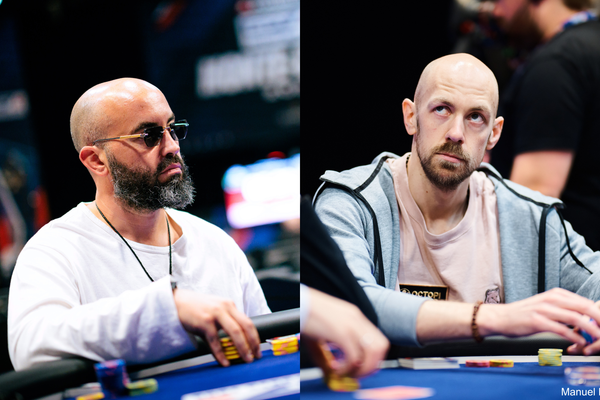
Kenney currently holds a $3.3 million advantage over Chidwick on the all-time money list, but a victory here could dramatically shift that margin. The American pro navigated Day 1 smoothly with a single €250K bullet, more than doubling his starting stack to finish with 540,000 chips.
Chidwick’s journey proved far more turbulent. His first entry ended in spectacular fashion when he found himself down to a single chip—literally—before being forced all-in against Orpen Kisacikoglu and Alex Kulev. On a board showing multiple streets of action, both opponents checked, and Kisacikoglu tabled the winning hand to eliminate Chidwick, whose deuce-three couldn’t connect. The British pro immediately re-entered and managed to build his second bullet up to 370,000, positioning himself for a legitimate run at the title.
The remaining field reads like a who’s who of high roller poker: Aleksejs Ponakovs, Biao Ding, Mikita Badziakouski, Isaac Haxton, Enrico Camosci, and fan-favorite Jean-Noel Thorel all survived to compete for the massive prize pool. The top six finishers will secure at least €651,000, while the runner-up takes home just over €2 million.
The Poker Strategy Breakdown
Chidwick’s willingness to fire a second bullet in this €250K event exemplifies the calculated risk-taking required at poker’s highest levels. With €500,000 invested and a stack of 370,000 chips (roughly 25 big blinds at Day 2’s starting level of 10K/15K/15K), he’s positioned in the middle of the pack with plenty of play ahead.
The decision to re-enter after a brutal bust-out isn’t purely emotional—it’s mathematical. With 14 players remaining and six spots paid, Chidwick faces approximately 57% of the field needing to bust before he reaches the money. However, the payout structure heavily rewards top finishes, with first place capturing €3,212,000 compared to the min-cash of €651,000. This top-heavy distribution incentivizes skilled players to take shots even after early eliminations.
Kenney’s Day 1 performance demonstrates a contrasting approach: conservative accumulation without unnecessary risk. His 540,000 stack (36 big blinds) provides more flexibility for Day 2 maneuvering, allowing him to apply pressure without risking tournament life. In ultra-high roller events where a single mistake can cost hundreds of thousands, having extra chips creates exponentially more strategic options.
The chip leader Christopher Nguyen enters Day 2 with 100 big blinds—a commanding position that allows for maximum aggression. He can contest pots liberally, knowing that even losing a significant pot won’t cripple his stack. This chip leverage becomes particularly powerful as the bubble approaches, where medium stacks face increasing pressure to survive into the money.
For players like Leon Strum (245,000) and Orpen Kisacikoglu (200,000) sitting on short stacks, Day 2 strategy requires immediate chip accumulation. With 16 and 13 big blinds respectively, they’ll need to find spots to double up before the blinds consume their resources. This creates opportunities for big stacks to exploit their desperation, while also presenting risks if the short stacks wake up with premium hands.
Reading The Field & Table Dynamics
The EPT €250K field represents perhaps the most skilled player pool in tournament poker. Every remaining player has extensive high roller experience, eliminating the exploitable weaknesses typically found in lower buy-in events. This shifts the strategic focus from exploiting individual tendencies to navigating ICM pressure and table dynamics.
With 14 players and six paid spots, Day 2 begins in the accumulation phase where chip preservation matters less than building a stack capable of final table contention. The bubble won’t become a factor until 7-8 players remain, giving aggressive players a window to apply pressure before ICM considerations dominate decision-making.
The Kenney-Chidwick dynamic adds an intriguing psychological element. Both players understand the all-time money list implications, but allowing that external motivation to influence in-game decisions would be a critical error. The correct play remains the correct play regardless of who holds the chips or what’s at stake historically. However, their recent One Drop final table encounter means each player has fresh reads on the other’s current strategic tendencies.
Players like Isaac Haxton and Mikita Badziakouski bring exceptional tournament acumen to the table. Haxton’s analytical approach and Badziakouski’s aggressive style create contrasting threats that opponents must navigate. Meanwhile, Jean-Noel Thorel’s unpredictable play and willingness to gamble makes him particularly dangerous in big-bet situations where conventional strategy suggests caution.
The presence of multiple million-chip stacks (Nguyen, Martirosian, Kulev) creates an interesting dynamic where big-stack-versus-big-stack confrontations could dramatically reshape the leaderboard. These players can afford to tangle with each other without facing immediate elimination, potentially creating opportunities for medium stacks to climb the ladder through survival.
How To Apply This To Your Game
While most players won’t face €250K buy-in decisions, the strategic principles on display translate directly to tournaments at every level. Here’s how to incorporate elite-level thinking into your game:
Understand Re-Entry Value: Chidwick’s second bullet wasn’t tilt—it was calculated investment in a profitable opportunity. Before re-entering any tournament, assess your edge against the remaining field, the payout structure’s top-heaviness, and your bankroll’s ability to absorb the additional buy-in. If you’re among the best players remaining and the structure rewards winners disproportionately, re-entry often shows positive expected value.
Stack Size Dictates Strategy: Notice how different stack sizes require completely different approaches. With 100+ big blinds, you can play speculative hands and apply maximum pressure. With 30-50 big blinds, you maintain flexibility but must be more selective. Below 20 big blinds, your strategy shifts toward push/fold considerations and finding spots to double up. Adjust your game plan based on your stack-to-blind ratio, not your absolute chip count.
Recognize Accumulation Windows: The period before bubble pressure emerges offers opportunities for aggressive chip accumulation. When you’re far from the money, focus on building a stack rather than preserving what you have. The difference between 15th and 7th place is zero dollars, but the difference between a medium stack and a big stack at the final table is enormous.
Study Top-Heavy Structures: Tournaments with significant pay jumps at the top require different strategies than flat payout structures. When first place pays 5-10x the min-cash, playing for the win becomes more important than laddering up pay jumps. This means taking calculated risks to accumulate chips rather than playing conservatively to survive into smaller money.
Manage Psychological Factors: External motivations—whether chasing all-time money lists or proving something to opponents—must never override optimal strategy. Make decisions based solely on expected value within the current tournament context. The chips in front of you and the payout structure are the only factors that matter.
Key Takeaways
- Stephen Chidwick invested €500,000 across two bullets in pursuit of the €3.2M first prize and a potential all-time money list lead over Bryn Kenney
- The €250K buy-in represents PokerStars’ largest-ever live tournament entry fee, surpassing the 2023 PCA $250K event
- With 14 players remaining and only 6 paid spots, Day 2 begins in the accumulation phase before ICM pressure intensifies near the bubble
- Christopher Nguyen’s chip lead (100+ big blinds) provides maximum strategic flexibility, while short stacks like Kisacikoglu (13 BB) face immediate pressure to accumulate
- Top-heavy payout structures incentivize aggressive play and calculated re-entries for skilled players with sufficient edge over the field
- The elite field composition eliminates exploitable weaknesses, shifting strategic focus to ICM navigation and table dynamics rather than individual opponent tendencies
Frequently Asked Questions
How much does Stephen Chidwick trail Bryn Kenney on the all-time money list?
Chidwick currently sits approximately $3.3 million behind Kenney on poker’s all-time tournament earnings list. A victory in the EPT Monte Carlo €250K, which pays €3,212,000 (roughly $3.75 million USD) for first place, would vault Chidwick past Kenney into the top position, assuming Kenney doesn’t also finish deep in the money.
Why did Stephen Chidwick fire a second €250K bullet after busting his first entry?
Chidwick’s re-entry decision reflects calculated expected value rather than emotional response. As one of the world’s best tournament players, he likely assessed his edge against the remaining field as significantly positive. With a top-heavy payout structure that awards €3.2M to the winner versus €651K for sixth place, skilled players benefit from taking multiple shots at the top prizes in events where they hold substantial edges.
What stack size is considered optimal entering Day 2 of a major tournament?
While any stack that survives provides tournament equity, 30-50 big blinds offers ideal flexibility for Day 2 play. This range allows you to apply pressure, play speculative hands in position, and survive mistakes without facing elimination. Bryn Kenney’s 36 big blinds and Stephen Chidwick’s 25 big blinds both fall within playable ranges, though Christopher Nguyen’s 100+ big blind stack provides maximum strategic options.
Final Thoughts
The EPT Monte Carlo €250K Super High Roller showcases tournament poker at its absolute pinnacle—where buy-ins reach stratospheric levels and every remaining player possesses world-class skill. The convergence of Bryn Kenney and Stephen Chidwick in this event adds narrative weight beyond the already massive prize pool, as their all-time money list battle provides a compelling subplot to the strategic warfare unfolding at the felt.
Chidwick’s comeback from a single chip to a competitive Day 2 stack exemplifies the resilience required at poker’s highest levels. His willingness to invest a second quarter-million euros demonstrates the confidence elite players have in their abilities when they identify profitable opportunities. Meanwhile, Kenney’s smooth Day 1 navigation shows that sometimes the best strategy is simply avoiding disasters and letting your skill edge manifest over time.
As Day 2 unfolds with 14 players competing for six paid spots and a €3.2 million top prize, expect to see world-class poker strategy on full display. The accumulation phase will give way to bubble pressure, which will eventually yield to final table ICM considerations—each phase requiring distinct strategic adjustments. For poker students willing to study this elite-level action, the lessons available are invaluable regardless of the stakes you play.
Ready to Sharpen Your Poker Game?
Master your poker game with expert hand analysis