Esfandiari’s Flush Gamble: When Aggression Meets Opportunity
Antonio Esfandiari demonstrated textbook aggressive poker on PokerStars’ The Big Game on Tour, turning a marginal suited hand into a $70,500 pot against sports analyst Nick Wright. The hand showcased how relentless pressure and image exploitation can transform speculative holdings into massive winners when the cards cooperate.
What Happened
Episode 12 of The Big Game on Tour Season 2 delivered fireworks as Antonio ‘The Magician’ Esfandiari clashed with Nick Wright in a hand that perfectly illustrated the fine line between genius and disaster in high-stakes poker.
The action began innocuously enough when Esfandiari opened to $800 from the cutoff holding J♦2♦—a hand most recreational players would fold without hesitation. Phil Hellmuth found A♠K♣ on the button and flatted, setting up what looked like a classic squeeze spot. Wright seized the opportunity from the big blind with Q♥9♥, three-betting to $2,100.
Here’s where the hand took its first interesting turn: Esfandiari called the three-bet with his jack-high, while Hellmuth—showing uncharacteristic discipline—folded his premium holding. The flop came 8♦7♦4♣, giving Esfandiari a flush draw while Wright held just queen-high and backdoor possibilities. Despite missing completely, Wright continuation bet $1,100 into the $5,100 pot, maintaining aggression as the preflop raiser.
Esfandiari called quickly, already engaging in table talk: “You got anything?” Wright’s unconvincing “Yeah” response hinted at the weakness both players likely sensed in each other’s ranges.
The Q♦ turn was the cruelest card in the deck for Wright. He’d improved to top pair, but Esfandiari had completed his flush. Wright bet just $1,400 into the $7,300 pot—a sizing that screamed uncertainty. Esfandiari pounced, raising to $7,500. After brief consideration, Wright shoved his remaining $31,600 into the middle.
“Go,” Esfandiari said flatly, snapping off the all-in to create a $70,500 pot. When Wright asked if he’d flopped the flush, Esfandiari confirmed he’d turned it, leaving Wright drawing dead. The river was a formality.
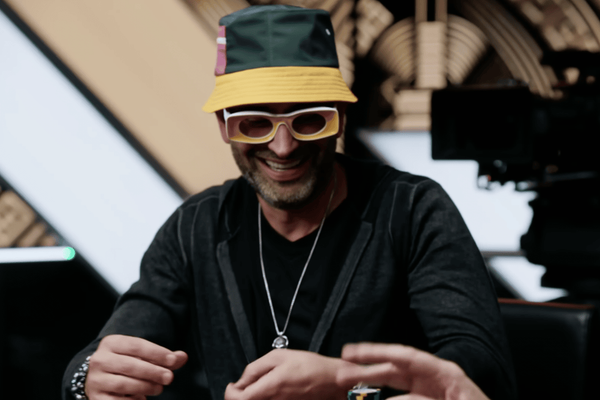
The table reaction was priceless. Hellmuth couldn’t resist commentary about Esfandiari’s “8-4 suiteds and J-2 suiteds” making flushes, while Rob Gronkowski observed, “You’re all over the place, but it’s working.” Esfandiari’s response captured his approach perfectly: “I didn’t come here to wait for ace-king. That never happens.”
The Poker Strategy Breakdown
This hand offers a masterclass in exploitative poker, though it’s important to separate the results from the process. Let’s examine each decision point critically.
Esfandiari’s initial raise with J♦2♦ from the cutoff is a standard late-position steal attempt. Suited connectors and one-gappers play well in position and can flop disguised strength. The real decision point came facing Wright’s three-bet. Calling a three-bet out of position with jack-high suited is objectively marginal—this works primarily because of the specific dynamics at play.
Against a recreational player like Wright who might three-bet too wide and struggle with postflop execution, Esfandiari could justify the call. He had position on the three-bettor (since Wright was in the big blind, Esfandiari would act last postflop), implied odds given the deep stacks, and a table image that would get him paid when he hit. Still, this is a fold for most players in most situations.
Wright’s flop continuation bet was mandatory. As the three-bet aggressor, he needs to follow through with a bet on this board regardless of whether he connected. His sizing of roughly 22% pot was on the small side, but not unreasonable given the dry texture. The problem was what came next.
The turn Q♦ created a fascinating dynamic. Wright’s $1,400 bet into $7,300—just 19% of the pot—revealed his hand strength more clearly than if he’d checked. This sizing typically indicates either a marginal made hand that wants to see a cheap showdown or a bluff that’s lost confidence. Wright had the former: top pair with a mediocre kicker on a three-flush board.
When Esfandiari raised to $7,500, Wright faced a crucial decision. His top pair was at the very top of his range given the action, but the board texture was treacherous. Three diamonds, straight possibilities, and an opponent known for creative plays made this a clear fold. Instead, Wright compounded his mistake by shoving, turning his hand into a bluff against a range that would only continue with better.
Esfandiari’s call was instantaneous and correct. Once Wright shoved, he was representing an overpair, a set, or a flush himself. Esfandiari’s flush was near the nuts given the action, losing only to higher diamond holdings that didn’t make sense in Wright’s range.
Reading The Field & Table Dynamics
Context is everything in poker, and this hand didn’t happen in a vacuum. Hellmuth’s comment about Wright seeing “Antonio bluff too many times” was the key to understanding the disaster.
Esfandiari had clearly been applying pressure throughout the session, showing down marginal holdings and running elaborate bluffs. This created a situation where Wright felt compelled to make a stand. The psychological pressure of being run over at a televised table, especially for a competitive athlete like Wright, can override sound strategic thinking.
Gronkowski’s observation that Esfandiari was “all over the place” but “it’s working” captured the essence of Esfandiari’s approach. By playing a wide range aggressively, he’d created maximum confusion about his holdings. When he finally made a hand, his opponents couldn’t give him credit for it.
This is advanced image exploitation. Esfandiari wasn’t just getting lucky with suited garbage—he was creating the conditions where those hands would get paid off when they connected. The flip side, of course, is that this approach requires deep stacks, strong postflop skills, and the ability to handle variance.
The cash game format also mattered significantly. With no ICM considerations and the ability to reload, Esfandiari could take high-variance lines that would be suicide in a tournament. Wright, as the Loose Cannon with a limited buy-in, faced different incentives but seemed to forget that preservation of his stack should have been a priority.
How To Apply This To Your Game
Before you start opening J♦2♦ from the cutoff, let’s extract the actually applicable lessons from this hand.
First, understand that aggression creates opportunities. Esfandiari’s loose image meant that when he actually made a hand, he got maximum value. You don’t need to play as wide as he does, but establishing yourself as an active player rather than a rock will increase your win rate when you connect with boards.
Second, pay attention to bet sizing tells. Wright’s tiny turn bet was a massive red flag indicating weakness or uncertainty. When opponents bet 20% pot on scary boards, they’re rarely confident in their holdings. This is an exploitable pattern you’ll see regularly at all stakes.
Third, recognize when you’re beat. Wright’s shove with top pair on a three-flush board against a tight value range was the critical error. When you improve on a card that completes obvious draws, proceed with extreme caution. The queen gave Wright just enough to hang himself.
Fourth, position matters enormously in three-bet pots. Esfandiari’s decision to call the three-bet was marginally acceptable because he would have position postflop. Calling three-bets out of position with speculative hands is a recipe for disaster unless you have a significant skill edge.
Finally, table dynamics should inform every decision. If you’ve been caught bluffing repeatedly, tighten up your value betting range because you’ll get looked up light. If you’ve been playing tight, that’s when you can run the occasional big bluff. Esfandiari understood this perfectly—his loose image was a carefully constructed weapon.
Key Takeaways
- Aggressive table image creates payoff opportunities when you actually connect with boards, but requires deep stacks and strong postflop skills to execute properly
- Tiny bet sizes on dangerous boards typically indicate weakness or uncertainty—exploit these spots by applying pressure with your strong hands and drawing hands
- Improving to top pair on a card that completes obvious draws is often a trap—proceed with caution and be willing to fold when facing significant aggression
- Calling three-bets with speculative hands works best when you have position, deep stacks, and a skill edge over opponents who struggle postflop
- Table dynamics and opponent perception should inform every decision—understand how your recent history affects how opponents will respond to your actions
- In cash games with deep stacks, high-variance plays become more acceptable than in tournaments where chip preservation carries additional value
Frequently Asked Questions
Should I call three-bets with hands like J2 suited?
Generally, no. Esfandiari’s call worked because of specific factors: he had position, deep stacks, a significant skill edge, and had established a loose image that would get him paid. For most players in most situations, this is a clear fold. Focus on calling three-bets with suited connectors (like 8♠7♠) and broadway suited hands (like K♦Q♦) that have better playability and equity when called.
How should Wright have played top pair on the turn?
Wright should have either checked the turn to control the pot size or bet larger (around 50% pot) and folded to a raise. His small bet sizing induced action from Esfandiari’s entire range, and his shove over the raise turned his marginal made hand into a bluff. The three-flush board and Esfandiari’s aggressive line made this a mandatory fold once facing the raise.
What’s the right balance between tight and aggressive play?
The optimal strategy depends on your skill level, stack depth, and table dynamics. Beginners should focus on tight-aggressive play with premium holdings. As you develop postflop skills, you can gradually widen your ranges in position. Esfandiari’s ultra-loose approach requires expert hand reading, fearlessness with variance, and deep stacks—it’s not a sustainable strategy for developing players or those with limited bankrolls.
Final Thoughts
Antonio Esfandiari’s performance in this hand exemplifies both the power and the peril of aggressive poker. While the result was spectacular, it’s crucial to recognize that his approach requires a unique combination of skill, bankroll, and table conditions to succeed. For every flush he completes with J♦2♦, there are dozens of hands where he’s torching money with marginal holdings.
The real lesson isn’t to emulate Esfandiari’s starting hand selection—it’s to understand how he weaponized his image and exploited his opponent’s adjustments. Wright’s fatal error wasn’t losing to a flush; it was allowing frustration and the desire to make a stand override his strategic judgment. When you improve to a marginal hand on a dangerous board against an opponent representing strength, that’s usually a trap, not a gift.
As you develop your game, focus on the fundamentals: solid starting hand selection, positional awareness, appropriate bet sizing, and the discipline to fold when the situation demands it. Once you’ve mastered these basics, you can experiment with looser, more creative approaches in the right situations. Until then, leave the J♦2♦ three-bet calls to the magicians.
Ready to Sharpen Your Poker Game?
Master your poker game with expert hand analysis