Daniel Dvoress Defeats Jason Koon in Epic Short Deck Showdown
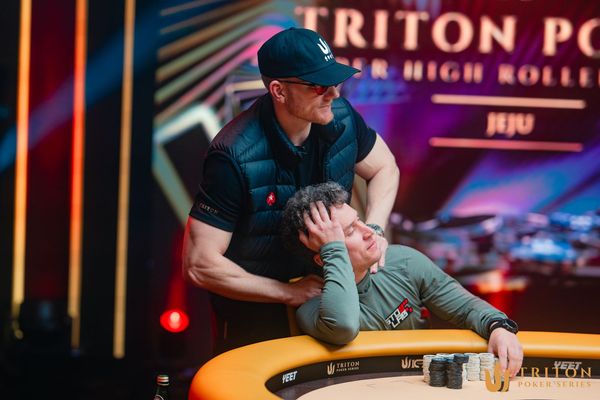
Daniel Dvoress claimed his third Triton title after an all-night heads-up battle with Jason Koon at Triton Jeju’s $100K Short Deck event, banking $1.38 million and denying the American pro his 13th series victory. The marathon final table showcased the unique dynamics of Short Deck poker at its highest level, with both elite competitors navigating the high-variance format for seven-figure stakes.
What Happened
The $100K Short Deck event at Triton Jeju attracted 46 entries, creating a prize pool of $4.6 million. When the dust settled after an extended final table session, Canadian high roller Daniel Dvoress emerged victorious over Jason Koon in heads-up play.
Dvoress added $1.38 million to his tournament resume, while Koon collected $997,000 for his runner-up finish. This marks Dvoress’s third Triton championship overall and his second Short Deck title, complementing his previous Triton PLO victory. For Koon, it represented a second near-miss at Triton Jeju after finishing third in the $25K Short Deck event earlier in the series.
The final table featured a strong international lineup including Winfred Yu (3rd – $646,000), Kiat Lee (4th – $487,000), and Ruslan Khadartsev (5th – $378,000). Notable pros Chan Wai Leong, Mike Watson, and Michael Zhang rounded out the money finishers.
With this victory, Dvoress now has 65 career cashes in Triton events, placing him fourth on the all-time list behind Stephen Chidwick, Jason Koon, and series leader Bryn Kenney. His career earnings jumped to approximately $48.7 million, enough to surpass poker legend Erik Seidel for 14th on the all-time money list.
The Poker Strategy Breakdown
Short Deck poker fundamentally changes traditional hold’em strategy by removing all cards below six from the deck. This seemingly simple modification creates dramatic shifts in hand values, equity distributions, and optimal play that both Dvoress and Koon had to navigate perfectly at the final table.
In Short Deck, flushes beat full houses due to the mathematical reality that with fewer cards of each suit in the deck, completing a flush becomes significantly more difficult. Straights are also more valuable relative to standard hold’em, while pocket pairs gain strength since set-mining becomes more profitable with the condensed deck structure.
The removal of low cards means players connect with flops more frequently, creating multi-way pots with complex equity distributions. Middle pairs that would be easy folds in traditional hold’em suddenly have showdown value. Drawing hands gain tremendous equity, and the variance swings can be enormous even for world-class professionals.
At the $100K buy-in level, both players would have been acutely aware of how stack depths interact with Short Deck’s high-variance nature. Deep-stacked play allows for more sophisticated post-flop maneuvering, but it also means massive pots can develop quickly. The heads-up battle likely featured intense mathematical calculations around equity realization and implied odds.
Dvoress’s victory demonstrates mastery of Short Deck’s unique dynamics. His previous Short Deck title shows this wasn’t a lucky run but rather expertise in a format that punishes players who simply apply standard hold’em thinking. The Canadian pro would have needed to adjust his ranges, understand the modified equity distributions, and maintain composure through the inevitable variance swings.
Koon’s deep run, despite falling just short, reinforces his reputation as one of poker’s most versatile players. His ability to compete at the highest level across multiple formats—from No-Limit Hold’em to PLO to Short Deck—separates elite professionals from merely good players. The heads-up battle likely showcased advanced concepts like range balancing in a condensed deck environment and exploitative adjustments based on opponent tendencies.
Reading The Field & Table Dynamics
The 46-entry field represented a typical Triton event: small but exceptionally strong, with buy-ins that ensure only the world’s best professionals and wealthy recreational players participate. This creates unique table dynamics where every opponent commands respect, but skill edges still matter significantly.
In Short Deck tournaments, ICM (Independent Chip Model) considerations become even more critical due to the format’s variance. Players can’t simply wait for premium hands because the action comes fast and furious. The condensed deck means more playable holdings, forcing professionals to make marginal decisions for significant portions of their stack.
As the final table developed, both Dvoress and Koon would have been calculating pay jump implications while managing their aggression levels. The jump from third place ($646,000) to second ($997,000) represented over $350,000—meaningful even for players with eight-figure career earnings. Yet playing too conservatively in Short Deck allows aggressive opponents to run over the table.
The heads-up battle introduced different dynamics entirely. With only two players remaining, ICM pressure disappears and the contest becomes pure poker skill. However, Short Deck heads-up play differs substantially from traditional hold’em. Hand values shift, positional advantages remain but manifest differently, and the high-variance nature means even significant skill edges can take time to realize.
Dvoress’s experience in high-stakes mixed games likely provided an edge. Players who excel across multiple formats tend to think more deeply about fundamental poker concepts rather than relying on memorized charts. This adaptability becomes crucial when fatigue sets in during all-night sessions and mental stamina separates winners from runners-up.
Koon’s pursuit of a 13th Triton title added psychological complexity to the match. Chasing milestones can create subtle pressure, though a player of Koon’s caliber would be well-equipped to handle such situations. His extensive experience in high-pressure spots—he leads all players with 12 Triton victories—means he’s comfortable playing for seven-figure sums.
How To Apply This To Your Game
While most players won’t face $100K Short Deck tournaments, the strategic principles from this match apply across stakes and formats. Understanding how rule variations affect fundamental strategy separates thinking players from those who simply follow standard advice.
First, recognize that game format dramatically impacts hand values. Whether you’re playing Short Deck, PLO, or even just different blind structures in hold’em, you must adjust your ranges and decision-making accordingly. Don’t assume that what works in one format automatically translates to another.
Second, develop comfort with variance. Both Dvoress and Koon understand that short-term results don’t define quality decisions. In high-variance formats, you’ll experience massive swings even when playing perfectly. Focus on process over results, especially in individual sessions.
Third, study how stack depths affect your strategy. Deep-stacked play allows for more post-flop complexity, while short stacks require tighter ranges and more all-in situations. Adjust your aggression levels and hand selection based on effective stacks, not just your absolute chip count.
Fourth, pay attention to opponent tendencies and make exploitative adjustments. While game theory optimal (GTO) play provides a solid baseline, the biggest edges come from identifying and exploiting opponent weaknesses. Both players in this heads-up match would have been constantly adjusting based on what they observed.
Finally, build mental stamina for extended sessions. Tournament poker often requires maintaining peak performance for many hours. Develop routines for staying focused, managing tilt, and making quality decisions even when exhausted. The player who maintains their A-game longest often wins close matches.
Key Takeaways
- Daniel Dvoress won his third Triton title and second Short Deck championship, defeating Jason Koon heads-up for $1.38 million at the $100K Short Deck event in Jeju
- Koon’s runner-up finish marked his second near-miss at a 13th Triton victory during the Jeju series, having also placed third in the $25K Short Deck event
- Short Deck poker requires significant strategic adjustments from traditional hold’em due to the removal of cards below six, changing hand values and equity distributions
- Dvoress’s victory pushed his career earnings to $48.7 million, surpassing Erik Seidel for 14th on the all-time money list
- The marathon heads-up battle showcased the importance of format expertise, mental stamina, and variance management in high-stakes tournament poker
- With 65 Triton cashes, Dvoress ranks fourth all-time in the series behind only Chidwick, Koon, and Kenney
Frequently Asked Questions
What makes Short Deck poker different from regular Texas Hold’em?
Short Deck removes all cards below six from the deck, leaving only 36 cards (6 through Ace in all four suits). This changes hand rankings—flushes beat full houses, and straights become more common. Players connect with boards more frequently, creating higher variance and bigger pots. The format requires significant strategic adjustments in hand selection, equity calculations, and post-flop play compared to traditional hold’em.
How many Triton titles does Jason Koon have?
Jason Koon has won 12 Triton Poker titles, more than any other player in the series’ history. The next closest group of players each have five victories. Koon has had multiple opportunities to win his 13th title, including two deep runs at Triton Jeju where he finished third in the $25K Short Deck and second in the $100K Short Deck events.
Where does Daniel Dvoress rank on the all-time poker money list?
After this victory, Daniel Dvoress moved to approximately $48.7 million in career tournament earnings, placing him 14th on the all-time money list and surpassing poker legend Erik Seidel. He ranks as Canada’s second-highest earner behind Daniel Negreanu, though he still trails by nearly $10 million. Dvoress has been climbing rapidly, adding $2.9 million over six months prior to this win to jump from 17th to 15th before this latest score.
Final Thoughts
Daniel Dvoress’s victory over Jason Koon represents more than just another high-stakes tournament result. It demonstrates the value of format versatility in modern poker, where the most successful professionals excel across multiple games rather than specializing in a single variant. Dvoress’s collection now includes titles in Short Deck, PLO, and traditional hold’em—a testament to his comprehensive understanding of poker fundamentals.
For Koon, the near-miss at a 13th Triton title doesn’t diminish his remarkable achievements. His consistency at the highest levels of tournament poker remains unmatched, and his runner-up finish adds nearly $1 million to an already impressive resume. The heads-up battle between these two elite professionals showcased poker at its finest: deep strategic thinking, mental fortitude, and the ability to perform under immense pressure.
As the Triton series continues with additional high-stakes events throughout March, both players will have more opportunities to add to their legacies. The Super High Roller Series portion features 17 events with buy-ins ranging from $25,000 to $100,000, culminating in dual $100K Main Events in PLO and No-Limit Hold’em. Whether you’re studying high-stakes poker to improve your own game or simply appreciate world-class competition, these events provide invaluable insights into how the best players in the world approach the game.
Ready to Sharpen Your Poker Game?
Master your poker game with expert hand analysis