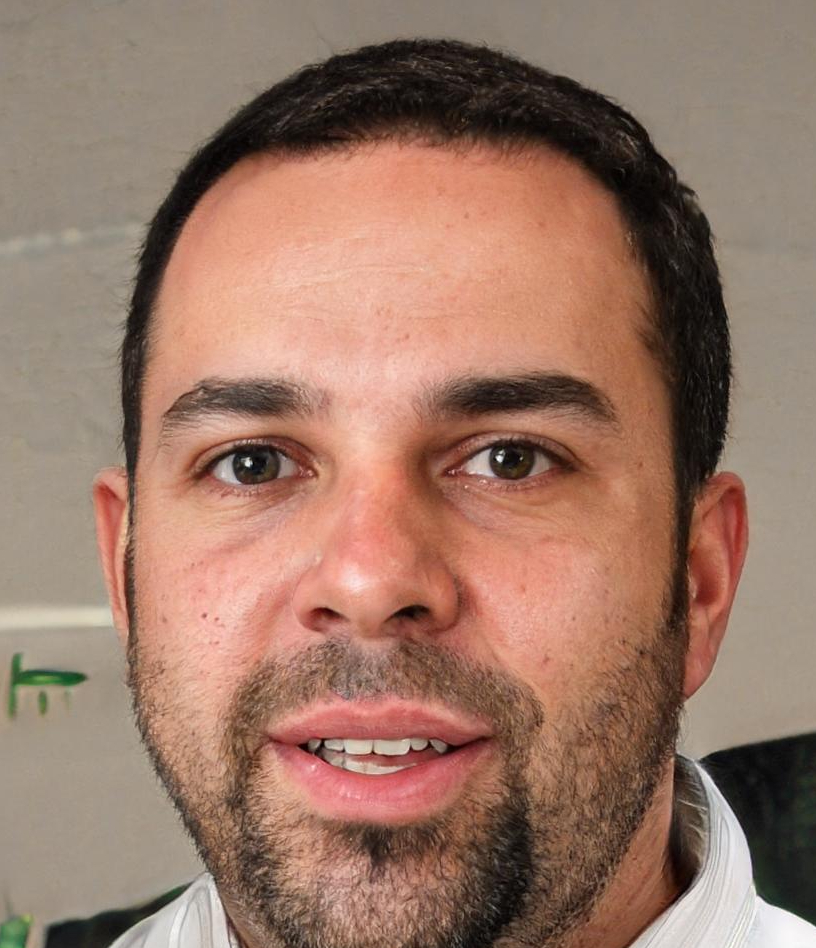
Frank Koopmann’s Quads Crush Deeb’s WSOPE Dream
Frank Koopmann captured his first WSOP bracelet in dramatic fashion at the 2026 WSOPE, cracking Shaun Deeb’s king-high flush with quad kings on the final hand of Event #2. The €3,300 Mixed PLO/PLO8/Big O tournament ended with one of poker’s cruelest coolers, denying Deeb his ninth bracelet and adding another runner-up finish to his growing collection of near-misses.
What Happened
The €3,300 Mixed PLO/PLO8/Big O event at King’s Resort in Prague drew 181 entries, generating a prize pool of €543,000. After two days of intense action, the tournament came down to a heads-up battle between recreational player Frank Koopmann and WSOP legend Shaun Deeb, who was fresh off his 2025 Player of the Year title and hunting for his ninth bracelet.
Deeb had dominated the tournament from the moment he late-registered on Day 1, spinning up his stack seventeen times over in just a few hours to bag the chip lead with 696,000. He maintained that advantage throughout Day 2, eliminating 2025 Main Event champion Michael Mizrachi and navigating a stacked final table that included Dario Sammartino and Blaz Zerjav.
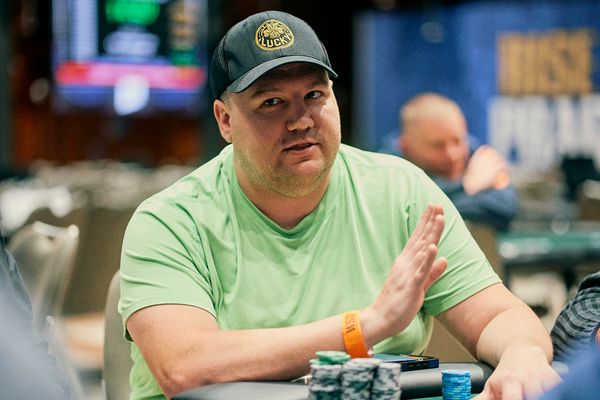
But poker has a way of humbling even the best players. On the final hand, Deeb flopped a king-high flush and got his stack in the middle, only to watch Koopmann turn over quad kings. “Quads?” Deeb asked in disbelief before graciously congratulating his opponent and exiting the stage. For Koopmann, a player who describes his two-decade poker career as “recreational,” the moment was overwhelming. “It’s amazing to beat such a professional player like Shaun,” he said afterward. “PLO is my love.”
The victory earned Koopmann €123,879, while Deeb collected €81,784 for second place. More significantly, it marked Deeb’s eighth runner-up finish at WSOP events—matching his bracelet count. Had he converted all those second-place finishes into wins, he’d be sitting on 16 bracelets, just one behind Phil Hellmuth’s record.
Day 1 featured its share of controversy, particularly involving Martin Kabrhel. In the final PLO hand of late registration, both Kabrhel and Michael “Texas Mike” Moncek potted blind in a three-way all-in situation. When Kabrhel discovered he had five cards instead of four, the floor initially ruled his hand dead. After a heated argument, the ruling was modified to forfeit just 18,000 in chips rather than his entire stack. Moncek, who was eliminated on the hand, wasn’t pleased with the delay or the outcome.
Day 2 moved quickly, with 42 players returning and the bubble bursting within two hours. Ryan Leng went out on the stone bubble, forced all-in from the big blind and unable to connect on a three-way river. Viktor “Isildur” Blom, who bagged chips on Day 1, failed to cash. Benny Glaser busted in 21st, and Steven Jones fell in 12th as the field condensed toward the final table.
The Poker Strategy Breakdown
The final hand between Koopmann and Deeb represents one of poker’s ultimate coolers—a situation where both players have monster hands and the money is going in regardless of skill level. In PLO, flopping a king-high flush is an incredibly strong holding, especially in a heads-up scenario where range advantages shift dramatically.
Deeb’s play was textbook correct. When you flop the second-nut flush or better in PLO, you’re typically looking to get maximum value, and in a heads-up situation with shallow stacks, that often means getting all the chips in the middle. The problem is that PLO is a game of the nuts, and when your opponent has flopped quads, there’s simply no escape route.
What makes this hand particularly brutal is the card removal effect. Deeb holding the king of the flush suit actually makes it less likely his opponent has quads, since one of the kings needed for that hand is in Deeb’s hand. This is a classic example of how card removal can sometimes work against you—it gives you false confidence in the strength of your holding.
From Koopmann’s perspective, flopping quads in PLO is about as strong as it gets. The key strategic consideration is how to extract maximum value from a hand that’s essentially unbeatable. Against a flush, the strategy is simple: get the money in. The only question is whether to slow-play or move aggressively, and with a player as skilled as Deeb, aggressive action is warranted since he’s capable of finding folds in marginal spots.
The broader strategic lesson from this tournament is visible in Deeb’s Day 1 performance. Late registering and spinning up a stack seventeen times over in a few hours isn’t luck—it’s the result of superior hand selection, position awareness, and the ability to exploit weaker players during the late registration period when recreational players are taking shots with their final bullets.
Reading The Field & Table Dynamics
The mixed game format of this event—rotating between PLO, PLO8, and Big O—creates unique strategic considerations. Players need to adjust their ranges and strategies as the game changes, and those who specialize in one variant often struggle when the format rotates. Deeb’s ability to dominate across all three variants showcases his versatility and deep understanding of split-pot and high-only Omaha games.
The presence of unlimited re-entries on Day 1 significantly impacted table dynamics. Aggressive players like Moncek and Kabrhel were able to fire multiple bullets, creating wild action and inflated pots. This environment favors skilled players who can exploit loose action, but it also increases variance dramatically. Deeb’s late registration strategy allowed him to enter when the field was softer and players were on their final bullets, often playing desperately to build a stack.
The final table featured a fascinating mix of playing styles. Sammartino is known for his mathematical precision and tight-aggressive approach. Zerjav, fresh off a $25K High Roller victory at the 2025 WSOP, plays a more balanced game with the ability to apply pressure in big spots. Koopmann, as a recreational player, brought an unpredictability that can be dangerous in PLO variants where hand reading is crucial.
ICM considerations at the final table would have been significant, particularly for players like Sammartino who have deep WSOP experience and understand the value of ladder-ups. However, in a mixed game format with rapidly rotating blinds and antes, survival mode isn’t always optimal. The aggressive approach that Deeb employed—continuing to accumulate chips rather than playing conservatively—is often correct in these formats where hand values can shift dramatically.
The Kabrhel incident on Day 1 highlights another aspect of tournament dynamics: the psychological warfare and angle-shooting that can occur at the highest levels. Whether intentional or accidental, having five cards in a pot-limit game is a serious error, and the floor’s decision to allow Kabrhel to forfeit only a portion of his stack rather than his entire hand created controversy. These situations can tilt opponents and shift table dynamics in unpredictable ways.
How To Apply This To Your Game
The most important lesson from this tournament isn’t about the final hand—coolers happen, and there’s nothing you can do about them. Instead, focus on the process that got both players to heads-up in the first place.
First, consider Deeb’s late registration strategy. In tournaments with unlimited re-entries, there’s often value in registering late when the field is softer and players are on their final bullets. This requires discipline to skip the early levels, but it can provide a significant edge if you’re a skilled player. When you do enter, play aggressively to exploit players who are trying to survive rather than accumulate.
Second, work on your mixed game skills. If you only know one variant of Omaha well, you’re at a significant disadvantage in mixed game formats. Study the differences between PLO, PLO8, and Big O, particularly how hand values change in split-pot games. In PLO8, low hands have tremendous value, and high-only hands decrease in strength. In Big O, with five cards instead of four, hand values shift dramatically and you need stronger holdings to win at showdown.
Third, practice bankroll management and bullet discipline. The unlimited re-entry format can be a bankroll killer if you’re not careful. Set a limit on the number of bullets you’ll fire before the tournament starts, and stick to it. Don’t let the fear of missing out drive you to make -EV decisions with your tournament buy-in budget.
Fourth, study position play in PLO variants. Position is even more valuable in Omaha games than in Hold’em because of the complexity of hand reading and the multi-way nature of many pots. Deeb’s ability to accumulate chips so quickly on Day 1 was partly due to superior positional awareness and the ability to apply pressure from late position.
Finally, learn to handle bad beats and coolers with grace. Deeb’s reaction to losing with a flopped flush to quads was professional and composed. He immediately recognized it as a cooler, congratulated his opponent, and moved on. This mental resilience is crucial for long-term success in poker, where variance can be brutal even when you make all the right decisions.
Key Takeaways
- Frank Koopmann won his first WSOP bracelet and €123,879 by cracking Shaun Deeb’s flopped flush with quad kings on the final hand of Event #2 at the 2026 WSOPE
- Deeb now has eight runner-up finishes at WSOP events, matching his bracelet count—if he’d won them all, he’d have 16 bracelets, one behind Phil Hellmuth’s record
- Late registration can provide a strategic advantage in unlimited re-entry tournaments, as Deeb demonstrated by spinning up his stack 17x in just a few hours
- Mixed game formats require versatility across multiple variants—players who specialize in just one game type are at a significant disadvantage
- Card removal effects in PLO can sometimes work against you, giving false confidence when you hold blockers that make opponent’s nutted hands less likely but not impossible
- Mental resilience and the ability to handle coolers professionally is crucial for long-term tournament success, as variance will eventually catch up to every player
Frequently Asked Questions
What is a cooler in poker and how should you handle them?
A cooler is a situation where both players have very strong hands and the money goes in correctly, but one hand is slightly better. In the Koopmann-Deeb hand, both players had monster holdings (flush vs. quads), and neither could reasonably fold. Coolers are part of poker variance and should be accepted as unavoidable situations rather than mistakes. The key is to maintain emotional control, recognize that you played correctly, and move on to the next hand without tilting.
Why is late registration advantageous in unlimited re-entry tournaments?
Late registration can provide several advantages: the field is softer because recreational players are often on their final bullets and playing desperately, you avoid the high-variance early levels where stacks are deep and speculative hands have more value, and you can observe table dynamics before committing your buy-in. However, you start with a shorter stack, so this strategy requires strong post-flop skills and the ability to accumulate chips quickly. Players like Shaun Deeb excel at this approach because they can exploit weaker opposition effectively in the late registration period.
How does strategy differ between PLO, PLO8, and Big O?
In standard PLO, you’re playing for the high hand only, so premium high cards and suited connectors have maximum value. In PLO8 (split-pot), low hands become crucial, and hands that can scoop both high and low are premium—A-2-3-x with high cards is ideal. In Big O, you receive five cards instead of four, which dramatically increases hand values—what would be a strong hand in PLO becomes mediocre in Big O because opponents have more opportunities to make better hands. Adjusting your starting hand requirements and understanding these value shifts is essential for success in mixed game formats.
Final Thoughts
Frank Koopmann’s bracelet victory is a reminder that poker tournaments aren’t always won by the best player—sometimes, they’re won by the player who catches the right cards at the right time. But that doesn’t diminish the accomplishment. Koopmann navigated a field of 181 players, survived a stacked final table, and beat one of the world’s best players heads-up. His 20-year “recreational” career culminated in a moment he’ll never forget, and his genuine emotion after the win resonated with poker fans everywhere.
For Shaun Deeb, this runner-up finish is another chapter in a career defined by both tremendous success and agonizing near-misses. Eight bracelets and eight second-place finishes is a testament to his consistency at the highest levels, but it also highlights how variance can impact even the most skilled players. His gracious handling of the final hand cooler demonstrates the professionalism that’s made him one of poker’s most respected players, even if he doesn’t always get the credit he deserves.
The 2026 WSOPE is just getting started, with 14 more bracelets to be awarded in Prague. Whether Deeb can convert his strong start into another bracelet—and continue his Player of the Year defense—remains to be seen. But if this tournament taught us anything, it’s that in poker, you can do everything right and still lose. The key is to keep making the right decisions and trust that the results will follow over the long term.
Ready to Sharpen Your Poker Game?
Master your poker game with expert hand analysis