

Surviving the WSOP Marathon: Mental Game Strategy Guide
The World Series of Poker transforms Las Vegas into a pressure cooker where mental endurance matters as much as technical skill. Most players arrive with solid poker fundamentals but lack a systematic approach to managing the psychological warfare of a six-week tournament gauntlet. Without deliberate planning for bankroll stress, fatigue management, and emotional resilience, even experienced grinders watch their edge evaporate as the series progresses.
What Happened
The WSOP represents the most grueling stretch on the poker calendar, compressing dozens of high-stakes opportunities into a compressed timeline that tests every dimension of a player’s game. Unlike isolated tournament weekends, the summer series creates a unique psychological environment where financial pressure accumulates, sleep deprivation compounds, and the constant proximity to variance can destabilize even disciplined professionals.
High-performance psychology has become increasingly central to poker strategy, particularly for marathon events. Alan Longo, a specialist in coaching high-stakes players, emphasizes that the summer grind exposes hidden vulnerabilities in how players manage their mental resources. The combination of FOMO-driven late registrations, revenge-motivated re-entries, and inadequate recovery protocols creates a perfect storm for underperformance.
The challenge isn’t simply playing well in individual tournaments—it’s maintaining decision-quality across weeks of continuous competition. Players who neglect the psychological infrastructure supporting their technical game frequently experience dramatic performance degradation, regardless of their fundamental poker skills.
The Poker Strategy Breakdown
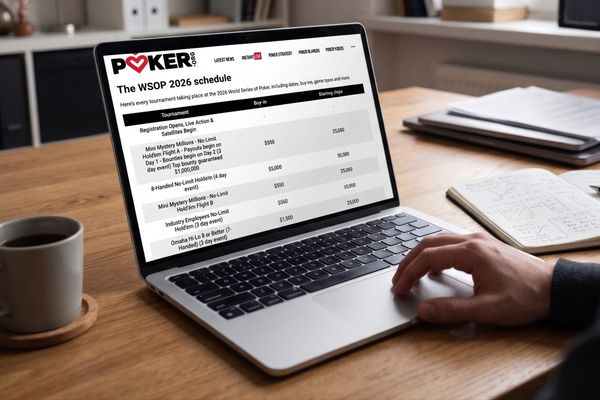
Managing the WSOP effectively requires treating it as a strategic project rather than a series of isolated gambling opportunities. The foundation starts with intelligent tournament selection that accounts for genuine bankroll constraints rather than aspirational thinking.
A tiered scheduling system provides clarity when faced with dozens of tempting events. Designate your “Priority Events”—tournaments that represent optimal combinations of buy-in level, format preference, and competitive advantage. For these core competitions, determine your maximum re-entry commitment before cards go in the air. This pre-commitment prevents emotionally-driven decisions when you bust with pocket aces in the first level.
Create a secondary “Conditional Events” category for tournaments that interest you but don’t justify automatic registration. These become game-time decisions based on your current mental state, bankroll trajectory, and energy reserves. If you’re running deep in a multi-day event, that $1,500 side tournament might not make strategic sense despite the attractive structure.
Equally important is maintaining a “No-Play List”—events you explicitly commit to avoiding. This might include turbos when you excel in deep-stack play, or buy-in levels that would create debilitating financial anxiety. Having predetermined boundaries prevents 3am registrations driven by tilt or social pressure.
Financial anxiety operates as an invisible tax on your decision-making. When tournament buy-ins represent significant percentages of your bankroll, the psychological weight influences everything from pre-flop aggression to river bluff execution. Players experiencing bankroll pressure unconsciously shift toward risk-averse play, avoiding profitable but high-variance spots that might end their tournament.
This manifests in subtle ways: folding slightly +EV shoves because you can’t stomach another bullet, checking back thin value bets to “protect” your stack, or failing to apply maximum pressure in favorable situations. The cumulative effect of these micro-adjustments significantly reduces your edge, particularly in tournament poker where aggressive accumulation creates exponential advantages.
Recovery optimization represents another critical strategic dimension. The WSOP isn’t a sprint—it’s an ultra-marathon where pacing determines outcomes. Professional athletes periodize their training with deliberate recovery blocks; poker players need equivalent discipline.
Rather than scheduling arbitrary rest days, develop awareness of your personal fatigue indicators. Some players can maintain peak performance for five consecutive days before requiring downtime. Others need recovery after three intense sessions. The key is honest self-assessment rather than machismo about grinding capacity.
Monitor specific degradation signals: difficulty maintaining focus during routine decisions, heightened emotional reactivity to standard variance, or intrusive thoughts about previous hands while playing current ones. These symptoms indicate your cognitive reserves are depleting and continued play will likely be -EV regardless of the tournament quality.
Reading The Field & Table Dynamics
The WSOP creates unique field dynamics that evolve throughout the series. Early events attract fresh, eager players with maximum energy and focus. By week four, you’ll encounter a higher concentration of fatigued competitors making exploitable mistakes driven by mental exhaustion rather than skill deficits.
Recognizing these patterns in opponents provides significant edges. The player who’s been grinding for three straight weeks without a deep run often displays visible tilt triggers and deteriorating discipline. They might be technically skilled but operating on depleted mental reserves, making them vulnerable to pressure and aggression.
Table dynamics shift as the series progresses. Early WSOP tables often feature cautious play as players protect their fresh bankrolls. Later events see more gambling behavior as players chase losses or become desensitized to buy-in amounts. Adjusting your strategy to these atmospheric changes—tightening when tables are wild, applying pressure when opponents are risk-averse—amplifies your edge.
Pay attention to timing tells related to fatigue. Players checking their phones obsessively, ordering multiple energy drinks, or displaying physical restlessness often struggle with focus. These opponents are prime targets for complex multi-street bluffs and thin value extraction, as their hand-reading accuracy degrades.
ICM considerations intensify during the WSOP because of the compressed schedule. Players deep in Day 2 of one event while registered for another tournament face divided attention and time pressure. This creates exploitable situations where opponents make questionable folds near the money bubble to ensure they can bag chips and make their next event.
How To Apply This To Your Game
Implementing a sustainable WSOP approach starts with pre-series preparation. Before arriving in Las Vegas, map your complete tournament schedule with realistic buy-in allocations. Calculate your total series bankroll and ensure your combined entries represent appropriate risk levels—typically no more than 1-2% of your roll per bullet for recreational players, potentially higher for professionals with makeup or backing arrangements.
Establish process-oriented goals rather than results-based targets. You cannot control whether you final table the Main Event, but you can control whether you execute your pre-flop strategy correctly, manage tilt effectively, and maintain focus during long sessions. Define specific behavioral objectives: “I will take a five-minute walk after every bad beat before playing another hand” or “I will review my biggest pots each evening before sleeping.”
Create a daily routine that supports consistent performance. This might include morning exercise, standardized meal timing, hydration protocols, and pre-session visualization. The routine itself matters less than the consistency—your brain performs better with predictable rhythms during high-stress periods.
Develop a personal fatigue checklist you review before each registration decision. Rate your sleep quality, emotional stability, physical energy, and mental clarity on a simple scale. If multiple indicators show red flags, that’s your signal to skip the session regardless of how attractive the tournament appears on paper.
Build accountability mechanisms. Share your tournament schedule and re-entry limits with a trusted friend who can provide objective feedback when you’re tempted to deviate. The simple act of explaining why you want to fire a fourth bullet often reveals the decision is emotionally rather than strategically motivated.
Practice emotional regulation techniques specifically for poker contexts. When you suffer a brutal beat, implement a structured reset protocol: take deep breaths, physically stand up and stretch, review the hand objectively to confirm you played correctly, then consciously release the outcome. This prevents the emotional residue from contaminating subsequent decisions.
Manage social commitments strategically. The WSOP offers valuable networking opportunities, but late-night dinners and party invitations can sabotage your performance in the next day’s tournament. Be selective about social engagements, prioritizing connections that genuinely matter while protecting your recovery time.
Key Takeaways
- Create a tiered tournament schedule before the series begins, categorizing events as Priority, Conditional, or No-Play to prevent impulsive registrations driven by FOMO or tilt
- Pre-determine your maximum re-entry limits for each event to avoid emotionally-driven decisions when busting with strong hands early
- Monitor specific fatigue indicators—attention lapses, emotional reactivity, impulsive registrations—rather than following arbitrary rest day schedules
- Focus on process-oriented goals you can control (decision quality, tilt management, focus maintenance) rather than results-based targets vulnerable to variance
- Recognize that financial anxiety acts as an invisible tax on your game, causing risk-averse plays that reduce your edge in profitable high-variance situations
- Exploit the evolving field dynamics as the series progresses, with later events featuring more fatigued opponents making mistakes from mental exhaustion
Frequently Asked Questions
How many tournaments should I play during the WSOP?
There’s no universal answer—it depends on your bankroll, stamina, and performance patterns. Most players overestimate their grinding capacity. Start conservatively with your Priority Events list, then add Conditional tournaments only when you’re genuinely sharp and properly bankrolled. Quality of play matters far more than quantity of entries. If you notice performance degradation after three consecutive days, that’s your personal limit regardless of how many events remain.
When should I take a rest day during the WSOP?
Take rest days based on symptoms rather than schedules. Monitor for attention lapses during routine decisions, heightened emotional reactions to standard variance, difficulty sleeping due to hand replays, or impulsive urges to register for events outside your plan. When multiple indicators appear, prioritize recovery over playing another tournament. Conversely, if you’re feeling sharp and energized, you can push your planned rest day back. Flexibility based on honest self-assessment produces better results than rigid schedules.
How do I prevent tilt from affecting my next tournament?
Implement a structured reset protocol immediately after bad beats or frustrating eliminations. Physically remove yourself from the poker environment—take a walk outside, get fresh air, change your physical state. Review the hand objectively to separate correct decisions from unfortunate outcomes. If you played well, consciously acknowledge that and release attachment to the result. Don’t register for another event until you’ve completed this process and honestly assessed whether you’re emotionally neutral. Sometimes the best decision is ending your poker day early to protect tomorrow’s edge.
Final Thoughts
The WSOP rewards players who treat it as a strategic campaign rather than a six-week gambling spree. Your technical poker skills provide the foundation, but mental game management determines whether you actually realize your edge across the marathon. The players who consistently perform well throughout the series aren’t necessarily the most talented—they’re the most disciplined about protecting their decision-making capacity.
Financial pressure, fatigue, and emotional volatility represent predictable challenges with systematic solutions. By establishing clear boundaries before the series begins, developing awareness of your personal performance indicators, and prioritizing process over results, you create the infrastructure for sustained excellence. The goal isn’t grinding maximum volume—it’s playing your best poker when it matters most.
Remember that every tournament you skip while fatigued or emotionally compromised isn’t a missed opportunity—it’s a strategic decision to preserve your edge for spots where you can actually capitalize. The WSOP will still be running tomorrow, next week, and next year. Your long-term success depends on sustainable practices that protect both your bankroll and your mental health throughout the summer grind.
Ready to Sharpen Your Poker Game?
Master your poker game with expert hand analysis
