NGNF Live Reboot: What Wright, Hellmuth & Dwan Mean for Poker
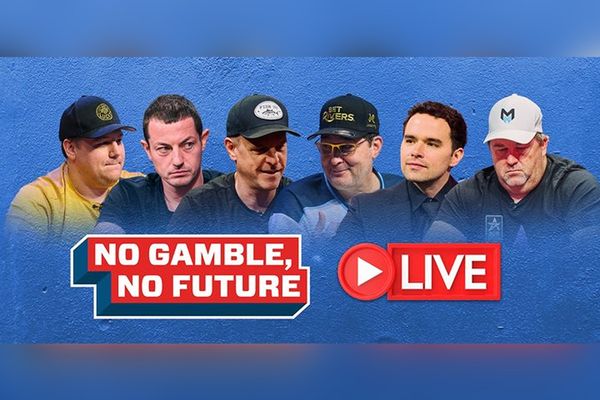
No Gamble, No Future is getting a major overhaul with sports media personality Nick Wright stepping into the hosting chair alongside a murderer’s row of poker legends including Phil Hellmuth, Tom Dwan, and Chris Moneymaker. The live debut this weekend marks a strategic pivot that could redefine how poker content reaches mainstream audiences.
What Happened
The revamped No Gamble, No Future launches its first live broadcast this weekend from PokerGO Studios in Las Vegas, featuring an unprecedented lineup that spans multiple poker generations. Wright, best known as co-host of FS1’s First Things First and host of What’s Wright with Nick Wright podcast, joins forces with sports card entrepreneur Jared Bleznick and PokerGO CEO Brent Hanks to lead the show’s new direction.
The two-night event brings together Phil Hellmuth, Chris Moneymaker, Tom Dwan, Alan Keating, Erick Lindgren, and Shaun Deeb for a $100/200 cash game that figures to play significantly deeper. The format includes the show’s signature Wheel of Pain alongside a new integration with Blez Online, incorporating trading card breaks and interactive elements where viewers can compete for prizes.
This isn’t just a hosting change—it’s a fundamental reimagining of poker broadcasting strategy. Wright’s involvement creates a direct conduit to the sports world, potentially opening doors for athlete appearances and crossover content that poker has struggled to achieve consistently. The round-robin structure ensures maximum clash potential between personalities who’ve defined different eras of televised poker.
The Poker Strategy Breakdown
While the entertainment value is obvious, the strategic implications of this lineup deserve serious analysis. You’re looking at a $100/200 game featuring players with wildly different approaches, risk tolerances, and motivations—a recipe for exploitable dynamics if you know what to watch for.
Start with Tom Dwan, whose rare PokerGO appearance immediately elevates the action ceiling. Dwan’s historical willingness to play massive pots with marginal edges will put pressure on everyone at the table to either widen their comfort zones or risk being run over. His presence alone changes preflop opening ranges—players know they can’t simply open-fold their way through hands when durrrr is in the game.
Alan Keating represents the action-player archetype that makes these games profitable for professionals but dangerous for those who misread his seemingly loose play. The critical mistake recreational players make when watching Keating is assuming his style is purely gambly. In reality, action players like Keating create their own value by generating action from others—when the table loosens up to match his energy, he’s often more disciplined than he appears.
Then you have the technical wizards. Shaun Deeb brings a tournament-honed game that’s been sharpened across thousands of WSOP events. His current run at potentially breaking Phil Hellmuth’s bracelet record adds a psychological layer—Deeb will be acutely aware of every pot he plays against Hellmuth, and vice versa. This creates subtle tension that manifests in betting patterns, particularly in marginal spots where ego and optimal play intersect.
Hellmuth himself remains one of poker’s most fascinating strategic studies. His tight-aggressive foundation is well-documented, but what makes him dangerous in cash game settings is his willingness to make huge laydowns based on reads. Against a lineup this strong, watch for Hellmuth to tighten up even more than usual early, waiting to identify the table’s primary action source before adjusting his ranges accordingly.
Chris Moneymaker and Erick Lindgren bring the old-school ESPN era sensibility—aggressive, image-conscious play that prioritizes big moments. Lindgren’s experience in the highest stakes games gives him a comfort level that shouldn’t be underestimated, even if he’s been less visible in recent years. Moneymaker’s game has evolved significantly since 2003, but he still carries the fearlessness that defined his World Series run.
The Wheel of Pain adds a crucial strategic wrinkle. When game conditions can change mid-session—whether through forced straddles, button straddles, or other modifications—your standard ranges need constant recalibration. The best players in these formats maintain range flexibility, avoiding the rigid structures that work in static games but crumble when rules shift.
Reading The Field & Table Dynamics
Cash game dynamics differ fundamentally from tournament play, and this lineup creates specific patterns worth understanding. Unlike tournament poker where ICM considerations and blind pressure dictate action, cash games reward patience and situational exploitation. With multiple six-figure stacks in play and no elimination pressure, expect to see more creative lines and speculative plays than you’d find in comparable tournament structures.
The generational mix creates natural fault lines. Dwan, Deeb, and to some extent Keating represent modern poker theory—more balanced ranges, sophisticated board texture analysis, and comfort with high variance. Hellmuth, Moneymaker, and Lindgren come from an era where hand reading and physical tells carried more weight. These different frameworks will clash in fascinating ways.
Pay attention to seat selection dynamics. In a round-robin format, position relative to action players becomes crucial. Having Keating or Dwan on your right is a mixed blessing—you get to act after them, but you’re also in their direct firing line for three-bets and four-bets. The professionals will jockey for optimal positioning, while the pure action players will be less concerned with such considerations.
The commentary booth featuring Wright, Bleznick, and Hanks adds another layer. Wright’s sports background means he’ll likely frame hands in win-probability terms familiar to sports bettors, potentially making poker strategy more accessible to crossover audiences. Bleznick’s poker expertise ensures technical accuracy, while Hanks provides the production perspective. This combination could influence how viewers perceive optimal play versus entertaining play.
Table talk and needling will play an outsized role. Hellmuth is famous for his table presence and occasional blow-ups. Deeb won’t shy from verbal sparring. Wright himself is known for trash talk in sports media contexts. The psychological warfare will be as important as the cards, with players trying to tilt opponents or goad them into marginal calls. Smart players exploit this by staying emotionally neutral while others spiral.
The open seat mentioned in the broadcast creates speculation value. Who fills that chair—whether a surprise athlete, another poker legend, or a high-stakes regular—will immediately shift table dynamics. This uncertainty is itself a strategic consideration; players can’t fully optimize their approaches without knowing the complete lineup.
How To Apply This To Your Game
The strategic lessons from this lineup translate directly to your local games and online sessions. First, understand that player types matter more than individual hands. When you sit down, immediately categorize opponents: Who’s the action player? Who’s tight-passive? Who’s the technical wizard? Your entire strategic approach should flex based on these identifications.
When facing action players like a Keating-type in your game, resist the urge to match their looseness hand-for-hand. Instead, tighten your opening ranges slightly but widen your calling ranges with position. Let them do the betting while you have the stronger range. The mistake is trying to out-gamble the gambler—you’ll just increase variance without improving your win rate.
Against technical players like Deeb, focus on balance and avoid obvious patterns. These players are tracking your frequencies and looking for exploitable tendencies. Mix in some bluffs on scary boards, don’t always continuation bet, and occasionally check strong hands. The goal isn’t to be unexploitable (impossible in practice) but to avoid being obviously exploitable.
Study how professionals handle ego battles. The Hellmuth-Deeb dynamic offers a masterclass in managing personal feelings at the table. When you’re emotionally invested in beating a specific opponent, you make suboptimal decisions—calling too wide, bluffing too frequently, or playing pots out of position. The solution is recognizing these feelings and consciously returning to fundamentals.
Use game-changing elements like the Wheel of Pain as practice for adaptability. In your games, conditions change when a new player sits down, when someone goes on tilt, or when the table gets short-handed. Players who rigidly stick to one strategy regardless of conditions are leaving money on the table. Develop the flexibility to shift gears based on current dynamics, not theoretical optimal play.
Pay attention to how professionals manage their table image. Hellmuth’s tight reputation lets him occasionally get away with bluffs because opponents assume he has it. Keating’s loose image means his value bets get called more often. Consider what image you’re projecting and how to exploit it. If you’ve been card-dead for an hour, that’s prime bluffing time. If you’ve shown down three big hands in twenty minutes, shift to pure value betting.
Finally, embrace the entertainment factor without sacrificing strategy. Wright’s involvement signals that poker’s future involves crossover appeal and personality-driven content. In your home games and local card rooms, being enjoyable to play with—through appropriate table talk, good sportsmanship, and engaging personality—creates softer games and more invitations. Just ensure the entertainment never compromises your strategic foundation.
Key Takeaways
- Player-type identification trumps hand-by-hand analysis—categorize opponents early and adjust your entire strategy accordingly
- Action players create their own value by loosening the table; exploit this by tightening ranges but widening calling ranges in position
- Generational differences in poker approach (hand-reading vs. GTO) create exploitable patterns when players from different eras clash
- Emotional investment in specific matchups (like Hellmuth-Deeb) leads to suboptimal decisions; recognize ego involvement and return to fundamentals
- Adaptability matters more than rigid strategy—conditions change with new players, rule modifications, and shifting table dynamics
- Table image is a tool for exploitation; tight players can bluff more effectively while loose players get paid on value hands
Frequently Asked Questions
How does Nick Wright’s sports media background change poker broadcasting?
Wright brings mainstream sports audience familiarity with concepts like win probability, expected value, and strategic narratives that poker has historically struggled to communicate to casual viewers. His involvement creates a bridge between poker and sports betting audiences, potentially expanding poker’s reach beyond traditional enthusiasts. Expect more accessible explanations of complex concepts and framing that resonates with sports fans who understand competition and high-stakes decision-making.
What’s the strategic significance of the Wheel of Pain in cash games?
The Wheel of Pain forces players to adapt ranges and strategies mid-session when game conditions change—whether through mandatory straddles, button straddles, or other rule modifications. This rewards flexible thinking over rigid strategy and punishes players who can’t quickly recalculate optimal ranges. It’s essentially training for real-world poker where conditions constantly shift based on table composition, stack depths, and player psychology. The best players maintain range flexibility and avoid becoming married to specific strategic frameworks.
How should recreational players approach games with mixed skill levels like this NGNF lineup?
Focus on identifying and exploiting the weakest players rather than trying to outplay the strongest. In mixed games, most of your profit comes from one or two players making significant mistakes—target them specifically. Against professionals, play straightforward ABC poker and avoid fancy plays that might work against weaker opponents but just burn money against experts. Maintain position awareness, tighten your ranges against tough opponents, and widen them against recreational players. Most importantly, don’t let ego drive you to battle the table’s best player when easier money is available elsewhere.
Final Thoughts
The No Gamble, No Future reboot represents more than just a hosting change—it’s a strategic bet on poker’s crossover potential. By bringing in Wright’s sports media credibility and mainstream audience, PokerGO is acknowledging what many in the industry have known for years: poker’s growth ceiling isn’t limited by the game itself but by its ability to reach beyond hardcore enthusiasts. The lineup mixing legends like Hellmuth and Dwan with the sports card integration shows a willingness to experiment with format and audience that poker broadcasting desperately needs.
From a pure strategy perspective, this weekend offers a clinic in cash game dynamics across multiple playing styles and generations. Whether you’re a tournament specialist looking to improve your cash game or a recreational player trying to understand how professionals think, watching these specific matchups provides insights you can’t get from standard training content. Pay attention not just to individual hands but to how players adjust to each other, manage their emotions during conflicts, and exploit specific opponent tendencies.
The real question is whether this format can sustain beyond the novelty of the launch. Wright’s sports world connections could bring a steady stream of athlete guests, creating ongoing crossover appeal. The trading card integration might attract a younger demographic that poker has struggled to reach. But ultimately, the content needs to deliver both entertainment and substance—casual viewers need drama and personality, while serious players need strategic depth. If NGNF can balance both, this reboot could mark a genuine turning point in poker broadcasting.
Ready to Sharpen Your Poker Game?
Master your poker game with expert hand analysis