WSOP Salute to Warriors: Holly Foley’s Deep Run Strategy
A Navy veteran making her World Series of Poker debut turned heads on Day 3 of the $500 Salute to Warriors event, outlasting former Main Event champion Jamie Gold and poker vlogger Lexy Gavin-Mather to secure a fifth-place finish worth $57,020. Holly Foley’s remarkable run offers valuable lessons in tournament poker strategy and mental game execution.
What Happened
The 2026 WSOP $500 Salute to Warriors event reached its climax with 35 players returning for Day 3 action. While the spotlight initially focused on recognizable names like 2006 Main Event winner Jamie Gold and content creator Lexy Gavin-Mather, it was first-time WSOP participant Holly Foley who captured the poker community’s attention with her impressive performance.
Foley, who served four years of active duty in San Diego working in aviation before transitioning to the reserves in 1990, was recalled for Desert Storm and completed six additional years of service. Now three years into retirement and residing in Broomfield, Colorado, she decided to take her shot at poker’s biggest stage. Her choice of the Salute to Warriors event wasn’t random—the tournament’s military focus gave it personal significance that resonated with her background.
The Navy veteran’s deep run netted her $57,020, dwarfing her previous tournament earnings of just $3,515. Her poker experience came primarily from home games with friends, making her fifth-place finish even more remarkable. She outlasted Gold, who busted in 17th place for $9,940, and Gavin-Mather, who finished seventh for $33,120. Prashanth Nataraj ultimately claimed the title and $208,800 first prize.
The Poker Strategy Breakdown
Foley’s success in her maiden WSOP voyage reveals several strategic elements that contributed to her deep tournament run. The transition from casual home games to the bright lights of the World Series represents a massive leap in competition level, yet she managed to navigate the field with remarkable composure.
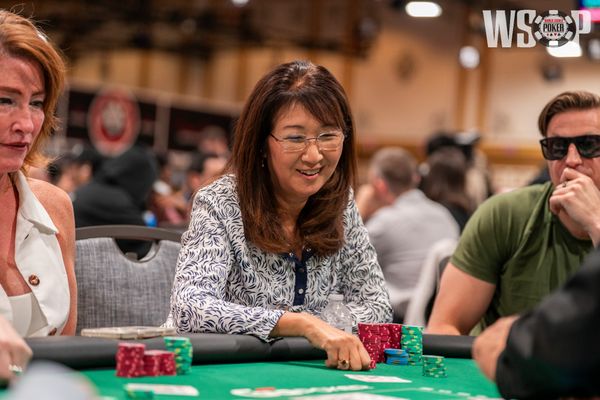
One of the most intriguing aspects of Foley’s game was the stark contrast between her table presence during standard play versus high-pressure all-in situations. Observers noted that while she maintained a friendly, approachable demeanor throughout most hands—complete with cardigan sweater and wire-rimmed glasses—her expression transformed completely when chips were at risk. During all-in confrontations, she displayed a stoic, almost challenging smirk that projected confidence and strength.
This dichotomy in table image represents an advanced poker concept that many recreational players struggle to execute. By appearing friendly and unassuming during routine play, Foley likely encouraged lighter calls and less respect for her raises. However, when the money went in and cards were on their backs, her demeanor shifted to project absolute certainty in her decisions. This psychological warfare, whether intentional or instinctive, creates doubt in opponents’ minds about whether they made the correct call.
The ability to maintain two distinct personas at the table—one that invites action and another that intimidates during showdowns—demonstrates a sophisticated understanding of poker psychology. Many players make the mistake of being either too friendly (and getting run over) or too aggressive (and getting isolated by premium hands). Foley’s natural balance between these extremes served her exceptionally well.
Her stack management throughout Day 3 also deserves examination. Making a deep run in a tournament of this size requires not just winning big pots, but also preserving chips during difficult stretches. The $500 Salute to Warriors attracted 1,865 entries, creating a prize pool that paid 280 spots. Navigating from the money bubble to the final table requires constant adjustment to stack sizes, blind levels, and opponent tendencies.
Reading The Field & Table Dynamics
The presence of high-profile players like Gold and Gavin-Mather added an interesting dynamic to the tournament’s late stages. These recognizable names carry reputations that can influence how opponents play against them—some players tighten up out of respect, while others look to make a name for themselves by eliminating a celebrity.
Foley’s ability to maintain focus on her own game rather than being starstruck by famous opponents represents crucial tournament discipline. Many amateur players make the mistake of altering their strategy when facing well-known pros, either playing too cautiously or forcing action to prove themselves. The Navy veteran’s military background likely contributed to her ability to stay mission-focused regardless of who sat across from her.
As the field narrowed from 35 players to the final table, Independent Chip Model (ICM) considerations became increasingly important. ICM pressure intensifies as pay jumps grow larger, and players with medium stacks face difficult decisions about when to apply pressure versus when to ladder up the payout structure. Foley’s fifth-place finish for $57,020 represented a significant jump from sixth place ($43,260) and a substantial difference from a min-cash.
The final table bubble and subsequent eliminations require a delicate balance between survival and chip accumulation. Players must identify opportunities to attack short stacks while avoiding unnecessary confrontations with big stacks. Foley’s ability to navigate these treacherous waters in her first WSOP event suggests strong instincts for tournament poker fundamentals.
Her performance also highlights the importance of game selection. By choosing the Salute to Warriors event—one with personal meaning and potentially a softer field than some other WSOP tournaments—Foley maximized her chances of success. The $500 buy-in attracted a mix of military veterans, recreational players, and professionals, creating a field composition that rewarded solid fundamentals over advanced game theory optimal play.
How To Apply This To Your Game
Foley’s breakthrough performance offers several actionable lessons for tournament players at all levels. First, consider the power of strategic game selection. Rather than jumping into the biggest, most prestigious events, she chose a tournament that held personal significance and featured a field composition suited to her experience level. This decision-making process should inform your own tournament schedule—play events where you have the best combination of edge and comfort.
Second, develop awareness of your table image and how it evolves throughout a session. If you’ve been playing tight and friendly, you’ve earned credibility that can be leveraged for strategic aggression. Conversely, if you’ve been active and chatty, a sudden shift to stoic silence during a big hand sends a powerful message. These non-verbal elements of poker communication matter more than many players realize.
Third, embrace the mental game aspects that military service instilled in Foley: discipline, focus, and mission orientation. Tournament poker requires sustained concentration over long periods, often 10-12 hours per day across multiple days. Developing the mental stamina to maintain optimal decision-making throughout these marathons separates deep runs from early exits.
Fourth, don’t let inexperience or the presence of famous players intimidate you. Foley’s first WSOP event resulted in a five-figure score because she trusted her abilities and played her game. Whether you’re facing a bracelet winner or a complete unknown, each hand should be evaluated on its own merits based on ranges, stack sizes, and position.
Finally, recognize that home game experience, while different from tournament poker, still builds valuable skills. Reading opponents, managing bankroll, and understanding hand values all translate from kitchen tables to casino felt. Don’t discount the foundation you’ve built in smaller games—it’s more relevant than you might think.
Key Takeaways
- Strategic game selection matters: Foley chose a tournament with personal meaning and a field composition suited to her skill level, maximizing her chances of success in her WSOP debut.
- Table image management is a powerful weapon: Maintaining a friendly demeanor during standard play while projecting confidence during all-ins creates psychological advantages against opponents.
- Mental discipline translates across domains: The focus and mission-orientation developed through military service provided Foley with the mental framework to succeed in high-pressure tournament situations.
- Don’t be intimidated by big names: Foley outlasted a former Main Event champion and popular vlogger by staying focused on fundamentals rather than being starstruck by celebrity opponents.
- Home game experience builds real skills: Despite limited tournament experience, Foley’s home game background provided sufficient foundation for a deep WSOP run when combined with solid fundamentals.
- ICM navigation requires balancing survival with accumulation: Making a deep run means knowing when to apply pressure and when to preserve your stack as pay jumps increase.
Frequently Asked Questions
What makes the WSOP Salute to Warriors event special?
The Salute to Warriors is a $500 buy-in tournament specifically designed to honor military veterans and active service members. The event attracts both poker professionals and military personnel, creating a unique field composition with personal significance for participants who have served. A portion of proceeds supports veteran-focused charities, adding philanthropic value beyond the competitive element.
How does table image affect tournament success?
Table image influences how opponents perceive your range and tendencies, directly impacting the action you receive. A tight, friendly image encourages lighter calls and less respect for your aggression, while a confident, stoic presence during big pots can induce folds or create doubt. The most effective players consciously cultivate and manipulate their table image to maximize value from different situations.
What’s the best way to transition from home games to tournament poker?
Start with smaller buy-in tournaments to gain experience with blind structures, ICM considerations, and multi-day formats without excessive financial risk. Study tournament-specific concepts like bubble play, final table dynamics, and stack-to-pot ratio management. Focus on fundamentals rather than advanced theory, and choose events with softer fields where your home game skills translate most effectively. Most importantly, maintain confidence in your abilities while remaining humble enough to learn from each session.
Final Thoughts
Holly Foley’s remarkable fifth-place finish in the WSOP Salute to Warriors demonstrates that poker success doesn’t require years of professional experience or a massive tournament resume. Her combination of solid fundamentals, mental discipline, and strategic game selection proved more valuable than extensive credentials. The Navy veteran’s ability to maintain composure under pressure—a skill honed through military service—translated perfectly to the high-stakes environment of World Series of Poker competition.
Her story also reminds us that poker remains a game where unknowns can compete with and defeat established names. While Gold and Gavin-Mather brought larger followings and more extensive poker resumes to the felt, Foley’s focused execution and tournament survival skills carried her deeper into the money. This accessibility represents one of poker’s most appealing characteristics: on any given day, in any given tournament, the best player at the table might be someone you’ve never heard of.
As Foley returns to Colorado with plans to play more WSOP events in the future, her debut performance stands as inspiration for recreational players considering their first major tournament. The gap between home games and professional competition isn’t as wide as it appears—solid fundamentals, mental discipline, and smart game selection can bridge that distance faster than you might expect.
Ready to Sharpen Your Poker Game?
Master your poker game with expert hand analysis