

WSOP Attorney Blends Patriotism, Poker & Philanthropy
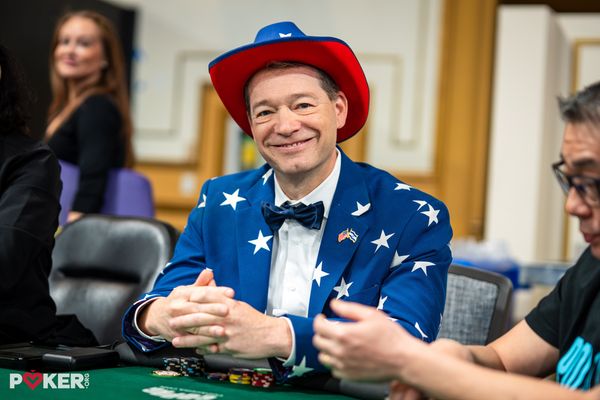
Dan Ruttenberg isn’t your typical World Series of Poker grinder. The Supreme Court attorney showed up to the Main Event wearing light-up sneakers, an American flag cowboy hat, and a mission that extends far beyond the felt—running a poker charity that’s changing lives back home in Virginia.
What Happened
When most players roll into the WSOP Main Event, they’re focused on one thing: making a deep run and chasing poker’s most prestigious title. Dan Ruttenberg had those same ambitions during his fourth attempt at the Main Event, but his approach to the game tells a different story about what poker can mean beyond the tournament arena.
Seated near the back wall of the tournament floor, Ruttenberg drew a table that included 2004 Main Event champion Greg Raymer. While the poker media gravitated toward the former champion, Ruttenberg quietly went about his business in an outfit that somehow managed to be both impossible to miss and easy to overlook in the visual chaos of a WSOP Day 1 field.
The tax attorney arrived in Las Vegas with an entire crew—a dedicated poker club that grinds together throughout the year, pools resources to send representatives to the Series, and shares whatever profits come their way. It’s a model that’s gaining traction among recreational players looking to take shots at major tournaments without shouldering the full financial burden alone.
But Ruttenberg’s poker involvement runs deeper than club games and shared bankrolls. He founded Poker Players Who Care, a charitable organization that merges his passion for the game with his lifelong commitment to philanthropy. The timing of his Main Event appearance—coinciding with America’s 250th anniversary celebrations—wasn’t lost on the proudly patriotic attorney, who sees poker as another avenue for giving back to his community.
The Poker Strategy Breakdown
The poker club model Ruttenberg employs represents a sophisticated approach to tournament poker that deserves serious strategic consideration. By pooling resources and sharing results, recreational players can access buy-ins that might otherwise be prohibitive while simultaneously reducing variance—the mathematical swings that can devastate individual bankrolls.
This arrangement fundamentally changes the risk-reward calculus of tournament poker. When you’re playing with a piece of yourself rather than your entire investment, the psychological pressure shifts. You’re still incentivized to perform—nobody wants to disappoint their backers—but the financial catastrophe of busting is distributed across multiple stakeholders rather than landing entirely on your shoulders.
From a game theory perspective, this setup can actually improve decision-making. Players who are properly rolled for their stakes make better decisions than those playing scared money. When a $10,000 Main Event represents a manageable fraction of a shared bankroll rather than a significant personal expense, you’re more likely to make theoretically sound plays rather than risk-averse mistakes driven by loss aversion.
The club structure also creates natural accountability and skill development opportunities. When you’re representing a group rather than just yourself, there’s inherent motivation to study, prepare, and perform at your highest level. Post-tournament hand reviews become collaborative learning experiences where multiple perspectives can identify leaks and optimize future play.
However, this model isn’t without strategic complications. Profit-sharing arrangements can create misaligned incentives if not structured properly. If one player consistently cashes while others don’t, resentment can build. Clear agreements about buy-in allocation, profit distribution, and performance expectations are essential to maintaining both the financial and social health of the arrangement.
Reading The Field & Table Dynamics
Drawing a table with a former Main Event champion like Greg Raymer presents unique dynamics that require strategic adjustment. Raymer’s presence naturally attracts media attention and recreational players seeking to test themselves against a legend, which can create exploitable situations for observant opponents.
In early Day 1 action, table composition matters enormously. With deep stacks and long levels, you have time to identify player tendencies and adjust your ranges accordingly. Sitting near a recognizable champion means the table likely features a mix of serious players who earned their seats through satellites and recreational players who specifically targeted that flight hoping for a memorable experience.
The Main Event’s unique structure—with its glacial blind levels and massive starting stack—rewards patience and observation more than almost any other tournament. Players like Ruttenberg, making their fourth attempt, understand that survival through Day 1 requires discipline more than aggression. The real poker doesn’t start until later stages when stack-to-blind ratios compress and ICM considerations begin influencing every decision.
Playing with a backing arrangement adds another layer to table dynamics. While opponents can’t see your financial structure, knowing you’re representing a group rather than playing purely for yourself can subtly influence your table image. Some players become more conservative when they feel accountable to others; the best players maintain their strategic approach regardless of the backing situation.
The timing of this particular Main Event—during Fourth of July weekend with World Cup matches creating noise and distraction throughout the venue—also affects table dynamics. Players who can maintain focus amid chaos gain an edge over those distracted by external stimuli. Tournament poker is as much about mental endurance as technical skill, and environmental factors test both.
How To Apply This To Your Game
The most immediate application from Ruttenberg’s approach is considering whether a poker club or staking arrangement makes sense for your tournament ambitions. If you’re a recreational player who wants to take shots at major events but can’t justify the buy-ins individually, forming or joining a club with like-minded players can open doors that would otherwise remain closed.
When structuring such arrangements, transparency is paramount. Establish clear written agreements about buy-in contributions, profit distribution percentages, and what happens in edge cases (like players who want to buy additional action or sell pieces to outside backers). The best poker clubs treat these arrangements with the same seriousness as business partnerships, because that’s exactly what they are.
From a pure poker strategy perspective, Ruttenberg’s fourth attempt at the Main Event demonstrates the value of persistence and proper bankroll management. Too many players take one or two shots at major tournaments, bust, and give up. The players who eventually break through are often those who keep showing up, learning from each attempt, and gradually improving their tournament game.
The philanthropic angle also offers lessons for serious players. Poker can be an isolating, self-focused pursuit. Finding ways to connect your poker life to broader community impact—whether through formal charity work or simply using poker winnings to support causes you care about—adds meaning beyond the purely financial. It also builds networks and relationships that enrich your poker experience.
Finally, don’t underestimate the psychological value of having fun and expressing personality at the tables. Ruttenberg’s distinctive appearance isn’t just patriotic flair—it’s a form of table image management. Players who seem loose and fun-loving often get more action on their value hands because opponents misread their overall approach to the game. Your image doesn’t have to match your actual strategy, and that disconnect can be profitably exploited.
Key Takeaways
- Poker clubs that pool resources and share results allow recreational players to take shots at major tournaments while managing variance across multiple stakeholders
- Backing arrangements can improve decision-making by reducing the psychological pressure of playing scared money, but require clear agreements to prevent misaligned incentives
- Drawing tables with recognizable champions creates unique dynamics that observant players can exploit through careful opponent profiling and range adjustment
- Persistence matters in tournament poker—most successful Main Event players made multiple attempts before achieving significant results
- Connecting poker to broader philanthropic efforts adds meaning beyond financial results and can create valuable community networks
- Table image and actual strategy don’t need to align—distinctive appearances and personalities can create profitable misconceptions about your playing style
Frequently Asked Questions
How do poker clubs structure profit-sharing for major tournaments?
Most poker clubs use a proportional model where members contribute to a shared bankroll throughout the year, then receive profit shares based on their contribution percentage. Some clubs add performance bonuses where the player who cashes keeps a larger share (often 40-50%) with the remainder distributed among all contributors. Clear written agreements established before any tournament play are essential to prevent disputes.
Does playing with backing change your tournament strategy?
Theoretically, your strategy shouldn’t change based on backing arrangements—optimal poker remains optimal regardless of who owns your action. However, backing can psychologically free players from scared money decisions, allowing them to make theoretically correct plays they might avoid when playing their own funds. The key is maintaining the same strategic approach whether you’re fully staked, partially backed, or playing entirely for yourself.
What advantages do repeat Main Event players have over first-timers?
Experience with the Main Event’s unique structure—extremely deep stacks, slow blind levels, and massive field size—provides significant advantages. Veteran players better understand the patience required early, recognize when to shift gears as the tournament progresses, and handle the mental endurance challenge of multi-day competition. They’ve also typically corrected mistakes from previous attempts, giving them refined strategies for navigating the specific dynamics of poker’s biggest event.
Final Thoughts
Dan Ruttenberg’s approach to the World Series of Poker Main Event illustrates how the game can be more than just a competition for prize money. By combining poker with community through his club structure and philanthropy through Poker Players Who Care, he’s created a framework where the game serves broader purposes while still maintaining its competitive integrity.
The poker club model he represents is becoming increasingly popular among recreational players who want access to major tournaments without the full financial exposure. It’s a smart approach that manages risk, builds community, and creates accountability—all factors that can actually improve performance at the tables. For players considering their own tournament ambitions, exploring similar arrangements might be the difference between watching the Main Event on stream and actually playing in it.
Whether you’re grinding local tournaments or taking your fourth shot at the Main Event, remember that poker success isn’t just measured in cashes and final tables. The relationships you build, the causes you support, and the joy you bring to the game all contribute to a richer poker life. Sometimes the most serious players are the ones who remember to have fun along the way—even if that means showing up in light-up sneakers and an American flag cowboy hat.
Ready to Sharpen Your Poker Game?
Master your poker game with expert hand analysis
