Caitlin Comeskey’s WSOP Breakthrough: Mixed Game Mastery
Caitlin Comeskey transformed from content creator to serious mixed game contender in one explosive WSOP summer, notching back-to-back final tables including a fifth-place finish in the $10K Stud Hi-Lo Championship for nearly $100K. Her journey from nervous newcomer to confident crusher offers a masterclass in embracing discomfort and accelerating your poker growth.
What Happened
The Texas native arrived in Las Vegas with just over a year of mixed game experience under her belt, primarily from private games and modest buy-in tournaments online. What followed was a summer that redefined her poker trajectory.
Comeskey’s hot streak started immediately. She racked up cashes in the $1,500 Limit Omaha Hi-Lo and $1,500 Deuce-to-Seven Single Draw, captured an Aria 2-7 Single Draw title, and satellited her way into bigger events. The momentum was undeniable, but it came with growing pains that would ultimately shape her breakthrough.
Her deepest run came in the $1,500 2-7 Single Draw, where she found herself at the final four tables with a massive stack, sandwiched between David “ODB” Baker and Jerry Wong. Then reality struck hard. A crucial pot went sideways, eliminating her in 30th place in what she candidly described as “a punt.”
Rather than let the disappointment derail her summer, Comeskey sought guidance from her coach Alex Livingston. His advice was deceptively simple: the only way to handle pressure is to experience it repeatedly. She took this wisdom and ran with it, deliberately entering events outside her comfort zone, including pot-limit variants she hadn’t mastered.
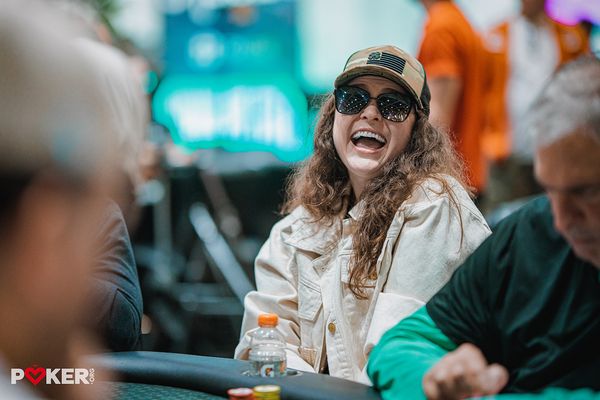
The strategy paid dividends. Comeskey final tabled the $1,000 Ladies Championship for a career-best $67,735, then immediately fired the $10K Stud Hi-Lo Championship using her own winnings. That gutsy decision resulted in her second consecutive final table and a fifth-place finish worth $97,785, more than doubling her previous career high.
The Poker Strategy Breakdown
Comeskey’s summer success wasn’t accidental—it was the product of deliberate strategic choices that accelerated her development as a mixed game player.
First, she identified her strongest discipline: 2-7 Single Draw. Rather than spreading herself thin across all poker variants, she built confidence in one game before expanding. This focused approach allowed her to develop deep expertise in hand ranges, drawing strategies, and opponent tendencies specific to that format.
Her willingness to acknowledge weaknesses proved equally crucial. When she admitted that PLO8 and Big O were “beyond my pay grade,” she wasn’t making excuses—she was being strategically honest about her skill gaps. This self-awareness prevented her from making costly mistakes in high-variance games where her edge was minimal or non-existent.
The pivot point came after her 2-7 Single Draw elimination. Instead of avoiding pressure situations, she actively sought them out. This counterintuitive approach—playing events where she felt uncomfortable—created accelerated learning opportunities. Each pot-limit session, even the unsuccessful ones, built her mental fortitude and expanded her tactical repertoire.
Her decision to fire the $10K Stud Hi-Lo Championship represented calculated bankroll management with an aggressive edge. She didn’t randomly punt her Ladies Championship winnings into the next big event. She chose a mixed game variant where her year of study and recent tournament experience gave her a legitimate edge against a field that included seasoned professionals.
The Stud Hi-Lo format also played to her strengths: disciplined hand selection, patience through long tournaments, and the ability to navigate split-pot dynamics. These skills transfer directly from other mixed games, allowing her to compete effectively despite the elevated buy-in.
Reading The Field & Table Dynamics
Comeskey’s breakthrough illustrates an often-overlooked aspect of tournament poker: recognizing when table dynamics favor your style, even if the game variant isn’t your strongest.
At the final four tables of the 2-7 Single Draw event, she found herself in an intimidating lineup with established pros. The pressure of that moment—sitting with a big stack between Baker and Wong—created what she described as an overwhelming experience where she “couldn’t even breathe.” This wasn’t a strategy failure; it was an experience gap.
High-level mixed game tournaments present unique field dynamics. Unlike No-Limit Hold’em events with thousands of recreational players, $10K mixed game championships attract smaller, tougher fields. However, they also attract specialists who dominate in certain rotations but play exploitably in others. Comeskey’s broad mixed game foundation, even with acknowledged weaknesses, made her less predictable than single-game specialists.
The Ladies Championship final table offered different dynamics entirely. While the field included skilled regulars, the event’s structure and player pool created opportunities for aggressive mixed game players to leverage their broader strategic toolkit. Comeskey’s experience in limit formats and split-pot games gave her decision-making frameworks that translated to tournament play.
Her approach to ICM pressure evolved throughout the summer. The early elimination in 2-7 Single Draw taught her that having a big stack means nothing if you can’t execute under pressure. By her second final table in the $10K Stud Hi-Lo, she’d logged enough high-pressure hours to trust her decisions when it mattered most.
How To Apply This To Your Game
Comeskey’s summer offers a blueprint for players looking to break through to the next level, regardless of your current stakes or preferred format.
Start by identifying your strongest game and building from there. If you’re a Hold’em specialist considering mixed games, don’t try to master all eight games simultaneously. Pick one limit or split-pot variant, study it intensively for three months, and play it exclusively until you’re consistently profitable. Comeskey’s focus on 2-7 Single Draw gave her a foundation of confidence that carried into other formats.
Actively seek uncomfortable situations. If you’ve never played a $1K tournament, satellite into one. If you always play cash games, enter a tournament. If you fold too much, force yourself to three-bet more for an entire session. Growth happens at the edges of your comfort zone, not in the middle.
Invest in coaching or study groups when you hit plateaus. Comeskey’s conversation with Livingston didn’t reveal some secret strategy—it reframed her perspective on pressure. Sometimes you need an outside voice to identify the mental blocks holding back your technical skills.
Practice aggressive bankroll management during hot streaks. When Comeskey used her Ladies Championship winnings to enter the $10K Stud Hi-Lo, she wasn’t gambling recklessly. She was capitalizing on momentum, confidence, and recent success to take a calculated shot at a bigger score. This approach works when you have legitimate edge and can afford the variance.
Document your journey and celebrate wins authentically. Comeskey’s genuine excitement about her accomplishments—”Who does that? Me! I fucking did that!”—wasn’t bragging. It was reinforcing positive outcomes and building the self-belief necessary for future success. Confidence is a skill you can practice.
Key Takeaways
- Specialize before you generalize: Master one mixed game variant deeply before expanding to others, building confidence through focused study and repetition
- Pressure tolerance requires exposure: The only way to handle high-stakes situations is to deliberately put yourself in them repeatedly until discomfort becomes familiarity
- Strategic discomfort accelerates growth: Playing formats outside your comfort zone creates learning opportunities that translate back to your primary games
- Aggressive bankroll management during hot streaks: Use tournament winnings to take calculated shots at higher buy-ins where you have edge and momentum
- Self-awareness prevents costly mistakes: Honestly assessing your skill gaps helps you avoid high-variance games where your edge is minimal
- Coaching provides perspective shifts: Sometimes breakthrough moments come from reframing mental blocks rather than learning new technical strategies
Frequently Asked Questions
How long does it take to become competitive in mixed games?
Comeskey became competitive in WSOP mixed game events after just over a year of focused study and play. However, this timeline assumes consistent practice, quality coaching, and deliberate study. Most players should expect 12-24 months of regular play to develop proficiency across multiple mixed game variants, though you can become competitive in a single format like 2-7 Single Draw or Stud Hi-Lo much faster with focused effort.
Should I use tournament winnings to enter higher buy-in events?
Using tournament winnings for higher buy-ins can be strategically sound if three conditions are met: you have legitimate edge in the higher buy-in field, the buy-in represents proper bankroll management even accounting for the increased variance, and you’re capitalizing on momentum and confidence from recent success. Avoid this approach if you’re chasing losses or entering games where you lack sufficient edge to overcome the tougher competition.
How do I handle pressure at final tables when I’ve never been there before?
First-time final table pressure is universal, even among pros. The solution is exposure therapy: deliberately enter more tournaments to create opportunities for deep runs. Between events, practice visualization techniques where you imagine yourself in high-pressure situations and rehearse your decision-making process. Meditation and breathing exercises help in the moment, but ultimately, repeated exposure is the only cure for pressure-induced mistakes.
Final Thoughts
Caitlin Comeskey’s WSOP summer represents more than a hot streak—it’s a case study in intentional player development. By identifying her strengths, acknowledging her weaknesses, seeking expert guidance, and deliberately embracing discomfort, she compressed years of learning into a single transformative summer.
The most instructive aspect of her journey isn’t the $165K in cashes or the back-to-back final tables. It’s her willingness to risk failure in pursuit of growth. When she satellited into PLO8 and Big O events despite admitting those games were beyond her current skill level, she wasn’t being reckless—she was investing in her education. Every uncomfortable pot, every pressure-packed decision, and every mistake built the foundation for her championship-level performances.
Whether you’re grinding microstakes online or playing your local card room, the principles remain constant: focus your study, embrace discomfort, seek guidance when you plateau, and take calculated shots when opportunity and preparation intersect. Comeskey’s breakthrough didn’t happen because she got lucky for six weeks. It happened because she created the conditions for success, then had the courage to capitalize when the cards fell her way.
Ready to Sharpen Your Poker Game?
Master your poker game with expert hand analysis