WSOP POY Race Tightens as Deeb Edges Ahead in $25K HORSE
The 2026 WSOP Player of the Year race reached fever pitch at the $25,000 High Roller HORSE event, where all three leading contenders battled at the same final table. Shaun Deeb emerged with the POY lead despite an eighth-place finish, while Alexander Kostritsyn captured his maiden bracelet and Naoya Kihara’s third-place run vaulted him past Alex Foxen into second overall.
What Happened
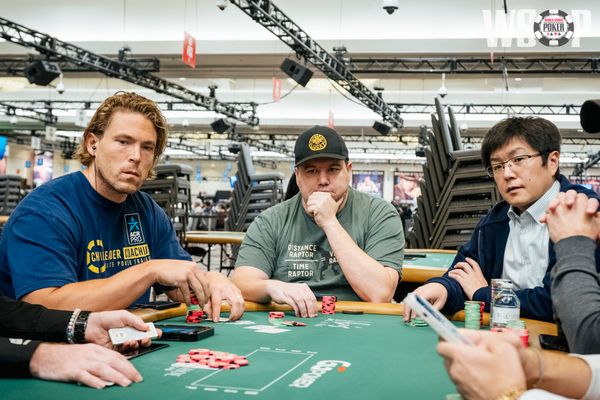
The final day of the $25,000 HORSE Championship delivered everything poker fans could hope for: high-stakes mixed game action, bracelet dreams, and a Player of the Year showdown that couldn’t have been scripted better. Starting with 16 players, the tournament quickly narrowed to an unofficial final table of nine that featured an unprecedented convergence of the top three POY contenders.
Alex Foxen entered the day holding a narrow advantage in the POY standings, but his tournament hopes evaporated when he busted in ninth place. The elimination came at the hands of Russian pro Alexander Kostritsyn, who would go on to dominate the final table. Shaun Deeb, visibly relieved to see one competitor exit before him, thanked Kostritsyn for the favor before departing in eighth position himself.
Naoya Kihara mounted the deepest run of the three POY leaders, grinding his way to a third-place finish worth $394,433. His elimination set up heads-up play between Kostritsyn and Ali Eslami, who began their duel with nearly identical chip stacks. Kostritsyn seized control early and maintained pressure throughout, ultimately securing his first WSOP bracelet and the $872,052 top prize from a field of 148 entries.
The POY implications were immediately clear. Despite finishing eighth, Deeb accumulated enough points to claim the overall lead with 3,410 points. Kihara’s podium finish earned him 3,388 points, good for second place, while Foxen’s ninth-place exit left him third with 3,381 points. The margin separating first from third? A razor-thin 29 points heading into WSOP Paradise.
The Poker Strategy Breakdown
HORSE tournaments present unique strategic challenges that separate mixed game specialists from no-limit hold’em grinders. The rotating format—Hold’em, Omaha Hi-Lo, Razz, Stud, and Eight-or-Better—demands proficiency across five distinct disciplines, each with its own optimal strategy and hand selection criteria.
At the $25,000 buy-in level, players face opponents who excel across all variants, eliminating the typical mixed game advantage of exploiting weak spots. This forces a fundamental strategic shift: rather than targeting specific game weaknesses, elite players focus on minimizing mistakes and capitalizing on marginal edges. In HORSE, a 0.5 big bet advantage per hundred hands compounds significantly over lengthy sessions.
The limit betting structure fundamentally alters tournament dynamics compared to no-limit formats. Without the threat of large all-in bets, players must rely on precise hand reading, disciplined fold equity calculations, and optimal bet-sizing across multiple streets. Pot control becomes paramount in games like Stud and Razz, where visible cards provide information but also telegraph your likely holdings.
Kostritsyn’s victory demonstrates the importance of adaptability in mixed games. While specific hand details weren’t disclosed, his ability to build and maintain a chip lead during heads-up play—where the format rotates every eight hands—shows mastery of transitioning between aggressive and conservative approaches. In heads-up HORSE, momentum shifts rapidly as the game changes, requiring constant strategic recalibration.
For the POY contenders, the strategic calculus extended beyond individual hands to tournament survival. Foxen’s early exit likely stemmed from a critical decision point where the risk-reward calculation didn’t favor his stack size. In contrast, both Deeb and Kihara successfully navigated the middle stages, understanding that survival—not chip accumulation—was their primary objective given the POY implications.
Reading The Field & Table Dynamics
The unofficial final table of nine created extraordinary psychological pressure, particularly with three POY leaders simultaneously competing. This dynamic fundamentally altered standard final table play, as each contender had to balance bracelet pursuit against POY point preservation. The result was a fascinating game theory problem playing out in real-time.
From an ICM perspective, Foxen’s ninth-place finish was catastrophic for his POY chances. The pay jump from ninth ($88,909) to eighth ($88,909) was minimal, but the point differential was significant. His elimination opened the door for both Deeb and Kihara, who immediately recognized the shifted landscape. Deeb’s visible relief at Foxen’s exit wasn’t just emotional—it was a rational response to improved POY odds.
Table dynamics shifted dramatically after Foxen’s departure. With one POY contender eliminated, both Deeb and Kihara could play more conservatively, knowing that merely outlasting each other by one position could prove decisive. This likely influenced Deeb’s eighth-place finish; rather than gambling for a deeper run, he may have recognized that securing points while Foxen was already eliminated represented a winning scenario.
Kihara’s third-place finish required navigating four-handed and three-handed play against opponents with varying motivations. Kostritsyn and Eslami were playing purely for the bracelet and prize money, giving them freedom to apply maximum pressure. Kihara had to balance POY considerations against defending his stack, a dual objective that creates exploitable tendencies in theory but requires opponents skilled enough to recognize and attack them.
The heads-up battle between Kostritsyn and Eslami represented pure poker, unburdened by external considerations. Starting with even stacks, both players could implement optimal heads-up HORSE strategy. Kostritsyn’s ability to build an early lead and close out the match suggests superior game selection and bet timing—knowing which games favored his style and when to apply pressure during those rotations.
How To Apply This To Your Game
The strategic lessons from this tournament extend far beyond high-stakes HORSE events. First, understand when external factors should influence your in-game decisions. The POY contenders faced a classic tournament poker dilemma: optimize for this event or optimize for the larger goal. In your poker career, similar situations arise when considering bankroll management, series scheduling, or game selection. Recognize when the bigger picture demands adjusting optimal strategy for a single session.
Second, develop proficiency across multiple poker variants. While you may not play HORSE regularly, understanding Omaha, Stud, and other games makes you a more complete player. The hand reading skills from Stud translate to reading board textures in Hold’em. The equity calculations from Omaha Hi-Lo sharpen your ability to assess complex situations with multiple win conditions. Cross-training in poker variants builds cognitive flexibility that improves decision-making across all formats.
Third, study limit poker even if you primarily play no-limit games. The disciplined approach required in limit formats—where you can’t rely on big bets to push opponents off hands—forces you to develop precise hand reading and value extraction skills. Many no-limit players overrely on fold equity; limit poker teaches you to maximize value from marginal edges, a skill that directly improves your no-limit red-line winrate.
Fourth, recognize how field dynamics affect optimal strategy. When multiple players have correlated incentives—like the POY race—table dynamics shift in predictable ways. In satellite tournaments, bubble play changes dramatically when multiple players are trying to min-cash. In series leaderboard races, chip accumulation may matter more than survival. Identify these situations and adjust accordingly, exploiting opponents who fail to recognize the shifted incentives.
Finally, practice tournament survival skills in deep-stacked limit formats. Many players struggle with patience in limit tournaments because the betting structure prevents quick chip accumulation. Learning to grind through these events, preserving your stack while waiting for premium opportunities, builds the mental endurance required for deep runs in any tournament format. The discipline required to fold marginal hands in limit poker translates directly to better decision-making in no-limit tournaments.
Key Takeaways
- Shaun Deeb leads the WSOP POY race with 3,410 points, just 29 points ahead of third-place Alex Foxen, setting up a dramatic finish at WSOP Paradise
- Alexander Kostritsyn claimed his first WSOP bracelet and $872,052 after defeating Ali Eslami heads-up in the $25,000 HORSE Championship
- Mixed game tournaments require strategic adaptability across multiple poker variants, with edges coming from minimizing mistakes rather than exploiting weaknesses
- External factors like POY races fundamentally alter optimal tournament strategy, requiring players to balance immediate objectives against long-term goals
- Limit poker formats demand precise hand reading and value extraction skills that translate to improved decision-making in no-limit games
- ICM considerations intensify at final tables when multiple players have correlated incentives beyond prize money
Frequently Asked Questions
What is HORSE poker and how does the format work?
HORSE is a mixed game format rotating through five poker variants: Hold’em, Omaha Hi-Lo, Razz, Stud, and Eight-or-Better (Stud Hi-Lo). The game changes every orbit in cash games or every eight hands in heads-up play. All variants use a limit betting structure, requiring players to master multiple disciplines and adapt strategy as the game rotates.
How are WSOP Player of the Year points calculated?
WSOP POY points are awarded based on buy-in level, field size, and finishing position. Higher buy-in events award more points, and points scale based on how deep you finish relative to the field size. The system rewards both deep runs in major events and consistent cashes across multiple tournaments throughout the series.
Why do limit tournaments require different strategy than no-limit events?
Limit poker eliminates the all-in bet as a weapon, forcing players to extract value through precise bet-sizing across multiple streets. Without the ability to apply massive pressure with large bets, limit poker rewards hand reading accuracy, pot control, and disciplined value betting. Tournament survival requires patience since you cannot quickly accumulate chips through big pots.
Final Thoughts
The $25,000 HORSE Championship delivered a masterclass in high-stakes mixed game poker while simultaneously reshaping the 2026 WSOP Player of the Year race. Alexander Kostritsyn’s maiden bracelet victory was well-earned, but the real story lies in the razor-thin margins now separating the POY leaders. With just 29 points spanning first to third place, WSOP Paradise promises to deliver one of the most competitive POY finishes in recent memory.
For poker students, this tournament offers valuable lessons that extend beyond mixed games. The interplay between optimal strategy and external incentives, the importance of tournament survival skills, and the value of cross-training across multiple poker variants all represent fundamental concepts that improve your game regardless of format. Whether you’re grinding online tournaments or pursuing live poker glory, the strategic principles on display in this event apply universally.
As the poker world turns its attention to WSOP Paradise, expect fireworks as Deeb, Kihara, and Foxen battle for poker’s most prestigious annual honor. The tight race ensures that every cash, every final table, and every bracelet opportunity will carry enormous weight. For fans of competitive poker, the stage is set for an unforgettable conclusion to the 2026 WSOP season.
Ready to Sharpen Your Poker Game?
Master your poker game with expert hand analysis