WSOP Fantasy Draft Strategy: Finding Value Picks in 2026
The 2026 World Series of Poker Fantasy Draft is just days away, and smart players know that championships aren’t won by drafting the biggest names—they’re won by identifying undervalued grinders who deliver massive points-per-dollar returns. With a $200 budget to build an eight-player roster, your ability to spot sleepers and avoid overpaying for marquee pros will determine whether you’re celebrating in July or watching from the sidelines.
What Happened
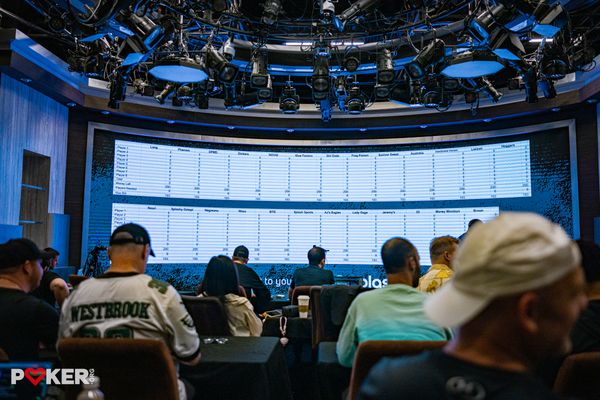
The annual WSOP Fantasy Freeroll returns for 2026, giving poker fans a chance to compete in a season-long contest that mirrors the drama of the World Series itself. Participants must construct an eight-player team while staying within a $200 salary cap, then accumulate points based on their players’ cashes, final table appearances, and bracelet wins throughout the summer.
Registration opens May 26 at 4am PT, with the live draft taking place in Las Vegas the following Monday. The competition is completely free for registered members, with prizes ranging from Amazon vouchers to poker training subscriptions and strategy books. Last year’s contest saw Shaun Deeb command a record-breaking price after winning Player of the Year, while bargain picks like Viktor Blom delivered exceptional value at a fraction of the cost.
The format rewards both volume and results. Players who fire multiple bullets in high rollers can rack up points quickly, while consistent mid-stakes grinders who cash frequently provide a steady scoring foundation. Understanding the pricing dynamics and identifying market inefficiencies separates championship rosters from also-rans.
The Poker Strategy Breakdown
Constructing a winning fantasy roster requires the same analytical thinking you’d apply to ICM decisions at a final table. You’re working with limited resources and must maximize expected value across multiple positions. The mathematical reality is simple: you cannot afford to roster eight premium players, which means your mid-tier and budget selections must dramatically outperform their cost.
The premium tier will likely consume $90-140 of your budget for a single player. Shaun Deeb’s projected price of $142 reflects his Player of the Year performance and commitment to playing virtually every event. That’s 71% of your entire budget for one-eighth of your roster. The question isn’t whether Deeb will score points—he absolutely will—but whether he’ll score enough to justify that allocation compared to rostering two $70 players who might collectively deliver more value.
Jeremy Ausmus presents an interesting case study in market correction. After setting the 2025 price record but underperforming expectations, his projected $115 price tag in 2026 represents a discount based on recency bias. If Ausmus returns to his typical form with a full schedule, that $26 discount compared to his peak price could represent significant value. This is where understanding variance versus true skill becomes crucial—one disappointing summer doesn’t erase years of consistent performance.
Daniel Negreanu occupies a unique position in the fantasy landscape. His $108 projected price reflects near-certainty: he’ll play a massive volume of events and cash frequently. Negreanu is the index fund of fantasy poker—you won’t get explosive upside, but you’ll get reliable, predictable returns. For risk-averse players building their first roster, allocating 54% of the budget to Negreanu provides a stable foundation.
The middle tier ($35-80) is where roster construction gets interesting. Alex Foxen at a projected $80 delivered 14 cashes last year, demonstrating the consistency that makes him a safe investment. Brian Rast’s $70 price point offers a different value proposition—fewer events but concentrated in high-variance mixed games where his edge is substantial. If Rast final tables the Poker Players Championship, he could outscore players who cost $30 more.
Alex Livingston’s $75 projection factors in his high-roller volume, which creates both upside and risk. High roller events offer more points per cash due to larger prize pools, but the field strength means even elite players experience significant variance. Maxx Coleman at $75 represents the opposite profile—quiet consistency across mid-stakes events that accumulates points without the boom-or-bust swings.
Reading The Field & Table Dynamics
Fantasy draft strategy mirrors tournament poker in that you’re not just playing your cards—you’re playing against the field’s tendencies. If everyone overvalues the same players, contrarian picks become more valuable even if they’re objectively inferior, simply because you’re not competing for the same scoring sources.
Viktor Blom exemplifies this principle. His $22 price last year delivered 310 points—a 14.1 points-per-dollar ratio that crushed premium picks. His 2026 projection of $40 still offers value if he maintains his high-roller schedule, but the market has corrected somewhat. The key question is whether other fantasy players have fully adjusted or if recency bias will cause them to overpay, leaving other bargains available.
Brock Wilson represents the classic “hot hand” dilemma. After dominating the PokerGO Studio with back-to-back series championships, his projected $25 price seems reasonable. But is he genuinely improving, or is he running hot in a small sample? The WSOP’s massive field sizes and diverse game formats provide a different test than PGT events. If the market overreacts to his recent success, you might find better value elsewhere.
Sam Soverel at a projected $10 is the definition of a market inefficiency. High-roller specialists often get undervalued in fantasy formats because they play fewer events, but when they do cash, the point totals are substantial. A single deep run in a $100K event can match the scoring output of a player who cashes in ten $1,500 tournaments. If you can secure Soverel at $10, you’re getting high-roller exposure at bargain-bin prices.
Phil Ivey’s $90 projection reflects name value as much as expected performance. Ivey commands a premium because fantasy players want him on their roster regardless of pure value considerations. This creates opportunity—if enough competitors overpay for Ivey, you can fade him entirely and allocate that $90 across multiple high-value picks that collectively outscore him.
The timing of the draft also matters. Early drafters set the market, and prices can spiral if multiple people target the same player. Having a backup plan for each roster slot prevents panic picks when your primary target goes for more than anticipated. Build your roster in tiers with multiple options at each price point, just as you’d have multiple lines in a poker hand based on opponent actions.
How To Apply This To Your Game
The analytical framework for fantasy draft success translates directly to poker tournament strategy. Both require resource allocation under uncertainty, value identification, and risk management across multiple decisions.
Start by establishing your baseline. Calculate the average points-per-dollar from last year’s results to understand what constitutes good value. If the average was 3.5 points per dollar, any player projected to exceed 4.0 represents positive expected value. This is identical to calculating pot odds and comparing them to your equity—you’re looking for situations where your return exceeds your investment.
Diversification matters in fantasy rosters just as it does in tournament poker ranges. Don’t construct a team where all eight players have similar profiles. Mix high-floor consistent cashers with high-ceiling variance plays. If you roster three high-roller specialists, you’re essentially putting yourself all-in on a few big scores. If those players brick, your entire roster suffers. Balance is key.
Pay attention to schedule overlap. If you roster multiple players who primarily play high rollers, they’ll all be competing in the same events. This creates correlation risk—if the high rollers run tough, multiple roster spots underperform simultaneously. Diversifying across different buy-in levels and game formats reduces this correlation, similar to how you’d balance your poker schedule across different stakes and formats.
Monitor the market during the draft. If prices are running high across the board, adjust your strategy to target the players being undervalued. If everyone’s paying up for big names, the middle tier might offer exceptional value. This is exactly like adjusting your opening ranges based on table dynamics—when opponents are playing too tight, you widen; when they’re too loose, you tighten.
Don’t fall victim to sunk cost fallacy. If a player you drafted gets injured or announces a reduced schedule, don’t let that affect your analysis of other decisions. Each roster spot should be evaluated independently based on current information, just as each poker decision should be made based on current pot odds and equity, not money you’ve already invested.
Key Takeaways
- Fantasy championships are won in the bargain bin—finding players who deliver 5+ points per dollar while others pay premium prices for 2-3 points per dollar creates insurmountable advantages over a full summer
- Market corrections create value opportunities—players who underperformed last year often get discounted below their true value, while hot players get overpriced based on recent results
- High-roller specialists offer asymmetric upside at low prices—a $10 investment in a player who final tables one $100K event can outscore a $50 mid-tier grinder
- Diversification across buy-in levels and game formats reduces correlation risk—don’t roster eight players who all compete in the same events
- Volume matters but isn’t everything—a player who cashes 20 times for minimum payouts might score fewer points than someone who final tables three high rollers
- Have a draft strategy with backup options at each price point—don’t panic pick when your primary target goes for more than expected
Frequently Asked Questions
Should I spend most of my budget on one elite player or spread it across multiple mid-tier pros?
The optimal strategy depends on the scoring system and your risk tolerance. Elite players like Shaun Deeb offer high floors—you know they’ll score points—but they consume 60-70% of your budget. Spreading that allocation across two $70 players or three $45 players increases your variance but also your upside potential. Historically, winning rosters typically include one premium player ($90-140), two mid-tier players ($50-80), and five value picks ($10-40) to maximize points-per-dollar efficiency.
How much weight should I give to recent performance versus long-term track record?
Long-term track record is generally more predictive than recent results due to poker’s inherent variance. A player who’s been consistently excellent for five years but had one down summer is likely experiencing variance, not decline. Conversely, a player with one breakout summer might be running hot rather than genuinely improving. Use recent performance as a tiebreaker between similar players, but don’t let it override years of data. The exception is when recent performance reflects a genuine change in volume or commitment level.
Are high-roller specialists worth rostering despite playing fewer events?
Absolutely, especially at discounted prices. High-roller events typically award more points per cash due to larger prize pools, and specialists like Sam Soverel can deliver exceptional points-per-dollar ratios. The key is not overallocating to high-roller players—roster one or two as value plays, but ensure you have volume players providing a consistent scoring baseline. A balanced roster might include one high-roller specialist at $10-20, providing asymmetric upside without sacrificing the floor that volume players establish.
Final Thoughts
The WSOP Fantasy Draft rewards the same skills that make you a winning poker player: value identification, risk management, and the discipline to avoid emotional decisions. The biggest mistake fantasy players make is overpaying for name recognition rather than expected production. Shaun Deeb might be the best player in the world, but if he costs $142 and delivers 400 points, that’s 2.8 points per dollar. Viktor Blom at $40 delivering 320 points gives you 8.0 points per dollar—nearly three times the efficiency.
Approach the draft with a clear strategy but remain flexible. Set maximum prices you’re willing to pay for each player, and don’t get caught up in bidding wars that destroy your value. Remember that you’re competing against the entire field, not just trying to roster good players. If everyone rosters Deeb, Negreanu, and Foxen, you need different players to separate yourself from the pack. Contrarian picks that hit are how you climb the leaderboard.
The fantasy draft is also excellent training for poker tournament decisions. You’re constantly evaluating risk versus reward, making decisions under uncertainty, and adjusting to market dynamics. The skills you develop analyzing fantasy value translate directly to ICM situations, deal negotiations, and bankroll management. Treat the draft as seriously as you’d treat a tournament, and you’ll not only improve your fantasy results but sharpen your poker thinking in the process.
Ready to Sharpen Your Poker Game?
Master your poker game with expert hand analysis