

What Texas’ WSOP Circuit Boom Teaches Us About Tournament Strategy
The World Series of Poker Circuit is doubling down on Texas after its inaugural Austin stop shattered records with a $2.5 million prize pool—the largest in state history. Now, with a $2 million guaranteed Main Event scheduled for September, players need to understand what these massive field tournaments demand from a strategic standpoint.
What Happened
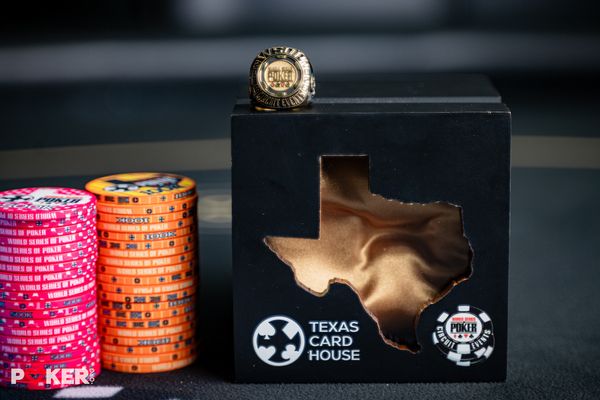
When the WSOP Circuit made its Texas debut in May 2025, organizers set a $1 million guarantee for the $1,700 Main Event at Texas Card House in Austin. The turnout exceeded all expectations, drawing 1,709 entries and creating a prize pool that sailed past $2.5 million. A total of 191 players cashed, with Thomas ‘Trey’ Brabham taking down the top prize of $368,000.
The overwhelming success sent a clear message: Texas poker players are hungry for major tournament action. The WSOP Circuit responded by scheduling a return engagement for September 10-21, this time with an even more ambitious $2 million guaranteed Main Event running September 17-21.
The two-week series features 50 tournaments with combined guarantees exceeding $4.1 million. Among these are 18 ring events spanning various formats and buy-ins, from $400 entry points to a $3,250 Big Tex High Roller. The schedule includes not just no-limit hold’em variants, but also Pot-Limit Big O, Omaha Hi/Lo, HORSE, and even No-Limit 2-7 Single Draw.
The $600 Mini Main carries a $750,000 guarantee, while the $400 Quarter Mil Monster Stack promises exactly what its name suggests. For mixed-game enthusiasts, the $600 PLO event features a $100,000 guarantee, demonstrating that alternative formats are gaining serious traction in the Texas market.
The Poker Strategy Breakdown
Massive field tournaments like the record-breaking Texas events require a fundamentally different strategic approach than typical circuit stops. When you’re facing 1,700+ opponents instead of 300, every decision compounds differently across the tournament’s arc.
First, understand the structure’s impact on your ranges. With 191 players cashing from a 1,709-entry field, that’s an 11.2% cash rate—slightly tighter than the standard 15% you might see in smaller events. This compression means the bubble becomes an extended war of attrition rather than a brief skirmish. Players need to accumulate chips earlier and more aggressively to maintain fold equity through this prolonged bubble period.
Stack preservation takes on new meaning in these mega-fields. The gap between min-cashing and making a meaningful run is enormous—the difference between a $1,500 min-cash and Brabham’s $368,000 victory represents a 245x multiplier. This reality should inform your entire strategic framework: you’re not playing to cash, you’re playing to accumulate.
Early stage play demands controlled aggression. With so many players yet to bust, tight-passive play is death. You must identify and exploit weak players immediately, building a stack that can weather the variance of the middle stages. This means wider three-betting ranges in position, aggressive continuation betting, and willingness to apply pressure when you sense weakness.
Middle stage strategy shifts toward stack management and table dynamics exploitation. As the field thins from 1,700 to 500, your relative stack size becomes critical. A 40-big-blind stack plays radically differently when 1,200 players remain versus when 200 remain. In the former scenario, you’re still in accumulation mode; in the latter, you’re navigating ICM pressure.
The bubble phase in these massive tournaments creates unique opportunities. While many players tighten up hoping to slide into the money, aggressive players with healthy stacks can run over tables. However, you must identify which opponents are bubble-scared versus which are playing for the win. The latter group won’t fold to standard pressure.
Reading The Field & Table Dynamics
Texas’ poker population presents specific player profile challenges. The state’s poker scene has historically centered around cash games and smaller local tournaments, meaning many players entering these WSOP Circuit events have limited experience with deep-stacked tournament play and ICM considerations.
This inexperience manifests in predictable ways. Watch for players who overvalue top pair hands deep in the tournament when effective stacks are 100+ big blinds. These opponents will call down too light, creating opportunities for value betting with medium-strength hands that would be check-backs against more sophisticated players.
Conversely, many recreational players tighten up dramatically once they’ve accumulated a stack, suddenly playing scared poker to “protect” their chips. These players become exploitable through relentless aggression—they’ll surrender blinds and antes repeatedly, allowing you to maintain your stack through theft rather than confrontation.
Table composition analysis becomes paramount. In a 1,700-player field, you’ll encounter every player type imaginable: grinders, amateurs, local heroes, and traveling pros. Your strategy must adapt table by table, sometimes orbit by orbit. A table with three aggressive players on your left demands tighter ranges and more trap plays. A table with passive players throughout invites wider opening ranges and aggressive stealing.
Pay attention to stack distribution across your table. When you’re the big stack, you can pressure medium stacks who can’t afford to play back without premium hands. When you’re a medium stack, identify which big stacks are playing loose versus tight—the former will give you action when you wake up with hands, while the latter you can steal from with impunity.
ICM pressure intensifies as you approach the final tables. With such a massive field, the pay jumps become significant at the top. Understanding when to apply pressure versus when to ladder up is crucial. If you’re short-stacked at the final two tables, sometimes the correct play is letting other short stacks bust before you, even if it means folding marginal spots where you might have slight chip EV.
How To Apply This To Your Game
If you’re planning to play the September series in Austin—or any massive field tournament—your preparation should begin now. These events reward players who’ve done their homework and understand the specific strategic adjustments required.
Start by studying multi-flight tournament structures. Many of these events feature multiple starting flights, creating unique dynamics. Players who bag big on Day 1A often play differently than those grinding through later flights. Understanding these psychological factors helps you exploit opponents’ mindsets.
Practice your early game aggression in online tournaments. The skills required to build a stack from 30,000 chips in a massive field don’t develop overnight. You need comfort with three-betting light, floating flops, and applying turn pressure. Online volume helps ingrain these patterns until they become second nature.
Review your hand histories with specific attention to bubble play. How do you perform when the money bubble approaches? Do you tighten up too much, or do you maintain aggression? Honest self-assessment here pays dividends. If you’re bubble-scared, you’re leaving money on the table in these spots.
Develop a game plan for different stack sizes at different stages. Write down your strategy for being short-stacked with 500 players left versus 50 players left. These situations demand different approaches, and having a pre-planned framework prevents emotional decision-making in the moment.
Consider playing some of the smaller buy-in ring events as preparation for the Main Event. The $400 Lone Star opening event or the $600 Mini Main provide excellent opportunities to acclimate to the venue, structure, and player pool without risking your entire bankroll. Treat these as paid practice sessions.
Study ICM calculators and understand pay jump implications. When you’re at a final table with $50,000 on the line between positions, you need instant recognition of whether a spot is a call or fold. This knowledge comes from repetition and study, not from trying to calculate in real-time under pressure.
Key Takeaways
- Massive field tournaments require early aggression to build stacks capable of surviving extended bubble periods and deep runs—tight-passive play results in min-cashes or busting before the money
- Texas’ poker population includes many players with limited deep-stack tournament experience, creating exploitation opportunities through aggressive play and value betting against opponents who overvalue marginal hands
- Stack preservation and accumulation balance shifts throughout the tournament: early stages favor controlled aggression, middle stages demand stack-size awareness, and late stages require ICM understanding
- Table composition analysis is critical in fields exceeding 1,500 players—your strategy must adapt based on the specific opponents at your table, not a one-size-fits-all approach
- The September series offers multiple entry points from $400 to $3,250, allowing players to gain experience in smaller events before tackling the $2 million guaranteed Main Event
- Mixed game events like PLO, Big O, and HORSE provide alternative paths to WSOP Circuit rings for players whose skills extend beyond no-limit hold’em
Frequently Asked Questions
What’s the optimal strategy for navigating a 1,700+ player field versus smaller tournaments?
Large field tournaments require more early aggression to build stacks, longer bubble periods that demand sustained pressure on medium stacks, and greater attention to table dynamics since you’ll encounter wider player skill variance. Focus on accumulation over survival in the early stages, as min-cashing provides minimal ROI compared to deep runs. The extended bubble phase creates more opportunities for chip accumulation through pressure, but requires larger stacks to maintain fold equity throughout.
How should bankroll management factor into playing a $1,700 Main Event?
Conservative bankroll management suggests having 50-100 buy-ins for your regular tournament stakes, meaning a $1,700 entry should represent 1-2% of your total poker bankroll ($85,000-$170,000). However, many players treat major series events as special occasions and accept higher variance. If you’re playing above your normal stakes, ensure the buy-in represents discretionary funds you can afford to lose, and consider satelliting in or playing smaller buy-in ring events instead to reduce financial pressure that affects decision-making.
What adjustments should cash game players make when transitioning to these large tournament structures?
Cash game players must adapt to increasing blinds that change optimal strategy every level, ICM considerations that make chip EV different from dollar EV, and stack size fluctuations that demand different ranges. Unlike cash games where you can reload, tournament chips become more valuable as you progress. Practice shorter-stacked play (20-40 big blinds), understand when to shift from accumulation to preservation mode, and study push-fold charts for late-stage play. The aggression that works in cash games must be tempered with survival awareness as you approach the money and final tables.
Final Thoughts
The WSOP Circuit’s explosive success in Texas represents more than just big prize pools—it signals a maturation of the state’s poker ecosystem. Players who understand the strategic nuances of massive field tournaments will have significant edges over opponents treating these events like oversized local tournaments.
The September series offers something for every player, from the $400 entry points to the $3,250 High Roller. But regardless of which events you choose, the strategic principles remain consistent: early aggression, stack awareness, opponent exploitation, and ICM understanding. Players who master these concepts won’t just cash—they’ll contend for life-changing scores.
As Texas continues establishing itself as a major tournament destination, expect fields to grow even larger and competition to intensify. The players investing in their strategic education now will reap rewards for years to come. Whether you’re a local grinder or traveling pro, these Texas Circuit stops represent must-play events with soft fields and massive overlays.
Ready to Sharpen Your Poker Game?
Master your poker game with expert hand analysis
