Phil Hellmuth’s Aces Cracked Twice in WSOP Final Table Exit
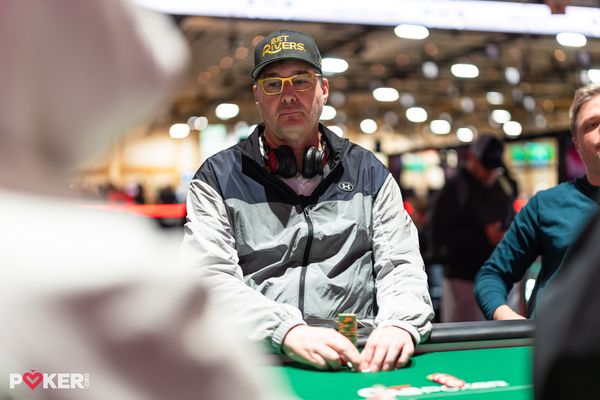
Phil Hellmuth’s quest for an 18th WSOP bracelet hit a brutal roadblock when pocket aces failed him not once, but twice at the $10,000 Limit Omaha 8 or Better Championship final table. The Poker Brat’s 76th career WSOP final table appearance ended in seventh place for $54,214, extending his agonizing wait for another piece of gold jewelry.
What Happened
The stage was set for another potential Hellmuth miracle run. Sitting in fifth position among the final eight players, Hellmuth started the televised final table with momentum, scooping the opening pot to climb into fourth place with 1.7 million in chips—a respectable 17 big bets in the limit format.
His wife Kathy joined him on the rail for support, and longtime friend Mike Matusow arrived at a crucial moment to help settle Hellmuth’s nerves after an early setback against Scott Clements. But in Limit Omaha Hi-Lo, momentum shifts faster than a desert windstorm, and Hellmuth’s stack began evaporating.
The first devastating blow came from fellow Hall of Famer Todd Brunson. After Hellmuth raised from the small blind and received a call, he fired bets on all three streets. Brunson called him down, and when the cards were revealed, Hellmuth’s aces and tens looked strong—until Brunson flipped over a rivered flush. The frustration was palpable as Hellmuth rose from his seat, cards sailing toward the muck.
“Nobody has the patience to win this ***ing thing except me, and I might run out of chips,” Hellmuth lamented to his wife, his stack now reduced to a precarious four big bets.
The final nail came against chip leader Dylan Weisman. Hellmuth raised from the cutoff, Weisman called from the big blind, and the flop brought decision time. After Weisman check-raised the flop, Hellmuth called. When Weisman fired the turn, Hellmuth tanked for several minutes before committing his remaining chips with a raise.
Weisman revealed the absolute nuts—nut flush with the nut low draw. Hellmuth’s aces were drawing dead, and the river merely formalized what was already decided. Handshakes exchanged, Hellmuth departed with Kathy, his tournament over far earlier than the 15-time bracelet winner had envisioned.
The Poker Strategy Breakdown
Limit Omaha Hi-Lo presents unique strategic challenges that differ dramatically from No-Limit Hold’em, and Hellmuth’s elimination hands illustrate critical decision points that even elite players face.
In the hand against Brunson, Hellmuth’s aggression with aces and tens represented standard play for the format. In Limit Omaha Hi-Lo, you’re often building pots with strong high hands while hoping your opponents don’t complete low draws or backdoor flush possibilities. The small blind versus big blind dynamic typically creates wider ranges, and Hellmuth’s decision to bet all three streets with top pair and a decent kicker makes sense—until the river changes everything.
The crucial lesson here involves understanding board texture evolution. In Omaha variants, flush possibilities lurk on every street, and three cards of one suit dramatically increase the likelihood your opponent connected. Brunson’s call-down suggested either a made hand or strong draws, and the river completed multiple drawing possibilities. While Hellmuth’s line was theoretically sound, the runout punished him.
The elimination hand against Weisman reveals the brutal mathematics of short-stack play in limit formats. With only four big bets remaining, Hellmuth faced a classic tournament dilemma: wait for a premium spot or take a stand with a playable hand before the blinds consume you entirely.
His decision to raise from the cutoff represents optimal short-stack strategy—stealing blinds becomes paramount when your stack can’t sustain many more orbits. When Weisman check-raised the flop, Hellmuth faced a defining moment. The check-raise in Limit Omaha Hi-Lo typically signals significant strength: either a made hand, strong draws to both high and low, or a combination.
Hellmuth’s tank on the turn demonstrates proper thought process. He understood this decision could end his tournament, and with aces in a game where premium starting hands hold less value than in Hold’em, he needed to assess whether his hand retained enough equity. Unfortunately, against Weisman’s actual holding—the nut flush with nut low draw—Hellmuth’s aces were essentially drawing dead for the high, with no low possibility.
This scenario highlights a fundamental Omaha Hi-Lo principle: two-way hands (those competing for both high and low) possess exponentially more value than one-way hands. Weisman’s holding was nearly perfect, capable of scooping the entire pot, while Hellmuth could only win half at best—and in reality, couldn’t win any portion.
Reading The Field & Table Dynamics
Final table dynamics in a $10,000 championship event differ substantially from typical tournament play. Every remaining player possesses elite skill, deep experience, and the ability to exploit mistakes. Hellmuth entered this environment as the shortest of the shorter stacks, which immediately placed him in survival mode.
The presence of another Hall of Famer in Todd Brunson added psychological complexity. These players know each other’s tendencies intimately after decades of high-stakes competition. Brunson’s willingness to call down three streets suggests he either had a read on Hellmuth’s frustration level or held a hand strong enough to see showdown regardless.
Hellmuth’s emotional state—visible enough that Matusow felt compelled to provide calming influence—likely affected his table image. Opponents recognize when the Poker Brat enters tilt territory, and they adjust accordingly. Some might avoid confrontation, while others see opportunity to apply pressure.
The chip leader dynamic with Weisman created additional pressure. Big stacks at final tables can call wider ranges, knowing they can absorb losses while potentially eliminating opponents. Weisman’s position allowed him to see flops cheaply and apply pressure with strong holdings, exactly what transpired in the elimination hand.
ICM considerations (Independent Chip Model) also influenced these decisions. With seven players remaining and Hellmuth desperately short, every other player had incentive to let him blind out. This reality forced Hellmuth’s hand—he couldn’t wait indefinitely for premium holdings, as the pay jump pressure and blind structure demanded action.
How To Apply This To Your Game
Even recreational players can extract valuable lessons from Hellmuth’s final table experience, particularly regarding short-stack management and emotional control.
First, recognize when game format demands adjusted strategy. Limit structures require different approaches than no-limit formats. Your aggression must account for fixed bet sizing, meaning you can’t move all-in at will to protect hands. This reality makes drawing hands more valuable and made hands more vulnerable, as opponents receive correct odds to chase.
Second, understand that pocket aces in Omaha variants hold dramatically less value than in Hold’em. While still a strong starting hand, aces alone rarely justify massive commitment without supportive cards (suited connectors, low possibilities, or backup pairs). When the board develops unfavorably—multiple flush cards, straight possibilities, or low cards—be prepared to release even premium starting hands.
Third, master short-stack urgency timing. Hellmuth waited until four big bets before making his stand, which left him with minimal fold equity. In limit formats, consider taking stands slightly earlier when you retain enough chips to generate folds. Once you’re down to three or four big bets, opponents know you’re committed, reducing your fold equity to nearly zero.
Fourth, control emotional responses to bad beats. Hellmuth’s visible frustration after the Brunson hand likely influenced subsequent action. Opponents smell blood when you’re tilting, and they adjust their ranges accordingly. Develop mental reset techniques—deep breathing, brief walks, or positive self-talk—to maintain optimal decision-making despite variance.
Finally, accept that tournament poker involves significant luck components, especially in split-pot games. You can execute perfect strategy and still bust when opponents hit miracle cards. Focus on process over results, knowing that correct decisions compound over time even when individual hands go wrong.
Key Takeaways
- Pocket aces in Omaha Hi-Lo hold significantly less value than in Hold’em, especially without supporting cards for low or additional high equity
- Short-stack play in limit formats requires earlier aggression than no-limit, as you can’t move all-in to generate fold equity once critically short
- Two-way hands (competing for both high and low) possess exponentially more value than one-way hands in split-pot games
- Emotional control at final tables directly impacts your table image and opponents’ willingness to apply pressure
- Board texture evolution in Omaha demands constant reassessment, as three-card flush and straight possibilities dramatically shift equity
- ICM pressure at final tables forces action from short stacks, as pay jumps and blind increases make waiting for premium hands unsustainable
Frequently Asked Questions
Why are pocket aces less valuable in Omaha Hi-Lo than Hold’em?
In Omaha Hi-Lo, you must use exactly two cards from your hand and three from the board, which limits how aces play. Additionally, the split-pot nature means you’re often competing for only half the pot, and aces alone don’t create low possibilities. Hands with coordinated cards (suited connectors, wheel cards) that can make both strong highs and qualifying lows possess more value than bare aces.
What is proper short-stack strategy in limit poker tournaments?
In limit formats, you should take stands earlier than in no-limit because you can’t move all-in pre-flop to generate fold equity. Once you’re below 10 big bets, begin widening your raising range from late position. At 5-6 big bets, you’re in critical territory and should raise with any playable hand from good position. Below 4 big bets, you’re essentially pot-committed and have minimal fold equity remaining.
How should you handle bad beats at important final tables?
Develop a mental reset routine before tournaments begin. This might include deep breathing exercises, positive visualization, or a mantra that refocuses you on process over results. At the table, take a brief moment to acknowledge the emotion, then consciously redirect attention to the next hand. Remember that opponents are watching for tilt signals, and maintaining composure preserves your table image and decision-making quality.
Final Thoughts
Phil Hellmuth’s seventh-place finish in the $10,000 Limit Omaha Hi-Lo Championship serves as a masterclass in tournament poker’s cruel variance. Despite decades of experience, 15 WSOP bracelets, and widely recognized expertise, even the Poker Brat can’t overcome drawing dead against the nuts. His elimination illustrates that in split-pot games, hand selection and situational awareness matter more than premium starting cards alone.
The hands also demonstrate why Limit Omaha Hi-Lo remains one of poker’s most challenging formats. The fixed betting structure, split-pot dynamics, and four-card starting hands create complexity that rewards deep strategic understanding while punishing even small mistakes. Hellmuth’s aggressive approach with short stack was theoretically correct, but Weisman’s monster holding left no room for escape.
For aspiring tournament players, these hands offer crucial lessons about emotional control, format-specific strategy, and the importance of two-way hands in split-pot games. While we can’t control the cards, we can control our preparation, decision-making process, and responses to adversity. Hellmuth’s chase for bracelet number 18 continues, and his track record suggests he’ll manufacture more opportunities throughout the summer series. The question isn’t whether he’ll reach another final table—it’s whether the cards will cooperate when he does.
Ready to Sharpen Your Poker Game?
Master your poker game with expert hand analysis