Benny Glaser Wins 9th WSOP Bracelet in Poker Players Championship
Benny Glaser has cemented his legacy among poker’s all-time elite by capturing the $50,000 Poker Players Championship, claiming his ninth World Series of Poker bracelet alongside $1.34 million and the coveted Chip Reese Memorial Trophy. The 37-year-old British mixed game specialist delivered a masterclass performance that positions him just one bracelet behind legends like Johnny Chan and Erik Seidel.
What Happened
The Poker Players Championship represents the pinnacle of mixed game poker, testing competitors across eight different variants over multiple grueling days. Glaser navigated a star-studded final table that included Phil Ivey, Josh Arieh, Jason Mercier, and Paul Volpe—a who’s who of poker royalty.
The climactic heads-up battle against Josh Arieh showcased Glaser’s technical mastery and mental fortitude. Starting with a slight chip disadvantage, the UK pro systematically dismantled his opponent’s stack through superior decision-making across the rotating game formats. The final hand arrived during an Omaha Hi-Lo round, where both players held nearly identical starting hands—Glaser with A♠Q♥7♦4♣ versus Arieh’s A♥J♠7♥4♠.
The flop brought Arieh two pair with fours and threes, but Glaser’s superior kicker meant any queen would give him the winning hand. The turn delivered exactly that—a queen giving Glaser queens and fours. When the river bricked, the trophy was his. For the first time in his decorated career, the notoriously stoic competitor let his emotions flow freely, dropping to his knees in tears as his rail erupted.
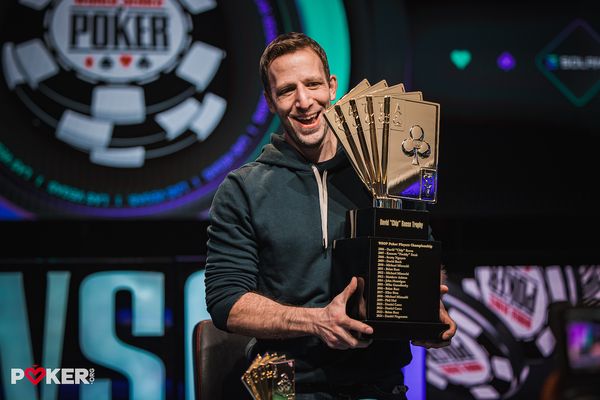
This victory elevates Glaser into rarefied air. Only five players in WSOP history have reached nine bracelets: Phil Hellmuth leads with 17, Phil Ivey has 11, and Johnny Chan, Erik Seidel, and Doyle Brunson each have 10. Glaser now shares ninth place with Johnny Moss, and at just 37 years old—three years before Hall of Fame eligibility—he’s virtually guaranteed enshrinement when he becomes eligible.
The Poker Strategy Breakdown
The Poker Players Championship rotates through eight game variants: Limit Hold’em, Omaha Hi-Lo, Razz, Seven Card Stud, Stud Hi-Lo, No-Limit Hold’em, Pot-Limit Omaha, and 2-7 Triple Draw. Success requires not just competency but elite-level proficiency across all formats—a skill set possessed by fewer than a hundred players worldwide.
Glaser’s edge manifests most clearly in the limit games, particularly Stud variants and Razz, where hand reading and bet sizing become paramount. Unlike No-Limit Hold’em where aggression and stack leverage dominate, limit poker rewards precise calculation and exploitative adjustments. Every bet carries fixed value, making pot odds calculations straightforward but decision trees infinitely complex.
The final hand exemplifies proper Omaha Hi-Lo strategy. Both players held premium starting hands with wheel cards (A-4) and suited components. In Omaha Hi-Lo, hands that can scoop both high and low are exponentially more valuable than one-way hands. Glaser’s queen kicker proved decisive—a reminder that in mixed games, seemingly minor card differences create massive equity swings.
What separated Glaser throughout the final table was his game-switching acumen. Mixed game tournaments punish specialists who excel at one or two variants but struggle in others. Elite players like Glaser maintain consistent win rates across all eight games, preventing opponents from exploiting weak spots during specific rotations. This requires thousands of hours studying each variant’s theoretical foundations and developing game-specific intuition.
His heads-up comeback also demonstrated crucial endgame adjustments. Starting behind in chips, Glaser couldn’t afford passive play. He increased aggression during the limit rounds where variance runs lower, building his stack through accumulated small edges. During big-bet games like PLO and No-Limit Hold’em, he exercised more caution, avoiding tournament-ending confrontations without premium holdings.
Reading The Field & Table Dynamics
The PPC final table presented a fascinating dynamic. Phil Ivey, himself an 11-time bracelet winner and arguably the greatest all-around player ever, brought immense ICM pressure. Every opponent had to account for Ivey’s presence, knowing his skill edge in most situations. Yet Glaser never showed intimidation, playing his cards and situations rather than opponents’ reputations.
Josh Arieh, the eventual runner-up, brought his own championship pedigree with five WSOP bracelets and the 2021 Player of the Year title. The heads-up battle became a chess match between two players operating at poker’s highest level. Arieh’s aggressive style typically overwhelms opponents, but Glaser’s composed approach neutralized that advantage.
Table dynamics in mixed games differ fundamentally from Hold’em tournaments. Position matters less in limit formats, while hand selection becomes more critical. The rotating games also create natural momentum shifts—a player running hot in Stud might cool off during 2-7 Triple Draw rounds. Glaser’s consistency across all variants meant he never experienced prolonged cold stretches.
The presence of multiple bracelet winners also elevated the strategic complexity. Against recreational players, exploitative strategies dominate. Against world-class opposition, game theory optimal approaches become essential. Glaser balanced both, making theoretically sound plays while identifying and exploiting opponent tendencies when opportunities arose.
ICM considerations at this final table were unique. With $1.34 million to first and $895,837 to second, pay jumps remained significant but less dramatic than typical tournament structures. This allowed for more aggressive play, as ladder-climbing incentives were minimized. Glaser leveraged this by applying maximum pressure, knowing his opponents couldn’t simply fold into higher payouts.
How To Apply This To Your Game
Most players won’t compete in $50,000 mixed game championships, but Glaser’s approach offers valuable lessons for any serious poker student. First, develop true proficiency in multiple game variants. Even if you primarily play No-Limit Hold’em, studying Omaha, Stud, and draw games improves hand reading and equity calculation skills that transfer across all formats.
Practice emotional control during crucial moments. Glaser’s ability to maintain composure until the final card demonstrated years of mental game development. In tournament poker, emotional spikes—both positive and negative—lead to suboptimal decisions. Develop routines that keep you centered regardless of short-term results.
Study ICM and pay structure implications. Understanding when to apply pressure versus when to tighten up based on stack sizes and payout jumps separates good players from great ones. Many players leave significant money on the table by failing to adjust their ranges based on tournament stage and stack dynamics.
In mixed games specifically, identify your weakest variant and dedicate focused study time there. Your overall win rate equals your worst game’s performance. If you’re crushing seven variants but losing in Razz, opponents will exploit that weakness. Glaser’s consistency across all eight PPC games prevented opponents from waiting for favorable rotations.
Finally, embrace variance and long-term thinking. Glaser has been grinding mixed games for years, accumulating edges through countless hands. One tournament doesn’t define a career—sustained excellence over time does. Focus on decision quality rather than short-term outcomes, and results will follow.
Key Takeaways
- Benny Glaser won his ninth WSOP bracelet by taking down the $50,000 Poker Players Championship for $1,343,764, joining Johnny Moss as the only players with exactly nine bracelets
- The victory came through a dominant heads-up performance against five-time bracelet winner Josh Arieh, showcasing Glaser’s mastery across all eight mixed game variants
- At 37 years old, Glaser is now virtually guaranteed Hall of Fame induction when he becomes eligible at age 40, with a resume that already ranks among poker’s all-time greats
- Success in mixed games requires elite-level proficiency across multiple variants—specialists cannot compete at the highest levels where every game rotation matters
- Glaser’s emotional release after victory highlighted the immense pressure and significance of the Chip Reese Memorial Trophy, poker’s most prestigious mixed game honor
- The final hand demonstrated proper Omaha Hi-Lo strategy, where small kicker differences create massive equity swings and scooping potential determines hand value
Frequently Asked Questions
How many WSOP bracelets does Benny Glaser have now?
Benny Glaser now has nine WSOP bracelets after winning the 2026 Poker Players Championship. This ties him with legendary player Johnny Moss for ninth place on the all-time bracelet leaderboard. Only five players in history have more bracelets: Phil Hellmuth (17), Phil Ivey (11), and Johnny Chan, Erik Seidel, and Doyle Brunson (10 each).
What games are played in the Poker Players Championship?
The Poker Players Championship rotates through eight different poker variants: Limit Hold’em, Omaha Hi-Lo 8 or Better, Razz, Seven Card Stud, Seven Card Stud Hi-Lo, No-Limit Hold’em, Pot-Limit Omaha, and 2-7 Triple Draw Lowball. This rotation tests players’ comprehensive poker skills across limit, pot-limit, and no-limit structures, making it the ultimate mixed game championship.
When will Benny Glaser be eligible for the Poker Hall of Fame?
Benny Glaser will become eligible for the Poker Hall of Fame when he turns 40 years old. Currently 37, he has three years until eligibility. Given his nine WSOP bracelets, PPC victory, and consistent excellence in mixed games, he’s considered a virtual lock for induction once he meets the age requirement.
Final Thoughts
Benny Glaser’s Poker Players Championship victory represents more than another bracelet or seven-figure score. It’s validation of a career spent mastering poker’s most demanding formats while many contemporaries chased No-Limit Hold’em glory. The Chip Reese Memorial Trophy sits alongside honors won by Freddy Deeb, Scotty Nguyen, Michael Mizrachi, and other mixed game legends—names that will echo through poker history long after today’s trends fade.
What makes this achievement particularly impressive is the competition level. The PPC attracts poker’s absolute elite, players who’ve dedicated decades to understanding every variant’s nuances. Glaser didn’t just win—he dominated a final table featuring Phil Ivey and other multiple bracelet winners. That level of performance against that caliber of opposition cements his status among the game’s all-time greats.
For aspiring players, Glaser’s journey offers a roadmap. Specialize in an area where you can develop true expertise, maintain emotional control under pressure, and think long-term rather than chasing short-term variance. The mixed game path requires more study and offers less mainstream recognition than No-Limit Hold’em, but for those willing to put in the work, it provides a sustainable edge against less dedicated opponents. As Glaser just proved, mastery still gets rewarded at poker’s highest levels.
Ready to Sharpen Your Poker Game?
Master your poker game with expert hand analysis