Josh Reichard’s Bracelet Breakthrough: Strategy Lessons
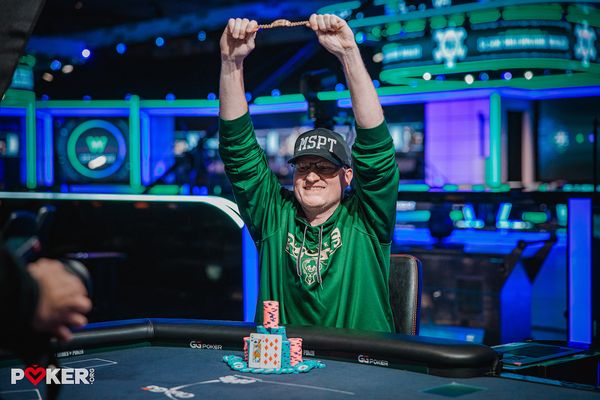
After 17 WSOP Circuit rings and a WPT title, Josh Reichard finally captured the elusive prize that had escaped him for years—a World Series of Poker bracelet. The accomplished mid-stakes grinder defeated a field of 1,736 players in the $2,500 No-Limit Hold’em event, banking $555,198 and ending one of poker’s most notable bracelet droughts.
What Happened
Reichard’s victory came after a summer of near-misses that would have crushed lesser players. He’d already notched two third-place finishes at this year’s WSOP—one in the $600 PLO/NLH mix and another in the prestigious $10,000 Mystery Bounty. But instead of dwelling on what might have been, the veteran tournament grinder maintained his composure and kept firing.
The final hand saw Reichard make a crucial river call against runner-up Caleb Harris, who had moved all-in as a bluff with ace-high. Reichard’s straight held up, triggering an eruption from what was easily the most energetic rail of the summer. His wife Ashley was first to embrace him, followed by a parade of family and friends who’d witnessed his long journey to this moment.
The win propelled Reichard to second place in the unofficial WSOP Player of the Year race with 2,261 points, trailing only Alex Foxen. With multiple deep runs already under his belt this series, the timing couldn’t have been better for his breakthrough performance.
The Poker Strategy Breakdown
What separates a player with 17 Circuit rings from one with a WSOP bracelet? Often, it’s not skill—it’s variance, timing, and the mental fortitude to keep showing up. Reichard’s path to victory offers crucial insights into tournament poker at the highest level.
The decisive hand against Harris demonstrates a fundamental principle that separates elite players from the pack: knowing when your opponent’s range is capped and exploitable. When Harris jammed the river with ace-high, he was representing a polarized range—either a massive hand or nothing. Reichard’s ability to identify this spot and make the call shows years of pattern recognition at work.
This wasn’t a hero call made in isolation. Throughout the final table, Reichard would have been gathering information about Harris’s tendencies, bet sizing tells, and timing. By the time that river decision arrived, he’d already constructed a mental database of how his opponent played big hands versus bluffs. That’s the unsexy reality of elite tournament poker—most crucial decisions are won or lost based on information gathered hours earlier.
Reichard’s approach to the summer itself reveals strategic maturity. After those third-place finishes, many players would have either gone on tilt or become overly cautious. He did neither. His comment that he was “100 percent encouraged, 0 percent frustrating” isn’t just positive thinking—it’s a strategic mindset that prevents emotional leaks from contaminating future decisions.
Consider the alternative: if Reichard had internalized those near-misses as failures, he might have tightened up at crucial moments in the $2,500 event, potentially costing himself the bracelet. Instead, he viewed them as confirmation that his game was in peak form, which likely gave him the confidence to make that final river call.
Reading The Field & Table Dynamics
Tournament poker at this level isn’t played in a vacuum. With 1,736 entries, the $2,500 NLH event attracted a mixed field of recreational players, online grinders, and seasoned live pros. Navigating this spectrum requires constant adjustment.
Early in these events, the presence of recreational players means you can play more straightforward poker, value betting thinner and avoiding elaborate bluffs. As the field narrows and the average skill level increases, hand reading and population reads become paramount. By the final table, you’re typically facing players who understand ICM pressure and won’t make egregious mistakes.
Reichard’s experience with 17 Circuit rings gave him a massive edge in this environment. Circuit events attract similar fields—strong enough to require solid fundamentals but soft enough to reward patient, exploitative play. He’s spent years learning to identify player types quickly and adjust his strategy accordingly.
The rail factor also can’t be ignored. While emotional support doesn’t directly improve your poker decisions, the psychological boost of having dozens of supporters creates confidence that manifests in clearer thinking. Players who feel backed and supported are more likely to trust their reads and make bold calls when necessary—exactly what Reichard did on that final hand.
Final table dynamics in events of this size also involve significant ICM considerations. With pay jumps ranging from $49,241 for ninth place to $555,198 for first, every decision carries massive financial implications. Shorter stacks become more desperate, middle stacks play cautiously to ladder up, and big stacks can apply maximum pressure. Understanding where you sit in this ecosystem determines your entire strategic approach.
How To Apply This To Your Game
You don’t need 17 Circuit rings to learn from Reichard’s bracelet breakthrough. Here’s how to implement his approach in your own tournament game:
Embrace the long view. Reichard’s comment about being “an optimist but a realist” captures the essential mindset for tournament success. You will lose far more often than you win—that’s mathematical reality. The key is viewing each tournament as a small sample in a larger career. Those third-place finishes weren’t failures; they were evidence his game was sharp enough to compete at the highest level.
Build your database constantly. Every hand you observe at a final table is information. How does your opponent size their continuation bets with air versus value? Do they check-raise more on certain board textures? These patterns might not matter for hours, but when that crucial river decision arrives, you’ll have the data to make an informed choice.
Stay in your lane. Reichard mentioned he won’t fire mixed game events he’s not versed in, even for POY points. This discipline is crucial. The temptation to chase glory in unfamiliar formats is strong, but your hourly rate and mental game both suffer when you’re out of your depth. Master your chosen game before expanding.
Cultivate your support system. Poker is often portrayed as a solitary pursuit, but Reichard’s rail demonstrates otherwise. Whether it’s a spouse, poker friends, or a study group, having people invested in your success creates accountability and motivation. Share your goals, discuss your hands, and build a community around your poker journey.
Trust your preparation. When Reichard called that river jam, he wasn’t gambling—he was executing a decision based on years of experience and hours of observation. Build your skills through study and volume so that when high-pressure spots arrive, you can trust your instincts.
Key Takeaways
- Mental resilience matters more than any single result—Reichard’s ability to stay positive after multiple third-place finishes directly contributed to his bracelet win
- Information gathering throughout a tournament pays dividends in crucial moments—the final river call was informed by hours of observation
- Specialization beats diversification—focus on mastering your strongest format rather than spreading yourself thin across multiple game types
- ICM pressure creates exploitable situations at final tables—understanding how different stack sizes affect opponent ranges is crucial for deep tournament runs
- Support systems aren’t just emotional—they create accountability and confidence that manifests in better decision-making
- Pattern recognition separates good players from great ones—Reichard’s 17 Circuit rings gave him the experience base to navigate mixed fields effectively
Frequently Asked Questions
How many WSOP Circuit rings did Josh Reichard have before winning his bracelet?
Reichard had accumulated 17 WSOP Circuit rings before finally capturing his first WSOP bracelet in the $2,500 No-Limit Hold’em event. He also had a WPT title and a spot in the MSPT Hall of Fame, making him one of the most accomplished players without a bracelet prior to this victory.
What was the key hand that won Reichard the bracelet?
The decisive hand saw Reichard call a river all-in from Caleb Harris while holding a straight. Harris was bluffing with just ace-high, and Reichard’s ability to identify this spot and make the call secured him the bracelet and $555,198 in prize money.
How did Reichard’s earlier third-place finishes affect his mindset?
Rather than becoming frustrated, Reichard viewed his two third-place finishes earlier in the summer as encouraging signs that his game was in top form. He described himself as “100 percent encouraged, 0 percent frustrating,” demonstrating the mental resilience required for tournament poker success. This positive mindset likely contributed to his confidence in making the final river call that won him the bracelet.
Final Thoughts
Josh Reichard’s bracelet victory is more than a feel-good story about persistence—it’s a masterclass in tournament poker psychology and strategy. His journey from multiple near-misses to ultimate triumph illustrates that success at the highest level requires technical skill, emotional control, and the wisdom to view each tournament as part of a larger narrative.
The most instructive element of Reichard’s win isn’t the final hand itself, but rather the years of preparation and the mental framework that made that call possible. He didn’t suddenly become a better player when he won the bracelet—he was already elite. The difference was variance finally breaking in his favor at the exact moment when his preparation, experience, and mental state aligned perfectly.
For players at any level, the lesson is clear: focus on the process, not the results. Build your skills methodically, maintain emotional equilibrium through the inevitable downswings, and trust that if you consistently make good decisions, the outcomes will eventually follow. Reichard’s bracelet didn’t validate his career—it simply confirmed what anyone paying attention already knew. Sometimes the hardware just takes a while to catch up to the skill.
Ready to Sharpen Your Poker Game?
Master your poker game with expert hand analysis