Negreanu Eyes Bracelet #8 at Wild $100K PLO Final Table
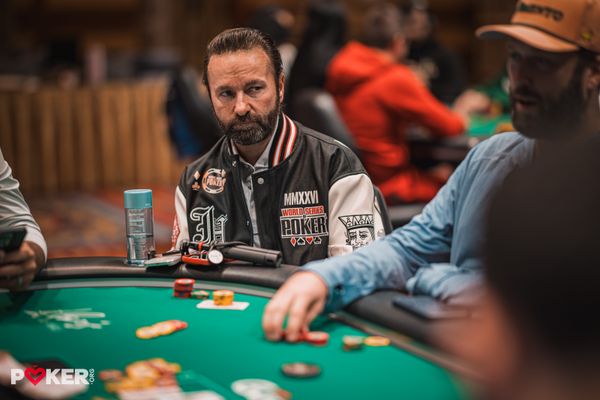
Daniel Negreanu is one day away from potentially capturing his eighth WSOP bracelet after storming to second place in chips at a bizarre $100K Pot-Limit Omaha High Roller that featured a delayed start, lightning-fast bubble, and questionable structure. The poker legend sits behind only Germany’s Chris Frank heading into Thursday’s finale, with $2.25 million and immortality on the line.
What Happened
The $100K PLO High Roller got off to one of the strangest starts in World Series history. Day 1 kicked off with fewer than seven players registered, forcing organizers to essentially pause play for nearly an entire level while waiting for the minimum field. Eventually, 50 entries trickled in on opening day, with 19 survivors advancing.
Day 2 brought even more peculiarities. Twenty-one additional players jumped in during late registration, pushing the total field to 83 entries. But here’s where things got truly unusual: registration closed after just two levels, with 13 spots scheduled to pay. A mere two hours later, only 15 players remained, creating an absurdly compressed timeline from registration close to the money bubble.
High-stakes regular David ‘ODB’ Baker didn’t mince words on social media, declaring: “We are at a dangerous and bad time with tournament structures.” His criticism highlights growing concerns that even premium buy-in events are adopting structures more suited to daily tournaments than six-figure competitions.
Despite the structural chaos, Negreanu navigated the minefield brilliantly. He traded the chip lead with Frank multiple times during the final level, ultimately bagging 12.3 million (51 big blinds) in second position. Frank claimed the overnight lead with 13.7 million after eliminating Sean Winter in sixth place during the closing hands.
The final five players are guaranteed at least $393,129, with the winner claiming $2.25 million. Rounding out the finalists are Japan’s Yosuke Miki (9.7 million), American high roller Philip Sternheimer (9.5 million), and Russian crusher Artur Martirosian (4.7 million).
The Poker Strategy Breakdown
Pot-Limit Omaha at the $100K level demands a fundamentally different strategic approach than No-Limit Hold’em, especially when tournament structures compress action into hyper-aggressive scenarios. The rapid progression from registration close to bubble play created unique strategic challenges that separated the elite from the merely excellent.
In PLO, hand equity runs much closer than in Hold’em. Premium starting hands like double-suited aces might only be 60-65% against coordinated mid-range holdings, compared to pocket aces being 80%+ favorites in Hold’em. This equity distribution forces players to be more willing to commit chips in marginal situations, knowing that even when behind, they’re rarely crushed.
Negreanu’s success in this event—his third PLO final table of the summer—demonstrates mastery of position-based aggression. In PLO, position is arguably even more valuable than in Hold’em because pot-control becomes critical. With the ability to build massive pots on later streets, having last action allows you to realize equity more effectively and apply maximum pressure when opponents show weakness.
The compressed structure likely forced players into looser preflop ranges earlier than ideal. With blinds escalating quickly and stacks relatively shallow (the chip leader has just 56 big blinds), players couldn’t afford to wait for premium rundowns and double-suited holdings. This environment rewards players who can accurately assess postflop equity and aren’t afraid to commit with draws.
Frank’s late surge to the chip lead illustrates another crucial PLO concept: momentum accumulation. In PLO, winning one significant pot often provides the ammunition to apply relentless pressure across multiple subsequent hands. With his 56-big-blind stack, Frank can effectively three-bet and four-bet opponents, forcing difficult decisions with tournament life on the line.
Martirosian’s short stack at 19 big blinds presents interesting strategic considerations. In PLO, short-stack play differs dramatically from Hold’em because you can’t effectively shove preflop with the same frequency. The pot-limit betting structure means even with 19 blinds, Martirosian will often see flops and need to navigate postflop decisions rather than relying on preflop all-ins.
Reading The Field & Table Dynamics
This final table presents a fascinating clash of playing styles and experience levels. Negreanu brings seven WSOP bracelets and nearly $60 million in career earnings, but he’s facing opponents who’ve proven themselves in the modern high-roller circuit where PLO has become increasingly dominant.
Frank enters with significant leverage beyond just his chip lead. His $2 million victory in the $100K PLO at Triton Montenegro in 2024 proves he’s comfortable playing for these stakes in this exact game. That experience matters enormously when ICM pressure intensifies and million-dollar pay jumps loom. He already has one WSOP bracelet from 2017, so he won’t be paralyzed by the weight of winning his first.
The pay structure creates fascinating ICM dynamics. The gap between fifth place ($393K) and first ($2.25M) is massive—nearly $1.9 million. However, with three players clustered between 39-51 big blinds, the middle positions might play cautiously early, hoping Martirosian’s short stack busts first to lock up a pay jump.
Miki represents the wild card. As the only late registrant remaining from 21 who entered on Day 2, he’s already defied odds. His modest resume dating back only to 2022 might suggest inexperience, but his fourth-place finish in the $25K High Roller earlier this series and sixth-place showing at Triton Jeju ($628K) prove he belongs. Young, hungry players often play more fearlessly than established pros protecting their legacies.
Sternheimer’s six cashes this summer without a major score might create urgency. He’s grinding but hasn’t broken through yet, and this represents his best opportunity. His runner-up finish at Triton Jeju for $2.5 million shows he can handle the pressure of seven-figure final tables, but second-place finishes sting differently than victories.
Negreanu’s situation is particularly interesting from a psychological perspective. This would be his highest WSOP cash ever (excluding the 2014 $1M One Drop), surpassing his 2019 $100K High Roller victory by approximately $500K. At this stage of his career, adding bracelet number eight would cement his legacy among the all-time greats, but the pressure of that narrative could influence decision-making.
How To Apply This To Your Game
Even if you’re not playing $100K PLO tournaments, the strategic principles on display here translate directly to games at every level. Here’s how to incorporate these lessons into your poker arsenal.
Master position-based aggression in PLO. Whether you’re playing $1/$2 PLO at your local card room or online micro-stakes, position matters even more than you think. Make it a rule to play significantly tighter from early position and exploit late position relentlessly. When you’re on the button or in the cutoff, widen your three-betting range with coordinated hands that play well postflop.
Adjust to structure, not just opponents. Baker’s criticism of the tournament structure highlights a crucial skill: recognizing when standard tournament strategy needs modification. In fast structures, you can’t wait for premium hands. Calculate your M-ratio (stack size relative to blinds and antes) and adjust your ranges accordingly. When you have fewer than 30 big blinds in PLO, you need to start taking stands with decent but not premium holdings.
Understand equity distribution in PLO. Stop thinking in Hold’em terms when you play Omaha. Run equity calculations on free tools to internalize how close PLO matchups really are. This knowledge will make you more willing to call when you’re getting proper odds and more cautious about overvaluing hands that seem strong but have serious vulnerabilities.
Practice short-stack PLO specifically. Martirosian’s 19-big-blind stack requires specialized skills that differ from short-stack Hold’em. You can’t just shove and hope. Study how to play draws aggressively when short, how to pot-commit effectively, and when to fold hands that would be easy calls in Hold’em but are dominated in PLO.
Build momentum strategically. When you win a significant pot, don’t immediately tighten up to protect your gains. Use that increased stack to apply pressure over the next several orbits. Your opponents will often give you credit for continuing the hot streak, allowing you to steal pots you wouldn’t otherwise win.
Key Takeaways
- Negreanu sits second in chips with 12.3 million (51bb) behind chip leader Chris Frank’s 13.7 million (56bb) heading into the $100K PLO High Roller finale
- The tournament featured an unusually compressed structure, going from registration close to the money bubble in just two hours with only 83 total entries
- A victory would give Negreanu his eighth WSOP bracelet and his highest WSOP cash ever at $2.25 million (excluding the 2014 One Drop)
- PLO equity distributions run much closer than Hold’em, requiring more aggressive play and willingness to commit with strong draws
- Position-based aggression and momentum accumulation are critical skills in high-stakes PLO tournaments with fast structures
- The final five players include a mix of established legends and rising stars, creating fascinating ICM dynamics with pay jumps exceeding $1.9 million
Frequently Asked Questions
How many WSOP bracelets does Daniel Negreanu currently have?
Daniel Negreanu currently has seven WSOP bracelets. A victory in this $100K PLO High Roller would give him his eighth, further cementing his status among poker’s all-time greats. Only a handful of players in history have won eight or more WSOP bracelets, making this potential achievement particularly significant for Negreanu’s legacy.
Why was the tournament structure criticized?
The structure drew criticism because it compressed play unusually fast for a $100K buy-in event. Registration closed after just two levels on Day 2, and only two hours later, the field had shrunk from 40 players to 15, leaving just two spots before the money bubble. High-stakes regular David ‘ODB’ Baker called it “dangerous,” suggesting the structure resembled a daily tournament rather than a premium high roller.
What makes PLO strategy different from No-Limit Hold’em?
PLO differs fundamentally because equity runs much closer between hands—premium holdings might only be 60-65% favorites versus 80%+ in Hold’em. This tighter equity distribution means position becomes even more valuable for pot control, draws are worth more and should be played aggressively, and you can’t rely on preflop all-ins with short stacks the same way. The four-card hand structure also creates more postflop complexity and hand combinations.
Final Thoughts
Thursday’s finale promises to deliver high drama regardless of structural concerns. Negreanu’s pursuit of bracelet number eight provides a compelling narrative, but he faces formidable opposition in Frank, who has proven himself in this exact format at the highest levels. The relatively shallow stacks and massive pay jumps will force aggressive action from the opening hand.
What makes this final table particularly intriguing is the blend of old-school poker royalty and modern high-roller circuit grinders. Negreanu represents poker’s golden era, while players like Miki embody the new generation of fearless competitors who cut their teeth in the Triton and high-roller scene. These stylistic clashes often produce the most memorable final tables.
Whether you’re a Negreanu fan hoping to see him add to his legendary bracelet collection or simply appreciate elite PLO strategy, this finale deserves your attention. The combination of life-changing money, structural peculiarities forcing aggressive play, and world-class talent creates the perfect recipe for an unforgettable conclusion to one of the summer’s most unusual tournaments.
Ready to Sharpen Your Poker Game?
Master your poker game with expert hand analysis