Daniyal Gheba Claims Maiden WSOP Bracelet in $5K Event
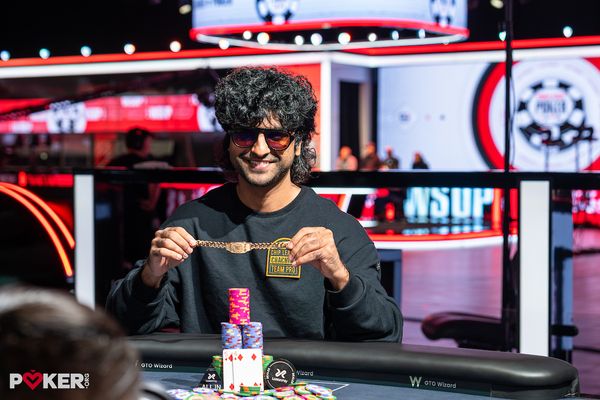
Daniyal Gheba has finally broken through for his first World Series of Poker bracelet, conquering a 570-player field in Event #2’s $5,000 No-Limit Hold’em 8-Max. The victory, worth just over $500K, came on the inaugural final table inside WSOP’s spectacular new arena at the Horseshoe Las Vegas.
What Happened
The 2026 WSOP’s first open-event champion has been crowned, with Daniyal Gheba emerging victorious from a competitive $5,000 buy-in field that attracted 570 entries and generated a prize pool exceeding $2.6 million. Gheba’s triumph netted him $502,985, pushing his career tournament earnings to nearly $2 million.
This wasn’t Gheba’s first rodeo in this particular event. He’d previously navigated deep runs in both 2024 and 2025, finishing sixth and 23rd respectively. That experience proved invaluable as he outlasted a tough final table that included several accomplished professionals.
The runner-up spot went to Chenxiang Miao, who collected $335,290 for his efforts. Xiaohu Liu rounded out the podium in third place with $234,432, while the highly-decorated Ren Lin fell in fourth for $166,448. Peter Mugar ($120,035), Ivan Ruban ($87,945), and Anatoly Nikitin ($65,479) completed the seven-handed final table lineup.
Adding historical significance to the victory, this final table marked the first to be contested inside WSOP’s brand-new 25,000-square-foot arena—a state-of-the-art facility that’s been generating buzz throughout the poker community. For Gheba, winning in this venue added an extra layer of prestige to an already career-defining moment.
“Dream come true,” Gheba said following his victory. “It’s a pretty sick arena, I like it a lot. I did sort of visualize a lot about winning this tournament.” He added that the win was crucial for his summer plans: “I kind of needed to win this tournament to play the stuff I wanted to play this summer without selling all my action, so, yeah, it’s amazing.”
The Poker Strategy Breakdown
Navigating an 8-max final table requires a fundamentally different approach than traditional 9-handed play. With one fewer player at the table, aggression becomes more profitable, stealing opportunities increase, and hand ranges need to widen accordingly. Gheba’s path to victory demonstrates masterful understanding of these dynamics.
In 8-max formats, position becomes even more critical. The hijack seat essentially becomes a late position, and players must adjust their opening ranges to account for the increased fold equity. Successful players in this format understand that tightness gets punished—you need to apply pressure consistently while maintaining balance in your ranges.
Gheba’s experience in this specific event clearly paid dividends. His two previous deep runs gave him invaluable data about the player pool, common tendencies, and crucial spots that tend to arise. This pattern recognition is often the difference between a good tournament player and a great one. Understanding how specific player types react in high-pressure situations allows for exploitative adjustments that maximize expected value.
The final table structure also demands ICM awareness at every decision point. With seven players remaining and significant pay jumps between positions, pure chip EV plays often need to be tempered with survival considerations. However, the best players know when to ignore ICM pressure—typically when holding a commanding chip lead or when facing extremely short stacks who are forced to play desperately.
Stack management throughout the final table becomes a delicate balancing act. Too conservative, and the blinds and antes erode your stack while aggressive opponents accumulate chips. Too loose, and you risk busting before the money gets serious. Gheba’s ability to navigate this tightrope while maintaining pressure on his opponents showcases tournament poker at its finest.
Reading The Field & Table Dynamics
The presence of Ren Lin at this final table added a fascinating dynamic. Lin has been on an absolute tear in 2026, accumulating over $2 million in earnings already this year and making it clear he’s hunting both WSOP Player of the Year and GPI Player of the Year honors. His aggressive schedule and stated goal of “winning everything” creates a specific player profile that observant opponents can exploit.
When facing a player with such ambitious goals and a packed tournament schedule, you can often identify spots where fatigue or variance frustration might lead to suboptimal decisions. Lin’s fourth-place finish for $166,448 represents his fifth six-figure score of 2026, but it also marks another bracelet-less result—a pattern that now spans a career exceeding $19.5 million in tournament earnings.
This psychological element cannot be understated. A player of Lin’s caliber who’s repeatedly come close but fallen short in WSOP events carries a specific mental burden. He recently finished runner-up in a €20,800 High Roller at WSOP Europe, another near-miss that adds to the pressure. Recognizing when accomplished players might be pressing too hard for that elusive first bracelet can create profitable opportunities.
The mix of players at the final table—from seasoned professionals to emerging talents—created a complex strategic environment. Each player brought different risk tolerances, experience levels, and comfort zones to the table. Gheba’s ability to adjust his strategy based on who he was in pots with demonstrates advanced-level game theory application.
Table dynamics shift dramatically as stacks change and players are eliminated. The player who thrives in these environments constantly reassesses position-specific ranges, adjusts aggression levels based on stack depths, and identifies which opponents are playing scared money versus those willing to gamble for the win. Gheba clearly read the room correctly when it mattered most.
How To Apply This To Your Game
The first lesson from Gheba’s victory is the value of specialization and repeated exposure to specific formats. His three consecutive years of deep runs in this exact event didn’t happen by accident. When you find a tournament structure that suits your playing style, commit to it. Study it. Learn the player pool. Build pattern recognition that gives you edges others don’t have.
Second, understand that 8-max tournaments require range adjustments from standard 9-handed play. Your opening ranges should expand by approximately 10-15% from each position. Your three-betting frequency needs to increase, especially from the blinds where you’ll face more late-position aggression. Practice these adjustments in lower-stakes events before implementing them in major tournaments.
Third, develop your visualization practice. Gheba mentioned visualizing winning this tournament—this isn’t new-age nonsense, it’s legitimate mental preparation. Top athletes across all sports use visualization to prepare for high-pressure moments. Spend time mentally rehearsing how you’ll handle crucial decisions, bad beats, and the pressure of final table play.
Fourth, manage your bankroll with tournament schedules in mind. Gheba explicitly stated he needed this win to play his desired summer schedule without selling excessive action. This demonstrates sophisticated bankroll management—understanding your financial limitations and making strategic decisions about which events to target based on your current resources.
Finally, study ICM extensively. Download an ICM calculator and run scenarios from final tables you’ve played or watched. Understanding the mathematical implications of different stack sizes and payout structures will improve your decision-making in crucial moments. The difference between a min-cash and a victory often comes down to a handful of ICM-aware decisions.
Key Takeaways
- Specialization pays off: Gheba’s three consecutive years of deep runs in this event demonstrate how repeated exposure to specific formats builds expertise and pattern recognition that creates edges.
- 8-max requires aggression: With one fewer player at the table, successful strategies involve wider ranges, increased three-betting, and more frequent steal attempts compared to 9-handed play.
- Mental preparation matters: Visualization and mental rehearsal of tournament scenarios helps players perform under pressure when career-defining moments arise.
- ICM awareness is non-negotiable: Understanding Independent Chip Model implications at final tables separates good tournament players from champions, especially when navigating significant pay jumps.
- Player psychology creates opportunities: Recognizing when accomplished players carry psychological burdens (like Lin’s bracelet drought) can reveal exploitable tendencies in crucial spots.
- Bankroll management enables opportunities: Strategic tournament selection based on current bankroll health allows players to take shots at meaningful events without excessive financial pressure.
Frequently Asked Questions
How does 8-max strategy differ from 9-handed tournaments?
Eight-max tournaments require wider opening ranges from all positions, increased three-betting frequencies, and more aggressive blind defense strategies. With one fewer player at the table, fold equity increases and positional advantages become more pronounced. Players should expand their ranges by roughly 10-15% from each position and increase their overall aggression, particularly in late position and blind-versus-blind situations.
What is ICM and why does it matter at final tables?
ICM (Independent Chip Model) is a mathematical model that calculates the real money value of tournament chips based on remaining players, stack sizes, and payout structure. At final tables, ICM becomes crucial because chip EV and dollar EV diverge significantly. A decision that’s profitable in terms of chips might cost you money when accounting for pay jumps. Understanding ICM helps you make mathematically sound decisions about when to take risks and when to play conservatively.
How can studying specific tournament formats improve results?
Repeated exposure to specific tournament structures allows players to develop deep pattern recognition, understand the player pool’s tendencies, and refine strategies for that exact format. Like Gheba’s three consecutive years in this event, specialization builds expertise that casual players can’t match. You learn which spots commonly arise, how different player types react under pressure, and which adjustments yield the highest expected value in that specific environment.
Final Thoughts
Daniyal Gheba’s maiden WSOP bracelet victory represents more than just a career milestone—it’s a masterclass in preparation, specialization, and tournament poker execution. His willingness to return to this specific event year after year, learning from each deep run and refining his approach, demonstrates the patience and dedication required to succeed at poker’s highest levels.
The inaugural final table in WSOP’s new arena will be remembered for years to come, and Gheba has etched his name into that history. For Ren Lin, the bracelet hunt continues despite another impressive result and a year that’s already seen him bank over $2 million. The contrast between these two players—one achieving a breakthrough, the other still chasing that elusive first bracelet—illustrates the fine margins that separate good results from great ones in tournament poker.
As the 2026 WSOP continues, Gheba’s victory sets the tone for what promises to be an exceptional summer of poker. His story reminds us that persistence, preparation, and strategic thinking ultimately prevail in this game we love. Whether you’re grinding online tournaments or saving for your first WSOP buy-in, the principles that led to Gheba’s success apply at every level.
Ready to Sharpen Your Poker Game?
Master your poker game with expert hand analysis