

How Santhosh Suvarna Won $1.9M Cracking Kings at WSOP
India’s Santhosh Suvarna captured the biggest prize of the 2026 World Series of Poker so far, banking $1,922,870 after cracking pocket kings in the final hand of the $50,000 High Roller 8-Max. The dramatic river card gave him his third career bracelet and cemented his status as one of India’s most decorated tournament players.
What Happened
The $50,000 High Roller 8-Max drew 167 entries, creating a massive prize pool that would award nearly $2 million to the winner. Suvarna navigated through a stacked field that included some of poker’s elite high roller regulars, entering the final day with a healthy chip advantage.
However, Day 3 didn’t go according to script initially. Russian player Anatoly Zlotnikov went on an absolute tear, accumulating more than half the chips in play by the time the televised six-handed final table began. Zlotnikov’s aggressive style had propelled him from the middle of the pack to a seemingly commanding position.
The momentum shifted dramatically when Suvarna won a crucial pot against Zlotnikov. On a board that brought both draws and made hands into play, Suvarna called down three streets with a pair and flush draw, ultimately rivering his flush against Zlotnikov’s triple-barrel bluff with ace-high. This hand swung the chip lead back to Suvarna and set the stage for Zlotnikov’s fifth-place elimination shortly after.
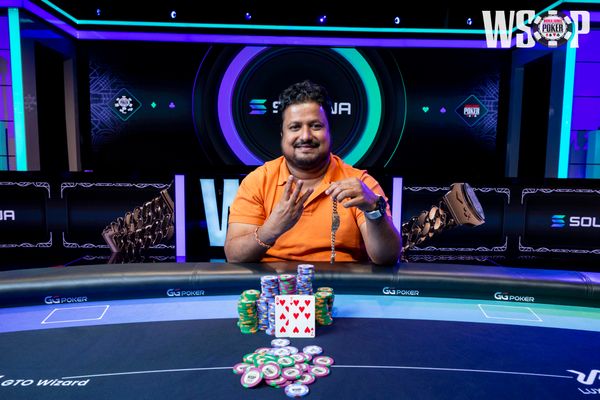
After Chris Brewer and Colin Robinson busted in fourth and third place respectively, Suvarna faced off against Chang ‘Jack’ Lee heads-up. Lee had won the $25,000 High Roller 8-Max the previous summer in his very first WSOP event and was looking to capture back-to-back bracelets in consecutive years.
The heads-up battle was competitive, but Suvarna gradually built his advantage. The tournament concluded with a hand that will be replayed in highlight reels for years. Lee moved all-in on the turn holding pocket kings, while Suvarna called with bottom pair of eights and a gutshot straight draw. The river brought a third eight, giving Suvarna trips and his third WSOP bracelet while denying Lee his second piece of Vegas hardware.
The victory ties Suvarna with Nipun Java for most WSOP bracelets among Indian players at three apiece. More impressively, it extends his lead on India’s all-time money list to over $22.6 million—nearly triple the $8 million earned by Vivek Rajkumar, who sits in second place.
The Poker Strategy Breakdown
The pivotal hand against Zlotnikov showcases advanced tournament poker theory in action. When facing an ultra-aggressive opponent who’s been running hot, Suvarna demonstrated remarkable patience and hand-reading ability. Rather than trying to outplay Zlotnikov with marginal holdings, he waited for a spot where he had equity and showdown value.
Calling down three streets with top pair and a flush draw against an aggressive opponent represents sound exploitative strategy. Zlotnikov had established a pattern of relentless aggression, and Suvarna correctly identified that his opponent’s range would include significant air. The key wasn’t just making the call—it was recognizing when an opponent’s betting frequency had exceeded what their actual hand distribution could support.
This type of adjustment requires both courage and calculation. Many players would fold top pair facing escalating bets on multiple streets, especially against an opponent with momentum. But Suvarna understood that Zlotnikov’s recent success meant his betting range had widened considerably, making calls with medium-strength hands more profitable.
The final hand against Lee presents a different strategic consideration entirely. Getting trips over trips or making a straight would be standard outcomes, but rivering a two-outer for trips against an overpair is pure variance. However, the decision to call the turn shove with bottom pair and a gutshot deserves examination.
In heads-up play with significant pay jumps behind them, Suvarna’s call was likely based on pot odds and his read of Lee’s shoving range. With four outs to a straight and potentially three more outs to trips (though these could be counterfeited), he had roughly 15-20% equity against most value hands. If Lee’s range included any bluffs or weaker pairs, the call becomes even more justified mathematically.
The broader lesson here is about tournament poker’s dual nature: you need both skill to put yourself in winning positions and the willingness to embrace variance when the math supports it. Suvarna didn’t just get lucky—he made theoretically sound decisions that gave luck the opportunity to favor him.
Reading The Field & Table Dynamics
High roller tournaments create unique dynamics that differ significantly from standard tournament play. With 167 entries at $50,000 each, every player at the table has proven their ability to compete at poker’s highest levels. This means you can’t rely on opponents making fundamental mistakes—instead, you must identify and exploit their strategic tendencies.
Zlotnikov’s aggressive surge presented both opportunity and danger. When a player accumulates chips rapidly, they often continue the same aggressive approach that brought them success. This creates exploitable patterns for observant opponents. Suvarna’s strategy of waiting for a strong hand rather than immediately fighting fire with fire demonstrates elite-level patience.
The final table structure—eight-max rather than the traditional nine-handed format—also influences optimal strategy. With fewer players, hand values increase, and aggressive play becomes more profitable. However, this doesn’t mean mindless aggression. The best players, like Suvarna, understand when to apply pressure and when to let opponents hang themselves.
ICM considerations at the final table were significant. The pay jumps between positions were substantial, with first place earning nearly $2 million compared to $340,905 for sixth. These pay jumps should theoretically make players more conservative, yet Zlotnikov’s hyper-aggressive approach initially paid dividends. This suggests he was either ignoring ICM pressure or correctly identifying that his opponents were playing too tight given the structure.
Heads-up against Lee, Suvarna faced an opponent with limited WSOP experience but proven ability to win at the highest level. Lee’s victory the previous year wasn’t a fluke—it demonstrated his capacity to compete with the world’s best. This meant Suvarna couldn’t assume any significant skill edge and needed to execute fundamentally sound poker while remaining alert for exploitable patterns.
How To Apply This To Your Game
The first lesson from Suvarna’s victory is the importance of patience against aggressive opponents. When someone is running hot and betting frequently, your natural instinct might be to fight back immediately. Resist this urge. Instead, wait for hands with genuine showdown value and let them continue their aggressive line into your strength.
Second, understand that calling down requires a clear plan based on your opponent’s tendencies. Don’t call one street hoping to get lucky on the next. Before you call the flop, consider whether you’ll be able to continue on various turn cards. Suvarna’s call-down worked because he had identified Zlotnikov’s pattern and had equity on every street.
Third, study ICM but don’t become paralyzed by it. Yes, pay jumps matter, especially in high roller events with massive differences between positions. However, accumulating chips still matters enormously. The best players find the balance between survival and aggression that maximizes their overall expected value.
Fourth, recognize that tournament poker requires embracing calculated risks. Suvarna’s turn call with bottom pair and a gutshot might seem loose, but in the context of heads-up play with his read of Lee’s range, it was likely a profitable decision in the long run. Don’t confuse getting lucky with making bad decisions—sometimes you make the right play and still need to get fortunate.
Finally, momentum matters but isn’t everything. Zlotnikov’s chip accumulation was impressive, but it didn’t make him invincible. When you’re facing an opponent on a heater, remember that variance cuts both ways. Stay focused on making optimal decisions rather than being intimidated by their recent success.
Key Takeaways
- Santhosh Suvarna won $1,922,870 and his third WSOP bracelet by defeating 167 entries in the $50,000 High Roller 8-Max
- The victory ties him with Nipun Java for most bracelets among Indian players and extends his lead on India’s all-time money list to over $22.6 million
- Patient, exploitative play against aggressive opponents proved more effective than fighting fire with fire, as demonstrated in the crucial hand against Anatoly Zlotnikov
- Calling down multiple streets requires strong hand-reading skills and recognition of opponents’ betting patterns and frequencies
- The final hand saw Suvarna crack Lee’s pocket kings by rivering trips, highlighting how tournament poker combines skill in getting to profitable spots with the variance inherent in all-in situations
- High roller dynamics differ from standard tournaments due to the elite player pool, requiring adjustments based on tendencies rather than exploiting fundamental mistakes
Frequently Asked Questions
How many WSOP bracelets does Santhosh Suvarna have now?
Santhosh Suvarna now has three WSOP bracelets, which ties him with Nipun Java for the most among Indian poker players. His latest bracelet came in the $50,000 High Roller 8-Max event, where he defeated 167 entries to claim nearly $2 million in prize money. This victory also extended his commanding lead on India’s all-time poker money list to over $22.6 million.
What was the key hand that shifted momentum in Suvarna’s favor?
The pivotal hand occurred against Anatoly Zlotnikov, who held over half the chips at the final table. Suvarna called progressively larger bets on all streets with top pair and a flush draw, ultimately rivering his flush against Zlotnikov’s triple-barrel bluff with just ace-high. This hand reclaimed the chip lead for Suvarna and demonstrated his patient, exploitative approach against an ultra-aggressive opponent who had been dominating the table.
How did the final hand play out between Suvarna and Lee?
In the tournament-deciding hand, Chang ‘Jack’ Lee moved all-in on the turn holding pocket kings, while Suvarna called with bottom pair of eights and a gutshot straight draw. Rather than hitting his straight, Suvarna caught one of his two remaining outs when an eight appeared on the river, giving him trip eights and the victory. While the result involved significant luck, Suvarna’s turn call was likely mathematically justified based on pot odds and his read of Lee’s range in the heads-up situation.
Final Thoughts
Santhosh Suvarna’s victory in the $50,000 High Roller 8-Max exemplifies what separates good tournament players from great ones. While the final hand against Lee required a fortunate river card, everything leading up to that moment demonstrated elite-level poker strategy. His patience against Zlotnikov’s aggression, his willingness to call down with medium-strength hands when his read was strong, and his ability to gradually accumulate chips in crucial spots all contributed to putting him in position to win.
The dramatic finish shouldn’t overshadow the strategic excellence displayed throughout the tournament. Cracking kings on the river makes for great headlines, but the real story is how Suvarna navigated a field of 167 elite players, adjusted to different opponents and table dynamics, and executed a game plan that maximized his chances of victory. Tournament poker will always involve variance—the skill lies in consistently making decisions that give variance the opportunity to work in your favor.
As Suvarna prepares for the Hustler Casino Live Million Dollar Cash Game, he carries momentum from this massive score. Whether that momentum translates to the cash game tables remains to be seen, but one thing is certain: India’s poker scene has a champion who can compete with anyone in the world at the highest stakes.
Ready to Sharpen Your Poker Game?
Master your poker game with expert hand analysis
