When Mandatory Straddles Beat Peer Pressure at the Table
Converting optional straddles into mandatory third blinds eliminates one of poker’s most uncomfortable social dynamics. What poker rooms once left to unspoken agreements, forward-thinking card rooms now codify with plaques reading $2/$5/$10 instead of $2/$5 with an optional straddle—removing the friction entirely.
What Happened
Poker’s evolution has always involved formalizing what was once informal. The latest battleground? Straddles. These voluntary third blinds create an awkward tension between players who want action and those who prefer standard blind structures. When one player declines to straddle while everyone else participates, the entire table feels it.
Progressive poker rooms have discovered an elegant solution: eliminate the choice. Instead of spreading a $5/$10 No-Limit Hold’em game with an optional $20 straddle, they simply spread a $5/$10/$20 game. The third blind isn’t optional—it’s structural. This administrative shift resolves multiple problems simultaneously, from determining re-entry costs after missing blinds to preventing one player from disrupting table rhythm.
The Wynn Las Vegas and several regional card rooms have already adopted this approach. When a player sits at a game with three numbers on the plaque, there’s no negotiation, no peer pressure, and no social contract to navigate. You either post all required blinds or find a different game.
The Poker Strategy Breakdown
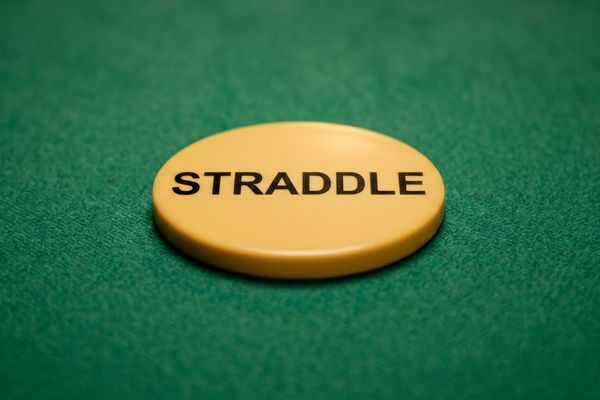
Understanding why this matters requires examining what straddles actually do to game dynamics. A straddle doubles the effective stakes, transforming a $5 big blind game into a $10 big blind game for that hand. Players who embrace straddles typically seek increased action, larger pots, and more gambling. Those who resist them often prefer tighter, more controlled play.
The strategic problem with optional straddles isn’t the straddle itself—it’s the inconsistency. When a game alternates between $5 and $10 effective big blinds depending on who has the button, stack-to-pot ratios become unpredictable. A 100 big blind stack at $5/$10 becomes 50 big blinds when the straddle is on, fundamentally altering optimal strategy.
Consider the mathematical reality: In a $5/$10 game with a $20 straddle, you’re effectively playing $10/$20 for that hand. Your opening ranges, 3-bet frequencies, and stack-off thresholds should all adjust accordingly. But when the straddle disappears next orbit because someone declines, you’re back to $5/$10 dynamics. This constant recalibration introduces unnecessary complexity.
Mandatory third blinds eliminate this variance. Every hand operates under identical parameters. You can calculate your effective stack size once and maintain that framework throughout your session. Position values remain consistent. Pot odds calculations don’t require mental adjustments based on whether the button player feels like gambling this orbit.
From a game selection perspective, mandatory structures provide clarity. You know exactly what stakes you’re playing before sitting down. A recreational player who budgets $500 for a $5/$10 game isn’t ambushed by discovering they’re actually playing $10/$20 effective. Conversely, action players seeking bigger pots don’t face disappointment when someone breaks the straddle chain.
The strategic adaptation is straightforward: treat the third blind as you would any big blind. It’s not a special circumstance requiring social negotiation—it’s simply the game structure. This clarity extends to pre-flop ranges, continuation betting frequencies, and all downstream decisions.
Reading The Field & Table Dynamics
The social dynamics surrounding optional straddles reveal deeper truths about poker table psychology. When a game develops an informal straddle agreement, players who participate feel they’re contributing to the action and entertainment value. Those who decline—regardless of their reasons—become perceived as obstacles to fun.
This creates an uncomfortable power dynamic. Recreational players may feel pressured to straddle beyond their comfort zone to avoid seeming like the table’s wet blanket. Conversely, solid regulars who recognize the mathematical disadvantage of straddling face social costs for playing optimally. Neither situation is healthy for the game.
The bomb pot phenomenon illustrates similar tensions. Many games now feature bomb pots—hands where everyone antes a set amount and sees a flop without betting. When participation is optional, some players angle-shoot by participating only from favorable positions. This behavior violates the spirit of bomb pots while technically remaining within the rules.
These situations highlight a fundamental truth: social contracts work in private games where hosts can enforce norms through invitation control. In public card rooms, they create friction without recourse. The player who angles bomb pots or declines straddles isn’t breaking any rules. They’re simply operating within the gaps that informal agreements create.
Table dynamics improve dramatically when ambiguity disappears. With mandatory structures, there’s no social contract to violate. The player who would have declined straddles simply chooses a different game. The player who would have angled bomb pots either participates fully under formal rules or sits out entirely. The remaining players enjoy consistent action without interpersonal tension.
This shift also affects how regulars and recreational players interact. When optional straddles exist, regulars sometimes pressure recreational players to straddle, creating an adversarial dynamic. Mandatory structures eliminate this pressure, allowing the game to flow based on cards and decisions rather than social maneuvering.
How To Apply This To Your Game
If you’re selecting games, prioritize rooms with formalized structures over those relying on social contracts. A $2/$5/$10 game provides more predictable conditions than a $2/$5 game with optional $10 straddles, even if the effective stakes are identical. You’ll face less social pressure and enjoy more consistent strategic conditions.
When you encounter optional straddle games, decide your participation policy in advance. Don’t let table pressure dictate your decisions hand-by-hand. If you’re comfortable straddling, commit to doing so every orbit. If you’re not, decline consistently. The worst approach is inconsistent participation, which maximizes both strategic disadvantage and social friction.
For home game hosts, consider formalizing your own structures. Instead of leaving straddles and bomb pots to informal agreements, establish clear rules. Decide whether straddles are mandatory, prohibited, or truly optional without social pressure. For bomb pots, use a button system where participation is all-or-nothing for the session, preventing selective participation.
If you’re advocating for changes at your local card room, frame mandatory structures as customer service improvements rather than rule changes. Emphasize that clear plaques reading $5/$10/$20 help players select appropriate games for their bankrolls. This benefits both the room (fewer disputes) and players (better game selection).
Strategically, adjust your game selection based on effective stakes rather than posted stakes. A $5/$10/$20 game plays like a $10/$20 game, not a $5/$10 game. Your bankroll requirements, buy-in decisions, and risk tolerance should reflect the largest blind, not the smallest.
Finally, recognize that some players will always prefer informal, social-contract-based games. That’s fine. The key is matching your preferences to available structures rather than trying to change the players around you. You can’t enforce social contracts in public spaces, so choose environments where formal rules align with your desired experience.
Key Takeaways
- Mandatory third blinds eliminate the social pressure and inconsistency of optional straddles by making them structural requirements rather than player choices
- Games with formalized structures (like $5/$10/$20 plaques) provide more predictable strategic conditions than those relying on informal straddle agreements
- Social contracts cannot be enforced in public card rooms, making them sources of friction rather than solutions
- Players who decline optional straddles or angle-shoot bomb pots aren’t breaking rules—they’re exploiting the ambiguity that informal agreements create
- Your effective stack size in a straddled game should be calculated against the straddle amount, not the big blind, fundamentally altering your strategic approach
- Game selection should prioritize rooms with clear, formalized structures over those where table dynamics depend on unspoken agreements and peer pressure
Frequently Asked Questions
What’s the difference between an optional straddle and a mandatory third blind?
An optional straddle allows players to choose whether to post a third blind, creating inconsistency and potential social pressure. A mandatory third blind is a structural requirement listed on the game plaque (like $5/$10/$20), meaning every player must post it in turn or leave the game. The mandatory version eliminates choice and the social dynamics that come with it.
How should I adjust my strategy in a game with a mandatory third blind?
Treat the game as if the third blind is the actual big blind. A $5/$10/$20 game plays like a $10/$20 game, not a $5/$10 game. Calculate your effective stack size against the $20 blind, adjust your opening ranges for the deeper effective stakes, and ensure your bankroll can support the larger swings that come with bigger blinds.
Can I decline to post the third blind in a mandatory structure game?
No. In games with mandatory third blinds (indicated by three numbers on the plaque), you must post all required blinds or leave the game. This is the entire point of the structure—eliminating the option to decline removes the social friction that optional straddles create. If you don’t want to play with a third blind, choose a different game.
Final Thoughts
The shift from optional straddles to mandatory third blinds represents poker’s ongoing maturation from informal gambling to structured gaming. Every evolution in poker—from standardized deck sizes to shot clocks—has involved replacing informal practices with formal rules. Straddles are simply the latest frontier.
This isn’t about eliminating action or fun. Mandatory structures actually enhance both by removing the friction that optional systems create. Players who want bigger pots get them consistently. Players who prefer standard structures know exactly what they’re sitting into. Nobody faces social pressure to play outside their comfort zone.
The broader lesson extends beyond straddles. Whenever poker relies on social contracts in public spaces, problems emerge. The solution isn’t better enforcement or stronger peer pressure—it’s better rules. Formalize what matters, eliminate ambiguity, and let the cards determine outcomes rather than social dynamics. That’s when poker works best for everyone at the table.
Ready to Sharpen Your Poker Game?
Master your poker game with expert hand analysis