

Orleans Summer Open: How to Exploit $4.7M Mixed Game Series
The Orleans Casino has unveiled its 2026 Summer Open schedule, featuring $4.7 million in guarantees across 52 days of tournament action from May 22 through July 12. With $1.5 million dedicated exclusively to mixed game events, this WSOP alternative presents unique strategic opportunities for players willing to venture off The Strip.
What Happened
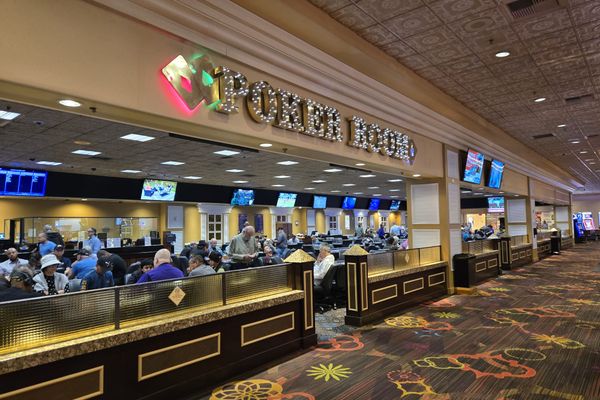
The Orleans has positioned itself as the premier mixed game destination during the World Series of Poker season, releasing a comprehensive schedule that caters to players seeking alternatives to the Rio’s bustling tournament halls. The series kicks off May 22 and runs through mid-July, offering daily tournaments with a heavy emphasis on non-Hold’em variants.
The centerpiece of the weekly schedule is the return of the Super Sunday Special, running on seven consecutive Sundays throughout the series. These $300 buy-in events (with an optional $100 add-on for a second starting stack) each carry $100,000 guarantees. Last summer, these tournaments consistently crushed their guarantees, establishing them as some of the best value plays in Las Vegas.
The series culminates in a $600 Main Event with a $500,000 guarantee, featuring multiple starting flights from July 1-4 and Day 2 action on July 5. This represents a strategic shift from previous years—the 2025 edition featured an $800 buy-in that attracted 1,653 entries for $1.1 million in prizes, while 2024’s $600 price point drew 2,726 entries and generated over $1.4 million. The decision to return to the lower buy-in suggests Orleans is prioritizing field size and accessibility.
What sets this schedule apart is the unprecedented commitment to mixed games. Nearly every day features at least one non-Hold’em event, with opening week showcasing several $600 championship tournaments. The lineup includes Omaha Hi-Lo, TORSE (a rotation game), Triple Draw Mix, Triple Stud Mix, Razz, and potentially the first-ever tournament offering of Dramaha—a hybrid variant combining elements of Draw and Omaha.
The Poker Strategy Breakdown
Mixed game tournaments require a fundamentally different strategic approach than standard No-Limit Hold’em events. The Orleans Summer Open schedule presents both opportunities and challenges that demand careful preparation.
First, understand that edge magnification occurs in mixed games. While a competent Hold’em player might have a 10-15% ROI edge over weak competition, that same skill differential in games like Razz or Stud Hi-Lo can translate to 30-40% edges or higher. The reason is simple: most recreational players have logged thousands of hours in Hold’em but might have played Razz only a handful of times. When the game switches to a variant they barely understand, their decision-making deteriorates dramatically.
The Super Sunday Special format with the add-on option creates an interesting strategic decision point. Taking the add-on gives you double the starting stack for only 33% more investment, which mathematically seems like a no-brainer. However, the real consideration is field dynamics. If 80% of the field takes the add-on, you’re playing a deeper-stacked tournament where post-flop skill edges matter more. If you’re uncomfortable playing 200+ big blind stacks, the add-on might actually decrease your edge despite the chip value.
For the mixed game events, your preparation should focus on the games where you have the largest edge and where opponents make the most mistakes. In Stud variants, this typically means starting hand selection—many players enter pots with mathematically unprofitable door cards. In Omaha Hi-Lo, the biggest errors occur in counterfeit situations and when players chase low draws without proper odds. In Triple Draw games, aggressive players often draw too many times trying to make premium hands rather than showing down medium-strength holdings.
The rotation games like TORSE (Triple Draw, Omaha Hi-Lo, Razz, Stud, Stud Eight-or-Better) present unique challenges. You need to track not just the current game but also what’s coming next. If you’re on the button in Razz with the Stud round approaching, you might play more conservatively knowing you’ll have position disadvantages in the next orbit. Conversely, if you’re about to enter your strongest game in the rotation, you might look for opportunities to accumulate chips in the current round even if the immediate situation is marginal.
Reading The Field & Table Dynamics
The Orleans Summer Open attracts a distinctly different player pool than Strip properties. You’ll encounter a mix of local grinders who play the Orleans daily tournaments year-round, WSOP regulars taking a break from the main action, and mixed game specialists who specifically target these events.
The local grinders typically have solid fundamentals in Hold’em and Omaha but may struggle in the more exotic variants. They understand tournament poker concepts like ICM and bubble dynamics but might not adjust these concepts properly for games like Razz where hand equity runs closer than in Hold’em. Against these players, you can exploit their tendency to play too tight near bubble situations in fixed-limit games where the pot odds often justify wider calling ranges.
The WSOP refugees—players taking a day off from the Rio—often arrive with a different mindset. They’re looking for a change of pace and might not be as mentally sharp as they would be during a major WSOP event. These players can be exploited through aggressive play in the early levels when they’re still settling into the different environment and game variants.
Mixed game specialists represent your toughest competition. These players specifically seek out events like the Orleans Summer Open because they know their edge is larger in these fields. They’re typically older, more experienced players who learned poker before the Hold’em boom. Against them, avoid marginal confrontations in games where you’re less confident, and save your aggression for variants where you have clear technical advantages.
ICM considerations shift significantly in mixed game tournaments. Because the games rotate and edges fluctuate based on which variant is currently being dealt, you need to think about chip accumulation in terms of positioning yourself for your strongest games. If you’re a Stud specialist but weak at Triple Draw, you might accept higher variance plays during the Stud rounds to build a stack that allows you to play conservatively during Triple Draw.
Pay attention to how opponents handle game transitions. Many players mentally check out during variants they dislike, playing too tight and surrendering blinds and antes. Others go on tilt in games they don’t understand, making wild bluffs or calling down with weak holdings. These transitions are prime exploitation opportunities.
How To Apply This To Your Game
If you’re planning to play the Orleans Summer Open, start your preparation now. Don’t wait until you’re sitting at the table to learn the rules of Dramaha or TORSE.
Begin by identifying which games in the rotation offer you the largest edge. If you’re a strong Omaha Hi-Lo player but struggle with Razz, focus your study time on improving your Razz fundamentals to an acceptable level while maintaining your Omaha edge. You don’t need to become an expert in every variant—you just need to avoid making catastrophic mistakes in your weak games while maximizing value in your strong ones.
Practice hand reading in fixed-limit formats. Many players who’ve only played No-Limit struggle to adjust to the different bet sizing in Limit games. In Limit, you can’t make huge overbets to protect your hand, so you need to be more accurate in reading opponent strength based on their betting lines and timing rather than sizing tells.
For the Super Sunday Specials, develop a plan for the add-on decision before you arrive. Consider your bankroll, your skill level at different stack depths, and the typical field composition. If you’re rolled for the event and comfortable playing deep, always take the add-on. If you’re taking a shot or prefer shorter-stacked play, you might skip it—but understand you’re giving up significant chip EV.
Study bubble dynamics in mixed games. The bubble in a Limit Stud tournament plays very differently than in a No-Limit Hold’em event. In Limit formats, you can’t apply as much ICM pressure because the bet sizes are capped, so you need to be more selective about your bubble aggression spots.
Build a network of mixed game players before the series starts. Join online forums, Discord servers, or local study groups focused on non-Hold’em variants. Having people to discuss hands with during the series is invaluable for improving your game between tournaments.
Key Takeaways
- The Orleans Summer Open offers $4.7 million in guarantees with unprecedented focus on mixed games, creating significant edge opportunities for prepared players
- Super Sunday Specials provide excellent value with $100K guarantees and optional add-ons that double your stack for 33% more investment
- Edge magnification in mixed games means your skill advantage is worth more than in standard Hold’em tournaments—prioritize variants where opponents make the most mistakes
- The $600 Main Event represents a strategic shift toward accessibility and larger field sizes compared to previous higher buy-in iterations
- Game transitions in rotation events create prime exploitation opportunities as opponents struggle to adjust mentally between variants
- Preparation should focus on achieving competency in weak games while maximizing edge in your strongest variants rather than trying to master everything
Frequently Asked Questions
What is the best strategy for Super Sunday Special add-on decisions?
Take the add-on if you’re properly bankrolled and comfortable playing deep-stacked poker. The add-on gives you 100% more chips for only 33% more investment, which is excellent value. However, if you’re taking a shot or prefer shorter-stacked play where push-fold situations are clearer, you might skip it. Consider that most of the field will take the add-on, so declining it means you’ll be playing a shorter stack relative to the average, which requires tighter preflop ranges and more precise short-stack execution.
How should I prepare for mixed game tournaments if I’m primarily a Hold’em player?
Start by learning the basic rules and starting hand requirements for each variant in the rotation. Focus on avoiding catastrophic mistakes in your weak games rather than trying to become an expert in everything. Study one game at a time, beginning with variants that are closest to Hold’em (like Omaha Hi-Lo) before moving to more exotic games (like Razz or Triple Draw). Use online play-money tables or low-stakes cash games to practice before committing to tournament buy-ins. Most importantly, understand that tight play in unfamiliar games is profitable—you don’t need to win every hand, just avoid bleeding chips in games you don’t understand.
Why did Orleans lower the Main Event buy-in from $800 to $600?
The data shows that the $600 price point in 2024 attracted 2,726 entries and generated over $1.4 million in prize pool, while the 2025 $800 buy-in drew only 1,653 entries for $1.1 million. The lower buy-in creates a larger, more recreational field while still offering substantial prizes for top finishers. This strategy prioritizes accessibility and field size over buy-in prestige, which ultimately benefits both the casino (through increased rake) and skilled players (through softer competition and better overlay opportunities).
Final Thoughts
The Orleans Summer Open represents one of the best value propositions in tournament poker during the WSOP season. While the Rio draws the spotlight and the biggest names, the Orleans offers something potentially more valuable: softer fields, lower buy-ins, and game variants where skill edges are magnified. For players willing to put in preparation time learning mixed games, the $1.5 million in mixed game guarantees represents a goldmine of opportunity.
The key to success isn’t becoming a world-class expert in every variant—it’s achieving competency across the board while maintaining significant edges in a few games. If you can avoid major mistakes in your weak games and capitalize on opportunities in your strong ones, you’ll have a substantial advantage over the typical field. The players who struggle most are those who either avoid mixed games entirely (missing out on the value) or jump in completely unprepared (donating their buy-ins to more knowledgeable opponents).
Whether you’re planning to play the entire series or just cherry-pick a few events, start your preparation now. The Orleans Summer Open begins May 22, and the players who’ve done their homework will be the ones cashing tickets while others are still figuring out whether a wheel beats two pair in Omaha Hi-Lo.
Ready to Sharpen Your Poker Game?
Master your poker game with expert hand analysis
